Why frosted zipper bags fit wine club kits without driving up spend
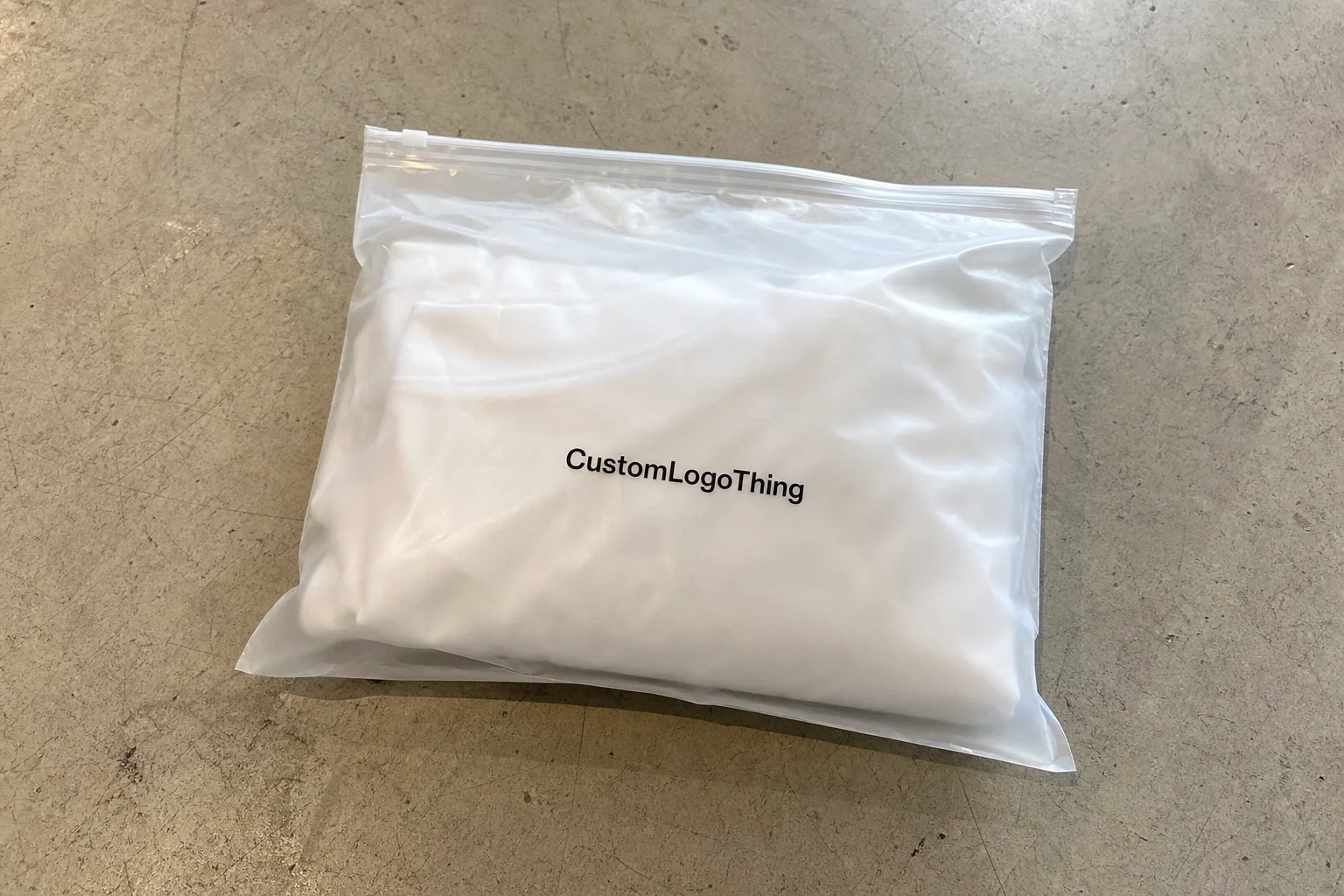
If you are assembling a wine club shipper that needs to hold a bottle, a tasting note card, a membership insert, and maybe one small gift item, the packaging question usually starts with economics rather than aesthetics. The goal is simple: create a kit that looks intentional, protects the contents, and does not turn into an oversized cost center. That is where Frosted Zipper Bags earn their place. They give the pack a cleaner, more finished appearance than a plain poly bag, yet they stay far below the cost of rigid cartons or fully custom display packaging.
From a fulfillment standpoint, the bag does more than dress up the order. It keeps loose pieces grouped, reduces movement during packing, and helps standardize the kit build. Once a team learns the packing sequence, the process becomes easier to repeat across monthly shipments. Less variation means fewer misses, fewer damaged inserts, and less time spent correcting small errors before the order leaves the floor.
The frosted film matters in a subtle way that buyers often underestimate. It softens what the customer sees without hiding the contents entirely. That creates a more polished presentation than clear low-cost film, which can look harsh under warehouse lighting and often shows scuffs, fingerprints, and handling marks. A light matte finish can make a modest kit feel more deliberate without pretending to be luxury packaging it is not.
Cost control is still the central issue. A frosted zipper bag can sit in a sensible price band if the dimensions are right, the film gauge is matched to the use case, and the print is restrained. In practice, the “premium” effect comes from proportion and cleanliness as much as from decoration. A well-sized bag with a neat logo and a reliable zipper often looks better than a heavily printed bag with awkward excess space.
That is why a useful unit-cost review should not ask only what the bag costs. It should ask what the bag contributes to packing speed, member perception, and reordering stability. Those three pieces often matter more than a small difference in unit price.
Construction details that shape performance and shelf appeal
Most Frosted Zipper Bags used for wine club kits are made from LDPE or a similar polyethylene film. The material is chosen for flexibility, reasonable puncture resistance, and easy handling during kitting. These are not rigid packages, and they are not meant to be. Their value comes from doing a simple job well: enclosing the contents cleanly, closing reliably, and holding up through packing and transit.
The frosted finish is not only cosmetic. It helps disguise scuffs and handling marks that appear during production, inspection, and final packing. A bag may be opened, filled, and closed several times before it reaches the customer, so the surface finish has a real effect on how polished the final kit feels. Compared with clear film, frosted film usually reads as more refined even when the construction is otherwise very ordinary.
Closure style is another practical decision. A standard single-track zipper is common because it offers a familiar open-and-close action and a straightforward manufacturing path. More specialized closures can improve the tactile impression or the seal, but they may add cost and introduce more variation in the converting process. For many wine club programs, the simplest zipper that closes consistently is the better choice.
Print coverage also changes the final look. A restrained logo, club name, or short line of messaging usually works better on frosted film than heavy artwork coverage. Too much ink can flatten the matte effect and make the bag feel more promotional than premium. In many cases, one-color or two-color branding is enough, especially if the rest of the kit already carries the club identity through inserts and cards.
These bags are not limited to bottle-adjacent items. Depending on the size and gauge, they can hold tasting cards, cork tools, coupons, welcome letters, and other flat or lightly dimensional components alongside the wine packaging. The key is matching the internal capacity to the actual contents, not to an abstract idea of what a wine club kit should contain.
Specifications to lock down before requesting a quote
A quote is only useful if the specification behind it is clear. Start with the bag dimensions: width, length, and usable opening area. A bag that looks right on paper can still be too tight once a folded insert, tissue, or accessory is added. If the zipper has to fight the contents, the finished pack will look stressed, and the bag may not close cleanly. That kind of problem shows up quickly during kitting, not after the order has shipped.
Film thickness is one of the biggest cost and performance drivers. Thicker film generally feels more substantial and resists tearing better, but it uses more resin and raises the unit price. For many wine club kits, a mid-range gauge is the practical middle ground. It gives enough structure for handling without making the bag heavier or more expensive than the job requires.
The finish should be defined as clearly as the dimensions. Some frosted films are only lightly matte, while others have a stronger opacity that hides contents more aggressively. That difference affects presentation and sometimes the way artwork reads on the surface. If the bags will be touched often, stacked, or stored in a warm packing area, say so. Those details influence the right material choice and closure strength.
Print requirements need the same level of precision. State the number of colors, the location of the imprint, the coverage area, and whether the artwork appears on one side or both. A small centered logo is not comparable to a large front-panel design, even if both are technically “printed bags.” Most quote confusion comes from people assuming those are equivalent. They are not.
Use-case notes improve the quote quality more than most buyers expect. If the bag is for final presentation only, the spec can differ from a bag that will be opened and reused by the subscriber. If it is part of a shipping kit, it may need better puncture resistance and a tighter closure. A supplier can only recommend the right construction if the brief explains how the bag will actually be used.
- Dimensions: width, length, and opening area
- Film gauge: thickness and expected hand-feel
- Finish: light frost, medium frost, or higher opacity
- Print: number of colors, placement, and coverage area
- Use case: shipping, retail presentation, or internal kitting
One detail that gets missed often: if members are likely to reuse the bag, zipper quality becomes part of the perceived value. A bag that opens smoothly and recloses without snagging feels better in hand, and that matters when the package is meant to travel beyond the first shipment.
Wine club frosted zipper bags unit cost review: pricing, MOQ, and quote drivers
A proper wine club Frosted Zipper Bags unit cost review should break pricing into the factors that actually move the number. Size, film thickness, zipper style, print complexity, order quantity, packing format, and freight all influence the final landed cost. Leave one of those out and the comparison can become misleading fast.
Order volume matters more than most people expect. At low quantities, setup costs are spread across fewer bags, which pushes the unit price up. At higher quantities, material purchasing and converting efficiencies improve the economics. That is why bulk pricing can drop sharply once a buyer moves past the smallest run size. It is not magic; it is simply fixed costs divided by a larger number of units.
There is no single universal price for this category, but buyers commonly see different cost bands depending on the build. A basic frosted zipper bag with standard dimensions and little or no print will sit at the lower end. Add heavier film, custom branding, or a broader print area, and the price climbs. If the bag is large, has special closure requirements, or needs tighter quality control, the cost rises again.
Useful quote comparisons usually depend on six questions:
- What are the exact bag dimensions?
- What film gauge is being quoted?
- Is the zipper standard or upgraded?
- How many print colors are included?
- What is the actual print coverage area?
- What quantity and reorder pattern is being assumed?
MOQ deserves a separate look. Some suppliers can support smaller runs, but the per-piece price is usually higher because setup costs are spread across fewer units. For a club program with repeat shipments, it often makes more sense to quote in a quantity that matches two or three shipping cycles rather than the absolute minimum. That gives better pricing and reduces the risk of running short mid-season.
Here is a practical way to think about the relative options buyers often evaluate. These are not fixed prices, but they reflect the usual spread between simpler and more customized builds.
| Option | Typical build | Relative unit cost | Best fit |
|---|---|---|---|
| Basic frosted zipper bag | Standard size, mid-gauge film, no print or minimal print | Lowest | Internal kitting and simple club mailers |
| Custom logo frosted bag | Standard size, branded print, standard zipper | Moderate | Recurring wine club shipments |
| Heavier presentation bag | Thicker film, broader print, more refined appearance | Higher | Sign-up kits and premium gift programs |
Setup fees and tooling charges should be reviewed alongside the unit price. Some suppliers include them inside the quote, while others break them out separately. The difference matters. A quote that looks inexpensive at first glance can become less attractive once artwork setup, plate charges, or special conversion costs are added. Freight should be treated the same way, especially if the bags are bulky or the shipment goes out in multiple cartons.
Another common mistake is comparing bags that are not actually equivalent. One quote may be for a lighter film, a slightly smaller size, or a different zipper profile. Another may include overwrap, case packing, or a delivery assumption that the first quote does not. If the spec is not aligned, the price comparison is not useful. A real apples-to-apples review needs the same dimensions, the same gauge, the same closure, the same print coverage, and the same delivery terms.
“The lowest quote is not always the best quote, because packaging lives in the warehouse, on the packing line, and in the member’s hand long after approval.”
That point is easy to say and harder to apply. Still, it is the right filter. A bag that saves a fraction of a cent but slows packing or arrives with print drift is not a bargain. Buyers usually get better results by comparing total value rather than headline unit price alone.
Production steps, approval checkpoints, and lead time expectations
The production flow is fairly standard, but the handoffs matter. A typical order moves through artwork review, dimension confirmation, proofing, material planning, printing, converting, zipper integration, inspection, and final packing. Each stage is manageable on its own. Trouble usually starts when the spec is still changing after the quote has already been issued.
Most delays happen before the line begins running. Missing artwork details, unclear logo placement, back-and-forth dimension changes, and slow proof approval are the usual culprits. Manufacturing can move quickly once the documents are settled. It cannot move well when the brief is still being rebuilt.
Lead times vary with complexity and order history. Repeat orders generally move faster than first-time custom runs because the bag construction and artwork have already been approved. New projects take longer, especially if the supplier needs to evaluate print coverage on frosted film or confirm zipper performance at the specified gauge. For a subscription business, that timing matters. A delayed bag order can throw off monthly fulfillment long before anyone notices the packaging issue itself.
Proofing should be treated as a checkpoint, not a formality. Many buyers are comfortable with a digital proof if the bag is a repeat format and the artwork is straightforward. Others want a physical sample, especially when the bag plays a visible role in member perception. Either route is reasonable. What matters is catching alignment problems, color questions, and spacing issues before full production begins.
A locked spec sheet makes reorders more predictable. Save the approved proof, final dimensions, film gauge, zipper style, print file, and packing method. That record becomes more valuable as the program grows and seasonal or monthly needs shift. Reorder control is often what separates a polished club program from one that is constantly correcting the same packaging mistakes.
How to evaluate a bag partner for repeat quality and reorder control
Consistency is the real test. A bag that looks fine once is not enough. The better question is whether the supplier can reproduce the same size, same print placement, same opacity, and same zipper feel on every reorder. Wine club members may not analyze packaging in technical terms, but they do notice when a recurring shipment suddenly looks thinner, duller, or less precise.
Communication usually reveals more than the quote does. A reliable supplier should answer direct questions about spec limits, feasible print coverage, and what drives a price increase. If the requested design is too ambitious for the film or the quantity, that should be said clearly. Vague reassurance is not useful. Straight answers are.
Quality control should focus on a few concrete checks: zipper function, film consistency, print registration, and seal integrity. If any of those are off, the bag feels less polished immediately. A good partner can explain how those checks are handled during production and how variation is monitored across the run. That discussion is more valuable than broad claims about quality.
Documentation matters more than most buyers realize. Keep the approved proof, the final spec sheet, the material details, and the packing method in one place. If your order volume changes from one season to the next, you should not have to rebuild the order from memory. The more complete the record, the easier it is to reorder the same item without small variations creeping in.
If you want outside reference points for packaging performance or sourcing claims, industry standards can help frame the conversation. The ISTA testing framework is useful for thinking about handling and distribution stress, while the FSC chain-of-custody system matters if the broader kit includes paper inserts or cartons tied to responsible sourcing claims. Those references do not replace a supplier quote, but they do help sharpen the questions you ask.
Next steps for quoting and ordering the right frosted zipper bag
When you are ready to request pricing, send the essentials in one clean brief: dimensions, estimated quantity, intended use, print requirements, and any nonnegotiable features such as heavier film or a specific zipper style. The clearer the request, the fewer clarification cycles you will need before the quote becomes meaningful.
Artwork should be usable, not just attached. Send a clean logo file, note the color targets, and specify placement preferences. If brand rules include minimum clear space, approved colors, or a preferred side for the imprint, include them at the same time. That reduces proofing back-and-forth and improves the odds that the first mockup is close to final.
Ask for a side-by-side breakdown showing unit price, MOQ, setup fees, tooling charges, and freight assumptions. A quote without those details can be deceptive, especially if the order sits near a pricing tier or requires special packing. You want the landed cost and the commercial terms, not just the lowest number in a column.
Before approving the order, check the production window against the club calendar. If the bags are feeding a monthly shipment or a seasonal member drop, delivery timing matters just as much as the price. A lower unit cost is not helpful if the bags arrive after the packing window closes.
The best packaging decision is usually the one that balances appearance, durability, and predictable reorder pricing. That is the real purpose of a wine club frosted zipper Bags Unit Cost review: to compare more than the sticker price and to make sure the final spec fits the program, not just the sample sheet.
What affects wine club frosted zipper bags unit cost the most?
Bag size, film thickness, zipper style, print complexity, and order quantity usually have the biggest impact on unit cost. Higher quantities lower the per-piece price because setup and material efficiencies spread across the run. Freight, packing format, and any special proofing or setup charges can also affect landed cost.
What MOQ should I expect for custom frosted zipper bags for a wine club?
MOQ depends on the bag size, print method, and material specification. Smaller quantities are possible in some cases, but unit pricing is typically higher at low volume. If you plan to reorder regularly, it is often smarter to quote a quantity that matches two to three shipping cycles.
Can frosted zipper bags be printed with a wine club logo?
Yes. They can usually be printed with a logo, a short brand message, or limited artwork. Print area, number of colors, and the opacity of the frosted film will affect the final look. A restrained design often looks more refined on frosted film than heavy coverage.
How long does production usually take after artwork approval?
Production time depends on order size, print complexity, and current scheduling. Once artwork is approved and the spec is locked, repeat orders typically move more predictably than first-time custom runs. If your shipping calendar is fixed, confirm lead time before final approval.
What details should I send when requesting a quote for wine club frosted zipper bags unit cost review?
Send dimensions, estimated quantity, film thickness preference, zipper style, and print requirements. Include usage details such as shipping, kitting, or presentation so the supplier can recommend the right spec. Attach artwork files and note your target delivery window to improve quote accuracy.


