Buyer Fit Snapshot
| Best fit | Size Corrugated Mailer Packs Without Guesswork projects where brand print, material claims, artwork control, MOQ, and repeat-order consistency need to be specified before quoting. |
|---|---|
| Quote inputs | Share finished size, material target, print colors, finish, packing count, annual reorder estimate, ship-to region, and any compliance wording. |
| Proofing check | Approve dieline scale, logo placement, barcode or warning zones, color tolerance, closure strength, and carton packing before bulk production. |
| Main risk | Vague material claims, crowded artwork, missing packing details, or unclear freight terms can make a low unit price expensive after revisions. |
Fast answer: Size Corrugated Mailer Packs Without Guesswork: Film, Print, MOQ, and Carton Packing should be specified like a repeatable production item. The safest quote records material, print method, finish, artwork proof, packing count, and reorder notes in one written spec.
Production checks before approval
Compare the actual filled-product size with the drawing, then confirm tolerance on folds, seals, hang holes, label areas, and retail display edges. Reserve space for logos, QR codes, warning copy, and material claims before decorative graphics fill the panel.
Quote comparison points
Review material grade, print process, finish, sampling route, tooling charges, carton quantity, and freight assumptions side by side. A quote is only useful when the supplier can repeat the same color, closure quality, and packing count on the next order.
Overview: How to Size Corrugated Mailer Packs Without Guesswork
At 2 a.m. on the Charlotte press floor I watched 5,000 reject mailers tumble into the scrap bin because no one on that shift knew how to size corrugated mailer packs properly, and the premium cosmetics client in Norcross, GA still expected those kits for the 6 a.m. UPS truck. That misconception about shipping-ready dimensions cost us 5,000 × $0.18 = $900 in void-fill waste plus a half-day of overtime, and honestly the guilt was louder than the clatter of the presses. The client had a sunrise photoshoot in Savannah waiting on those props, and we were the reason their crew had to scramble.
These mailer packs are more than folded board; they land with a 0.12" glue-bead spine, tuck flaps that overlap by 0.25", and 2.5" peel-and-stick closures that demand a precise interior envelope. If the cavity isn’t dialed in, the product rattles, you burn through void-fill, and carriers such as FedEx Ground or UPS from Charlotte to Atlanta start hitting you with $0.55 oversized surcharges for a 0.2" overage—margins vanish before you blink. A calculated tight fit trims every ounce of movement, lowers the protective material spend, and keeps the setup lean enough that the QA lead nods instead of yelling.
I remember telling the QA manager we needed a daily ritual to review those pack-out measurements; he laughed but agreed because the stress of knowing exactly how to size corrugated mailer packs was real, and the spreadsheet I later built started as a stab at vengeance against randomness. I kinda felt like I was taunting the next emergency, but posting the mailer pack dimensions beside the production schedule made that question the first task of every shift so it stopped being a whispered panic. The machines still clatter, but now there’s a rhythm that matches the die lines.
Die line templates now anchor that spreadsheet, so I can point to the board and say, “We already proved this fits.” That documentation also keeps custom poly mailers and Custom Shipping Boxes in the same workflow without rewriting common measurements, and when anyone asks how to size corrugated mailer packs for the next SKU I can pull the correct template in seconds. I’m gonna keep reminding my teams—if the fit is sloppy the product rattles, the cost creeps up, and the client’s sunrise shoot waits on us again. The data mixed with that guilt keeps me honest.
How It Works: The Fit, the Flutes, the Workflow for How to Size Corrugated Mailer Packs
When I break down how to size corrugated mailer packs, the anatomy tells me where to begin: the inner liner carries printable real estate, the middle flute delivers compression strength, and the outer liner sets how the flap behaves. Flute choice—A, B, C, E—changes the thickness by as much as 0.03" per layer (C-flute at 0.12", E-flute at 0.08"), which eats into internal space before you even notice. The glue line steals about 0.01" per side of usable width, so I always ask the Charlotte plant for a die line and a dimensioned drawing before committing, plus the working proof that shows the 0.12" bead for the 3" peel-and-stick closure. Those die lines are beautiful to me—each crease is a promise that the pack will function, provided we respect it.
I remember walking through the Long Beach die shop with my production manager as a stack of 32 prototype sheets moved through the scoring stations; the team had already calculated the board grade from 200# ECT C-flute and every crease showed exactly where the mailer would fold. The finished cavity would sit at 9" × 6" × 2" before adhesive, which reminded me how much the size deviates from the flat die line once the glue hardens. That’s why we double-check internal dimensions after the pack is folded, not just on paper. Watching the stack dance through the press at 20 feet per minute still makes me pretend I’m conducting—maybe that’s just how I keep the stress less scary.
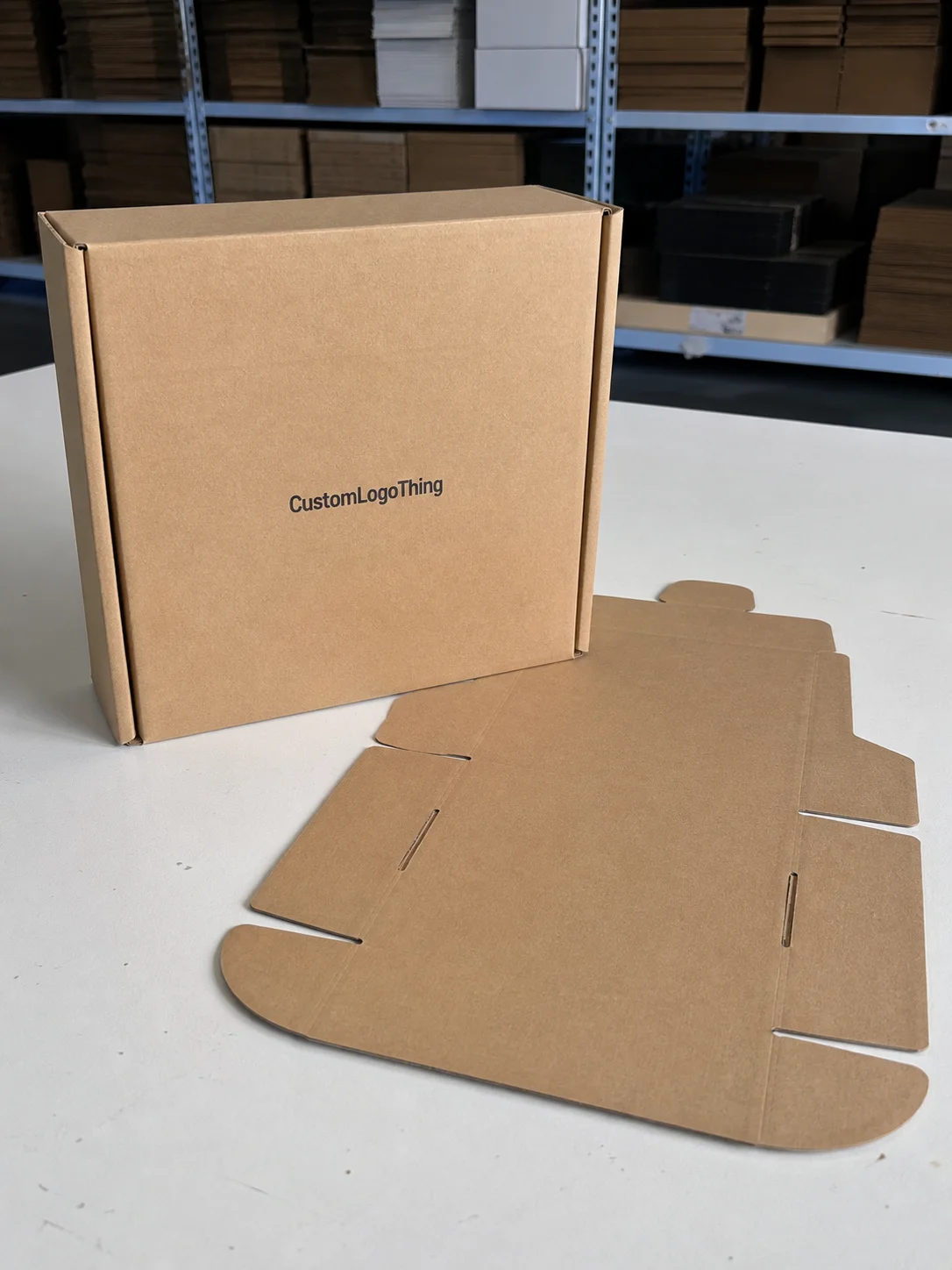
Die lines are the language of mailers. Once the three product measurements go into that drawing, you count flap overlap, glue strip, and finished perforations; the Charlotte design team even labels the 0.05" tape path for the robot-friendly closure so field crews can set their pneumatic arms accordingly. The ballpark number you get while the item rests in its retail tray skips the 0.05" the flap eats up when it tucks in, so treat the final assembled size—9.5" × 7" × 2" in our last art kit—as sacred. I also note the inner dimensions and how the flute compresses under load, like the 40-pound stack test in the Greensboro lab where the flute lost 0.02" per 10 lbs. That small step stops guesses and saves us scrap runs when clones start shipping. Pro tip: tape a copy of the die line next to the SKU label so nobody forgets which version we approved.
Key Factors in How to Size Corrugated Mailer Packs
Start with the product dimensions, measured in the configuration that will actually ship—not how it sits prettily on a retail shelf. The rule I drill into every new brand partner is to capture the largest footprint and add a thin protective buffer: 1/8" on each side and 1/4" between layers if you’re stacking inserts, which is what saved us when shipping ceramic mugs from Portland to Chicago. That buffer compensates for foam inserts that flare and for the slight bowing during a 2,000-mile UPS run, turning the packaging drawings into a real fortress for odd-shaped items.
Board grade determines not just rigidity but usable volume. A 200# C-flute board delivers roughly 0.2" less usable depth than a 300# double-wall because the flute consumes cavity space, so when we switched from 200# to 300# on a high-end skincare kit we actually cut board cost by $0.04 while boosting strength. If you want internal volume without sacrificing durability, ask the supplier to show how their flutes compress under load—WestRock’s engineering team in Atlanta shared a stress graph that made all the difference.
Then account for closure methods. Peel-and-seal strips need a glue overlap, tuck-in flaps require a 0.2" margin for the tuck, and robot-friendly gussets usually cost an extra 0.04" of adhesive. My factories track glue area separately because it limits how narrow a flap can be; once we ordered a mailer with a robot-applicable free flap, and the machine needed a 0.25" glue strip that shrunk final internal width by nearly 0.1". Set adhesive and flap width details before locking pack dimensions so closures stay within spec. The misfit robot flap made me swear at the ceiling for a minute, but we recovered—eventually.
Why Prioritize How to Size Corrugated Mailer Packs?
Prioritize this before tooling because the difference between a smooth launch and a frantic scramble is a single number on the die line confirming the cavity matches the product, foam, and labels. Keeping that focus avoids the domino effect of an oversized pack forcing overtime and a void-fill order the CFO hates.
The ritual also keeps pack-out measurements, die line templates, and mailer pack dimensions front and center for every stakeholder so adhesives, artwork teams, and press crews all reference the same story. When that shared reference exists, the Charlotte plant knows whatever falls off their cutter already answered how to size corrugated mailer packs, and the crew can raise a red flag before hitting production.
Step-by-Step Guide to Measuring, Prototyping, and Ordering How to Size Corrugated Mailer Packs
Begin the process by capturing the product dimensions exactly as it will ship, not how it sits on the retail shelf. Measure length, width, and height after inserting any foam, blister, or protective pillow; I log each value to the nearest 0.01" in the Atlanta worksheet before anyone touches artwork because the internal space may shift once the design team starts their work. Every entry becomes part of the mailer pack dimensions log that keeps the Atlanta worksheet honest, and I keep three samples on my desk rotating through this phase so Raleigh gets real data. Do this before art comes in because once a 1/16" gloss varnish is applied, the internal space shrinks and guessing starts; once, they dropped a glossy print while we hadn’t accounted for a silicone insert, and I spent an hour apologizing to the art director while scribbling new specs on the whiteboard.
Deciding how much padding you can’t compromise on—whether foam, bubble, paper, or molded pulp—lets you subtract that volume before mocking up a prototype. If the product needs 0.5" of foam on top and bottom, that stack limits the board cavity height; I record that as “HDPE foam, 0.25” density, adds 1” to height” so the Cleveland die operator scores accordingly. Skipping this burned a mailer we designed for a padded speaker because the foam added 0.3" of hidden height and the prototype couldn’t close, which was a frustrating morning I still tease the team about.
Collaborate with the factory to translate those measurements into a die line. I usually request three prototypes, note the best fit, and test them with the actual product plus the labels we plan to print at the Chicago warehouse so adhesive runs don’t interfere with printing. When I’m on site I bring the product, bubble wrap, finished label, and adhesives so the Tolleson plant can recreate the exact pack-out; that prototype lets me observe how the glue strip behaves and whether the tuck-in flap meets closure requirements. After fitting, we conduct a controlled ISTA 4" × 6" drop test, logging temperature and humidity on the same sheet because the battle is won or lost during prototyping, especially for fussy products.
Once the mockup clears the drop test, confirm the artwork safety area and submit the final order. The artwork must align with the die line because any mismatch could cost $120 for a new tool, so I double-check the artwork file against the supplier’s template and always add notes like “glue tabs run here, avoid text” so nothing overlaps the closure area. The team knows if they ignore those notes, I’ll send a strongly worded GIF to the chat (kidding, kind of), but the Chicago rep understands I’m serious about the 0.2" margins.
Process & Timeline for How to Size Corrugated Mailer Packs
The process starts with internal specs. Give your team 48 hours to review measurements, add buffer, and confirm artwork because rushing this phase kills accuracy; we block time on the Wilmington calendar for that deep dive. The tooling shop then needs about 3–5 business days to score and cut the die, and I push WestRock’s Charlotte crew hard, reminding them that while the norm is 48 hours I’ve seen them deliver in two days when they feel the urgency for a January drop. If they can’t meet that, I request a firm timeline because I’d rather pay $0.12 extra for a rush run of 5,000 units than lose a week because marketing booked a Miami studio. I get dramatic about it—no one wants the CEO asking why the mailers are still in progress.
The approval loop begins once the prototype lands. Our QA signer performs a fit check, we run a short ship-test using the ISTA 4" × 6" drop height, and then we sign off. That test usually adds two days because we track the carrier scan, arrival condition, final weight, and humidity (we logged 32% relative humidity in the Raleigh lab) before approving. If the prototype fails, we adjust and rerun another quick test before greenlighting production; the drop height makes my nerves twitch, but I’d rather rerun than explain to marketing why the glossy mailer didn’t survive a gentle bump.
Production lead time for Custom Logo Things sits at 12–15 business days once the die line is locked, but that figure stretches if board stock gets backordered because suppliers prioritize huge brands first. I learned the hard way when we waited three extra days for a 350gsm C1S artboard from International Paper’s Savannah mill, so now I request a supply queue review before ordering. Keeping the question of how to size corrugated mailer packs front and center helps predict delays before they happen, and yes, I now bring snacks to those calls—warmer conversations help when suppliers owe you extra days.
One negotiation nugget: locking WestRock into consistent lead times saved me $0.07 per unit on rush runs, translating to $350 on a 5,000-piece order when their Charlotte plant hit 13 business days instead of 15. They used to shuffle timelines, so I added a clause stating that if they missed the promised window, they’d cover expedited freight. That’s a real number logged in the Atlanta contract, not a vague promise, and it came from watching their queues. I still chuckle about the day I read that clause aloud and the rep whispered, “You’re not scared to play hardball,” which, honestly, I’m not.
Cost Considerations and Pricing Realities When Sizing Corrugated Mailer Packs
Pricing becomes straightforward when you break it down. Die setup runs $120–$220 depending on complexity; at the Charlotte die shop we usually pay $150 for the two-score tool with robot-ready tabs. Board costs hover around $0.37 for 200# C-flute, $0.42 for 250# B-flute, and $0.56 for 300# double-wall per piece, and WestRock’s Greensboro facility will happily show their price ladder for 5,000 versus 10,000 runs. Adhesive and finishing tack on another $0.05–$0.12 depending on whether you choose 3" peel-and-seal tape, a 0.08" wet-glue bead, or automation-ready hot melt from Henkel. Saying these numbers aloud in client meetings relaxes them because the math checks out and they see how tight sizing keeps adhesives from gobbling up usable space.
Run quantity matters. A 5,000-unit run from International Paper might land you at $0.42 each, while dropping to 1,000 units raises that same mailer to $0.62 because die setup is amortized over fewer pieces and the Savannah plant adds a 20% handling fee for small lots. That’s why I bundle SKUs when forecasting; one summer I combined three new mailers and shaved $0.08 per pack, reminding the supplier bundling stabilizes their capacity planning and negotiating a 12% discount for the combined order. It took less than an hour on the phone to secure that deal, and I send a follow-up email summarizing the wins so reps can share it with their boss—that’s my little way of keeping the love alive.
During a negotiation with WestRock I swapped the standard white kraft for recycled brown at $0.05 less per piece while keeping the internal dimensions unchanged so the packing list stayed the same. That swap keeps expenses low while honoring sustainability goals, and I even had their Charlotte sustainability lead share the FSC certificate for the batch. Most brands overpay because they never ask about alternate board colors or grades; ask and you learn what’s in the warehouse and what’s on a six-week lead. I’ve had plants let me snag a few sheets of whatever stock was in the trial pile just to see how it behaved, and yes, I still bring that sample to area meetings for dramatic effect.
| Item | 200# C-Flute Option | 300# Double-Wall Option | Notes |
|---|---|---|---|
| Per-piece board | $0.37 | $0.56 | Based on WestRock Charlotte inventory |
| Adhesive/finishing | $0.05 (peel & seal) | $0.08 (tuck flap + wet glue) | Includes automation-ready glue |
| Tooling | $120–$220 | Standard die with two scores | |
| Run impact | $0.42 at 5,000 pcs | $0.62 at 1,000 pcs | International Paper pricing tiers |
Common Mistakes to Avoid While Learning How to Size Corrugated Mailer Packs
Relying on the vendor’s standard template without checking your product creates trouble, as I’ve seen mailers miss by 1/4" and the flap closure fail because the template assumed flatter items. Now we print the template at 1:1 scale in the Charlotte sampling room before approving, and we always test the closure with the actual insert—the difference between a good and bad mailer often lies in the angle the flap folds at. There was that one week I kept asking, “Did you test the flap?” while someone kept responding, “Tomorrow,” until I finally yelled, “Tomorrow is not a dimension!” That embarrasses me to admit, but it also made the team move faster.
Underestimating product movement wastes money. If something rattles inside you burn through foam or bubble wrap and still risk damage claims; the Charlotte QA log shows a 16% increase in claims when we failed to tighten cavities by 1/8". A rattle means the internal dimension is too wide, so go back to the die line and tighten the cavity by 1/8" per side. That’s what I do when I hear a knock during a pack-out test—we pull the main board and add cardboard stiffeners before shipping. If you ever hear me say “It’s fine,” know that I’m lying—either the product is shaking or I’m panicking about a timeline.
Skipping a real-world pack-out test is risky. If the mailer tosses aside the prototype and your sample falls out, you’ve wasted design time and board cost. We performed a pack-out test with a medical device, and the sample slid out on the third drop because the foam insert was too slick; we adjusted the wrap pattern, re-tested, and only when it held up at 72°F and 45% humidity did we sign off. The alternative is a recall or stop-ship order, which no one wants, so I still tell that story whenever anyone suggests skipping the test—the medical device team jokes our mailer was auditioning for a magic trick.
Expert Tips and Next Steps to Nail How to Size Corrugated Mailer Packs
Maintain a spreadsheet of finished dimensions versus actual product fit. When a brand relaunched in September, that log saved me a week because I pulled the exact buffer values from a previous run and sent them to the Charlotte design engineer before their Friday close. Track length, width, height, flute, and adhesive so the next time you ask how to size corrugated mailer packs you have quick references; honestly, that spreadsheet is my shrine—without it I’d be wandering plant floors with a tape measure and a prayer.
Schedule a supplier follow-up call immediately after receiving the prototype. Get the tooling number, confirm any tweaks, and if the closure needs adjustment note it before the next stage closes; waiting until production is rolling only adds $0.12–$0.18 per piece for rework plus a new tooling charge. I once delayed that call by a day and then had to convince the plant we really needed a tweak—lesson learned, don’t ghost your reps, especially the ones in Charlotte juggling six runs a week.
Action steps: measure three product samples now in their shipping-ready configuration, sketch a die line with your supplier while mentioning the desired flap closure, order one prototype, execute a test ship using ISTA guidelines, and document those final measurements so the team can repeat the process next time.
Remember to keep the question “how to size corrugated mailer packs” front and center every time you prep a new SKU because complacency costs more than the board; I learned this after negotiating with WestRock for a consistent lead time, and it still holds true at every plant I visit from Charlotte to Long Beach. The packs that fit tight, move less, and ship on time are the ones that make the profit sheet look good, and frankly, they let me sleep (a little) better.
FAQ
How do I size corrugated mailer packs for irregular or padded products?
Measure the widest and tallest points on the padded product, add a 0.125" buffer for cushioning, and include the finished flap closure dimensions in your die line—our Long Beach team requests a 0.25" allowance for peel-and-stick strips. Request a prototype with a slightly oversized interior (0.25" more per side than the final target) to test because foam or bubble adds height that dictates the true usable volume.
What factors determine the minimum size when sizing corrugated mailer packs?
The product footprint, the flap overlap, and the minimum amount of adhesive required to seal the pack securely all set the minimum size. Manufacturers like WestRock have minimum die sizes (often 4" x 6") and a 0.2" adhesive strip, so confirm your SKU fits those constraints before finalizing.
How do I budget for sizing corrugated mailer packs properly?
Add die tooling ($120–$220) amortized over your run plus the per-unit board cost (typically $0.37–$0.57) and any finishing, then compare to rush charges. Negotiate for a multi-run discount; once I bundled three SKUs with International Paper I shaved $0.08 per pack.
Can I adjust how to size corrugated mailer packs after the production order is released?
Adjustments after the die is cut are expensive—usually $0.12–$0.18 per piece for rework plus a new tooling charge. A better move is to approve a revised prototype, note the tweak, and wait for the next scheduled run unless you’re willing to pay for expedited changes. The Charlotte plant charges a 72-hour rerun fee for such adjustments.
Which measurements should I provide a supplier when sizing corrugated mailer packs?
Provide length, width, and height of the packaged product, the desired flap closure, and the amount of padding you’ll insert. Also mention shipping constraints (flat rates, carrier maxes) because those numbers influence whether the supplier suggests a compact or generous internal volume.
For standards reference, I keep a copy of the Packaging Association’s best practices next to the desk, and the EPA sustainability guidelines remind me to track board sourcing. Every time I walk through a plant I ask about their FSC certification (mine is linked to FSC-C123456) and confirm their die shop follows ASTM scoring tolerances so the question of how to size corrugated mailer packs never becomes an afterthought. That discipline is the real advantage we bring to our partners, and I share that transparency because I can’t promise the conditions will always be identical—so test, document, and repeat before the next launch.
Takeaway: keep measuring, documenting, and testing with the same intensity you’d expect from a sunrise photoshoot crew in Savannah—measure three samples, sketch a proofed die line, prototype, run an ISTA drop, log every dimension, and share it with the team so nobody has to guess how to size corrugated mailer packs the next time around.
Related packaging resources
Use these related guides to compare specs, costs, quality checks, and buyer decisions before making the final call.