Why jacquard knit beanies can beat printed cold-weather merch
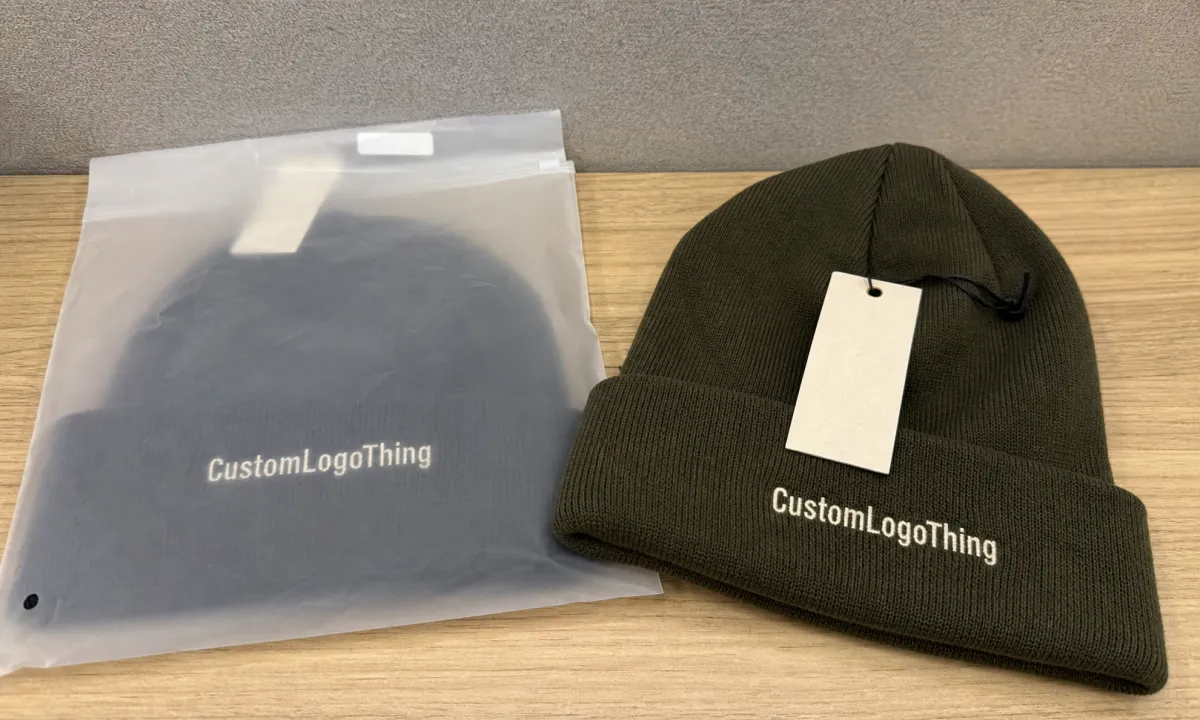
Jacquard Knit Beanies unit cost often looks higher than the price of a plain printed winter cap, but that line item hides the more useful comparison. Jacquard places the logo inside the knit structure, so the design does not depend on ink sitting on top of fabric. For buyers who care about durability, shelf appeal, and the way a product ages after repeated wear, that difference matters more than the first quote suggests.
Printed cold-weather merch can be fine for a one-off campaign. It is usually faster to decorate and easier to simplify, especially when the artwork is bold and the order is small. But a print or heat transfer can crack, lift, or look worn after a season of folding, rubbing, and washing. Knit-in artwork behaves differently. It stretches with the beanie, holds its shape better, and usually looks more intentional on a retail peg or in a gift box.
The real buying question is not whether jacquard is cheaper. It is whether the product sells better, returns less, and stays presentable longer. A beanie that costs a little more per unit can still deliver the lower landed cost if it supports a stronger margin or a cleaner brand impression. That is especially true for retail programs, resort stores, and corporate gifts where the item is handled before it is worn.
A low quote is not the same thing as a low-cost program. If the logo blurs, the cuff twists, or the knit feels thin in hand, the buyer pays for that later in discounts, reorders, or slow sell-through.
There is also a subtle difference in how people read the product. Jacquard looks built into the garment because it is built into the garment. That makes the beanie feel closer to merch from a true apparel line and farther from a disposable promo item. For many buyers, that perception is worth a meaningful amount.
The best comparison is not print versus knit in the abstract. It is your artwork, your quantity, your delivery window, and the channel where the beanies will live. Once those are fixed, the price conversation becomes much more honest.
Product details buyers should confirm before they compare suppliers
Pricing starts going sideways when the spec is vague. A cuffed beanie, slouch beanie, pom style, and double-layer style each use different amounts of yarn and time. Even the cuff height can shift the quote. Two suppliers can look far apart on price while quoting different products altogether.
Decoration method needs the same scrutiny. Some vendors mean true jacquard knitting, where the artwork is formed by the yarn itself. Others are pricing a beanie with an embroidered patch, woven label, or direct embroidery. Those options can work, but they are not the same product, and they do not age the same way. A patch often simplifies the knit pattern, yet it changes both the look and the hand feel.
Buyers should also define the end use before asking for numbers. A retail order demands a cleaner finish than a stadium giveaway. A staff program might accept a simpler build if the budget matters more than presentation. If the order is meant for shelf display, then seam finishing, fold consistency, and carton presentation deserve more attention than they would on a purely promotional run.
- Style: cuffed, slouch, pom, or double-layer
- Decoration: true jacquard, patch, woven label, or embroidery
- Fit: adult, youth, or one-size stretch profile
- Use case: retail, team wear, travel retail, or promotion
- Finish level: bulk pack, folded retail pack, or shelf-ready presentation
Those details sound administrative until production starts. Then they become material. They affect yarn usage, machine time, hand finishing, inspection labor, and how much margin survives the trip from factory floor to final destination.
One practical habit helps here: ask every supplier to quote the same exact spec sheet. If one vendor is pricing a heavier cuff, a denser knit, or retail-ready packaging while another is quoting a bare bulk pack, the comparison is useless. The cheaper number may simply be a thinner product with fewer finishing steps.
Specifications that affect color accuracy, fit, and hand feel
A usable spec sheet is not complicated, but it needs to be precise. At minimum, the buyer should lock in yarn type, gauge, finished dimensions, cuff height, color count, and edge finishing. If the supplier has to guess at any of those points, the quote is less reliable and the odds of revision go up. Revision costs usually land on the buyer side.
Material choice drives a surprising amount of the final impression. Acrylic is still the most budget-friendly option for many custom beanies because it knits cleanly and takes color well. Recycled polyester can support recycled-content sourcing goals and is often chosen when a program wants a more modern sustainability story. Wool blends feel warmer and usually more premium, but they also introduce cost, care requirements, and sometimes tighter tolerances in finishing. Mixed fibers sit between those poles and are common when buyers want a softer hand without stepping too far up the price ladder.
Gauge is where detail and texture start to diverge. Finer gauges can hold more artwork detail, especially for logos with small letterforms or narrower stripes. Coarser gauges can feel thicker and more winter-forward, but they will not resolve tiny design elements as cleanly. That tradeoff matters because buyers sometimes approve a mockup that looks perfect on screen and only discover during sampling that the knit cannot support the detail they wanted.
Color count is another quiet cost driver. Every additional yarn color can increase machine complexity and slow production. More colors also raise the chance of slight alignment drift, especially on designs with small typography or thin borders. A strong knit design is usually simpler than the first creative draft. The best artwork for jacquard often relies on bold shapes, clear contrast, and enough breathing room for the stitch structure to do its work.
Fit deserves its own attention. A beanie can measure correctly on paper and still feel wrong because the stretch recovery is weak or the crown sits too tall. That is why flat measurements are only part of the answer. Ask for the expected stretch range and, if possible, sample the size on more than one head shape before signing off.
For approval, sample photos and physical samples are more valuable than polished renderings. A render can hide loose edge finishing, uneven tension, or a logo that sits too close to the cuff. The sample is where those problems become visible and fixable.
- Yarn type: acrylic, recycled polyester, wool blend, or mixed fiber
- Gauge: finer for detail, coarser for a thicker winter feel
- Color count: fewer colors usually means cleaner knitting and lower cost
- Finished size: confirm stretch range, not just flat dimensions
- Edge finishing: clean seams and cuff recovery improve comfort and retail appeal
What drives jacquard knit beanies unit cost and MOQ
Jacquard knit Beanies Unit Cost is the result of several separate expenses layered together. Yarn selection, stitch complexity, machine time, labor, finishing, labeling, and packing all matter. On smaller orders, setup and programming are disproportionately expensive because those costs are spread over fewer pieces. On larger runs, the same setup gets diluted, which is why the price curve often drops sharply at certain quantities.
MOQ is not just a factory preference. It is a response to the time required to set up the pattern, match yarn, knit a sample, and run the bulk order without stopping to reprogram the machine. A 100-piece run can be perfectly possible, but the unit price may look uncomfortably high because the factory is doing nearly the same work it would do for a much larger run. That is why many suppliers quote several breakpoints instead of one flat rate.
The cost impact of design complexity is easy to underestimate. A beanie with two solid colors and a straightforward cuff is much easier to produce than a five-color logo with tiny letters, multiple stripe transitions, and a pom on top. More complexity means more knitting time and a higher chance of corrective work. Buyers often ask why a simple-looking artwork still costs more than expected; the answer is usually buried in how many yarn changes the machine has to make.
| Quantity | Typical cost per piece | Best fit | Notes |
|---|---|---|---|
| 100-249 | $6.50-$9.50 | Small events, pilot drops | Higher setup burden per unit; useful for testing artwork and fit |
| 250-499 | $4.25-$6.75 | Regional retail, team orders | Often the first range where price and flexibility start to balance |
| 500-999 | $3.10-$5.25 | Wholesale launches, seasonal gifting | Setup costs spread more efficiently; bulk pricing becomes more visible |
| 1,000+ | $2.20-$4.10 | National programs, chain retail | Lower unit cost, though cash tied up in inventory and freight rises |
Those numbers are directional, not promises. A dense wool-blend beanie with premium finishing can sit well above the ranges above, while a basic acrylic build with limited colors and simple packing can come in lower. The useful comparison is between identical specs, not between a premium sample and a stripped-down quote.
There are also charges that do not always show up in the first line of pricing. Pattern setup, sample development, individual polybags, woven labels, hang tags, carton marks, and rush handling can all move the total. Some suppliers credit sample charges against the bulk order; others treat them as separate costs. If you do not ask early, those items can appear after approval and make the final number look worse than expected.
Production steps, sampling, and lead time
The production path usually follows a predictable sequence: artwork review, digital mockup, yarn matching, sample knitting, buyer approval, bulk knitting, finishing, inspection, and packing. The path is simple; the timing is not. A quick reply from the buyer can save days. A slow approval can stall everything even when the factory is ready to move.
Sampling is the cheapest place to solve problems. A logo that looks balanced on a screen can turn out too small once it is translated into stitches. Thin type can disappear. A border that looks crisp in a mockup can soften in the knit. The sample shows those realities before the run is locked in. If the buyer skips that step or rushes it, the risk moves into the bulk order where corrections are slower and more expensive.
Lead time changes with season, quantity, and finish level. A straightforward order with fast approvals can often move in roughly 12-15 business days after sample sign-off, while a larger order or a peak winter booking can take longer. Retail programs and holiday shipments should be planned with a buffer. Once the order is near peak season, even a good factory may be balancing multiple knit runs at once.
It helps to lock in art, packing, and ship-to details together. Too many orders lose time because production is ready, but carton labels, consignee names, or delivery instructions are still in flux. That kind of delay does not show up on the quote, yet it affects the schedule as much as the knitting itself.
- Send vector artwork and confirm color references early
- Approve the sample before asking for bulk production
- Lock ship-to details, carton marks, and packing format together
- Build extra time into winter-season orders and holiday programs
Shipping conditions matter even for a soft good. Cartons can get crushed, pallets can get wet, and labels can go missing. Standards from groups such as ISTA are useful because they remind buyers that damage often happens in transit, not in the knitting room. The beanies may not be fragile in the glassware sense, but poor packaging still creates losses.
Quality checks and fulfillment options that protect margin
Quality control on knit headwear should be practical, not theatrical. The checks that matter most are stitch consistency, color match, seam strength, logo placement, and measurement tolerance. A cuff that drifts by a centimeter may be invisible in isolation, but on a retail wall it reads as uneven product. The same is true for a logo sitting slightly off center. Customers notice those things faster than many buyers expect.
Good inspection also considers how the beanie will be handled after it leaves the factory. Folding, bagging, tagging, and carton labeling are not decorative extras. They change how efficiently the receiving team can process the order and how clean the product looks when it reaches a store or warehouse. For many wholesale programs, that labor savings is worth more than a small discount on the unit price.
Fulfillment should match the destination. One-location shipping is easier to manage and usually safer for smaller programs. Split shipments can make sense when inventory has to land in multiple stores, but they require better carton labeling and clearer documentation. Drop shipping can support e-commerce or distributed employee programs, though it raises the bar on tracking and pack accuracy. If a supplier cannot explain how they handle those details, that is a warning sign.
Packaging also intersects with sourcing requirements. If the buyer needs FSC-certified cartons or inserts, that should be confirmed separately from the beanie spec. Packaging certification does not reduce jacquard knit Beanies Unit Cost by itself, but it can help meet corporate standards without changing the garment construction.
It is usually a mistake to treat fulfillment as an afterthought. A headwear order with weak presentation can lose margin long after the product leaves production. In practice, the best suppliers understand the difference between a beanie that is technically correct and one that arrives ready to sell.
- Inspection: verify stitches, sizing, and logo placement before packing
- Presentation: decide whether tags, bands, or polybags justify the added cost
- Shipping: match the freight method to the number of destinations and the timing
- Documentation: confirm carton labels and packing lists before dispatch
How to compare suppliers without overpaying for knit headwear
The fastest way to overpay is to compare quotes that are not actually comparable. One supplier may include yarn upgrades, folded retail packing, and delivery to your door. Another may be quoting a bare beanie with no finishing and no freight. On paper, the second quote looks better. In reality, the product is not the same.
Ask each supplier to quote the same yarn type, the same knit method, the same size, the same color count, the same packaging, and the same delivery terms. Then ask them to separate setup charges, rush fees, artwork revisions, and any sample cost. Once the costs are broken out, the pricing tells a much clearer story. Hidden fees are where a low quote turns into an expensive order.
Production photos carry more weight than renderings. A clean mockup can make almost any knit pattern look perfect. Finished photos show whether the cuff sits right, whether the color blocks read clearly from arm's length, and whether the knit has the density the buyer expected. That matters for shelf presentation and for online product photography, where small imperfections become visible fast.
Reliability is a financial variable. A supplier that is slightly more expensive but more disciplined about sampling, inspection, and packing can end up cheaper in landed cost because it reduces rework and delays. The lowest price is not always the lowest total cost, especially once freight, returns, and missed launch dates enter the picture.
- Match spec to spec before judging price
- Separate product cost from freight and packing
- Ask for production photos, not just artwork files
- Request several quantity tiers to expose pricing breaks
A useful habit is to keep one quote template and reuse it across suppliers and seasons. Consistent inputs are the only reliable way to see where one vendor is stronger, where another is simply cheaper on paper, and where a quote is missing something important.
Next steps to get an accurate wholesale quote
Start with a complete brief. Include the artwork file, target quantity, beanie style, yarn preference, finish level, and required delivery date. The more complete the input, the less guesswork the supplier has to do. Better inputs tend to produce better numbers because the first quote is based on the product you actually want.
Ask for two versions if your program allows it: a value build and a premium build. That makes the tradeoffs visible. You can usually see how much the price changes when the yarn gets softer, the knit gets denser, or the packaging becomes more retail-ready. In many cases, a modest upgrade improves the hand feel enough to justify the small difference.
Include packaging and shipping details in the same request. If you need individual polybags, hang tags, barcodes, split delivery, or special carton marks, say so at the start. Those choices affect landed cost, but they also prevent surprise add-ons late in the order. A quote that ignores them is not really a quote.
The strongest purchase decision is the one that matches the spec, the calendar, and the channel. A fair Jacquard Knit Beanies unit cost is not the cheapest number on the page. It is the number that still makes sense after sampling, shipping, inspection, and sales expectations are added back in.
What quantity do I need to lower jacquard knit beanies unit cost?
Larger runs usually lower the per-piece price because setup and programming costs are spread across more units. Ask for pricing at several breakpoints so you can see where the biggest drop happens for your exact design.
What artwork files are best for jacquard knit beanies pricing?
Vector files are preferred because they make stitch counts, color separations, and small details easier to review. Clean art reduces revision time, which helps speed quoting and avoids avoidable setup charges.
Can I mix colors or sizes in one order without changing the quote?
Mixing colors can change yarn handling and may affect setup cost, while size changes are usually limited on one-size knit beanies. Ask the supplier to quote each variation separately so you can see the real cost impact.
How long does production usually take for custom jacquard beanies?
Lead time depends on sample approval speed, order size, and season, but the knitting and finishing stages typically move faster after approval. If you have a fixed event date, confirm cutoffs for art approval and shipping before placing the order.
Are jacquard knit beanies better than embroidered beanies for wholesale orders?
Jacquard is usually the better choice when you want the logo built into the knit and visible from every angle. Embroidery can work for simpler logos, but jacquard often feels more premium for retail and team merchandise. For buyers who want a strong balance of durability and presentation, the price should be judged alongside resale value, not just the sticker number.


