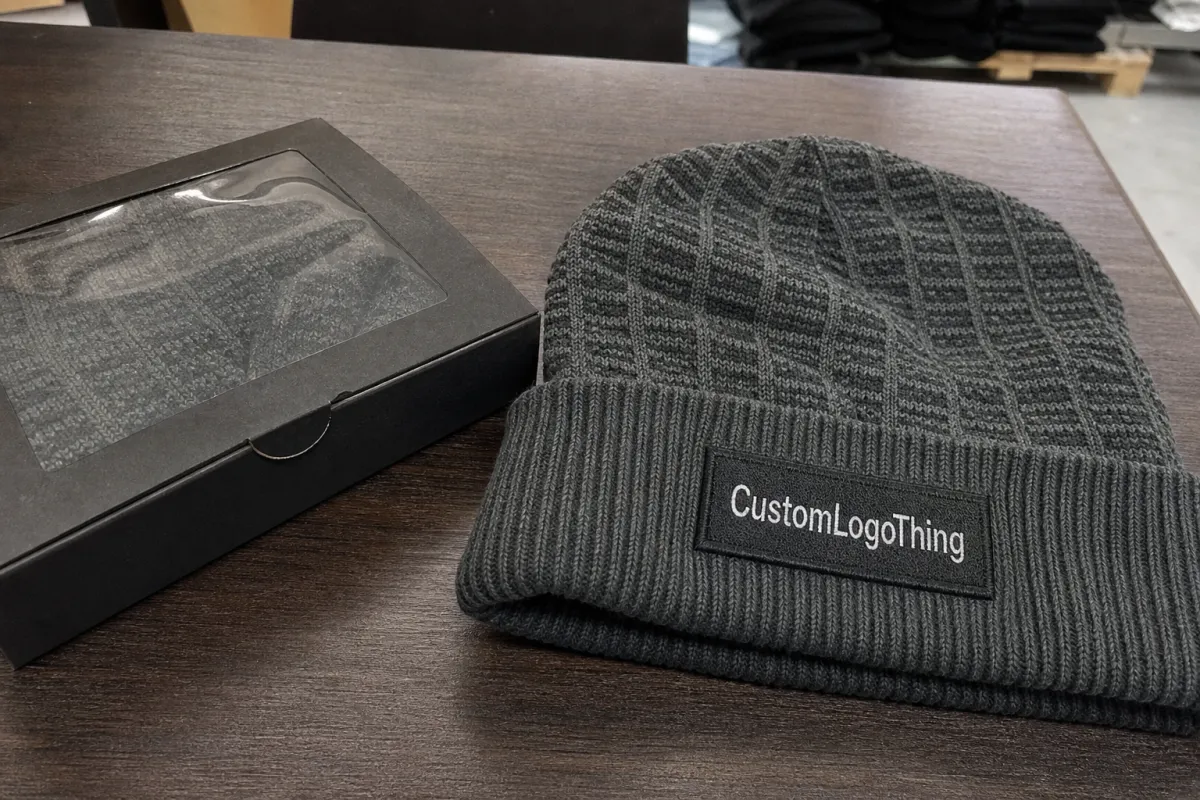
Hotel Jacquard Knit Beanies Reorder Plan for Reliable Restocks A good hotel Jacquard Knit Beanies reorder plan is less about buying hats again and more about preserving the exact version that already passed approval. That sounds simple until a second run lands with a softer cuff, a tighter crown, or a logo that sits a few millimeters off-center. Those differences can be invisible in a product photo and obvious on a front-desk shelf.
Hotels need repeatability. Not drama, not creative interpretation, not a supplier “improving” the original. A beanie may be a small item in the budget, but it can still carry guest-facing branding, staff presentation, and seasonal retail revenue. Once those uses overlap, the reorder has to be treated like a controlled production decision, not a casual restock.
The practical goal is straightforward: keep the same hand feel, knit density, fold width, label placement, and packing method across every reorder. That reduces approval loops, prevents stock mismatches between properties, and keeps the product from drifting into something nobody signed off on. The easier the first run was to approve, the better the documentation probably was. The harder the second run is to reproduce, the more the file was missing.
Why Repeat Orders Fail After the First Batch
The first run gets attention because everyone is looking at artwork, color, and sample shape. The reorder often gets treated like a copy-and-paste job. That assumption causes most of the avoidable problems. A buyer remembers the cuff felt “a little deeper,” the supplier remembers the same style name, and the old measurement sheet turns out to be buried in email or missing entirely. The outcome is a product that is technically close and operationally annoying.
In repeat knitwear, the weak points are familiar: no saved artwork file, no approved sample, no finalized measurement sheet, and no packing instructions. Those gaps matter more than they look from a distance. A beanie with a 0.25-inch shift in cuff depth or a half-inch change in finished length can change how it sits on the head. That is a small measurement on paper and a very different feel in use.
Multi-property hotels feel the problem faster than single-site buyers. One location may burn through stock because the beanies are sold in the gift shop, while another uses only a small quantity for staff and lobby display. If the reorder quantity is built as one flat number, the system looks tidy on a spreadsheet and under-delivers in the real world. Reorder planning only works if it reflects actual usage by property, season, and channel.
There is also a hidden risk in vendor language. “Same style” does not always mean same yarn lot, same gauge, or same finishing process. Two beanies can share a product name and still differ enough to fail visual comparison. Buyers should expect the supplier to define the actual construction, not just the style label. Without that discipline, the order can slowly drift from year to year.
The second run should be easier than the first. If it takes more decoding, the original spec was never complete.
A strong hotel jacquard knit Beanies Reorder Plan starts by protecting what already works. Keep the approved sample, the final artwork, the measurement sheet, and the packing instructions together. That file is the real asset. The beanie itself is just the finished result.
Lock Pattern, Fit, and Branding Before the Next Run
Jacquard knit looks clean only when the pattern, fit, and branding are aligned. Change one and the others can shift with it. A logo that looked centered on the approved sample may sit differently if the knit tension changes. A cuff that looked structured in the first batch may feel softer in the second batch if the yarn blend or gauge changes. Small production shifts create visible branding changes.
That is why the reorder file should preserve the original look and the original fit together. If the first run used a 7-gauge knit with a firm hand, the reorder should not quietly become a looser 5-gauge version just because the style code is the same. The same caution applies to cuff depth and crown shape. Even a modest change can make the beanie feel cheaper or less intentional.
Hotel branding usually works best when it stays restrained. A clean contrast knit, a simple logo repeat, or a single front-facing mark tends to age better than a busy graphic. From a practical buying standpoint, subtle branding is easier to reproduce consistently, especially across multiple production runs. The more complex the visual, the more room there is for variation.
Color should be handled like production data, not memory. If PMS references were used, record them. If the previous run used a close match rather than an exact brand color, say so plainly. Yarn-dyed knitwear is rarely perfect in the same way print can be. Slight variation is normal, but it should be defined before the order is placed, not explained after delivery.
That is especially true for mixed-property programs. A resort may want the beanies to match outerwear. A city hotel may want them to match lobby signage. A staff issue program may care more about durability than visual detail. Those are different priorities, and the reorder should note which one matters most. The best files do not just show what the item looked like; they explain why the approved version stayed approved.
Keep one master sample and one master photo set. Not ten screenshots, not a folder of near-identical images, just one clean reference point. If a new manager asks why the logo sits slightly higher than expected or why the cuff is folded a certain way, that file should answer the question in seconds. The less interpretation needed, the better.
Specs to Freeze Before You Reorder
The most useful reorder documents are the least glamorous ones. They list yarn type, fiber blend, gauge, weight, finished measurements, label method, and packing format. That is the information that prevents surprises. A style name alone does not tell you enough. A proper spec sheet does.
For hotel Jacquard Knit Beanies, the most common materials are 100% acrylic or a 70/30 acrylic-poly blend. A 6- or 7-gauge knit is common for a balanced mix of structure and comfort. Finished length often lands around 8.5 to 9.5 inches, with cuff depth around 2.25 to 3 inches depending on the approved sample. Those ranges are not decorative. They are the difference between a repeatable order and a guess.
It helps to lock the acceptable tolerance ranges too. For repeat knitwear, a practical tolerance might be within 0.25 inch on width and 0.5 inch on length, depending on the knit structure and finishing method. That is not a free pass for sloppy production. It is a realistic guardrail that recognizes knit goods behave differently from cut-and-sew products. Buyers who expect absolute rigidity from knitwear usually end up disappointed.
Any finish change should be called out before quotation. Woven labels, woven patches, printed hang tags, branded polybags, size stickers, anti-pill yarn, or brushed interiors all affect cost and lead time. If the beanie was previously packed as a simple folded retail unit, a switch to individually bagged cartons may add both labor and freight weight. The product may look the same on a desk, but the handling cost is not the same.
For hotels distributing stock across several properties, the packing spec matters as much as the product spec. Clear carton labels, property breakdowns, and size sorting save time on receiving docks. A warehouse team should not need to open every box to figure out what arrived. Small operational details tend to separate a useful reorder from an irritating one.
If transit protection matters, compare the packing method to industry testing standards used for shipping apparel and soft goods. Resources from ISTA are useful for thinking about drop, vibration, and carton durability. If paper-based packaging is part of the story, FSC certification can help support the sourcing claim. Neither of those replaces product quality. They simply keep the outer package from becoming the weak link.
One more detail often gets overlooked: the artwork file should match the actual knit method. A design that was approved as jacquard should not quietly turn into embroidery or a stitched patch unless that change was signed off. Different methods change texture, weight, and visibility. A good reorder file records not only what the logo is, but how it was built.
Pricing, MOQ, and Unit Cost for Repeat Runs
Repeat-run pricing depends on quantity, yarn availability, number of knit colors, packaging, and whether the supplier can reuse the original setup. If the old order already established the artwork and measurement baseline, the quote should move faster than a fresh development project. If the new order adds a woven patch, special labeling, or retail-ready packing, the price will rise. That is normal. What matters is whether the increase is visible or buried.
MOQ varies by factory and complexity. A simple solid-color beanie with a small jacquard mark may have a lower threshold than a multi-color design with custom packaging. That said, repeat orders do not eliminate setup cost. They only reduce the amount of rework. If a factory has to reserve yarn or reset a knit machine for a branded pattern, minimums can still be higher than a buyer would like.
| Volume band | Typical unit cost | Setup / sampling | Best fit |
|---|---|---|---|
| 300-499 pieces | $5.10-$7.40 | $45-$120 setup; sample often billed separately | Small property refresh or trial placement |
| 500-999 pieces | $3.80-$5.90 | Setup sometimes reduced on approved reorder | Multi-property replenishment |
| 1,000-2,499 pieces | $2.90-$4.30 | Lower per-unit setup impact; faster repeat quoting | Seasonal stock builds and guest retail |
Those are planning ranges, not promises. Yarn choice, knit complexity, and packing style move the final number. Even freight can shift the economics. A quote that looks attractive on the unit line may stop being attractive once labeling, repacking, and shipping are added. Hotels should compare landed cost, not just headline price.
Custom packaging typically adds somewhere around $0.10 to $0.45 per piece, depending on the format. Heavier retail-style presentation can push that higher. The same is true for special inserts or custom cartons. For staff inventory, a simple and durable pack format usually makes more sense than a decorative one. Extra presentation helps only if it supports the use case.
Ask for pricing to be split into unit cost, setup, packaging, and freight. That breakdown makes supplier comparison more honest. It also exposes a quote that is cheap in one line and padded in another. A supplier with a clean quote is easier to evaluate and easier to manage on the next reorder. Hidden complexity rarely stays hidden for long.
Timeline and Lead Time for a Clean Reorder
The reorder workflow should be boring in the best sense. Confirm the old spec. Verify the artwork. Approve the sample or proof. Release production. Ship. If any of those steps require detective work, the lead time grows. Most delays come from missing information, not manufacturing drama.
A realistic repeat-production timeline for a straightforward order is often 12 to 18 business days after approval. More time is needed if the yarn is special, quantity is low, or packaging is custom. Color matching from scratch adds more time. So does any last-minute change to labels, measurements, or pack-out. The fastest orders are the ones that already know what they are.
Hotels should work backward from occupancy peaks, holiday traffic, and event schedules. A reorder placed too late has a way of becoming a rush order, and rush orders are expensive for reasons nobody enjoys explaining later. A simple rule helps: place the reorder while inventory is still in the last third, not the last box. That leaves room for proofing, correction, shipping, and the occasional delay.
Lead time also depends on how well the previous order was documented. If the supplier still has the approved sample, final photos, and measurement sheet, the process moves faster. If they do not, every small detail becomes a question. A missing cuff measurement can slow the whole order more than a buyer expects. Knitwear is flexible in fabric and stubborn in logistics.
For organizations with multiple properties, usage should drive the reorder calendar. A central inventory team may want a safety buffer while individual properties want smaller, more frequent replenishment. Both approaches can work if the thresholds are defined in advance. What does not work is waiting until the shelves are empty and then asking production to catch up.
Quality Control That Keeps Every Property Consistent
A supplier that handles repeat orders well should be able to pull the previous sample, the approved artwork, and the measurement record without delay. That is not a bonus feature. It is the minimum expected for recurring branded goods. If the vendor cannot locate the original baseline, the buyer ends up paying for avoidable confusion.
The most useful pre-shipment checks are simple: stitch accuracy, color consistency, label placement, dimensions, and carton count. For hotel inventory, carton marking deserves attention too. If items are split by property, size, or department, the boxes should say so clearly. Receiving teams move faster when the cartons explain themselves.
Measurement checks should focus on the points that change guest perception. Crown depth, cuff depth, finished length, and width matter more than an abstract “style match.” A 0.25-inch shift may sound trivial until the beanie lands in a lobby display and one size looks noticeably longer than the rest. Small variations become obvious in a row of identical products.
Color checks need a practical standard. Light and dark yarns behave differently in knit construction, and a lab dip that looks perfect under one light source may not hold up under another. That is why buyer reference samples matter. A well-documented reorder file should show the approved color, the knit method, and the lighting conditions used for approval if the color is sensitive.
Good documentation cuts down on arguments later. Keep the final measurement sheet, color callouts, pack instructions, and approved images together. If the reorder is happening six months later, nobody should be guessing whether the logo was centered higher, whether the cuff was folded twice, or whether the label was stitched on the left seam. Guessing is expensive. Records are not.
If your team already uses a structured purchasing process for other inventory categories, use the same standard here. A beanie may be small, but the reorder logic is the same: lock the spec, confirm the sample, verify the counts, and keep the file complete. That is the real backbone of a dependable hotel jacquard Knit Beanies Reorder Plan.
How to Put the Reorder Plan Into Motion
Start with the records that already exist. Pull the original PO, approved photos, final sample, and any measurement notes. If the physical sample is still available, even better. The sample ends most arguments quickly because it shows the actual fold, knit density, and logo scale instead of asking anyone to remember them.
Next, confirm quantity by property or channel. A hotel group with a lobby shop, staff issue line, and seasonal retail program should not treat all beanie demand as one pool unless usage is truly even. Add a buffer that reflects real movement, not optimism. For many properties, 10% to 15% is enough for a winter accessory. A retail-heavy resort may need more.
Then ask for a quote that separates unit price, setup, packaging, and freight. If the supplier sends one bundled number, ask for the breakdown before comparing options. Clean pricing makes approval easier internally and reduces the risk of discovering hidden costs after the order is already moving. A vague quote is hard to defend and harder to repeat.
The order brief should also settle the details that often get left until too late: yarn blend, gauge, size tolerance, logo method, label position, carton labeling, and delivery split. Those are not side notes. They define the repeat. Leaving them open means the next person in the chain has to make decisions that should already be fixed.
Viewed plainly, a good reorder system is a record-keeping system that happens to produce beanies. The product matters, of course. But the consistency comes from the file. When the file is clean, the production run is easier, the receiving team has fewer questions, and the property gets the same branded item it approved the first time.
That is the real value of a strong hotel jacquard knit beanies reorder plan: not lower effort on paper, but fewer surprises in the building. In hospitality, that difference matters more than a flashy pitch ever will.
FAQ
How early should I place a hotel jacquard knit beanies reorder?
Place it before stock falls into the last third of inventory. That gives room for proofing, production, and shipping without forcing a rush order. If the beanies are distributed across multiple properties, keep enough buffer for internal transfers and unexpected demand spikes.
What usually changes the price on a repeat beanie order?
Quantity, yarn type, number of knit colors, label method, and packaging changes are the main drivers. Fresh color matching or a revised pack format can add setup time even if the beanie looks close to the previous run.
Can a supplier match the same beanie if the old vendor is gone?
Usually yes, if you have a physical sample, clear photos, or the original spec sheet. Expect small variation because yarn lots and factory processes differ. For guest-facing or branded use, approve a reference sample before full production.
What MOQ should I expect for a hotel beanie reorder?
MOQ depends on factory capacity, knit complexity, and whether the spec is already approved. Repeat orders are generally easier to quote than first-time development, but small quantities can still carry higher per-piece costs because setup does not disappear.
What do I need ready to speed up the reorder quote?
Send the last PO, approved artwork, color references, finished measurements, and any packaging notes. If possible, include the physical sample and a photo of the beanie in its final approved fold. That usually cuts down the back-and-forth quickly.