Jewelry Cuffed Knit Beanies Sample Guide for Buyers
A jewelry Cuffed Knit Beanies material sample guide should answer a simple question before anything gets approved: does the beanie still hold up once the cuff is stretched, the knit relaxes, and the piece is handled the way a customer would handle it? A product can look polished in a flat lay and still feel underbuilt in the hand. That gap matters. Knit structure, yarn finish, rib recovery, and decoration placement all change the final impression long before bulk production begins.
For jewelry buyers, the beanie is doing more than keeping someone warm. It sits close to the face, which means the cuff, logo, and trim need to look deliberate. A sample reveals whether the fabric feels premium or flimsy, but it also shows whether a patch, embroidery, or woven label sits cleanly on the cuff without warping the knit. That is the real value of the sample stage: it turns a design concept into something measurable.
The best buyers use the sample to reduce guesswork. They are not hunting for perfection in one round. They are checking whether the material, construction, and finish are close enough to justify a bulk order, and whether the likely corrections are small or expensive. That difference can save both time and margin.
What the material sample reveals
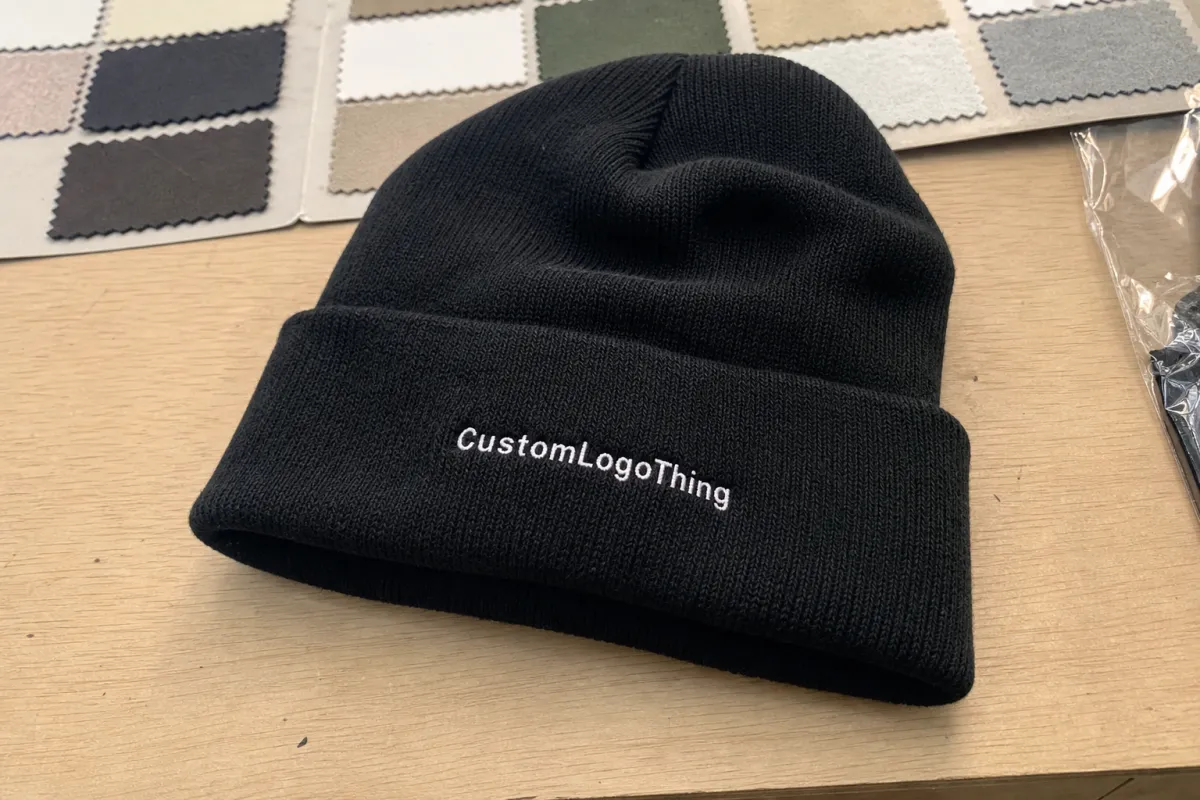
A sample is more than a color check. It shows how the yarn behaves under tension, how dense the stitch field looks, and whether the cuff rebounds after being folded and worn. A catalog image cannot tell you that. In hand, you can feel whether the beanie is airy, compact, scratchy, soft, or heavy. Those sensations are not cosmetic; they affect warmth, drape, and the way the beanie keeps its silhouette after handling.
The sample is also the first honest quality filter. If the knit pills too quickly under a light rub, if the rib recovery feels weak, or if the crown relaxes after short wear, those are early warnings. The same goes for cuff height. A 7 cm cuff feels neat and compact on many heads. A 10 cm cuff changes proportion fast, especially if the branding sits high on the fold. Small dimensions carry more weight than buyers expect.
One detail people miss: decoration behaves differently depending on the knit underneath. Embroidery can sink into a soft rib. A woven label may curl at the edges if the base fabric stretches too much. A patch can look heavy if the knit is too loose or the backing is too stiff. A proper sample should show whether the decoration method belongs on that fabric, not just whether it can be attached.
"If the cuff does not recover cleanly, the whole piece feels cheaper, even before anyone reads the logo."
For premium jewelry packaging, that matters. The beanie sits near polished product photography, gift wrap, and display fixtures, so any imbalance in the cuff or logo placement becomes more obvious. The sample should confirm that the material, construction, and presentation all match the brand standard before bulk production starts.
How the sample request process works
A good sample request starts with specific input. A loose mood board is not enough. Share the target audience, size range, cuff preference, decoration method, color direction, and any reference photos or existing trim standards. If the beanie needs to feel soft rather than chunky, say that. If the cuff must sit lower on the forehead, write that down. Clear input shortens the path to a usable sample.
The most useful factory response mirrors that clarity. You want yarn options, knit gauge, cuff construction notes, decoration placement ideas, and any limitations tied to the chosen material. A tighter gauge can make fine embroidery read better. A looser knit may need a larger logo or a different label style to avoid distortion. A supplier that explains those tradeoffs is helping prevent revisions later.
A tech pack or spec sheet does most of the heavy lifting. It gives the sample something measurable to be judged against: finished width, crown depth, cuff height, yarn content, label size, stitch direction, and acceptable tolerance. Without that, feedback slides into vague language like "make it nicer," which is not actionable for a production team.
The approval loop should stay disciplined: review, annotate, revise, and recheck until the sample matches the approved standard closely enough to release for production. One revision is common. Two is normal if the decoration and knit structure need to be balanced. What causes trouble is an approval cycle where each round changes a different variable and nobody can trace which adjustment solved the problem.
Cost, pricing, and MOQ factors
Sample pricing usually comes from several pieces: development labor, yarn sourcing, knit setup, trim preparation, courier charges, and any revision fee if the first version misses the mark. A sample made with standard yarn and a simple woven label is usually faster and cheaper than one that needs specialty yarn, multiple colors, or a dense embroidered badge. That sounds basic, but it is the fastest way to compare quotes without getting distracted by a low headline number.
MOQ changes the economics as well. A smaller order spreads setup costs across fewer pieces, so the unit price tends to rise. Larger runs usually reduce the per-unit cost, although the break point depends on yarn type, decoration count, cuff complexity, and the number of knit color changes. A buyer requesting 120 pieces and another requesting 1,000 pieces are not buying the same production profile, even if the beanies look almost identical in photos.
| Sample option | Typical sample cost | What it helps you verify | Best use case |
|---|---|---|---|
| Basic development sample | $45-$90 | Yarn feel, cuff structure, knit density, first logo placement | Early concept checks |
| Revised approval sample | $30-$70 | Corrections to fit, branding size, or cuff behavior | Finalizing details before PO release |
| Pre-production reference sample | $20-$50 | Final trim, color, and packaging confirmation | Locking the bulk standard |
Decoration method can change pricing quickly. Embroidery adds needle time and backing considerations. Patches add material and attachment steps. Woven labels are usually simpler, but label shape, fold direction, and edge finish still matter. Custom yarn blends, reflective thread, brushed yarn, or multiple color changes in the cuff can raise both cost and lead time. The smartest quote is not always the cheapest one; it is the one that says exactly what is included.
If packaging matters, ask for it in the quote. Some teams want the sample shipped in a simple corrugated cardboard mailer with kraft paper wrap and a plain label. Others prefer FSC certified cartons, recycled materials, or packaging with post-consumer waste content. Those choices usually add only a modest amount, but they should be itemized so the comparison is fair. For teams that need transit testing references, ISTA publishes useful packaging test methods at ISTA, and for paper sourcing standards, FSC is still the easiest benchmark to verify.
Biodegradable packaging can support a presentation strategy, but it should not mask a weak sample. The beanie still has to earn approval on fit, handfeel, and branding first. Packaging is the last layer, not the fix for a poor handfeel or a distorted cuff.
Process and lead time before bulk production
The timeline usually begins with yarn approval, then moves into knitting, washing or blocking if needed, trim attachment, inspection, packing, and shipment of the sample. A simple sample can move quickly. Specialty yarn sourcing, custom cuff construction, or complex decoration usually slows the first round. If the beanie needs a very specific handfeel, the factory may test more than one yarn count before settling on the closest match.
Lead time shifts again when the first sample needs revisions. That is normal. What matters is knowing where the delay comes from. A color correction is often quick. A cuff-height change or a logo reposition can require a fresh knit run. If the yarn is already booked and the sample changes after that, a few extra business days is a reasonable expectation.
Good approval gates slow things down in the right places. Color confirmation keeps the beanie from drifting away from the brand palette. Measurement sign-off locks the dimensions. Embellishment placement approval prevents logo issues from becoming expensive production mistakes. Final pre-production confirmation gives both sides one last chance to catch a missing detail before dozens or hundreds of pieces are made.
Seasonality matters too. Beanie programs stack up fast once colder-weather orders start landing across different buyers, and that congestion affects knitting slots, trim availability, and shipping windows. If your launch depends on a seasonal drop, build in a cushion instead of assuming the first sample will pass without revision.
A practical benchmark: a first sample often takes about 7-14 business days, and revisions can add another 3-7 business days depending on yarn availability and the size of the change. Specialty trim, blocking, or custom packaging can push that further. Planning for that range is safer than betting on the fastest possible turnaround.
For a clean paper trail, keep the sample in a simple, traceable pack-out: a marked beanie, spec sheet, trim card, and short revision note in one carton. That kind of discipline makes the next round much easier to judge. It also helps when different people on the buying team review the same item at different times.
Step-by-step jewelry cuffed knit beanies material sample guide for fit, handfeel, and branding
The easiest way to review a sample is to break the decision into repeatable checks. That keeps the result from being driven by one strong impression, like a nice color or a clean photo angle, while a more important issue gets overlooked. A jewelry Cuffed Knit Beanies Material Sample guide works best when it forces the buyer to inspect the same details every time.
- Check yarn content and knit density. Feel the fabric first, then look at the stitch face under light. The beanie should have enough body to hold shape, but not so much stiffness that it feels scratchy or heavy.
- Test the cuff in motion. Stretch it, fold it, and wear it for a few minutes. The cuff should rebound cleanly and stay comfortable around the forehead and ears without digging in or loosening too fast.
- Inspect the branding area in real light. Turn the beanie under daylight and indoor light. Embroidery, labels, and patches should stay aligned and readable, with no odd pull lines or distortion from the knit below.
- Record measurements and take photos. Note finished width, crown depth, cuff height, and logo placement. Written measurements make future reorders easier to match and reduce arguments about whether a piece is "close enough."
- Wash or steam the sample if your program allows it. That quick check can reveal whether the material relaxes, pills, or loses structure after handling. For knit goods, post-treatment behavior can be more revealing than first impression.
One detail buyers often overlook is the relationship between the cuff and the decoration. A dense knit can make a small logo feel crowded, while a softer rib can make the same logo look too large. If the brand mark sits too close to the fold line, it may disappear when the cuff is worn. That is the kind of issue a good sample exposes before the order is locked.
Keep notes in a simple pass-or-revise format. For example: fit, pass; handfeel, revise to reduce scratchiness; cuff recovery, pass; branding, revise placement by 5 mm upward. Clear notes like that are easier to act on than a paragraph of general impressions. They also make the next sample easier to judge against the last one.
If the beanie includes a wool blend, check for skin feel after a short wear test. If it uses recycled polyester or acrylic, check whether the yarn surface has an oily or flat appearance under direct light. If the goal is a premium retail piece, those small visual and tactile cues matter more than a catalog description.
Common sample mistakes that lead to rework
Approving under weak lighting is one of the easiest mistakes to make. On a desk with poor light, a beanie may look smoother or flatter than it really is, and the color can shift enough to hide a problem. Try it on, step back, and look at it under natural light if possible. The same sample can feel very different on the body than it does in the hand.
Another common miss is ignoring what happens after stretching. A cuff that seems fine in a single snapshot may relax too much after repeated wear, especially if the rib structure is loose. Once that happens, the hat starts to look tired even if the yarn itself is decent. That is why cuff recovery deserves as much attention as color or logo size.
Do not assume one sample covers every colorway or size. Dye lots can shift, and some yarns show stitch texture differently in lighter or darker shades. Trim placement can move slightly when the garment size changes. A buyer who approves one version and expects every other version to behave exactly the same is setting up a rough production cycle.
Skipping tolerance notes causes trouble later. If the factory never got a written range for cuff height, logo position, or acceptable measurement variance, it cannot reliably match the invisible standard in your head. A production team can hit a specification; it cannot read a silent preference.
"The sample was close, but not close enough" is usually a sign that the brief was too vague, not that the factory guessed badly.
Do not rush the sample because the launch date is close. A quick approval that misses a logo issue, a handfeel problem, or a trim mismatch can cost more time than a measured revision would have taken in the first place. Tight calendars expose weak sampling discipline fast.
Expert tips and next steps after the sample arrives
Build a simple review checklist and use it every time. Five checks are usually enough: fit, handfeel, cuff recovery, decoration placement, and overall visual balance. That one page keeps the review objective and makes it easier to compare a revised sample against the first version. It also helps anyone else on the team understand why a sample passed or failed.
Keep a measured reference set with annotated photos, the approved sample itself, and the final trim package. That may sound basic, but it is what keeps repeat orders consistent. If someone new handles the reorder six months later, the reference file should answer the common questions without a long chain of emails.
When feedback goes back to the factory, send one consolidated revision brief. Scattered comments create mixed signals, and mixed signals lead to mixed results. A clean note might say: increase cuff recovery, move the logo up 5 mm, reduce stitch density around the patch, and keep the color as approved. That is direct, measurable, and easy to execute.
After the sample stage, confirm the final spec, lock the approved trim package, verify the production timeline, and archive the jewelry Cuffed Knit Beanies material sample guide with the order file. That small bit of discipline protects reorders, keeps branding consistent, and makes future bulk runs less stressful.
The strongest decision is not the cheapest sample or the fastest answer. It is the version that proves the material, cuff, branding, and presentation work together in the real hand. That is what turns a sample from a curiosity into a production decision.
What should I check in a jewelry cuffed knit beanies material sample?
Check yarn feel, stitch density, cuff recovery, and whether the beanie holds its shape after stretching. Inspect branding placement, trim quality, and overall finish in real light, not only in photos. Compare the sample against your spec sheet so every key detail has a clear pass or revise decision.
How many samples should I review before approving custom knit beanies?
At minimum, review the first development sample and one revised sample if any major detail is off. Ask for separate checks if your design uses different colors, logo methods, or cuff constructions. Do not move to bulk until the approved sample matches both the look and the performance you expect.
What affects sample and bulk pricing for cuffed knit beanies?
Yarn type, knit complexity, trim choices, decoration method, and revision count all affect price. MOQ matters because setup costs are spread across the order, which changes the unit cost at different volumes. Confirm whether sample fees, shipping, and revision charges are included before you compare quotes.
How long does the sample and approval process usually take?
Timing depends on yarn availability, decoration method, and how quickly feedback is returned. A first sample can move quickly, but revisions, blocking, or special trim requests can extend lead time. Build in extra time before seasonal launches so approvals are not rushed.
What if the sample feels right but the branding is off?
Approve the material only if needed, then request a revision focused on placement, size, or stitch density around the logo area. Provide marked-up photos and exact measurements so the next sample corrects the right issue. Do not release bulk production until the branding location and finish match the approved standard, because that is the point of the sample stage.