Why cuffed knit beanies outperform disposable wedding favors
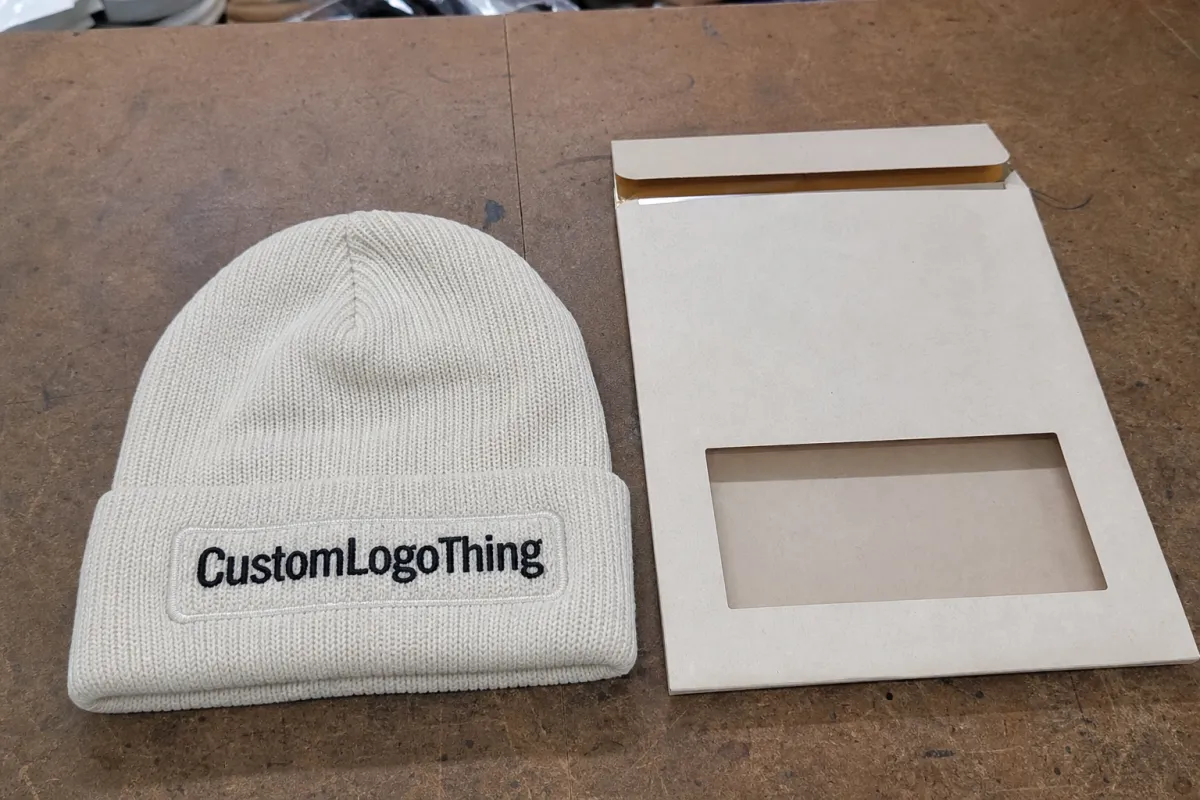
Cuffed Knit Beanies work because guests actually keep them. That changes the buying decision from short-lived novelty to long-term value. A favor that gets used after the event does more than sit on a reception table, which is why buyers often treat this category as a better return on spend than disposable items.
For planners, the format is practical. Beanies stack cleanly, travel well, and do not break, leak, or require assembly. For couples, they photograph well and feel more intentional than a throwaway favor. For venues, they are easier to store and distribute. Those basic advantages matter before design even enters the picture.
The shape also makes the decoration easier to manage. One size usually covers a wide audience, and the cuff gives a defined area for logos or initials. That matters on knit, where small decoration errors are more visible than they would be on a flat product. A stable cuff creates a cleaner result and reduces approval risk.
The real question is not whether the beanie works as a favor. It does. The real question is what drives the unit cost, how much quantity lowers it, and which specifications change the final quote. That is the useful frame for evaluating this product category.
Fit, cuff height, and knit weight buyers should specify
A useful quote starts with a tighter brief than “custom beanie.” Knit structure, cuff depth, yarn content, and color count all affect production. Small changes in those inputs can change both the look and the price, so the buyer should define them before asking for numbers.
Fit is usually straightforward. Most Cuffed Knit Beanies are adult one-size-fits-most, which suits mixed guest lists and bridal party orders. Even within that standard, the knit feel can vary. A lighter rib knit feels softer and more casual, while a heavier winter-weight version has more body and reads as a more substantial gift. For cold-weather weddings or outdoor ceremonies, the heavier option is often the better choice.
Cuff height deserves attention because it affects decoration space. A taller cuff gives embroidery or a patch more room and can make text easier to read. A shorter cuff looks cleaner and more minimal, but it limits placement and can force artwork to shrink. If the design includes small type or multiple elements, a larger cuff is safer.
Yarn content and construction also matter. Acrylic is common because it is stable, affordable, and easy to produce in bulk. Blends can soften the hand feel, but they do not automatically improve decoration results. A tighter knit usually keeps its shape better and gives the finished beanie a cleaner presentation. If the goal is the lowest practical cost per piece, avoid unnecessary material changes.
Before requesting pricing, buyers should lock down a few basics:
- Adult one-size fit or a special size range
- Approximate cuff height and body depth
- Light, medium, or winter-weight knit
- Color count for the full order
- Whether names, initials, or separate artwork are needed
Mixed orders can still be efficient. A bridal party may need a different emblem or thread color while guests receive a standard version. That increases coordination, but it can make the favor feel more considered. The important part is to describe the split clearly so the quote reflects the real production plan.
Decoration methods that survive stretch, wear, and washing
Decoration is where the order can either look refined or feel improvised. Knit is not a flat surface. It stretches, flexes, and carries texture that can distort fine detail, so the decoration method has to work with the material instead of fighting it. For cuffed beanies, the common options are embroidery, woven patches, faux leather patches, and heat-applied labels.
Embroidery is the most familiar option and usually the safest for simple logos, initials, or short text. It looks clean on the cuff because the fold gives the stitches a steadier base. The main limitation is detail. Thin lettering and intricate graphics can get crowded quickly on rib knit, especially when the artwork is scaled down too far.
Woven patches work well when the design needs sharper edges or finer line work. They handle detail better than direct embroidery and can keep a cleaner outline. Faux leather patches lean more premium and suit rustic, lodge, or winter wedding themes. They are less flexible on color, but they create a polished look that can elevate a simple beanie. Heat-applied labels can suit short runs or lower-budget orders, though they are not the strongest choice for repeated wear and washing.
Durability should guide the decision. If the beanie is meant to be kept and worn again, sewn decoration generally lasts better than a light heat transfer. Stretch and friction will expose weak applications fast, especially on textured knit. For the most reliable result, choose the method that matches how the item will actually be used.
Decoration also affects the quote. A complicated logo can increase digitizing work, raise stitch counts, or require a larger patch. That adds labor and may trigger separate setup charges. Buyers should ask for those items to be listed clearly instead of buried inside a vague per-piece number.
Before production starts, ask for:
- Thread colors matched to PMS references where possible
- Exact placement on the cuff, not only a general front location
- Stitch count or patch size if the artwork is complex
- Vector artwork files so the design is not rebuilt from scratch
The most common mistake is artwork that looks good on screen but fails on knit. Tiny type, thin lines, and low-contrast details often disappear. Bold shapes, clear spacing, and simple lettering usually produce the cleanest result.
Wedding cuffed knit beanies unit cost: pricing and MOQ breakdown
The most useful part of a wedding cuffed knit beanies Unit Cost Review is understanding what actually drives the price. There is no single number that stays accurate across every order. Quantity, knit quality, decoration method, and custom details all affect the final quote.
For a stock acrylic cuffed beanie with simple embroidery, bulk pricing often lands around $3.20-$6.50 per piece before freight. Smaller orders usually sit near the higher end because setup costs are spread across fewer units. If the order uses a woven patch or faux leather patch, the cost per piece can rise by another dollar or two depending on patch size, finish, and minimums. Specialty yarns, custom labels, and multiple decoration locations push the number up faster.
The main cost buckets are easy to separate:
- Blank beanie quality - yarn weight, knit density, and fiber content
- Decoration method - embroidery, patch, label, or a combination
- Setup charges - digitizing, plate creation, or patch setup
- Packaging - polybags, tags, inserts, or gift boxes
- Freight - carton count, destination, and ship method
MOQ affects the math because fixed costs do not disappear. A 100-piece run may be perfectly workable, but the per-piece price will usually improve at 500 pieces if the product stays the same. Many custom orders begin around 100 to 250 pieces. Some suppliers will go lower for stock blanks and simple decoration, but the price usually climbs when the order gets small.
Quotes only make sense when they are compared on the same basis. One supplier may include freight and basic packaging while another leaves those out. The lower number can look better until the missing items appear. For that reason, compare landed cost, not only the factory number. If sample cost, packaging, and shipping assumptions are not stated clearly, the quote is incomplete.
| Decoration option | Typical unit cost range | Best for | Tradeoff |
|---|---|---|---|
| 1-color embroidery | $3.20-$6.50 | Simple logos, classic wedding favors | Less friendly to tiny text |
| Woven patch | $4.00-$7.50 | Detailed artwork, cleaner edges | Higher setup and patch minimums |
| Faux leather patch | $4.25-$8.00 | Premium look, rustic or lodge themes | Limited color use |
| Heat-applied label | $3.00-$5.75 | Short runs, budget-sensitive orders | Less durable than sewn options |
If a quote looks unusually low, ask what is missing. A slightly higher number with clear packaging, sample, and shipping terms is usually safer than a mystery price that changes after approval.
Wedding orders are especially sensitive to hidden costs because the deadline is fixed. A supplier can weaken a low unit price by adding setup later or underestimating freight. Ask for the full landed number, then check whether the quote includes proofing, sample handling, and carton protection.
Production steps, turnaround, and shipping milestones
The production flow is usually straightforward: quote, artwork review, digital proof, sample approval, production, quality check, packing, and shipment. In practice, the schedule depends on how quickly proofing gets approved. That step often slows things down when multiple people need to sign off on placement, color, or decoration style.
For a stock beanie with simple embroidery, production often takes 2 to 4 weeks after proof approval. Patch work can take longer if the patch must be created separately or if a physical sample is needed before the full run. Shipping time sits on top of production time. Domestic transit may take only a few days, while cross-border freight can stretch longer depending on customs and carrier conditions.
The delays usually come from the same places:
- Artwork changes after proofing starts
- Color matching requests made too late
- Holiday backlog at the factory or carrier
- Waiting too long to choose the final ship method
- Revisions to names, initials, or placement after sample review
The useful lesson is simple: the beanie order is part of the event timeline, not a separate purchase. Invitations, venue setup, gift bags, and delivery windows all depend on the same schedule. A small delay in proof approval can become a real problem once cartons are already queued for production.
Packaging also deserves a check. If the cartons are traveling a long distance or being reshipped to a venue, ask about transit protection and carton testing. The International Safe Transit Association has useful testing context at ista.org. That matters when the order has to arrive flat, clean, and display-ready instead of bent or crushed.
For buyers who want a cleaner presentation, recycled or certified paper components can be a good fit. FSC-certified materials are one option, and more suppliers can source them than buyers realize. Review the standard at fsc.org. It is not required for every wedding favor, but it can improve presentation without making the order feel overdesigned.
Approve quickly, keep the artwork stable, and treat shipping as part of production. That keeps the delivery window intact and reduces the chance of a last-minute scramble.
What makes a dependable custom beanie supplier worth the extra cents
A lower quote does not always mean a better buy. For a wedding order, the supplier is responsible for proof accuracy, decoration consistency, packaging quality, and deadline control. If any one of those slips, the savings disappear quickly.
Consistent knit quality is the first thing to check. The beanies in a carton should feel like they came from the same run. Then look at stitching. Loose thread ends, uneven cuff folds, and crooked placement are small defects only on paper. In practice, they are the details guests notice when they put the beanie on.
Communication is the next filter. A reliable supplier can answer direct questions about yarn content, logo size, proof revisions, and packaging without turning the reply into a sales pitch. If they cannot explain a simple adjustment clearly, the order process is likely to get messy when the deadline gets close.
Good suppliers also understand the proof process. They send a digital proof that is close to the final output and confirm changes before production begins. Better ones can point out placement limits, simplify a logo before it causes problems, and tell you when an artwork file needs cleanup. That is what keeps a batch from being wasted.
A few buyer checks are worth repeating:
- Sample photos of similar knit work
- Clear proof revisions before production
- Transparent pricing with setup charges listed
- Realistic lead times, not optimistic promises
- Clear explanation of MOQ and re-order pricing
If one supplier is 15 percent higher but includes cleaner proofing, more reliable packaging, and better quality control, that may be the cheaper choice in the end. Replacements after a wedding cost money, time, and credibility. No one remembers the low quote if the beanies arrive late or the logo sits off-center.
A dependable supplier also asks useful questions before quoting. Quantity, color, deadline, file type, decoration method, and ship-to ZIP are not busywork. They are the variables that determine the actual unit cost. Better questions usually lead to better pricing because the supplier is pricing the real order, not a vague idea of one.
Next steps for a cleaner bulk order and accurate quote
The practical takeaway is simple. A wedding Cuffed Knit Beanies Unit Cost review should focus on matching the product to the event, then pricing the order that will actually be produced. That means the right knit weight, the right decoration method, the right MOQ, and a shipping plan that does not slip late in the process.
To request a clean quote, send the basics in one message:
- Quantity needed
- Beanie color or color mix
- Logo file and decoration location
- Preferred decoration method
- Delivery deadline
- Ship-to ZIP or destination country
If budget pressure is real, ask for two versions. One should use the preferred decoration method. The second should show a lower-cost alternative, such as simpler embroidery or a different patch style. That comparison makes the price movement easier to understand and shows whether the savings justify the visual tradeoff.
For planners and gifting buyers, the cleanest path is practical: get one quote with full landed cost, then ask for one alternate version if the first number is too high. That reduces the back-and-forth that usually wastes time and muddies what the supplier actually meant.
Keep the artwork clean, give the supplier complete information, and leave enough time for proofing and production. Do that, and the order stays controlled. Skip those steps, and even a modest run can turn into a budget headache.
What affects wedding cuffed knit beanies unit cost the most?
Quantity, decoration method, and knit weight usually move the price more than anything else. Rush timing, custom colors, and complex logos can increase the unit cost quickly.
What is the usual MOQ for custom wedding cuffed knit beanies?
Most custom orders start around 100 to 250 pieces, depending on the decoration and color requirements. Lower MOQs are possible with stock blanks, but the per-piece price usually rises.
Which decoration method looks best on cuffed knit beanies for weddings?
Embroidery is the cleanest option for simple logos and classic bridal-party styling. Patches work better when the artwork has finer detail or needs a more polished finish.
How long does production usually take for bulk wedding beanie orders?
Proofing can take a few days, and production often runs about 2 to 4 weeks after approval. Shipping time sits on top of that, and rush orders depend on stock and decoration method.
What should I send to get an accurate quote for wedding cuffed knit beanies?
Send the quantity, color choice, logo file, decoration location, deadline, and shipping ZIP. If you want a real comparison, ask for unit cost, setup fees, sample cost, and total landed cost.


