Jewelry embroidered baseball caps Bulk Order Planning starts with a simple but stubborn fact: the cap has to hold up as a branded accessory, not just survive a giveaway table. Jewelry artwork raises the bar because it tends to rely on shine, symmetry, and small details that can disappear once thread replaces ink. A logo that looks fine on a screen can turn crowded on a crown if the stitch plan is not disciplined from the beginning.
That is why the first question should not be “What is the cheapest hat?” It should be “What version of this design still reads clearly after sewing, wearing, packing, and shipping?” A clean embroidered cap can remain in rotation for months, sometimes longer, which makes the real metric cost per wear rather than unit price alone. That is a very different calculation from buying a low-cost promo item for one afternoon.
For most buyers, the best planning starts with three decisions: who will wear the caps, how polished the final piece needs to feel, and how much simplification the artwork can tolerate. A client gift, staff uniform, and retail-style accessory all ask different things from the factory. Treat them as the same order and the quote may look attractive right up until the sample arrives.
A strong bulk cap order is not the one with the lowest number on the quote sheet. It is the one that arrives on time, fits the audience, and still looks intentional after the first week of use.
Jewelry embroidered baseball caps bulk order planning that holds a premium look
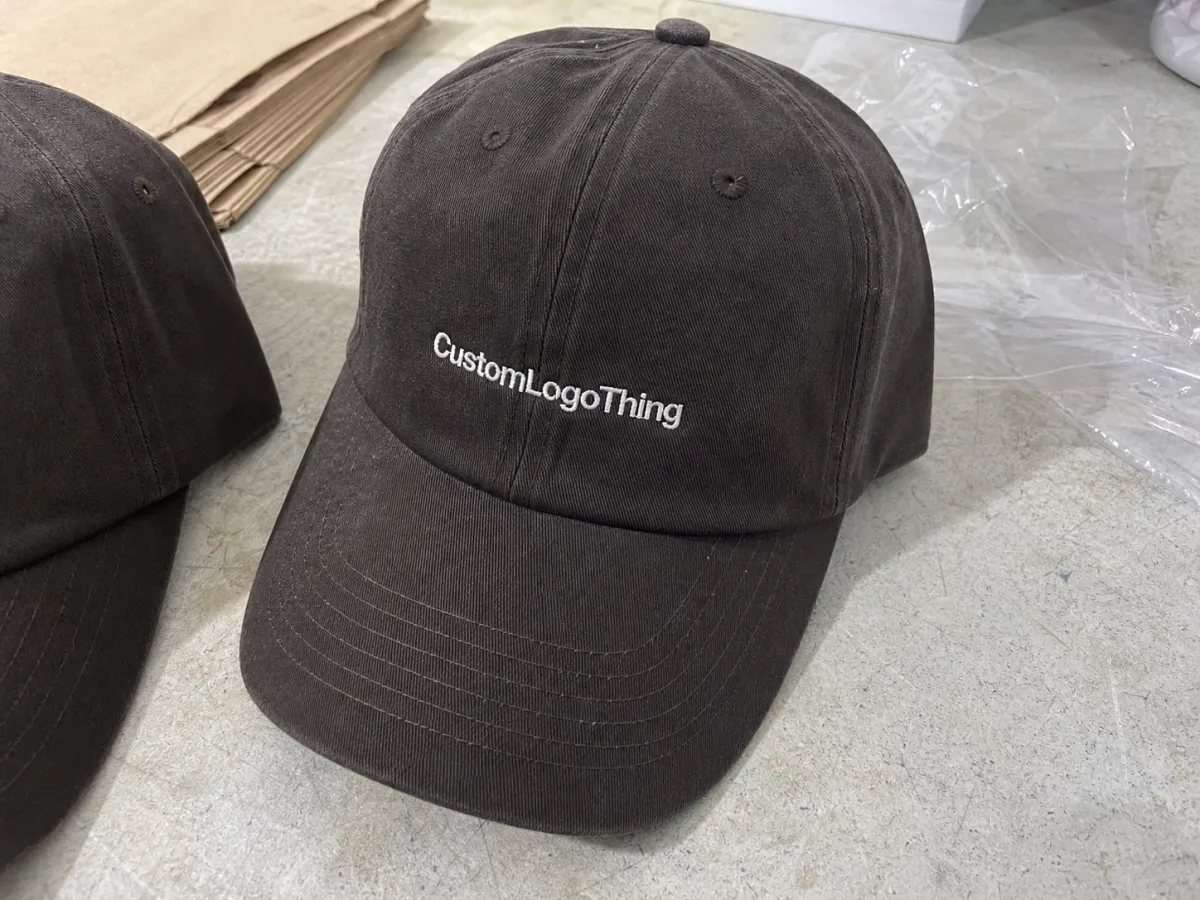
Jewelry motifs are tricky because they usually contain both structure and sparkle. Rings, stones, settings, prongs, chains, and facet lines all depend on contrast. Embroidery can handle that, but not literally. Thread has thickness, direction, and tension, so the design must be built around those limits instead of fighting them. The more delicate the original artwork, the more aggressively it usually needs to be simplified before digitizing.
The comparison that helps most buyers is this: a wordmark can often survive a direct translation into thread, while a jewelry illustration usually needs interpretation. That does not mean the design has to lose character. It means the important parts must be chosen carefully. On a cap, a few strong shapes often look more premium than a crowded cluster of thin lines that barely hold together.
There is also a practical reason to plan this way. A cap with embroidery that is too dense can pucker, feel stiff on the front panel, or lose its profile after wear. A design that is too sparse can look unfinished. The sweet spot sits between those two failures, and finding it early reduces revisions later.
For jewelry embroidered baseball caps Bulk Order Planning, it helps to define the order in operational terms:
- Audience - clients, staff, event guests, or retail buyers
- Use - daily wear, one-time event, gifting, or resale
- Finish level - promo-grade, polished, or retail-adjacent
- Quantity range - exact count or a range with a buffer for replacements
That buffer matters more than many teams expect. If an order needs 300 caps, ordering exactly 300 leaves no room for mis-picks, embroidery rejects, or transit damage. A 5% to 10% cushion is often enough to protect the schedule without distorting the budget. The cost of a small overrun is usually lower than the cost of a second production cycle.
Proofing should reflect how the cap will actually be made, not how the logo looks in a presentation mockup. A screen image can hide density issues, show impossible detail, and flatten the crown shape. A production-minded proof should show stitch direction, thread colors, embroidered dimensions, and placement on the panel. If the supplier cannot explain what changed from the original artwork, that is a warning sign.
For planning purposes, the cap category itself also shapes the order. A classic promotional run, a premium gifting run, and a retail-style order all sit at different points on the cost curve. The last one is not merely “more expensive”; it usually requires cleaner finishing, tighter QC, and more careful control of the embroidery file. Buyers who understand that difference tend to spend less time fighting revisions.
| Order type | Typical cap spec | Usual unit cost range | Main tradeoff |
|---|---|---|---|
| Basic promo run | 6-panel cotton twill, structured crown, one front embroidery hit | $3.20-$5.00 at 1,000+ pcs | Lowest cost, but fewer finishing options and limited detail tolerance |
| Premium gifting run | Brushed cotton or poly-cotton blend, cleaner closure, higher stitch count | $4.80-$7.50 at 1,000+ pcs | Better hand feel and presentation, with more setup discipline required |
| Retail-style run | Heavier fabric, refined interior finish, tighter embroidery file control | $6.50-$10.00+ depending on detail | Higher cost, but stronger perceived value and resale potential |
The price spread is not random. Thread coverage, cap body quality, trim work, and packing standards move the number quickly. A buyer who treats the first quote as the final answer often ends up paying later through sample revisions, rush charges, or freight upgrades. The more jewelry detail in the design, the more important it is to understand where the money is actually going.
If the run is larger and the cap becomes part of a repeat buying pattern, it can help to structure the project the way a Wholesale Programs order is usually handled: lock the spec first, confirm the embroidery path second, and leave enough time for a sample round before mass production. That discipline usually prevents the budget from drifting.
Thread density, motif size, and placement choices that protect the design
Digitizing is the step that decides whether the jewelry artwork becomes a clean embroidery file or a headache. The file needs to translate the drawing into stitches that can be sewn at speed without distorting the crown. Thin outlines, tiny spark points, and highly detailed facets are usually the first elements to suffer. A practical digitizer will preserve the structure of the piece and remove the details that do not survive needle and thread.
Stitch density deserves more attention than it usually gets. If the density is too low, the embroidery looks patchy or unfinished. If it is too high, the front panel can get hard and slightly raised, especially on structured caps. On a jewelry design, over-density can also make reflective elements look heavy rather than bright. The goal is not maximum thread use. It is a clean visual edge with enough coverage to feel premium.
Motif size changes the entire equation. A design that is comfortable at 4 inches wide may become cramped at 2.75 inches. Most front panels can support a reasonable embroidery field, but jewelry art often benefits from a little more breathing room than a plain wordmark. Shrinking the artwork just to save money can backfire if the details become unreadable from normal viewing distance.
Placement matters just as much. Front-center embroidery is the safest choice for recognition and legibility. Side placement can feel more fashion-driven, but the field is smaller and the art usually needs to be simpler. Back-strap decoration works well for subtle branding, although it is rarely the best spot for a jewelry emblem that needs to carry the whole design.
A useful planning habit is to map the design by visual priority. Ask which element must be instantly readable, which element can be simplified, and which element can be dropped altogether if the file becomes too crowded. For a jewelry graphic, the stone outline may matter more than the tiny facet lines, while a ring band may matter more than a decorative shine burst. This hierarchy keeps the final cap from looking like a compromised version of the artwork.
Color choice also influences legibility. Metallic thread can suggest shine, but it is not always the best answer for a large order because it may create a different texture than the rest of the logo and can sometimes show abrasion faster than standard polyester thread. Many buyers use a base palette of standard thread colors and reserve one accent color for the central “jewel” detail. That approach often gives a more balanced result than covering the entire design in special thread.
There are also times when a mixed-process approach makes sense. A design might use embroidery for the main shape and a woven or printed label for a small tag element, especially if the goal is a premium accessory rather than a strict all-embroidered piece. That choice depends on brand rules, budget, and the amount of visual detail the cap needs to carry. The right answer is often the one that preserves clarity without inflating the stitch count.
Buyers should also understand the relationship between crown structure and stitch behavior. A lightly structured or unstructured cap can feel softer, but it may not support a dense emblem as well as a structured front panel. A structured cap can hold more definition, though it may feel less relaxed. That tradeoff is worth discussing before the sample is made, not after.
Fabric, crown shape, and closure specs buyers should lock in
The cap blank is not just background material. It shapes how the embroidery sits, how the hat wears, and how premium the item feels when it comes out of the box. For most bulk orders, common fabrics include cotton twill, brushed cotton, poly-cotton blends, and performance poly. Each one behaves a little differently under embroidery and during packing.
Cotton twill is usually a safe choice because it is familiar, stable, and easy to source in consistent lots. Brushed cotton can feel softer and more upscale, though it may show surface texture a bit more clearly around the embroidery area. Poly-cotton blends often balance cost and durability, while performance fabrics may be preferred when the wearer expects more heat or moisture exposure. The best selection depends on the audience and how the cap is meant to be used.
Crown shape is equally important. A high-profile cap can make a bold design stand out, while a low-profile cap can look more fashion-forward and subtle. If the jewelry motif is compact and centered, a lower crown may be enough. If the artwork needs breathing room or includes more shape, a mid- to high-profile crown often gives the digitized design more visual space.
Closure style affects both comfort and logistics. Snapback closures are common in bulk because they are adjustable and easy to size across groups. Hook-and-loop closures can also be efficient for giveaways. Buckle or metal slide closures usually feel more premium, though they may add cost and require tighter quality control. If the cap is intended for resale, buyers often lean toward the closure that best matches the desired retail position.
Here are the spec choices most buyers should settle early:
- Fabric weight - light, mid, or heavier hand feel depending on season and audience
- Panel count - often 5-panel or 6-panel, depending on the artwork and shape
- Structure - structured front, semi-structured front, or unstructured feel
- Closure - snapback, strapback, hook-and-loop, or fitted construction
- Visor shape - flat, slightly curved, or pre-curved depending on brand style
Small details can have an outsized effect on perceived value. A clean inner seam, matching topstitch thread, a neat sweatband, and a secure button at the crown can make the difference between “cheap promo” and “finished accessory.” Those details do not always add a lot to the unit price, but they matter in how the order is received.
For teams trying to place a stable repeat order, the safest path is to document the exact spec set once and reuse it. That means fabric name, panel structure, closure type, panel color, embroidery dimensions, and packaging method should all be captured before the first mass run. When that information stays consistent, reorders are easier and the output is more predictable.
It is also worth checking whether the cap needs a liner or support material behind the embroidery. Some designs benefit from a backing that reduces stitch sink, while others do not need it. This is especially relevant when the motif includes dense fill areas or when the front panel fabric is thinner than usual. The right backing choice depends on the blank, the design, and the feel target.
Pricing, MOQ, and unit cost tradeoffs for bulk cap orders
Pricing for embroidered caps is usually driven by a combination of setup cost, blank cost, stitch count, labor time, and packing requirements. Buyers often focus on the base unit price, but the total project cost can move materially once digitizing, labeling, packaging, and freight are included. That is why two quotes that look close on paper may not actually be comparable.
MOQ, or minimum order quantity, usually reflects how much setup the factory needs to amortize across the run. A design with a simple one-color logo may have a lower effective minimum than a jewelry-style piece with multiple colors and a denser stitch map. Smaller orders can still be possible, but the unit price often climbs because the setup cost is spread across fewer caps.
Typical production scenarios often look like this: a 100 to 200 piece order may be workable for a tight event need, but the per-unit price may be noticeably higher than a 500 piece run. At 500 to 1,000 pieces, the quote often becomes more efficient if the design is stable and the spec is locked. At 2,000 pieces or more, the price may improve further, but only if the artwork and packing plan are already controlled.
Stitch count is one of the clearest cost drivers. A compact cap logo may sit in a moderate stitch range, while a more detailed jewelry motif can climb faster than expected because of fills, borders, and layered elements. Buyers do not need to memorize a specific number, but it helps to know that heavier coverage usually means more machine time, which usually means a higher price.
There are also hidden cost differences between “looks premium” and “is premium.” A cleaner inside finish, better carton packing, or more precise thread matching may add a little cost but reduce overall risk. This is why some buyers choose to align the project with a broader Wholesale Programs approach rather than treating it like a one-off commodity order. A wholesale-minded spec usually gives more room for consistency and less room for surprises.
A practical way to compare offers is to break them into four buckets:
- Setup - digitizing, sample approval, and color matching
- Product - blank cap, embroidery labor, and trim work
- Packaging - polybag, insert card, label, and carton pack-out
- Delivery - freight mode, carton count, and final destination handling
Once those pieces are separated, the quote becomes easier to judge. A lower product cost may not actually be the best deal if the packaging is weak or the lead time is too optimistic. Likewise, a slightly higher quote can make sense if the supplier is including better QC and a sturdier shipping method.
Buyers should also be cautious when a quote is dramatically lower than the rest. Sometimes that means a simpler cap blank, thinner embroidery backing, smaller motif size, or less careful packing. None of those is automatically wrong, but all of them should be visible in the spec sheet. If they are not, the buyer is comparing guesses instead of comparable offers.
Production steps and turnaround from proof approval to ship date
After the order is approved, the work usually moves through a familiar sequence: digitizing, sample or proof creation, material prep, bulk embroidery, trimming, inspection, packing, and dispatch. The speed of the process depends on design complexity, supplier workload, and whether any corrections are needed after the first proof.
For simpler orders, the timeline after proof approval may be relatively short. For jewelry-style designs, the process often takes longer because the file may need more refinement to prevent the embroidery from filling in or losing detail. It is common for a supplier to request one correction round, and sometimes two, before the artwork is ready for mass stitching.
Turnaround is easiest to manage when the buyer understands where the slowdowns usually happen. The first one is artwork approval. The second is color matching if the brand expects thread shades to be exact. The third is any change in cap blank or closure that requires a new material intake. The fourth is shipping, especially if the order has to move by sea rather than air.
Typical timelines vary, but many bulk cap orders fall somewhere in the 2 to 5 week range after final approval for standard production, with more time needed for complex artwork or busy seasons. That range is not a promise; it depends on capacity, inventory, and whether the buyer changes the spec late in the process. Clear communication usually saves more time than pressure does.
A practical production checklist helps reduce delays:
- Confirm the final art file before digitizing starts
- Approve the stitch direction and motif dimensions in writing
- Lock the cap blank, closure, and color before bulk sewing begins
- Verify packaging method and carton count before shipment
- Build in time for a replacement allowance if the order is event-critical
When the schedule is tight, buyers sometimes ask for faster shipping before they confirm the design. That can work on paper, but it usually increases risk because the order still needs a correct proof. A better approach is to identify the earliest safe ship date after the artwork is stable. That is often cheaper than paying to fix a rushed mistake.
If something is unclear during the process, the most efficient next step is often to compare the answer against a standard FAQ rather than waiting for the problem to compound. A well-structured FAQ can help buyers understand common turnaround questions, sample rules, and what usually changes the schedule.
Packaging, carton strategy, and shipping checks that prevent damage
Packaging is where cap orders are won or quietly ruined. Even a well-embroidered cap can arrive looking cheap if it is crushed, stained, or packed inconsistently. For jewelry embroidered baseball caps Bulk Order Planning, packaging should protect both shape and surface finish. That means thinking about crown support, moisture protection, and carton compression before the shipment leaves the warehouse.
Most bulk cap orders use individual polybags, then master cartons. A common polybag range is roughly 1.5 to 2 mil for standard protection, though the exact film thickness depends on the supplier and the shipping route. Some buyers prefer a soft insert or tissue to help the crown keep shape, especially for structured caps. Others skip extra inserts to save cost and carton space. Either choice can work if it is consistent and tested.
Carton packing density is another tradeoff. A typical master carton may hold 25 to 50 caps depending on the cap structure, carton size, and how much void space is left for the crowns. Packing too tightly can crush the visor and deform the front panel. Packing too loosely can let the product shift during transit. The right balance usually depends on the cap profile and the destination route.
For retail-style presentation, a buyer may ask for separate polybags with size stickers, barcode labels, or a simple insert card. Those items do not have to be elaborate to be effective. A neat printed card or a clean adhesive label can improve the perceived value of the whole order, especially if the cap is meant to feel like a branded accessory rather than a plain giveaway.
Moisture protection is often overlooked. If the shipment will move through humid environments or long freight legs, a desiccant packet or carton lining can help reduce the risk of damp packaging and a stale smell on arrival. That is a modest expense compared with the cost of reworking a large order that arrives with avoidable damage.
There is also a handling logic to consider. The cap should ideally be packed so the embroidery face is not rubbing aggressively against another hard surface. A front panel packed with the embroidery facing inward may protect the thread from abrasion better than a loose pile of hats in a carton. The supplier’s packing method should be described clearly in the order notes, not assumed.
A practical packaging spec often includes the following:
- Individual wrap - polybag, tissue, or both
- Shape support - insert, paper form, or none depending on cap profile
- Carton count - target quantity per master carton
- Labeling - carton mark, size label, or barcode if needed
- Transit protection - moisture control or extra outer packing for long routes
For larger runs, it is usually wise to ask for photos of the packed cartons before dispatch. That step can catch mixed sizes, missing labels, or poor carton sealing. The request is simple, but it often prevents an avoidable complaint after delivery. Even small packaging issues can create a strong impression if the order is intended for gifting or resale.
One more detail matters a lot: boxed caps settle during transit. If the carton is packed at the edge of its capacity, the lids and crowns can get flattened by stacking pressure. That is why a little spare volume is often better than a fully stuffed carton. A modest amount of air space can be worth more than the tiny savings from squeezing in one extra cap.
Vendor checks that matter more than the sales pitch
A polished quote is not proof of a reliable production run. Buyers need to know whether the supplier can repeat the result, not just make one attractive sample. The best checks are usually boring: ask how the file is digitized, how the cap blank is sourced, how QC is handled, and what happens if a defect appears before packing.
One sign of a capable vendor is that they can explain the embroidery limitations without overselling them. If a supplier promises every tiny facet and line from a jewelry drawing will appear perfectly on a cap, that may sound reassuring, but it is usually unrealistic. A better answer is one that identifies the likely problem areas and suggests how to simplify them.
Another useful check is production consistency across sizes or colorways. If the same cap needs multiple color options, the vendor should be able to show how they keep thread and blank color consistent across the run. Variation can be acceptable, but it should be managed rather than discovered after delivery.
Communication speed also matters. In bulk cap work, delays are often caused by slow decisions rather than slow sewing. A vendor who answers clearly, shares a realistic schedule, and flags risks early is often more dependable than one who says yes to everything. That reliability is especially important when the order has a launch date or event deadline.
It helps to ask for evidence of process, not just promises. For example, a supplier should be able to describe sample approval steps, carton inspection, and what triggers a rework before shipment. If they can provide that information in plain language, they usually understand bulk work better than a vendor who only talks about price.
Good vendors also ask the buyer better questions. They want to know whether the caps are for resale, gifting, uniforms, or promotion. They ask about target carton count, packaging finish, and whether the cap must arrive retail-ready. Those questions are useful because they show the factory is thinking about the full order, not just the embroidery file.
If the buyer needs a place to compare expectations against common process questions, the most efficient route is often the FAQ. That is especially useful for clarifying sample timing, spec changes, and what details usually need to be finalized before production can begin.
What to send before requesting a quote and placing the order
The cleanest quotes come from the cleanest briefs. If the buyer sends only a logo and a quantity, the supplier has to guess too much. If the buyer sends a complete but compact spec, the quote gets more accurate and the production risk drops. For jewelry Embroidered Baseball Caps, the goal is to make the artwork and packaging expectations unambiguous.
At minimum, a quote request should include the artwork file, the expected cap color, the preferred closure, the target embroidery placement, the approximate stitch size, and any packaging requirement. If the buyer already knows whether the caps should be bagged individually, grouped by size, or marked with a label, that should be included too. Those small choices can change both cost and logistics.
It is also helpful to state what the cap should feel like in use. Should it feel sturdy and structured, or soft and casual? Is the jewelry motif supposed to read as subtle luxury or bold statement branding? Those instructions help the supplier choose an appropriate blank and embroidery treatment instead of defaulting to a generic promotional build.
Use this simple pre-quote checklist:
- Artwork - vector file if available, or the highest quality source file
- Dimensions - preferred embroidery width and height
- Color details - cap color and thread color targets
- Spec choices - fabric, crown type, closure, and visor style
- Quantity - exact count plus any acceptable overrun or underrun
- Packaging - polybag, insert, label, carton count, and destination
- Deadline - event date, shipping window, or in-hand date
It can also help to say what not to do. For example, if the jewelry design should not be resized below a certain width, that limit should be written down. If a metallic effect is required only in one area, that should also be explicit. A few firm constraints often save more time than a long design discussion.
Once the quote arrives, compare it against the brief, not just the price. If the blank, stitch density, packaging, or shipping mode differs from what was requested, the quote may be valid but not suitable. That is the point where clarification is more important than bargaining. The best bulk order is the one that matches the brief closely enough to avoid surprises later.
FAQ
How much simplification does a jewelry design usually need?
It depends on the artwork, but small lines, tiny stones, and thin outlines often need to be reduced or merged. A cleaner embroidery file usually outperforms a literal copy of the original illustration.
What is a common MOQ for embroidered caps?
It varies by supplier and complexity, but smaller runs may be possible at a higher unit price, while larger runs usually improve efficiency. A simple design may support a lower effective minimum than a dense jewelry motif.
What packaging is typical for bulk caps?
Individual polybags and master cartons are common. Some orders also use tissue, insert supports, labels, or moisture protection depending on the shipping route and presentation level.
How early should packaging be confirmed?
Ideally before sample approval. Packaging affects carton count, shipping cost, and the final look of the cap when it is opened, so it should be part of the original spec.
What is the biggest risk in jewelry embroidered baseball caps Bulk Order Planning?
Usually it is over-detailing the artwork. The design can become crowded, the stitch file can lose clarity, and the final cap can look less premium than expected. Clear simplification and solid packaging control usually reduce that risk.
Where can I check broader ordering terms and common questions?
A good starting point is the Wholesale Programs page for larger-run planning and the FAQ for common process questions.