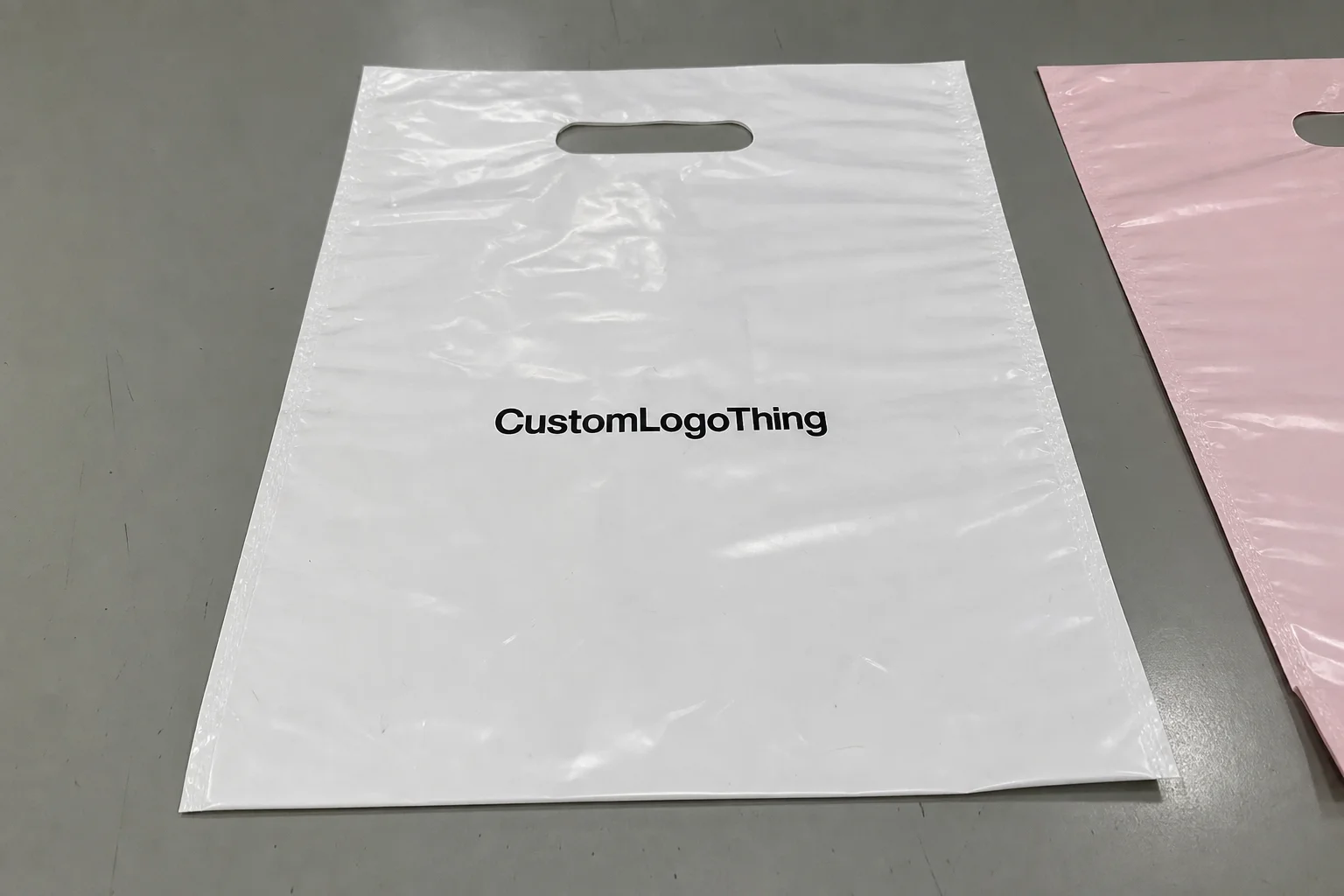
Jewelry Recycled Poly Mailers Sample Guide for Buyers - A jewelry Recycled Poly Mailers Material Sample guide matters because two mailers can look nearly identical on a screen and still behave very differently in production. Recycled content changes stiffness, opacity, gloss, and the way the film closes. That difference shows up fast once you put a ring box, pouch, card, or tissue inside and ask the bag to do real work.
Samples are not a courtesy item. They are the shortest route to discovering whether a mailer protects the product, supports the brand presentation, and keeps fulfillment moving without small annoyances that become expensive at scale. The right sample tells you more than color or print quality. It tells you whether the size, closure, handling, and transit behavior fit your order flow.
Why jewelry recycled poly mailers material samples reveal more than a spec sheet
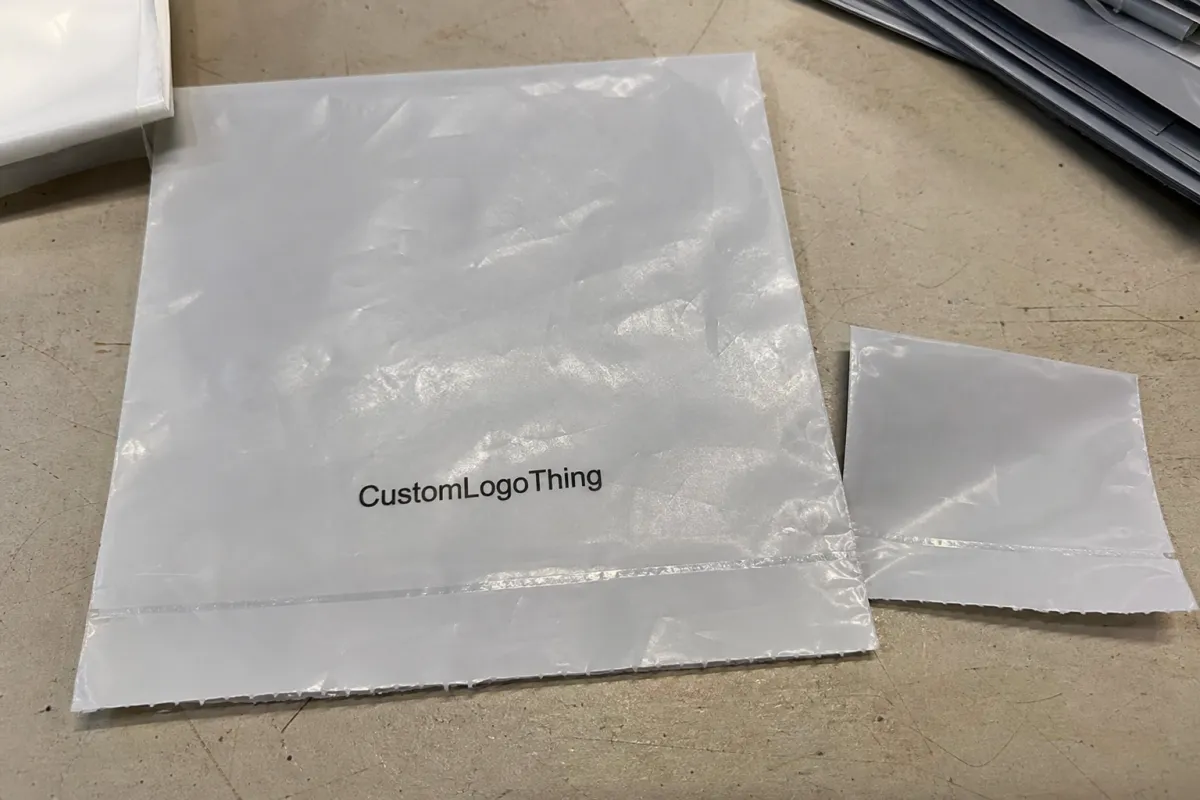
Spec sheets are useful, but they leave out too much. A mailer can be listed at the same thickness, dimensions, and print method as another bag and still feel firmer, softer, or more elastic because the resin mix and extrusion process differ. Buyers notice that first in hand. One sample holds its shape cleanly. Another drapes more loosely and needs a different pack-out method.
That matters for jewelry because the shipment may be small, but the contents are rarely simple. A rigid box, velvet pouch, authentication card, tissue, and branded insert create pressure points that affect closure and fit. If the sample does not hold up with the real contents inside, the final order may still look polished on the outside and be awkward to pack on the floor.
Samples also expose things photography hides. You can check opacity under bright light, print sharpness on dark artwork, adhesive strip alignment, seam consistency, and surface scuffing after handling. A buyer who only looks at a render misses the part that matters most: whether the mailer survives the way your team actually packs it.
A sample should answer one question clearly: does this mailer work the way your jewelry actually ships?
That answer affects both confidence and cost. A strong sample reduces guesswork. It also helps you avoid hidden labor later, especially if your current option is a paper-based outer pack that takes more folding, taping, or reinforcement. If you are still comparing the outer pack structure with inserts and internal wraps, the broader selection at Custom Packaging Products can help before you settle on one format.
How recycled poly mailer samples are made and what they represent
Most Recycled Poly Mailers use blended film, often a mix of post-consumer and post-industrial resin, so the sheet still seals, stretches, and prints correctly. The film is extruded, cooled, slit, and converted into a mailer shell with welded seams and a pressure-sensitive closure strip. That process sounds simple. It is not. Small changes in resin mix can change the handfeel and how the film behaves during packing.
A sample is not just a flat bag with ink on it. It is a snapshot of the build. Seam width, gusset shape, adhesive placement, and edge trim all affect the real experience. A narrow seal can look tidy but leave less margin for rough handling. A small gusset can make a jewelry box sit awkwardly and create a bulge that changes the whole profile.
Print and finish deserve their own review. Recycled film often carries natural variation, and that changes how white ink sits, how dark colors read, and how translucent areas appear under strong light. A pale pastel can print a little softer than expected. Heavy black artwork can show rubbing if the surface finish is more matte than the render suggested. None of that is unusual. It just means the sample has to be judged as production material, not as a digital mockup made real.
Ask for a production-intent sample whenever possible. If the sample uses a different thickness, a different adhesive strip, or a generic film grade, it only helps part of the way. The closer the sample is to the actual order, the fewer surprises you will see later. A jewelry Recycled Poly Mailers Material Sample guide should make that distinction obvious, because a near-match is not the same as the final spec.
For a neutral reference on recycling basics, the EPA overview at EPA recycling resources is useful. If you want a practical frame for transit testing, ISTA at ISTA is a good starting point for understanding abuse tests and distribution thinking.
Key specification factors to compare before you approve
Start with thickness, but do not stop there. A bag at 2.5 mil can feel stronger than a 3 mil bag if the film blend has better tensile behavior and less stretch under load. Handfeel is one signal. It is not the verdict.
Opacity is another major check. Many jewelry brands want enough coverage that the contents do not show through under warehouse lighting or front-of-house LEDs. If the sample is translucent, it may still work for some DTC shipments, but it may miss the premium feel you want on arrival. Recycled content can affect this more than many buyers expect.
Then inspect the closure and seams. Look for straight welds, even adhesive coverage, and a release liner that peels cleanly without tearing. If you ship box sets, layered cards, or multiple SKUs in one parcel, the closure has to stay consistent after the bag is opened and handled during packing. Puncture resistance matters too. Sharp corners from cardboard inserts or rigid boxes create stress points quickly.
What a good comparison should include
- Thickness and stretch: does the film flex without feeling loose?
- Opacity and branding visibility: does the print read cleanly over recycled film?
- Seam alignment and closure strength: does the top seal stay even and secure?
- Surface finish: does the mailer scuff, drag, or fingerprint easily?
- Pack-out ease: does the jewelry package sit flat and close without forcing the bag?
Print registration deserves a careful look, especially on logos with fine lines or small text. Recycled resin can change surface energy and ink laydown enough to soften edges slightly. That is not always a defect. It is still something you want to see before approval, not after a full run has landed.
Size clearance is another practical issue. If the mailer is tight, packing slows down and corners get stressed. If it is too large, the parcel can shift and arrive looking less intentional. For jewelry, the best sample usually balances a clean outer profile with just enough internal room for the real pack structure.
Do not forget handling. A bag that feels nice once may feel slick after twenty repetitions on a busy line. If your team packs at volume, repeat the test a few times. Fast fulfillment exposes weak details faster than a one-time review ever will.
Pricing, MOQ, and quote details that affect sample and production costs
Sample pricing depends on how close the sample is to final production. A blank stock sample may be free or nearly free aside from shipping. A custom printed sample usually includes setup time, film, ink, and a small run charge. Some suppliers credit the sample fee back if you place the production order. Some do not. Ask directly.
MOQ changes the economics more than many buyers expect. Lower quantities usually carry a higher unit price because setup work gets spread across fewer bags. A 5,000-piece run might land around $0.12-$0.28 per unit depending on size, film thickness, recycled content target, and print coverage. Smaller runs often cost more per bag because the line setup work is almost the same.
Quotes should also spell out shipping, packaging, and validity. Sending three sample versions for comparison can be worth it, but freight adds up if you request several dimensions or closure styles. Recycled resin availability can move pricing too. A credible supplier should tell you how long the quote holds and whether a price lock is possible before approval.
Here is a practical comparison buyers can use during quoting:
| Option | Typical sample or unit cost | Best fit | Watch-outs |
|---|---|---|---|
| Blank stock sample | $0-$25 plus shipping | Size check, basic feel review | Does not reflect print or final closure details |
| Custom printed sample | $35-$125 | Brand color, opacity, and finish review | May use a short-run process that differs slightly from full production |
| Production run at 5,000 pieces | $0.12-$0.28 per bag | Ongoing ecommerce or wholesale packaging | Price shifts with artwork coverage, film spec, and recycled resin supply |
If your outer pack includes paper inserts, tissue, or a kraft inner wrap, confirm whether those components are FSC certified if that matters to your brand story. Recycled poly mailers are not the same thing as biodegradable packaging, and they should not be described that way. Keep the claims specific. Loose language causes problems later.
Price is not only a purchasing issue. It is also a failure-mode issue. A cheaper sample can save money up front and still point you toward the wrong final spec if it does not reflect the actual build. That is a false economy.
Process and timeline from sample request to production approval
The cleanest sample process starts with complete inputs. Share target dimensions, artwork files, estimated order quantity, product weight, and the exact jewelry packaging that will go inside the mailer. A pouch-only shipment is one thing. A pouch plus rigid box is another. If the supplier does not know the full pack-out, the sample can still look fine while missing the fit problem that matters.
Once the request is in, the proofing stage should confirm construction details. That means seam position, closure type, print layout, and whether the dieline needs a small adjustment. This is also the point to ask whether the sample is intended to match production exactly or whether it is only a pre-production check piece. Those are not the same.
After the sample arrives, do not stop at visual approval. Load it, close it, reopen it, and repeat the handling the way your team actually works. Test it with the insert cards, tissue, pouches, or cardboard protectors you plan to use. If the bag feels great empty but starts to buckle once packed, you caught the issue early enough to fix it.
A realistic timeline often looks like this:
- Sample prep: 3-7 business days, depending on artwork and film availability.
- Transit: 2-5 business days for domestic shipping, longer if the sample crosses borders.
- Buyer review: 1-3 business days if all approvers are available.
- Production after approval: often 12-18 business days once the final spec is locked.
Fast turnaround usually depends on preparation, not luck. Clean artwork files, quick responses, and a firm answer on size and finish shorten the cycle. If you are also sourcing Custom Poly Mailers for other product lines, it helps to use one approval format across the range so the team is not rebuilding the review process every time.
Common sample review mistakes jewelry brands make
The first mistake is judging by color alone. A beautiful sample can still fail if the seam is weak, the adhesive lifts, or the film scuffs in transit. Jewelry buyers sometimes focus on the print because branding feels easier to judge than structure. Structure is what saves the order.
Another common miss is testing only one empty bag. Jewelry shipments are rarely empty. They usually include a box, pouch, thank-you card, tissue, or shipping slip, and each one changes how the mailer bends and closes. If you do not test with the actual pack contents, you are guessing at fit and pressure points.
Shipping simulation is easy to skip and annoying to replace later. If the sample only sits on a desk, you will not learn whether corner punctures, dust intrusion, or adhesive lift show up after vibration and temperature swings. A simple transit check is often enough. You do not need a lab to catch obvious weakness. You do need to think beyond the tabletop.
Lighting also changes the verdict. A bag that looks rich in soft office light may expose transparency or surface flaws under warehouse LEDs or at a retail counter. Compare the sample in more than one place if you can. That one habit prevents a lot of false approval.
Speed matters too. If the mailer takes two extra seconds to load or close, that becomes a labor problem at volume. A sample that is slightly less dramatic but easier to pack may be the better business choice, especially for brands with mixed SKUs or high order counts.
One more thing: do not let a “good enough” sample pass because the production deadline is tight. Tight deadlines are exactly when bad specs sneak through. If something feels off, stop and fix it before the order is locked.
Expert tips and next steps for a confident jewelry recycled poly mailers material sample guide
If you are narrowing down options, compare two or three close samples instead of one obvious favorite. That separates visual preference from actual performance. One bag may win on print sharpness while another wins on opacity or closure feel. The best choice is often the one that balances all three without pushing the budget too far.
A simple approval checklist keeps procurement and brand teams aligned. Score fit, seal, opacity, print quality, and packing speed on the same sheet, then compare the totals side by side. That keeps the review grounded in the same criteria and reduces the chance that one loud opinion overrides the actual pack-out test.
For jewelry shipments, always test the exact configuration that ships most often. If 70% of your orders use a small gift box plus card, test that. If wholesale orders use a pouch inside a larger carton, test that too. Approve the packaging you will really use, not the most flattering version of it.
It also helps to lock the final spec in writing. Include dimensions, thickness, recycled content target, print method, closure style, and any finish requirements. That protects you if the production run drifts from the approved sample and gives everyone one reference point if the supplier needs to source an equivalent film grade later.
For brands building a broader packaging system, it makes sense to compare the mailer against paper-based choices too. Sometimes kraft paper sleeves or FSC-certified inserts fit the brand better, and sometimes corrugated cardboard is the cleaner answer for heavier or more fragile sets. The right answer depends on the product, the presentation, and the labor you are willing to spend at pack-out.
Use this jewelry Recycled Poly Mailers Material Sample guide as a decision tool, not a style exercise. Request a quoted sample set, run a small pack-out test, document the results, and choose the version that best fits your size, finish, and transit needs before you place the order. That saves money, avoids rework, and gives your mailers a much better chance of arriving exactly the way you intended.
Frequently asked questions
What should I check in a jewelry recycled poly mailers sample?
Test the fit with your real jewelry packaging, not an empty bag. Check opacity, seal strength, and surface scuff resistance under normal handling. Confirm that the printed finish and closure style match the customer experience you want.
How many recycled poly mailer samples should I request before approving?
Request at least two close options if you are comparing thickness, finish, or print. Ask for a production-intent sample when possible, not just a generic stock bag. Keep one sample for visual review and one for pack-out testing.
Do recycled poly mailer samples usually cost extra?
They can be free, credited, or charged depending on whether the sample is custom printed. Small-batch sample costs often include setup, film, and shipping. Always ask whether the sample fee applies to the final production order.
How long does the sample process take for custom jewelry mailers?
Timing depends on artwork readiness, sample complexity, and supplier workload. Fast approval requires complete sizing details and quick feedback from your team. After approval, production lead time starts only once the final spec is locked.
Can recycled poly mailers protect delicate jewelry shipments well?
Yes, if the film thickness, seam quality, and size are matched to the product load. They work best when the jewelry is also packed in a box, pouch, or insert that prevents movement. A sample test should include your actual shipping configuration before you commit.