Toy Recycled Poly Mailers material sample guide requests usually start with a photo and end with a reality check. Two mailers can look close online and behave very differently in hand. One opens cleanly, seals flat, and survives a rough packing line. The other curls at the lip, feels thin where it should feel controlled, and raises concerns before the first shipment leaves the dock.
That is why a sample matters. It shows how the material behaves, not how the spec sheet hopes it behaves. For toy brands, that difference affects soft goods, boxed items, blind-box sets, plush, and mixed toy bundles. If the mailer also carries recycled-content claims, the sample helps confirm whether the material, opacity, and finish support the claim without creating a weak outer pack.
"A recycled mailer sample should tell you how the bag will act in the warehouse, on the line, and in transit. Pretty is secondary."
This toy Recycled Poly Mailers Material Sample guide is about reducing guesswork: deciding whether the material fits the product, the shipping method, and the damage tolerance of the business.
Why One Sample Can Expose Hidden Mailer Differences
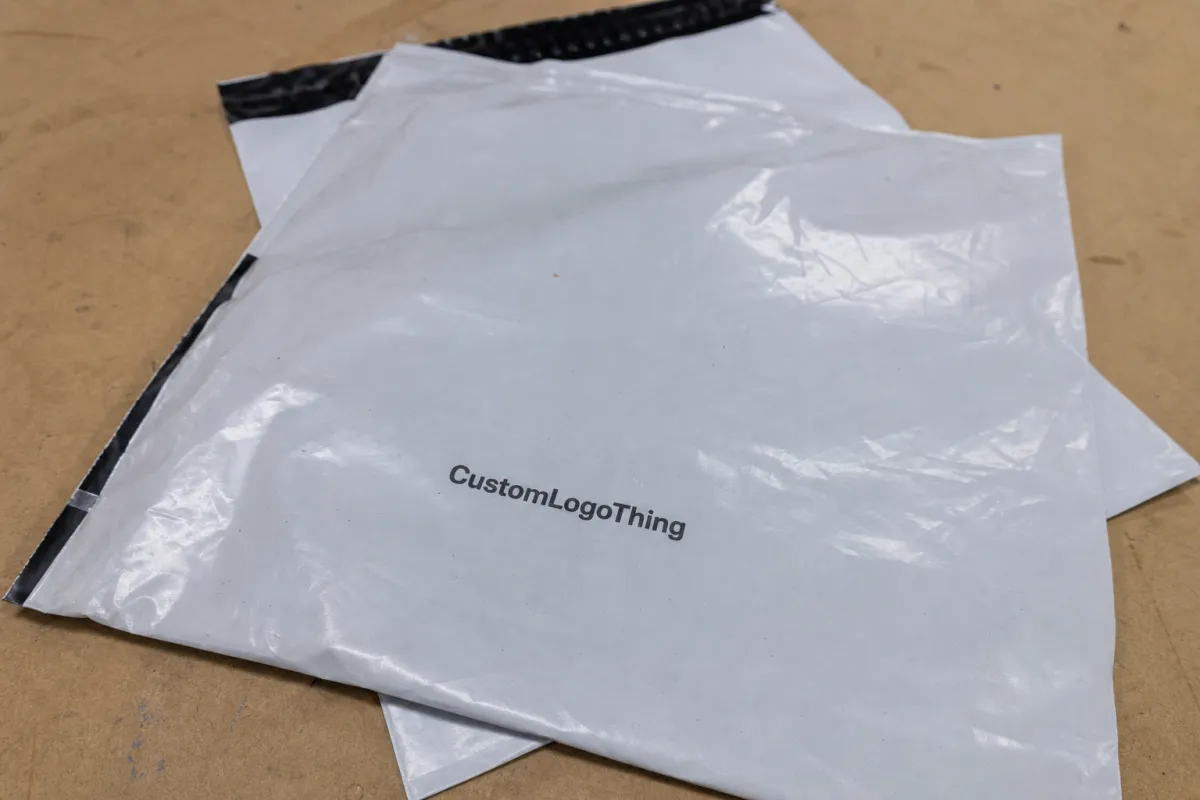
On paper, Recycled Poly Mailers can look interchangeable: same size, same thickness, same color, same closure. In practice, the details that matter are film stiffness, seal consistency, gloss level, opacity, and how the bag opens.
That is especially true with recycled material. Blend consistency can shift from lot to lot depending on post-consumer waste content, resin sourcing, and extrusion control. Even when the stated recycled percentage stays the same, the feel can change. One sample may feel tight and controlled. Another may feel softer, stretchier, or brittle at the edges.
Sampling reveals issues buyers do not always ask about. Does the lip curl after opening? Does the seal line stay even? Does the film recover after folding, or hold a crease? Does the printed area scuff when it rubs against a carton edge? Small issues, but they are the same ones that show up at scale when the warehouse is moving fast.
Buyers also underestimate the gap between sustainability language and packaging performance. A recycled poly mailer is not biodegradable packaging. A mailer with post-consumer content is not automatically better for every use case. And a nice product photo proves nothing about puncture resistance. The sample is where the claims stop being abstract.
For toy shipments that already use corrugated cardboard inner boxes or kraft paper inserts, the outer mailer still carries the load in transit. If the outer bag tears first, the rest of the pack structure becomes a cleanup job. One sample can expose whether the material supports the system or just looks fine in a presentation.
How the toy recycled poly mailers material sample guide works
The sampling flow is straightforward. The buyer defines size, product weight, shipping method, print needs, and target recycled content. The supplier confirms what can be sampled, whether it is a stock bag, a printed proof, or a production-like material sample. Then the sample ships, gets reviewed, gets marked up, and either moves forward or gets revised.
Those sample types are not the same thing. A stock sample shows current material and construction. A custom-printed proof shows artwork, layout, and color, but it may still differ from the final run in film lot or print density. A production-ready material sample is the closest match to the real order and matters most when the bag ships directly to customers.
A stock sample is enough to judge feel, opacity, and basic seal behavior. A printed proof is better for brand approval. A production-like sample is the one to trust when the order needs to survive real shipping abuse. If a supplier sends a mockup and calls it final, ask what exactly is final about it.
The review also needs the right people. Brand teams care about surface quality, opening experience, and print clarity. Operations care about throughput, closure reliability, and whether the bag slows anyone down. Someone should verify recycled-content claims and any mixed-material components before approval. If the sample needs to match existing packaging, compare it against the current system, not against memory.
The biggest mistake is treating the sample like a yes-or-no object. It is a decision tool. That means the criteria need to be written down, the feedback needs to be specific, and the sample needs to be judged against the actual spec.
Cost, MOQ, and Unit Price Drivers
Pricing for Recycled Poly Mailers moves more than people expect. The biggest drivers are recycled content percentage, size, thickness, color, print coverage, and closure style. A plain unprinted mailer in a standard size usually costs less than a custom printed bag with heavier coverage, a tinted film, or a higher recycled-content target.
Thickness matters too. A 2.5 mil bag and a 4 mil bag are not just different numbers on a quote. They feel different, seal differently, and resist puncture differently. Push the thickness up and the cost usually follows. Push recycled-content requirements up as well, and the price can move again if the resin blend becomes harder to source or process.
MOQ changes the economics of sampling. If the supplier needs a production lot to match a custom blend, the buyer may pay more per sample or narrow the search to fewer options. That is normal. What is not normal is approving a sample and then discovering the final order uses a different setup or a higher minimum. Ask early whether the sample reflects the real production route or a close substitute.
Several quote items hide the real cost: setup fees, plate charges, freight, sample kit fees, and color-matching charges. A headline unit price of $0.19 can look attractive until freight and revisions lift the landed cost to $0.28. At that point the quote is not cheap. It is just dressed up.
| Sample Option | What It Reveals | Typical Cost Range | Typical Lead Time | Best Use |
|---|---|---|---|---|
| Stock sample | Basic feel, size, seal, and opacity | $0-$25 plus freight | 2-5 business days | Early screening |
| Custom printed proof | Artwork placement, color, and brand look | $25-$100 depending on setup | 7-14 business days | Visual approval |
| Production-ready sample | Closest match to the final run | $50-$150 if custom film or print is involved | 10-20 business days | Final buying decision |
For production, many buyers see rough pricing in the $0.16-$0.32 per unit range at around 5,000 pieces for simple recycled poly mailers. That is a working range, not a promise. Size, print coverage, resin cost, freight, region, and order volume all move the number. Still, it gives a useful frame for judging whether a quote is in the right neighborhood or far off.
If the sample feels thicker than the quote suggests, ask whether the finished order will carry the same gauge. If the print coverage is heavier than the mockup, ask for a revised unit price. The sample is useful because it turns vague pricing into a concrete discussion.
Sampling Process and Lead Time: From Quote to Approval
A clean sampling process saves time later. Start with a brief that states product weight, shipping method, target recycled content, artwork needs, and order volume. Mention whether the bag will ship soft goods, boxed toys, or mixed items. Basic details are where many bad samples begin.
Then ask the supplier to confirm whether the sample will be stock, custom, or production-like. That single question prevents a lot of confusion. A stock sample is useful for feel and construction. A branded proof is better for artwork. A production-ready sample is what matters when the order has to match the final run.
Lead times vary. Stock samples may ship in a few days if inventory is available. Custom samples take longer because film, print, and approval steps all have to line up. A realistic range is 2-5 business days for stock and 7-20 business days for custom or production-like samples. Speed depends on communication as much as on factory capacity.
Use a checklist. It should cover fit, closure, seal line, opacity, print clarity, odor, material stiffness, and any damage after a short transit test. If the supplier says the mailer is suitable for shipping, ask for proof that matches real handling, not just a desk test. Many packaging teams borrow ideas from ISTA transit methods, and material discussions often reference ASTM tests for tensile strength or dart impact.
Document the sample version while it is still in front of you. Note thickness, color, print setup, and any supplier comments. If there is a revision later, that record matters and keeps approval from drifting into "we thought it was the other one."
Common Mistakes That Skew Sample Evaluation
The most common mistake is testing the wrong case. A buyer approves a small sample bag because it feels fine, then discovers the real order needs a larger format with more stretch and a different seal line. A recycled poly mailer should be tested at the size and load it will actually carry.
Another easy error is focusing only on graphics. Print clarity matters, but seal quality, tear behavior, and stretch resistance matter more once the bag enters the packing line. A sharp logo on a weak film does not reduce damage claims.
Warehouse conditions also change the result. Heat can soften some films. Cold can make them stiffer and more brittle. Friction from stacking or conveyor travel can scuff a finish that looked perfect in a quiet office review. If the bag will sit in a hot dock or move through a high-friction fulfillment line, the sample should face something closer to that environment before approval.
Another issue is comparing the sample without a written spec. Once that happens, every review becomes a memory contest. One person remembers "thick and sturdy." Another remembers "light but premium." Neither version is usable when a supplier needs a clear answer. The approved spec should cover thickness, target recycled content, print layout, closure type, and expected performance.
Finally, do not let sustainability claims blur the material facts. A recycled poly mailer can be a practical choice, but it is not the same thing as biodegradable packaging. If a supplier uses loose language, ask for a precise definition. Buyers who skip that step end up comparing claims instead of packaging performance.
Expert Tips for Better Side-by-Side Testing
A good comparison needs a scorecard. Rate each sample on the same scale for feel, opacity, seal strength, print clarity, shipping confidence, and packing speed. A five-point scale is enough. The point is to make the test repeatable so two people do not walk away with opposite conclusions from the same bag.
Test against a known benchmark. That can be your current mailer, a supplier's previous version, or a sample you already trust. Side-by-side comparison is often more useful than absolute judgment. A recycled option may feel a little stiffer than the current bag, but if it cuts damage or improves presentation, that tradeoff may be worth it.
Bring operations into the review. Brand teams often care about surface quality, color, and opening experience. Operations teams care about throughput, seal reliability, and error rates. If only one side reviews the sample, the final approval can miss a practical issue that shows up later in the warehouse.
Take photos in natural light and under warehouse lighting. Note odor, curl, opacity, and any mismatch in print registration. If the sample will be compared against Custom Poly Mailers or another current format, label the samples clearly so they do not get mixed up after the meeting. Confused samples create confused approvals, and confused approvals create expensive reprints.
Run a small packing trial, not just a hand-feel test. Put the actual toy or a representative carton in the bag, seal it, and move it through the same touchpoints it will see in real shipping. That step often exposes whether the sample works in practice or only looks right in a conference room.
What to Do After the Sample Lands
Once the sample arrives, make the decision against the checklist, not against memory. Approve it if it meets the written spec and passes basic handling checks. Revise it if the film weight, print area, or closure style needs adjustment. Reject it if the sample shows a clear performance gap that would create damage, rework, or customer complaints.
If the sample reveals a different thickness or print setup than expected, ask for a revised quote before moving forward. Small changes in film gauge or print coverage can move unit cost more than buyers expect. If the supplier says the final run will differ from the sample, get that in writing.
A pilot order is a smart next step when the sample passes both visual and functional checks. That is especially true for packaging that lands directly in front of customers. A short run lets you confirm throughput, seal consistency, and presentation under real fulfillment pressure before you commit to a larger volume.
For brands building a broader packaging system, the sample review should fit into the larger mix of recycled materials, corrugated cardboard, kraft paper, and other packaging components. The outer mailer is only one part of the experience, but it is the part customers touch first. That is why this toy Recycled Poly Mailers Material Sample guide matters only when it turns one sample into a repeatable buying decision.
What should I check in a recycled poly mailer sample?
Check thickness feel, seal strength, opacity, closure performance, and print clarity. Compare the sample against your product size, weight, and shipping method. Document anything that differs from the written spec so the supplier can confirm it before production.
How do I compare recycled poly mailer material quality across samples?
Use the same test items, same packing method, and same scoring sheet for every sample. Evaluate hand-feel, stretch, stiffness, and tear resistance side by side. Include warehouse or fulfillment staff in the review so practical handling issues do not get missed.
What affects recycled poly mailer sample pricing the most?
Material blend, size, thickness, and print complexity usually move pricing first. MOQ, setup fees, freight, and sample kit charges can change the final cost more than buyers expect. Ask for a quote that separates sample cost from production unit cost.
How long does the sampling process usually take?
Stock samples are usually faster because they already exist in inventory. Custom material or print samples take longer because they require setup, approval, and production coordination. A clear brief at the start reduces back-and-forth and shortens lead time.
What should I do if the sample does not match production expectations?
Compare the sample to the approved spec sheet and note every mismatch. Ask the supplier whether the difference is due to a sample version, a stock substitute, or a production constraint. Do not approve the order until the supplier confirms how the final run will match the sample or correct the gap.


