Embroidered Baseball Caps Unit Cost Breakdown to Buy
The Cheapest Cap Quote Usually Costs You Twice
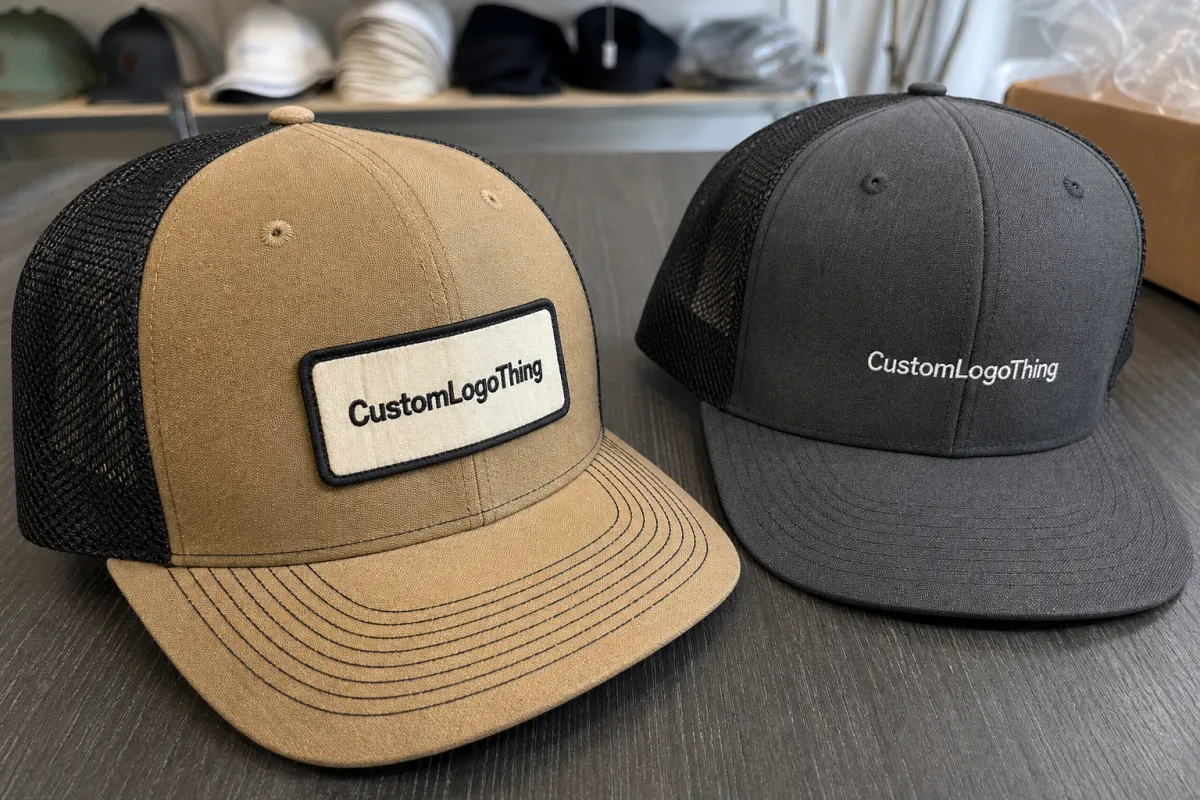
Cheap cap quotes hide expensive details. That is the whole trick.
Buyers need an embroidered baseball caps Unit Cost Breakdown before comparing suppliers because a $2.10 cap and a $5.80 cap may not describe the same product. One quote may cover a thin promo cap, a tiny 2-inch logo, no sample, basic bulk packing, and freight added later. Another may include a structured six-panel cotton cap, 10,000-stitch front embroidery, digitizing, trimming, inspection, individual polybags, carton labeling, and landed freight.
Same category. Different product.
Most cap problems start with a rushed buying process. A brand needs hats for a launch, team uniform, golf outing, merch drop, retail bundle, or event giveaway. Someone collects three quotes, picks the lowest number, approves a proof that looks fine on screen, and waits. Then the caps arrive with puckered embroidery, a crown shape nobody asked for, off-center placement, thread that does not match the brand color, or a final invoice that grew after artwork review.
The fix is not complicated. The quote needs to show what is being priced.
A useful cost breakdown includes the blank cap, embroidery stitch count, digitizing, thread colors, placement, backing, trimming, inspection, packing, cartons, freight, duties if applicable, and optional add-ons like 3D puff, side logos, woven patches, custom labels, or retail tags. If those parts are missing, the quote is not complete. It is just a number wearing a hat.
Buyer reality: the lowest unit cost only matters if the cap style, logo size, stitch count, packing method, and freight terms match the job you actually need produced.
This guide is a buying tool, not mood-board fluff. The goal is to show what changes price, what deserves budget, and what to confirm before approving a custom cap order. If you also compare related branded headwear, reviewing options such as custom baseball caps and decoration methods such as custom embroidered patches can help you understand when direct embroidery is the right choice and when a patch, label, or mixed decoration may be more cost-effective.
What You Are Actually Buying: Cap, Stitching, Fit, and Finish
A blank cap is not just a blank cap. Fabric, crown structure, panel count, closure, brim shape, sweatband, seam tape, and interior finishing all affect cost and perceived value. A cap sits on someone’s head, not inside a drawer like a cheap flyer. People notice when the crown collapses, the brim feels flimsy, the sweatband is scratchy, or the logo sits too high.
The base cap usually makes up a large part of the unit cost. In common production scenarios, a simple unstructured promotional cap may cost much less than a structured six-panel cap with heavier cotton twill, a pre-curved visor, clean seam taping, and a metal buckle closure. Mesh-back trucker caps, performance polyester caps, washed cotton caps, and flat-brim snapback caps all sit in different cost bands because they use different fabrics, shapes, closures, and assembly methods.
Embroidery is the next major cost driver. Direct embroidery pricing is often connected to stitch count because more stitches mean more machine time, more thread, more backing, and more trimming. A small text logo may be only a few thousand stitches. A filled badge-style logo on the front panel can easily reach 8,000 to 15,000 stitches or more, depending on size and density. Large areas of solid fill, outlines, small lettering, gradients converted into thread colors, and detailed mascots usually push costs higher.
Fit and structure also matter. A structured cap uses front support, often buckram or similar backing, to hold the crown shape. This gives a more retail-ready appearance but usually costs more than an unstructured cap. A low-profile cap may suit casual workwear or golf use. A mid-profile or high-profile cap may suit streetwear, sports teams, or retail merchandise. If the quote simply says “baseball cap,” it is not specific enough.
Finish quality is where many low quotes become risky. Clean embroidery requires proper digitizing, suitable thread tension, correct backing, accurate placement, and trimming. A logo that looks sharp on a flat digital proof can look distorted on a curved cap panel if it is not digitized for the cap shape. Small letters may close up. Thin lines may disappear. Dense fill areas may pucker the fabric. The supplier should be able to explain practical adjustments before production starts.
Packaging is also part of what you are buying. Caps can be bulk packed in cartons, packed by dozen, placed in individual polybags, fitted with hang tags, separated by color and size, or packed into retail cartons. Basic bulk packing is cheaper, but it may not protect shaped crowns as well during long shipping routes. Retail or ecommerce packing adds cost, yet it can reduce handling work after delivery and help prevent crushed product, mixed SKUs, or relabeling delays.
Cap Specifications That Move the Price Up or Down
The most reliable way to compare cap pricing is to compare specifications line by line. If one supplier quotes 100% cotton twill and another quotes thin polyester-cotton fabric, the prices should not be treated as equal. If one supplier includes a side logo and the other includes only a front logo, the quotes are not aligned. The details below are common price movers.
Fabric: Cotton twill, brushed cotton, washed cotton, polyester, nylon, wool blends, corduroy, and performance fabrics all price differently. Cotton twill is common for promotional and casual caps. Performance polyester may cost more but can be preferred for sports, outdoor, or moisture-wicking uses. Washed cotton often gives a softer vintage look but may need careful color control between batches.
Panel construction: Five-panel, six-panel, trucker, camper, dad cap, and snapback constructions use different patterns and assembly methods. Six-panel structured caps are common for embroidered front logos. Five-panel caps can be useful when the front logo needs a flatter surface, but the style may not fit every brand. Trucker caps use mesh panels, which change both material cost and perceived use case.
Closure: Plastic snapback closures are common and economical. Hook-and-loop closures are practical for workwear and events. Metal buckle closures often look more premium and usually cost more. Fitted or stretch-fit caps require size management and may increase inventory complexity because buyers need multiple sizes instead of one adjustable cap.
Visor and brim: A pre-curved visor is common for uniforms, events, and everyday wear. A flat visor is often used for streetwear or retail styles. Sandwich brims, contrast underbrims, printed underbrims, and custom visor stickers add cost. They may be worth it for retail programs but unnecessary for a short-run giveaway.
Embroidery placement: A single front embroidery is usually the simplest option. Side embroidery, back arch embroidery, strap embroidery, or multi-location decoration adds machine time and handling. A front logo plus side text can be a strong branding package, but it should be priced as two placements, not assumed to be included.
Thread colors: Most cap embroidery can use several thread colors without major issues, but each color change adds setup and run-time considerations. Metallic thread, neon thread, or specialty thread may cost more and may not work well for very fine detail. A supplier may recommend simplifying the logo to reduce stitch count and improve readability.
3D puff: Raised embroidery can create a bold retail look, but it usually costs more than flat embroidery. It uses foam under the stitches and requires artwork designed for thicker shapes. Small text, thin lines, tight corners, and detailed icons are usually not ideal for 3D puff. A common approach is to use puff for large letters and flat embroidery for smaller supporting elements.
Labels and trims: Woven labels, printed interior labels, sweatband labels, hang tags, visor stickers, and custom seam tape can make a cap feel more finished. They also add setup, minimum order considerations, and packing work. For retail programs, these details may be important. For a one-day event giveaway, they may not justify the added cost.
Quality control: Inspection is not free. Better QC often includes checking logo placement, thread color, loose threads, stains, seam defects, crown shape, closure function, carton count, and packing accuracy. It may add a small cost, but it often prevents bigger costs later. Returns, repacking, urgent replacements, and damaged brand perception are usually more expensive than inspection.
Embroidered Baseball Caps Unit Cost Breakdown by Order Size
An embroidered baseball caps Unit Cost Breakdown changes with quantity because setup costs, digitizing, machine preparation, sampling, and carton handling spread across more units as order volume increases. The ranges below are only typical examples. Actual pricing depends on fabric, construction, logo size, stitch count, region, supplier capacity, freight method, packaging, and duty treatment.
| Cost Component | Small Run: 50-100 pcs | Mid Run: 300-500 pcs | Larger Run: 1,000+ pcs |
|---|---|---|---|
| Blank cap | Often higher per unit due to low quantity | Usually more stable with better volume pricing | Often lower per unit if materials are standardized |
| Digitizing/setup | High impact per cap | Moderate impact per cap | Low impact per cap |
| Embroidery | Depends heavily on stitch count and placement | More efficient production runs | Best efficiency if design stays consistent |
| Packing | Basic packing may be used to control cost | Individual polybags or SKU sorting are common | Carton marks, retail packing, and pallet planning matter more |
| Freight | Can be a large share of landed cost | Improves with carton consolidation | Usually best planned by carton volume and delivery deadline |
For a simple small run, the buyer may see a higher unit price because the supplier still has to review artwork, create or adjust the embroidery file, set up thread colors, test the design, load caps, run the job, trim threads, inspect, and pack. Those steps happen whether the order is 50 caps or 5,000 caps. Small orders often look expensive because the fixed work has fewer units to absorb it.
For a mid-sized run, the unit economics usually improve. A 300- to 500-piece order is often large enough for better blank cap pricing and more efficient embroidery scheduling. If the artwork is clean and the cap style is standard, the supplier may be able to hold a reasonable unit cost while still including proper packing and inspection. This is a common range for company uniforms, events, corporate gifts, school programs, and local merchandise.
For larger runs, the buyer should pay closer attention to cartonization, SKU control, production consistency, and freight. At 1,000 pieces and above, a small mistake repeated across the order becomes expensive. A 2 mm placement shift, a thread mismatch, or a wrong carton label can affect hundreds of units. Larger runs benefit from pre-production samples, approved thread cards, written packing instructions, and clear inspection standards.
A practical breakdown might separate costs into six buckets:
- Base cap: fabric, panel construction, closure, visor, sweatband, seam tape, and labor.
- Decoration: digitizing, stitch count, thread colors, backing, machine time, trimming, and finishing.
- Sampling: physical sample, embroidery strike-off, revised sample, or approval photo.
- Packaging: polybags, carton dividers, hang tags, size labels, SKU stickers, master cartons, and carton marks.
- Quality control: in-line checks, final inspection, measurement checks, logo placement review, and carton count.
- Logistics: export packing, freight, duties, taxes, handling charges, and delivery terms.
When comparing quotes, ask suppliers to identify which of these buckets are included. A quote that includes only the cap and front embroidery may look cheaper than one that includes individual bagging, carton labeling, sampling, and freight. That does not mean the first supplier is cheaper. It may simply mean the buyer has not been shown the full cost yet.
Packaging, Cartons, and Freight Costs Buyers Often Miss
Packaging is not an afterthought for embroidered caps. It affects presentation, carton volume, damage risk, warehouse receiving, and final landed cost. A cap can be well-made and still arrive looking poor if it is crushed, mixed by color, labeled incorrectly, or packed in cartons that are too weak for the shipping route.
Basic bulk packing usually means caps are stacked by quantity and placed into master cartons. This is common for low-cost promotional orders where the buyer will distribute caps at an event or store them in a back room. It is usually the cheapest option, but it offers less individual protection. Structured crowns can flatten if cartons are overloaded or handled roughly. Light-colored caps can also pick up dust or marks if not protected well.
Individual polybagging adds cost but improves cleanliness and handling. It is often used for retail, ecommerce, employee kits, influencer mailers, or multi-location distribution. A typical polybag may include a size or SKU sticker, barcode label, suffocation warning where required, and sometimes a hang tag. The exact requirements depend on the sales channel. Buyers should confirm whether labels need to be scannable, whether barcodes must follow a specific format, and whether carton labels need purchase order numbers or destination codes.
Retail-ready packing may include hang tags, branded stickers, visor labels, tissue, insert cards, or custom cartons. These items can increase both material cost and packing labor. They can also increase carton volume, which matters for air freight and courier shipments. Caps are lightweight but bulky, so freight is often charged by dimensional weight rather than actual weight. That means a carton that is mostly air can still be expensive to ship.
Carton specifications should be clear. Buyers commonly ask for master carton dimensions, carton quantity, gross weight, net weight, carton marks, and packing method before shipment. A typical carton might hold 100, 144, or another practical quantity depending on cap structure and packing style, but the right number depends on the cap shape, whether each cap is polybagged, and how much compression is acceptable. Structured caps should not be packed so tightly that the crown shape is damaged.
Freight terms can change the true unit cost dramatically. Ex-works, FOB, CIF, DDP, courier, air freight, and sea freight are not the same. A quote that excludes freight may look attractive until the buyer adds pickup, export handling, import duties, customs brokerage, last-mile delivery, and possible storage. For urgent small orders, courier shipping may be simple but expensive. For larger orders with more lead time, consolidated air or sea freight may reduce unit cost, though it usually requires better planning.
Buyers should also consider receiving labor. If caps arrive in mixed cartons with no clear labels, the warehouse or office team may spend hours sorting colors, sizes, and destinations. That labor is part of the real cost. Clear packing instructions can reduce this problem. For example, a buyer may request one color per carton, carton labels showing style/color/quantity, and inner bundles of 12 caps. For multi-location distribution, the buyer may request packed-by-location cartons so the order can be forwarded without repacking.
The best packaging plan is not always the fanciest plan. It is the plan that matches the use case. A trade show giveaway may need sturdy bulk cartons and quick access. A retail drop may need barcoded polybags and clean presentation. A corporate onboarding kit may need individual packing that protects the cap and keeps the logo visible. A warehouse replenishment order may need carton labels that match the buyer’s inventory system. Each packaging decision should be visible in the quote.
Process and Timeline from Artwork to Finished Caps
The timeline for embroidered caps depends on artwork readiness, sample approval, cap availability, order size, decoration complexity, packaging requirements, and shipping method. A simple domestic or stocked-blank order can move faster than a fully custom cap with special fabric, custom labels, multiple embroidery locations, and retail packing. The safest approach is to build the schedule backward from the delivery date and leave room for revisions.
The first step is artwork review. Vector artwork is usually preferred, but embroidery also needs a digitized stitch file. A designer may need to simplify small details, thicken thin lines, adjust spacing, or remove gradients. Embroidery is not printing. Thread has thickness, tension, sheen, and direction. Very small text, tiny dots, distressed effects, and fine outlines may not reproduce cleanly at cap scale.
The second step is digitizing. Digitizing converts artwork into stitch paths, stitch types, densities, angles, trims, and color changes. A clean digitizing file helps reduce puckering, thread breaks, and distorted shapes. Good digitizing is especially important on curved front panels because the fabric is not flat during wear. A low-cost digitizing file may save a small amount upfront but cause visible quality issues across the production run.
The third step is sampling or proofing. For many orders, a digital proof shows logo placement, size, and thread color references. For higher-value orders, a physical sample or embroidery strike-off is usually safer. A pre-production sample lets the buyer check crown shape, logo scale, thread color, stitch quality, and packaging. If the sample is skipped, the buyer should understand the risk.
After approval, production begins. Caps may be produced from scratch or pulled from stock blanks, depending on the program. Stock blanks can reduce lead time but limit color, fabric, and construction choices. Fully custom caps allow more control but usually require longer lead times and minimum quantities. Decoration then follows the approved file and placement instructions. Operators load the caps into frames, run the embroidery, trim threads, remove backing as needed, and prepare the caps for inspection.
Inspection should happen before packing is sealed. Common checks include logo placement, thread color, loose threads, skipped stitches, stains, crown shape, brim condition, closure function, quantity, color split, and carton marks. If individual polybags, hang tags, or barcode labels are required, the packing team should check those details as well. A beautiful cap in the wrong SKU bag can still create a fulfillment problem.
The final step is shipping. Before shipment, buyers should request packing details, carton count, tracking or shipping documents, and photos if appropriate. For larger orders, it is useful to confirm carton dimensions and weights before freight is booked. If delivery timing is tight, the buyer should avoid approving final details at the last minute because embroidery, packing, and freight all need workable time.
Quote Mistakes That Make Caps More Expensive
The most common mistake is asking, “How much for embroidered caps?” without providing enough information. That question forces the supplier to guess. Some suppliers will quote low to win attention. Others will quote high to protect themselves. Either way, the buyer cannot compare pricing fairly.
Another mistake is ignoring stitch count. A 4,000-stitch logo and a 14,000-stitch logo can have very different costs even when they appear on the same cap. If the logo has dense fill, small lettering, or multiple borders, ask for an estimated stitch count before approving the quote. The stitch count may change after digitizing, but a rough estimate helps prevent surprises.
Buyers also overlook placement count. Front embroidery, side embroidery, back embroidery, and strap embroidery are separate operations. If the cap needs a front logo, a side icon, and a back web address, the quote should show three placements. Otherwise, the final invoice may increase after artwork review.
Packaging assumptions are another source of cost creep. A quote based on bulk packing will not cover individual polybags, barcode labels, hang tags, custom inserts, or packed-by-location cartons unless those are listed. If the caps are going into retail, ecommerce, or a distribution center, the packaging requirements should be shared at the start.
Freight is often the final surprise. Caps are bulky, and dimensional weight can raise shipping costs. A buyer may focus on saving a few cents on the cap while ignoring a much larger freight difference caused by carton size, delivery speed, or shipping terms. Always compare the landed cost, not only the product cost.
Color matching can also cause problems. Thread color is not the same as ink color on a screen. Most suppliers use thread charts, and a close match is often more realistic than a perfect match. If brand color is critical, ask for thread references and approve them before production. For very strict programs, a physical sample is usually worth the time.
Finally, buyers sometimes approve artwork that is not embroidery-friendly. Thin script, tiny taglines, gradients, distressed textures, and photographic details may look good in print but poor in thread. A practical supplier should flag these issues and suggest adjustments, such as increasing logo size, reducing detail, changing to a patch, or using a woven label for small text.
How to Read a Cleaner Cap Quote
A cleaner quote makes assumptions visible. It does not need to be complicated, but it should show enough detail that two people can understand the same product without guessing. At minimum, the quote should identify the cap style, fabric, panel count, crown structure, closure, color, embroidery placement, logo size, stitch count estimate, thread colors, quantity, packing method, lead time, and freight terms.
A useful quote might say: “Six-panel structured cotton twill cap, pre-curved brim, metal buckle closure, one front embroidery up to 10,000 stitches, up to six thread colors, standard backing and trimming, individual polybag, 144 pieces per carton, carton labels included, excluding import duties.” That sentence is much stronger than “embroidered cap, $3.85 each.”
Buyers should also check what happens if the artwork changes. If the logo is enlarged or the stitch count increases, the cost may change. If a second embroidery location is added, the cost will change. If retail labels are added after the quote, packing cost and lead time may change. These changes are normal, but they should be documented before production.
Payment terms, sample charges, and revision charges should be clear. Some suppliers include digitizing at certain quantities. Others charge it separately. Some refund sample charges after bulk order approval. Others do not. There is no single universal rule, so the buyer should ask rather than assume.
A cleaner quote also states tolerance expectations. Embroidery placement can vary slightly because caps are sewn products and are loaded by hand. Thread color may be a close commercial match rather than an exact digital color. Cap measurements may have normal production tolerances. These tolerances should be reasonable and understood before approval.
When the quote is clear, negotiation becomes more productive. Instead of demanding a lower number, the buyer can decide where to save. Maybe the logo can be simplified from 12,000 stitches to 7,000. Maybe side embroidery can be removed. Maybe bulk packing is acceptable. Maybe a stock cap is good enough instead of a fully custom cap. Cost control works best when it is tied to specifications, not guesswork.
Before You Request Pricing
Before requesting an embroidered cap quote, prepare the information a supplier needs to price accurately. This reduces back-and-forth and helps prevent low-quality assumptions.
- Confirm the quantity, including color splits and any size splits if fitted caps are required.
- Choose the cap style, such as dad cap, structured baseball cap, trucker cap, snapback, or performance cap.
- Share artwork in the best available format and note required logo width or height.
- List all decoration locations, including front, side, back, strap, patch, or label.
- State packaging needs, such as bulk pack, individual polybag, hang tag, barcode sticker, or packed-by-location cartons.
- Ask whether digitizing, sampling, inspection, cartons, freight, duties, and taxes are included or excluded.
If budget is tight, say so early. A good supplier may suggest a lower-stitch design, a standard cap body, fewer thread colors, a single placement, or simpler packaging. If presentation is more important than the lowest price, say that too. The supplier may recommend better fabric, a structured crown, upgraded closure, individual packing, or a patch treatment.
The smartest buying approach is to compare landed, packed, inspected product costs against the same specification. That is the only way the Embroidered Baseball Caps Unit Cost Breakdown becomes useful. Otherwise, the buyer is comparing vague promises and hoping the cheapest one behaves like the best one.
FAQ
What is usually included in an embroidered baseball caps unit cost breakdown?
A practical breakdown usually includes the blank cap, embroidery digitizing, stitch count, thread colors, embroidery placement, backing, trimming, inspection, packing, cartons, and freight terms. Some quotes also include samples, hang tags, barcode labels, duties, or delivery. Buyers should ask what is included and what is excluded before comparing prices.
Why does stitch count affect embroidered cap pricing?
Stitch count affects machine time, thread use, backing, trimming, and production speed. A simple logo with fewer stitches usually costs less than a dense badge, mascot, or filled design. The relationship is not always perfectly linear, but higher stitch counts commonly increase decoration cost.
Are structured caps more expensive than unstructured caps?
Structured caps are often more expensive because they use support material in the crown and require a more defined shape. They can look more polished and retail-ready. Unstructured caps are usually softer and may be more economical, but they are not the right choice for every logo or brand style.
Does individual polybagging add much cost?
Individual polybagging typically adds material and labor cost, and barcode labels or hang tags add more. The added cost may be worthwhile for retail, ecommerce, employee kits, or clean storage. For simple event giveaways, bulk packing may be enough if the caps can be handled carefully.
How can buyers reduce cap cost without lowering quality too much?
Common options include simplifying the logo, reducing stitch count, using fewer decoration locations, choosing a standard cap style, avoiding unnecessary specialty trims, and selecting practical bulk packing. The best savings usually come from adjusting specifications early, not from cutting inspection or rushing production.
Should I approve a physical sample before bulk production?
A physical sample is strongly recommended for larger orders, retail programs, strict brand colors, complex embroidery, 3D puff, or custom packaging. For very small or urgent orders, buyers may approve a digital proof or photo proof, but that carries more risk because embroidery appearance can change on the actual cap.


