Custom Logo Patch Beanies for hotel staff uniforms solve a very practical problem: a winter hat has to keep people warm, look professional under lobby lights, and still hold its shape after real use. That sounds simple until you try to put a logo directly onto knitwear. Stretch fabric moves. Ribbing distorts. Thick thread can crowd fine details. A patch gives the design a controlled surface, which is why it often looks sharper than embroidery on a beanie.
Hotels notice this faster than most businesses because their uniforms live in public. A valet standing near the curb, a bell attendant carrying bags, a concierge stepping outside into wind, a shuttle driver waiting at the entrance — all of them are part of the brand whether anyone planned it or not. Guests rarely separate “headwear” from “service quality.” They just see a team that either looks coordinated or does not.
That is the practical value of custom Logo Patch Beanies for hotel staff uniforms. They are not decorative accessories. They are part of a uniform system that has to survive cold weather, repeated wear, and a steady stream of first impressions.
There is also a quieter advantage. A patch feels intentional without being flashy. It creates a defined branding area without forcing the whole hat to behave like signage. That matters for hotels that want polish, not noise.
Why patch beanies solve the hotel uniform problem
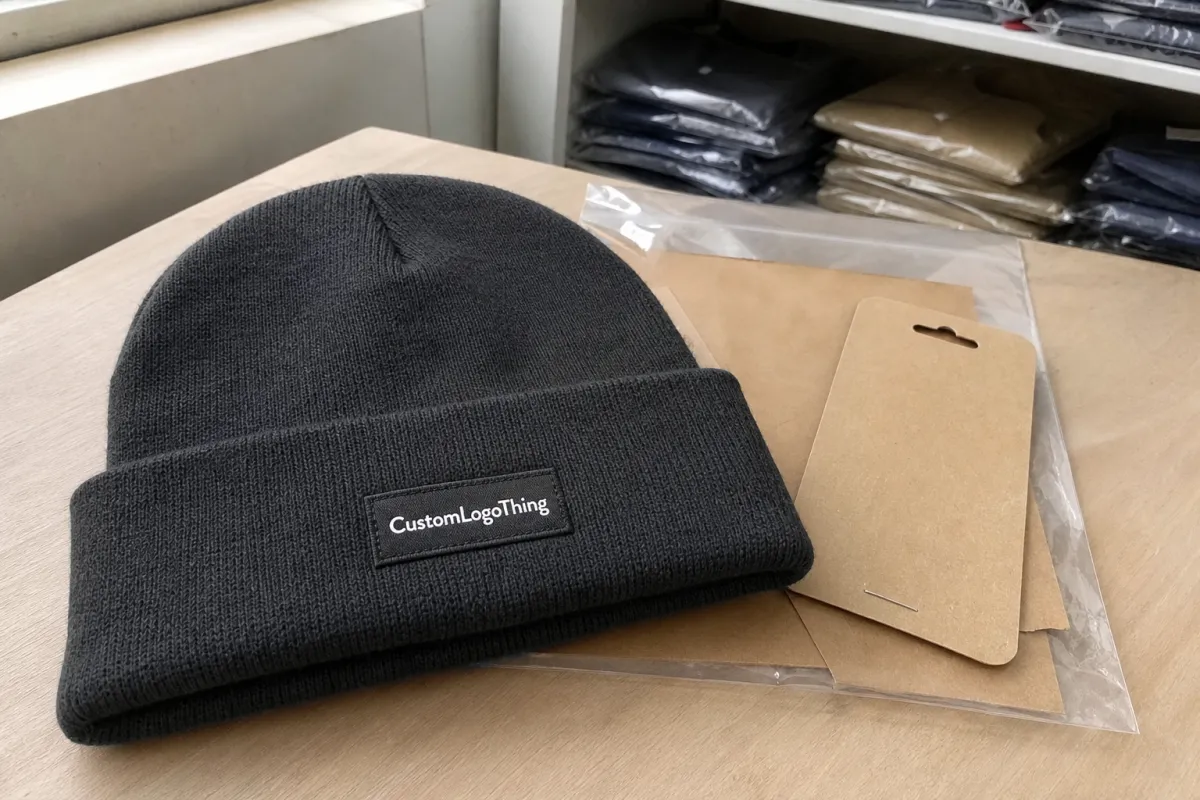
Hospitality uniforms have a split personality. They need to look finished in a guest-facing space, but they also need to work outdoors, in transit, and during long shifts. A beanie is one of the few items that can bridge that gap. Add a patch and it becomes usable branding instead of generic cold-weather gear.
Direct embroidery on knit often gets pulled into the fabric structure, especially on soft or looser gauges. The logo can look fine in a flat sample and less convincing once the beanie is stretched on a head. Patch decoration avoids some of that distortion. It gives the logo a more stable edge and a cleaner reading distance, which is useful when a guest sees staff from across a driveway or through a glass lobby entrance.
The best fit is usually the team members guests see first: front desk support who step outside, valet and bell teams, patio hosts, curbside staff, shuttle drivers, and seasonal employees working entrances in colder markets. In those roles, the hat is not an afterthought. It is part of the property’s visual language.
A good uniform beanie should answer three questions quickly: does it fit the shift, does it survive the weather, and does it still look like the hotel after a week of use?
From a buying standpoint, that order matters. Warmth first. Durability second. Brand finish third. If a style gets those backwards, it may look nice in a catalog and fail once it reaches a real team. Patch beanies usually avoid that trap better than trend-driven headwear that looks good in a mockup and awkward on staff.
They also sit well beside other guest-facing brand cues. The same discipline that goes into product packaging or package branding applies here: the item should reinforce the hotel identity without turning into a billboard. A patch is small, but small details carry more weight in hospitality than they do in a warehouse or back-office setting.
Process and timeline from artwork to delivery
The production path is predictable, but only if the artwork is prepared properly. Most delays come from the same handful of problems: low-resolution logos, missing vector files, patch shapes that are too intricate, or approval loops that drag on for days. None of those are exciting. They are still the reasons an order misses a rollout date.
A standard sequence for custom Logo Patch Beanies for hotel staff uniforms starts with the blank beanie, then the patch style, then artwork cleanup, proofing, sample approval if needed, and bulk production. If the supplier needs to redraw a logo or simplify a detail so it can be reproduced cleanly, the clock stops until that is resolved.
Typical timing depends on complexity. A stock beanie with a woven patch can often be completed in about 12 to 18 business days after proof approval. Add custom patch shapes, specialty materials, or matched yarn colors and the schedule usually extends by another 5 to 10 business days. Rush orders exist, but they usually narrow your options and raise the price. That is a tradeoff, not a shortcut.
Hotels feel production delays more sharply than many buyers because uniform orders are often tied to weather changes, opening dates, seasonal staffing, or property refreshes. The deadline is not theoretical. It is usually attached to a real service shift.
Ask a supplier to confirm a few things before you approve the order:
- Final art deadline and proof turnaround time
- Whether a physical sample is possible for complex patches
- Firm ship date, not a loose estimate
- Whether reorders use the same setup or require a new approval
- How units will be packed for distribution by department or property
That last point is easy to overlook. If you are shipping to multiple hotels, sorted cartons save front-office staff from opening and re-sorting everything by hand. Packaging is not just a retail concern. In a uniform program, it is part of the operational cost.
For transit and packaging quality, it is reasonable to ask whether cartons follow ISTA-style handling expectations and whether any paper components use FSC-certified materials. Those details do not make the beanie better by themselves, but they tell you whether the supplier thinks beyond decoration and into fulfillment.
Cost, pricing, MOQ, and quote drivers
Pricing makes more sense once you separate the parts. A quote for custom Logo Patch Beanies for hotel staff uniforms usually includes the blank beanie, patch production, attachment method, artwork setup, sampling, packaging, and freight. If the quote is one flat figure with no breakdown, there is probably something hidden inside it.
For standard hotel orders in the 300 to 500 piece range, these are realistic unit-price bands:
| Option | Typical unit price | What you get | Best fit |
|---|---|---|---|
| Stock acrylic beanie + woven patch | $3.20-$5.90 | Clean logo, dependable look, fast turnaround | Most hotel uniform programs |
| Heavier knit beanie + woven or twill patch | $4.10-$6.80 | Warmer feel, a slightly more premium finish | Cold-weather properties and outdoor teams |
| Leather or faux leather patch | $4.50-$7.50 | Sharper premium appearance, simple logo detail | Upscale hotels and lodge-style brands |
| PVC or specialty patch | $5.00-$8.50 | More visual punch, durable surface | Casual resorts or rugged outdoor branding |
Volume changes the math. Once an order reaches 1,000 pieces or more, unit pricing often drops by 15% to 30%, depending on patch complexity and beanie quality. Smaller orders cost more per unit because setup, labor, and proofing do not shrink just because the quantity does.
MOQ is usually driven by decoration setup rather than the blank alone. A simple stock beanie can be ordered in smaller quantities, but once you add a custom patch shape, several thread colors, or a more elaborate attachment method, the minimum rises. That is normal. It is also why a tiny logo change can have a bigger budget impact than a buyer expects.
Watch for quote traps. Some low prices leave out revisions, art cleanup, sample rework, individual polybagging, or alternate patch materials. Ask whether the price changes for reorders, because a hotel uniform program should be easy to replenish without repeating the full setup cost every time.
Packaging can affect cost too. Bulk-packed cartons are cheaper than individually bagged units. But if the order needs to be distributed by property, role, or department, labeled packaging may save more labor than it costs. That is a useful compromise, not wasted spend. The same logic shows up in custom printed boxes and package branding: the outer system matters because staff still have to move, sort, and store it.
One more practical observation: buyers sometimes focus on the beanie price and ignore the blank quality. A difference of less than a dollar on the cap can change the entire feel of the uniform. A tighter knit, better cuff recovery, and more stable yarn make the patch look more expensive than it is. That is a small number with a large visual effect.
Choose the right beanie body, patch material, and placement
The beanie body sets the tone before the logo is even seen. A cuffed beanie is usually the safest choice because it gives the patch a clean placement zone and keeps the shape neat. Slouch styles feel more relaxed and can work for resorts or casual properties, but they read less precise. If the brand leans polished, the cuffed profile usually wins.
Material matters too. Acrylic is common because it is cost-effective, easy to source, and usually warm enough for indoor-outdoor staff use. Acrylic-wool blends cost more but tend to feel richer and hold their structure better. For teams working long outdoor shifts, that can matter more than the paper spec sheet suggests.
For the patch itself, woven patches are the safest all-around choice. They handle detail well, stay relatively flat, and look crisp from guest distance. Twill or felt patches soften the look a little. Leather and faux leather work for elevated properties, but the logo has to stay simple. Once you crowd too much detail into a leather patch, the result starts to feel cramped instead of premium.
Placement changes how the whole item reads. Front-center on the cuff is the standard for a reason: it is easy to see, easy to align, and easy to reproduce across multiple sizes. Side placement can work, but it tends to look more fashion-led than uniform-led. That may be useful for some brands and unnecessary for others.
The cleanest comparisons are simple:
- Cuffed beanie: best logo visibility, most uniform-friendly
- Slouch beanie: softer silhouette, less formal presentation
- Woven patch: best balance of detail and durability
- Leather patch: premium feel, simplest artwork only
- PVC patch: durable and bold, but visually louder
Color contrast deserves more attention than it usually gets. A charcoal beanie with a lighter patch often reads better than a black-on-black setup that disappears in poor lighting. The same rule applies in retail packaging: if the contrast is weak, the brand gets weak. A beanie is a small surface, so contrast has to work harder.
Think about the full uniform system, not just the hat. If the coat is already detailed, keep the patch simple. If the jacket is plain, the patch can carry a little more presence. The goal is coherence. Uniforms look more expensive when every piece behaves as if it belongs to the same family.
Step-by-step ordering checklist for a clean rollout
The smoothest orders are usually the least dramatic. Define the use case first, lock the artwork second, and keep the proofing process short. For custom logo patch beanies for hotel staff uniforms, a practical order flow looks like this:
- Define the wearer's job. Decide which departments need the beanies and whether they will be used indoors, outdoors, or both.
- Finalize the logo spec. Confirm patch size, shape, colors, and placement before asking for pricing.
- Mock it on the actual beanie color. A logo that looks perfect on white can turn muddy on navy, charcoal, or forest green.
- Review a proof or sample. Check that the logo still reads when the cuff folds and the knit stretches.
- Confirm care and packing. Ask how the pieces should be washed, stored, and labeled for distribution.
- Build in extras. Add spares for new hires, lost items, and peak-season overflow.
That sixth step gets skipped more often than it should. Hotels do not run on exact headcount. Someone loses a hat. A new hire starts early. A weather shift hits harder than expected. If you order exactly to the current roster, the first real disruption creates a shortage.
Care instructions should be clear before production starts. Cold wash and air dry are usually safer than hot water or high heat. If the patch material has any heat sensitivity, that needs to be documented. A sewn patch can behave very differently from a heat-applied one, and the laundry process is where shortcuts show up.
A phased rollout is usually smarter than a full-scale guess. Start with one body style and one patch size. Get staff feedback. Check how the beanie sits with the rest of the uniform. If it works, expand. If not, a smaller trial has saved you from a larger mistake.
Distribution planning helps too. Front desk, valet, bell staff, shuttle drivers, and outdoor concierge teams may not need the same quantity or even the same color. Sorting by role before the shipment lands keeps the program tidy and prevents the classic inventory mismatch: too many in one size, not enough in another.
Common mistakes that make uniform beanies look cheap
The easiest way to weaken a beanie is to make the logo too small. If the patch cannot be read from guest distance, it stops doing its job. The next mistake is trying to fit too much detail into a tiny patch: borders, gradients, extra text, shiny finishes, and multiple colors all at once. Simpler artwork often looks more expensive because it survives the scale.
Blank quality matters more than people expect. A coarse, loose, or uneven knit can distort the patch area and make the whole item feel lower grade, even if the decoration is good. Saving a few cents on the blank can cost the hotel more in presentation than it saves on the invoice.
Care and wear are another weak spot. Pilling, fading, and heat damage can undo a clean launch in a few weeks if the beanies are treated like disposable winter gear. Hotels with active housekeeping, transportation, or guest-service teams need items that tolerate repeated use. A program that only works on day one is not a program.
Patch material is easy to misjudge from a sample image. Leather can look refined in one light and heavy in another. PVC can be durable and still feel too aggressive for a quiet luxury property. Woven patches are popular because they usually avoid both extremes. They are not the only valid option, but they are the least likely to create regret.
Another common miss is skipping spares. That sounds obvious until the order arrives and every piece is assigned on paper with nothing left for replacement. Uniforms are operational tools. They need backup inventory the way housekeeping needs extra linens and the kitchen needs reserve stock. No one celebrates that part, but everyone notices when it is missing.
Finally, do not approve a patch based only on a digital render. A logo can look balanced in mockup and still feel oversized, too pale, or too dense once it is stitched or sewn onto knit. Actual texture changes everything. That is why a real proof matters more than a pretty image.
Expert tips and next steps for a polished rollout
The best choice is usually the one that disappears into the uniform in the right way. If the property is refined, a matte patch finish and restrained contrast usually look right. If the brand is more casual or outdoorsy, a bolder patch can help the logo read without looking cheap. The decision should be deliberate, not accidental.
Request a sample or a photo against the actual uniform set, not against a plain white backdrop. Real life has jackets, scarves, overhead lighting, wind, and movement. A beanie should hold its shape in all of that. A design that only works in a studio shot is not ready for a lobby entrance.
Consistency is the quiet advantage here. Hotels already understand this principle in product packaging and package branding: choose the visual rules once, then apply them steadily. The same idea helps with uniforms. One body style. One patch size. One approved color story. That is usually enough.
A practical program usually includes the following habits:
- Approve one beanie body before adding alternates
- Use one patch size across departments when possible
- Keep the palette restrained and easy to read
- Lock the reorder specification before the first shipment lands
- Store spare units for replacements and seasonal staff
Those habits reduce friction later. They also make the uniform easier to refresh next season without renegotiating every detail from scratch. The strongest custom logo patch beanies for hotel staff uniforms are simple to wear, simple to reorder, and easy to recognize across the property. If those three things line up, the beanie does its work without demanding attention from anyone except the buyer.
Frequently Asked Questions
How many custom logo patch beanies for hotel staff uniforms should we order?
Start with current headcount plus 10% to 15% for spares, lost items, and new hires. If several departments wear them, split the order by role so you do not overbuy one color and come up short on another. Seasonal properties should keep a reserve for peak occupancy instead of ordering exactly to the roster.
What patch material works best for hotel uniform beanies?
Woven patches are usually the safest choice when you need crisp logo detail and a polished finish. Leather or faux leather can work for higher-end properties, but the artwork should stay simple. PVC and other specialty patches are durable, though they can look too bold for some hotel brands.
How long does production usually take for custom patch beanies?
Stock beanies with standard patching can move faster than fully custom builds. Expect extra time if you need patch sampling, logo revisions, or specialty color matching. Rush production is possible in some cases, but it usually comes with higher unit costs or fewer material options.
What should be included in a quote for hotel staff beanies?
The quote should list the beanie blank, patch type, setup charges, attachment method, and shipping. Ask whether artwork changes, samples, or reorders have separate costs so there are no surprises later. A useful quote also notes MOQ, Lead Time, and whether pricing changes with different patch materials.
Can hotel staff wash patch beanies without damaging the logo?
Yes, if the care instructions are followed and the patch is attached correctly. Cold water and air drying are usually safer than hot wash cycles or high heat drying. Before ordering, confirm whether the patch material has any heat sensitivity or special care limits.

