Embroidered baseball caps Unit Cost Breakdown sounds simple until a buyer compares two quotes that look similar on paper and behave very differently in production. The logo can be identical, yet the per-piece price can jump because of the blank cap, stitch count, closure style, packaging, and order size. That is why a quote total alone tells only part of the story.
From a packaging buyer's point of view, the real question is not “What is the cheapest hat?” It is “What is the true cost per piece once setup charges, digitizing, freight, and the blank cap are all visible?” A 24-piece rush order can price out higher than a 250-piece standard run by several dollars per unit, even if both orders use the same front embroidery. The difference is usually not the artwork. It is the math behind the order.
This post is a buying tool, not a sales pitch. If you know which variables move the needle, you can request a cleaner quote, compare vendors on the same basis, and avoid late-stage surprises that often show up only after approval.
Why the Same Embroidered Cap Can Price Out Differently
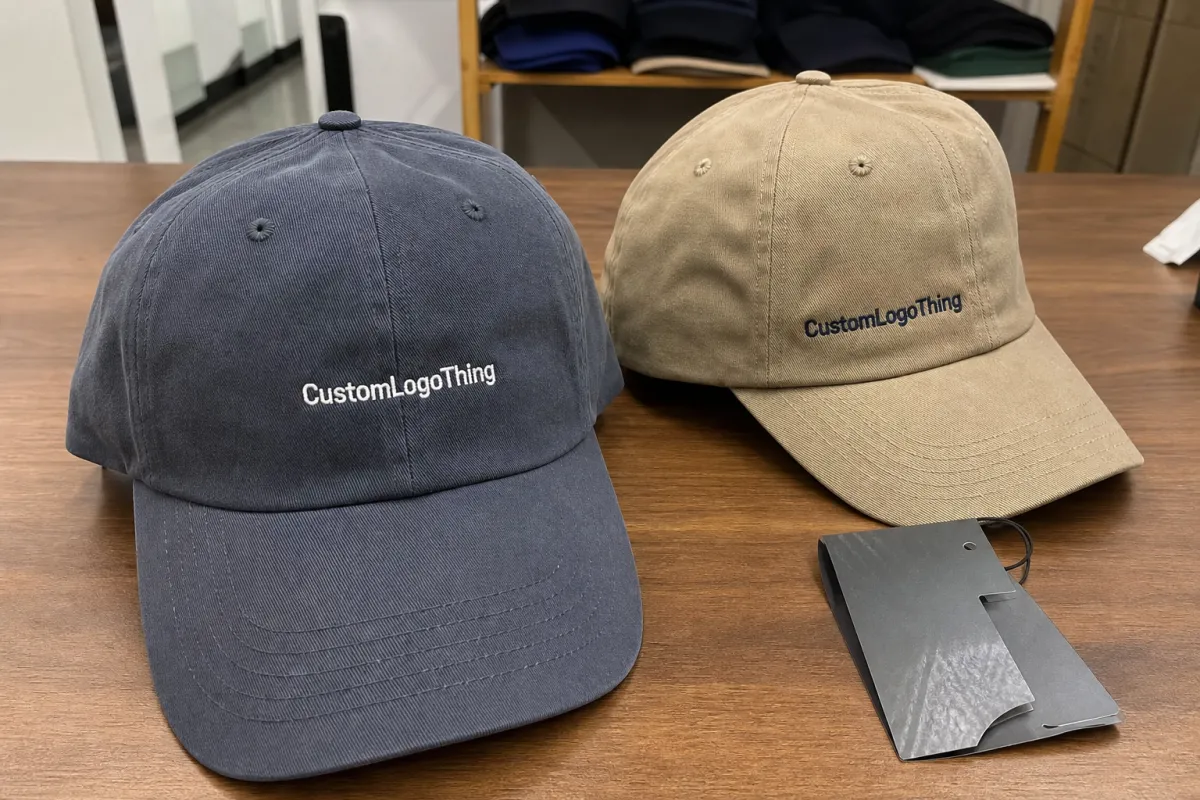
Two embroidered caps can look nearly identical on the shelf and still have very different economics. One may use a stocked cotton twill blank with a standard snapback closure. The other may use a premium structured cap, a low-availability color, and a more complex logo with dense stitching. Same brand mark. Different unit cost.
Procurement teams often compare the quote total first, but that hides the true embroidered baseball caps Unit Cost Breakdown. If one supplier folds digitizing into the price and another lists it separately, the totals are not directly comparable. The same is true for sample charges, shipping, and one-time tooling fees. If you do not separate recurring cost from setup cost, the cheaper quote may not be cheaper at all.
Here is where the swing gets real. A 24-piece rush order with a short approval window may carry higher labor pressure, a higher blank cost, and a smaller chance to spread setup charges across the run. A 250-piece order with a stocked cap body and a clean vector logo often benefits from bulk pricing, fewer interruptions, and a lower cost per piece. The embroidery itself may be the same 6,000 to 8,000 stitches, but the commercial outcome is not.
“The fastest quote is not always the best quote. The cleanest quote is the one that separates one-time charges from repeat charges.”
That is the mindset that keeps budget conversations honest. Instead of asking only for a price, ask for the structure behind it: blank cap, digitizing, embroidery labor, packaging, freight, and any extras tied to the approval process. If those pieces are visible, the embroidered baseball caps Unit Cost Breakdown becomes a decision tool rather than a guess.
Artwork, Thread Count, and Placement: What Changes the Sample
Artwork is usually the first place buyers underestimate cost. A logo that looks clean on a screen can still be expensive to stitch if it has tiny text, heavy fills, or too many color changes. Machine time rises with stitch count, and digitizing time rises with complexity. That means the sample can cost more even when the decoration area is small.
In practice, a simple front logo with three thread colors and moderate density is easier to control than a crest with gradient-like shading translated into thread. The more a design depends on detail, the more careful the digitizer has to be. That work shows up in the Embroidered Baseball Caps unit cost breakdown, either as a separate digitizing charge or as a higher landed unit price.
Placement matters too. Front-panel embroidery is usually the most efficient. Side embroidery adds setup complexity because the needle path and cap orientation change. Back text is often inexpensive by itself, but it becomes less attractive when combined with front and side locations. Multi-location decoration almost always increases labor, proofing, and quality-control time.
- Front panel: usually the lowest-cost embroidery location.
- Side panel: adds setup and alignment risk.
- Back text: useful for event caps, but it adds another operation.
- Multiple locations: raises both labor and approval complexity.
Buyers get the best stability when the art is a clean vector file, the stitch paths are predictable, and the logo does not depend on tiny serif details. Solid shapes, moderate fill areas, and limited thread changes usually keep the quote easier to manage. Low-resolution files, gradients, and text under about 0.20 inches often trigger extra back-and-forth because the cap surface is curved and less forgiving than a flat panel.
Cap Body, Back Closure, and Decoration Limits
The cap body changes more than appearance. Structured caps hold their shape and give the embroidery a firmer field. Unstructured caps drape more loosely, which can make the logo sit differently. Low-profile caps can feel cleaner on smaller heads and are often preferred for lifestyle brands, while high-profile caps offer more crown space and a more traditional retail look.
That shape affects production. A taller crown can accept larger embroidery more easily. A softer or lower crown may limit how far the machine can push the stitch field without distortion. Foam-front caps and performance caps can be even more specific, because the material behaves differently under the needle and sometimes needs a different digitizing approach.
Closure style matters for both cost and sourcing. Snapback closures are common and usually easy to source. Velcro can be quick and economical. Buckle closures may improve perceived quality but can raise the blank cost. Fitted styles are a different conversation altogether because sizing becomes part of the inventory plan.
The material itself is not just a style choice. Cotton twill is a familiar baseline and usually behaves predictably during embroidery. Brushed cotton can feel softer but may introduce more variation in surface texture. Polyester and blended fabrics often perform well in activewear programs, yet they may call for different needle settings or thread choices. The right blank can reduce rejects and help the embroidered baseball Caps Unit Cost Breakdown stay stable.
Decoration limits also deserve attention. Most caps have a practical embroidery area that is smaller than buyers expect. Seams, visor curves, and crown construction can all limit what the factory can safely stitch. If the logo sits too close to a seam or wants to stretch across a seam line, the supplier may need to revise the file or increase the setup time.
Embroidered Baseball Caps Unit Cost Breakdown
This is the section most buyers want first, and for good reason. The embroidered baseball caps unit cost breakdown is where quotes become transparent. Once you see the stack, it is easier to tell whether you are paying for materials, labor, setup, or shipping. That clarity matters more than a headline price.
A practical breakdown usually includes the blank cap, digitizing, embroidery labor, thread, setup charges, packaging, and freight. Some suppliers also charge for artwork correction, custom labels, or special folding and bagging. Others roll part of that into the unit price. Both approaches can be valid, but they are not equally easy to compare.
| Cost component | Typical range | What pushes it up |
|---|---|---|
| Blank cap | $1.80-$6.00 | Premium fabric, specialty closure, low inventory |
| Digitizing | $20-$75 one time | Tight text, multiple placements, complex fills |
| Embroidery labor | $0.90-$2.75 per cap | High stitch count, extra locations, slow thread changes |
| Setup charges | $0-$50 | Rush scheduling, file correction, extra machine prep |
| Packaging | $0.10-$0.60 per cap | Polybag, label, insert card, carton labeling |
| Freight | Variable | Carton count, service level, destination, split shipments |
There is a simple pattern behind the numbers. Fixed charges stay fixed whether you order 24 caps or 240 caps. That is why the unit cost falls as quantity rises. Variable costs, such as blank material and embroidery labor, stay closer to the same ratio per piece. The bigger the run, the more the setup gets diluted.
Here is a useful buyer habit: ask every supplier to separate one-time charges from repeat charges. If one quote shows a low unit price but hides digitizing, sample fees, and freight, the comparison is incomplete. For a clean embroidered baseball caps unit cost breakdown, the quote should tell you exactly what repeats on reorder and what disappears after the first run.
If you are comparing suppliers, ask for a line item that shows cost per piece before shipping. Then add freight and any packaging changes after the fact. That method is slower on day one, but it avoids the common mistake of treating an unshipped factory price as the final landed cost.
Unit Cost, Pricing, MOQ, and Quote Breakpoints
MOQ changes the conversation more than most buyers expect. A supplier willing to do 24 pieces is solving a different production problem than one optimized for 250 or 500 pieces. Lower minimums create flexibility, but they usually increase unit cost because the fixed work has fewer pieces to absorb it.
The quote breakpoints are where the economics get interesting. In many programs, the first meaningful drop appears around 48 to 100 pieces. Another drop often appears near 250. After that, the savings flatten unless the design is simple and the blank cap is readily stocked. That pattern is not universal, but it shows up often enough to matter.
| Order size | Typical cost per piece | What usually changes |
|---|---|---|
| 24 pieces | $7.50-$13.00 | Rush pressure, high setup share, limited price absorption |
| 48 pieces | $5.75-$9.00 | Better setup spread, but still premium pricing |
| 100 pieces | $4.50-$7.00 | More efficient machine time and better blank buying |
| 250 pieces | $3.25-$5.25 | Stronger bulk pricing and lower relative setup impact |
| 500 pieces | $2.80-$4.50 | Best use of repeatable artwork and stocked materials |
Those ranges assume a straightforward front embroidery and a standard cap body. Add side placement, custom woven labels, or a high-stitch-count crest, and the top end moves quickly. That is why an order that looks cheap in quantity can still be expensive in production.
A smart quote review looks like this:
- Compare blank cap style and closure first.
- Check whether digitizing is included or separate.
- Confirm embroidery locations and stitch count assumptions.
- Ask how packaging affects the carton count and freight.
- Clarify whether reorders reuse the original file or trigger new setup charges.
If you are shipping retail-ready cartons, ask about distribution testing expectations and carton performance. Resources such as the ISTA standards and the guidance available through the Packaging Institute can be useful when you want to think beyond decoration and into shipping durability. For paper-based packaging components, FSC chain-of-custody questions may also matter if your program has sourcing requirements.
Production Steps, Lead Time, and Approval Checkpoints
Lead time is usually less about the embroidery machine and more about the approvals around it. A clean order can move quickly if the artwork is approved, the blank is in stock, and the packaging instructions are complete. Delay one of those items, and the schedule stretches before the first stitch is sewn.
The process usually runs in a predictable sequence: RFQ, artwork review, digitizing, blank confirmation, proof approval, production, quality check, and packing. Buyers often focus on the factory run, but the approval steps are where most delays happen. A one-day delay in proof sign-off can become a three-day delay if the job loses its place in the production queue.
Typical timing depends on the order size and the factory load, but many cap programs fall into a pattern like this:
- Digitizing and proofing: 1-3 business days if artwork is clean.
- Sample approval: 2-5 business days when a physical sample is required.
- Production: often 7-12 business days for standard runs after approval.
- Freight and delivery: depends on service level and destination.
Lead time is also affected by blank availability. If the supplier has to chase a specific closure or a less common cap body, the order can stall even when embroidery capacity is free. That is why a buyer who wants speed should treat cap selection as part of the schedule, not just the style decision.
Approval checkpoints deserve discipline. Confirm thread colors in writing, verify logo placement with a ruler if the design is precise, and make sure the supplier knows whether the caps should be bulk packed, polybagged, or labeled by size. Those details do not feel dramatic, but they prevent rework. In a production line, rework is expensive.
Quality Control, Reorders, and Pack-Out Consistency
Quality control on embroidered caps is not just about whether the logo looks sharp from a distance. The better check is tighter: stitch alignment, tension, trimming, crown symmetry, and placement consistency across the full run. If the first 10 pieces look good but the next 60 drift, the order is not really under control.
Reorders are where a supplier proves whether it understands repeatability. Franchise groups, sports programs, distributor networks, and retail brands all care about the same thing: the next batch should match the last one. That means the same thread colors, the same stitch density, and the same placement notes must carry forward. When that system is weak, the cost per piece may look fine, but the brand consistency suffers.
Pack-out choices can change both receiving time and total cost. Bulk packing is usually the most economical option. Polybags can help with cleanliness or retail presentation. Size stickers and carton labels can save hours at the receiving dock, especially when orders are split across locations. The supplier should tell you whether each option is included or priced separately.
For buyers managing multiple shipments, ask how the factory handles carton labeling, lot control, and reorder references. That is especially useful when orders are repeated months later. A strong vendor keeps the setup notes, the digitized file, and the packing instructions aligned so the second run does not start from zero.
The cheapest cap is not the one with the lowest quote line. It is the one that arrives correct, repeatable, and easy to receive.
What to Send for a Fast, Accurate Quote Next
If you want a quote that reflects the real embroidered baseball caps unit cost breakdown, send enough detail to remove guesswork. That usually means the logo file, quantity, cap style, closure preference, color targets, embroidery location, packaging requirements, and delivery date. If any of those items are undecided, say so plainly. A good supplier can quote options, but only if the options are visible.
Here is the shortest useful request package:
- Artwork: vector file preferred, plus any print reference.
- Quantity: initial order and expected reorder volume.
- Cap body: structured, unstructured, low-profile, or high-profile.
- Closure: snapback, Velcro, buckle, or fitted.
- Decoration: front only, side add-on, back text, or multi-location.
- Delivery target: date needed, not just “ASAP.”
It also helps to state your buying priority. Do you want the lowest unit cost, the fastest turnaround, or the best balance of both? Those three goals do not lead to the same recommendation. A lower MOQ can help a pilot launch, but it usually lifts the cost per piece. A larger run can unlock better bulk pricing, but only if the design and blank are stable enough to support it.
Request the quote in line-item form. That is the fastest way to see the embroidered baseball caps unit cost breakdown without guessing where the margin sits. Once you have that view, confirm artwork and production details before you place the order. That single step prevents most price changes later and gives you a cleaner path to reorder the same cap with the same result.
Frequently Asked Questions
What is included in an embroidered baseball caps unit cost breakdown?
It usually includes the blank cap, digitizing, embroidery labor, thread, setup charges, packaging, and freight if the supplier is quoting delivered pricing. Buyers should ask which items are one-time charges and which repeat on every unit so they can compare vendors accurately.
How does MOQ affect embroidered baseball cap pricing?
Lower MOQs usually raise the unit price because setup costs are spread across fewer caps. Higher quantities often reduce the per-cap cost, especially when the same logo, cap body, and thread colors are repeated.
Which design details raise the cost the most?
Multi-location embroidery, dense stitch counts, extra thread colors, and tiny text usually increase labor and digitizing time. Specialty cap bodies and hard-to-source closures can raise blank cost even when the logo itself is simple.
How long does production usually take for embroidered baseball caps?
Lead time depends on proof approval, blank availability, and order size, not just machine time. Rush timelines are possible, but buyers should confirm whether fast shipping, special packaging, or artwork revisions will extend the schedule.
How can I lower unit cost without hurting quality?
Use a clean vector logo, limit stitch colors where possible, and choose a cap body that is readily stocked. Increasing quantity or simplifying packaging can reduce cost while keeping the embroidery standard intact.

