For merch teams, seasonal promotions, and retail buyers, logo patch Beanies Unit Cost is rarely determined by the beanie alone. The biggest swings usually come from the patch construction, the base knit, the packing spec, and how many pieces you commit to in one run. A simple stock beanie with a single front patch often prices more cleanly than a fully custom knit that needs multiple yarn colors, extra sampling, and longer machine time.
That distinction matters because the first quote is only useful if it holds together after sampling, packing, and freight are added. A low factory price can look attractive until the supplier adds tooling, carton charges, or a second proof round. Buyers who handle repeat apparel orders know the real comparison is landed cost per piece, not the headline number on the first line of the estimate.
Patch beanies tend to stay competitive because they reduce the number of moving parts. One decoration area. One approval path. Fewer variables for the factory to absorb. That simplicity does not make the product generic; it makes the order easier to control.
Why Patch Beanies Often Cost Less Than Fully Custom Knits
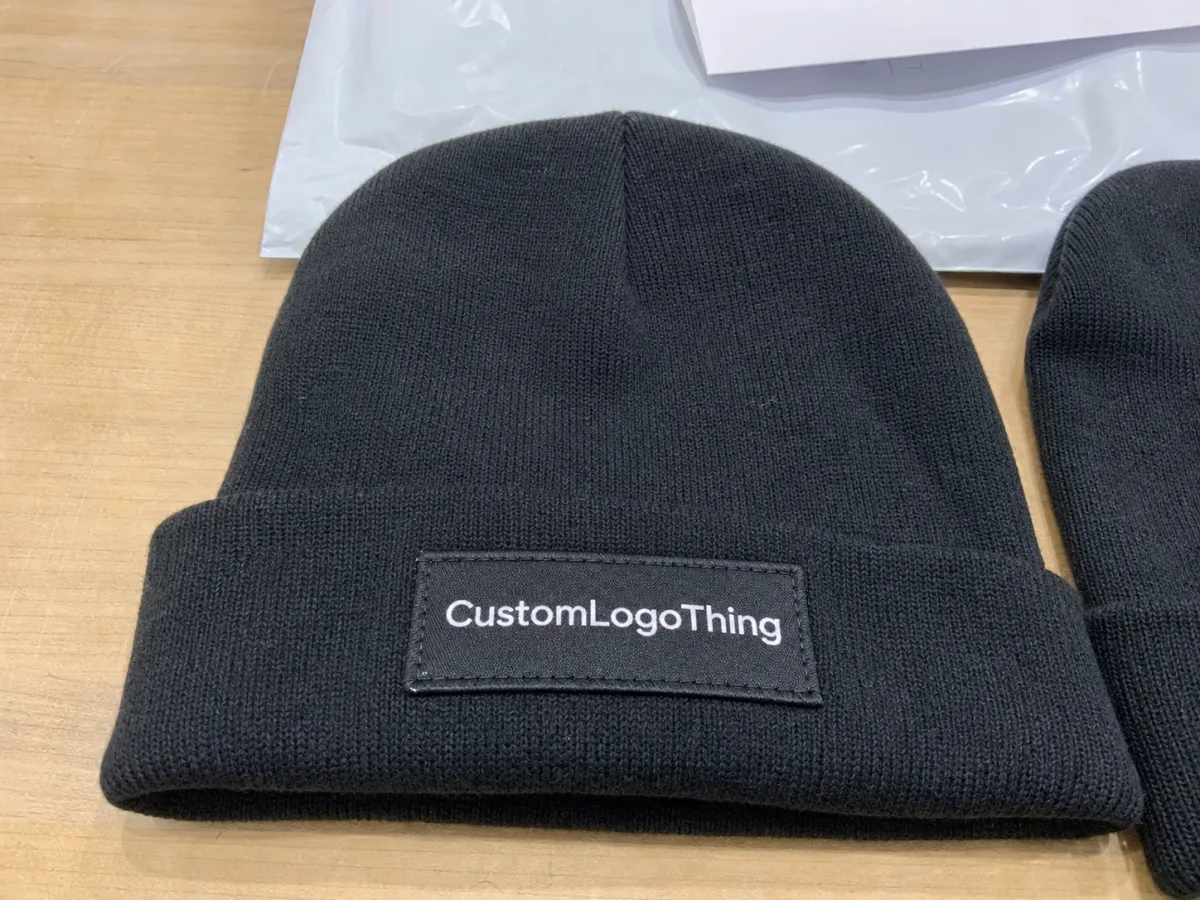
A fully custom knit beanie is built into the fabric itself. Every stripe, jacquard repeat, and color change adds machine time and production coordination. If the design is busy, the factory may also need extra sampling to confirm how the artwork reads in yarn instead of on-screen. That is not just a creative issue. It affects the quote.
A patch beanie shifts the branding work to a smaller area. The body can stay stock or semi-stock, while the logo is handled through a woven, embroidered, leather, silicone, or PVC patch. The result is more predictable pricing and fewer surprises during production. For procurement, predictability often matters as much as the final unit cost because it makes budget approval easier.
There is also a practical quality-control angle. A patch is easier to inspect than a knitted logo that runs across the entire crown. If the logo placement is off, the problem is visible immediately. If the knit tension varies or the colors bleed together visually, the issue can be harder to correct once the run is underway.
Patch beanies usually make sense for:
- Merch drops: clean branding without committing to a complex custom knit.
- Employee programs: consistent appearance across multiple order cycles.
- Retail bundles: easy comparison against other cold-weather accessories.
- Giveaways: a single front patch can keep the cost per piece in range.
One useful comparison: a custom knit can create strong brand presence, but it also behaves more like a production project. A patch beanie behaves more like a standard apparel order with a controlled decoration step. That difference is why Logo Patch Beanies unit cost often stays easier to forecast, especially at modest quantity levels.
Buyer reality: the cheapest-looking build is not always the lowest-cost order. If the decoration method causes sampling delays or rework, the final landed cost can rise faster than the original estimate suggests.
For many buyers, the best value is the build that balances appearance, lead time, and repeatability. Not the fanciest option. Not the lowest sticker price. The one that ships on time and comes back looking the same on the next order.
Patch Styles, Beanie Bodies, and the Build Choices That Matter
The patch itself drives part of the price, but not all of it. Material, edge finish, attachment method, and artwork detail all change the final number. If any of those details shift after quoting starts, the estimate usually has to move with them.
Woven patches are often the best middle ground. They handle small text well, keep edges tidy, and usually sit at a reasonable cost point for bulk orders. Embroidered patches add texture and a more tactile appearance, though dense stitching can raise cost and reduce legibility on tiny logos. Leather patches feel premium and pair well with outdoor or workwear branding, but custom shapes or debossing can add tooling or setup charges. Silicone and PVC patches create strong color blocks and a molded look, yet the tooling and curing process can make them less economical at lower quantities.
The beanie body matters just as much. A cuffed beanie gives a stable placement zone and is usually easier to align. An uncuffed beanie looks cleaner, but the logo has to be positioned carefully so it reads well once worn. Rib knit bodies feel classic and flexible. Smoother knits can read more premium, depending on yarn quality and gauge. Slouchy styles use more fabric than snug-fit versions, so the base cost can move before decoration is even added.
Patch size is another quiet cost driver. A larger badge is not automatically better. A well-sized 2-inch woven patch can feel sharper on a beanie than an oversized badge that crowds the cuff. The same is true for edge style. Merrowed edges, laser cuts, and stitched borders all produce slightly different looks and different production paths. The right answer depends on whether the goal is retail polish, outdoor durability, or simply a clean branded uniform item.
Attachment method deserves a closer look. Sewn patches are the most common and usually the safest choice for long-term wear. Heat-applied options can speed assembly, but they are not ideal for every fabric or every wash expectation. Adhesive-backed patches are useful for mockups and short-lived presentation samples, not for final production. If a supplier is vague about how the patch attaches, that is a signal to ask for more detail before you approve anything.
For most programs, the key question is simple: does the brand need a premium look, or does it need the best balance of appearance and cost? That answer usually narrows the build choices quickly.
Specifications to Lock Before You Request a Quote
The cleanest quotes come from the cleanest spec sheets. If you want a supplier to give you a price that actually holds up, send complete build details instead of asking for “custom beanies” and filling in the blanks later. Loose briefs create loose pricing.
Lock these details before you ask for a number:
- Beanie color: stock color or custom dye reference if a match is required.
- Body style: cuffed, uncuffed, slouchy, or snug fit.
- Patch type: woven, embroidered, leather, silicone, or PVC.
- Patch size and shape: round, square, rectangle, shield, or custom cut.
- Placement: center front, offset, cuff-only, or dual-placement if truly needed.
- Artwork files: vector AI, EPS, or PDF rather than a low-resolution image.
- Color count: thread colors, print colors, or molded color layers.
- Packaging: bulk packed, individual polybagged, hang tagged, or retail ready.
- Size range: adult, youth, or one-size-fits-most.
These decisions do more than make the quote cleaner. They let you compare suppliers on a like-for-like basis. A price that includes individual packing is not the same as one that assumes bulk cartons. A quote with custom-dyed yarn is not directly comparable to one using stock inventory. That distinction gets missed all the time in procurement reviews.
Artwork quality is part of the same problem. A clean vector file reduces redraw work and keeps the logo proportions stable at different patch sizes. A screenshot or compressed JPEG can trigger proof delays, especially if the supplier needs to rebuild lines, small text, or thin borders. That is not a creative preference. It is a production constraint.
If the order is intended for resale or export, ask whether the packaging and carton plan matches the transit requirements you actually need. Standards from groups such as ISTA are useful when shipping cartons need to survive longer routes. For recycled paper packaging, FSC can help define what certified material means in practice.
Logo Patch Beanies Unit Cost: Pricing, MOQ, and Volume Breaks
This is the part buyers usually care about first. Logo Patch Beanies unit cost is not a single number; it is a bundle of costs. Base beanie, patch, setup, sampling, packing, and freight all matter. If you separate those elements, the quote becomes much easier to judge.
At low quantity, fixed costs are heavy. At higher quantity, those same costs are spread across more units, so the average cost drops. That is why MOQ matters so much. A 200-piece order and a 2,000-piece order may use the same artwork, but they do not carry the same setup burden.
| Build Option | Typical MOQ | What Drives Cost | Ballpark Unit Cost Before Freight | Best Use Case |
|---|---|---|---|---|
| Stock beanie + woven patch | 100-300 | Patch size, stitch detail, simple setup | $4.50-$7.50 | Merch drops, giveaways, employee gifts |
| Stock beanie + embroidered patch | 100-300 | Stitch density, thread count, placement | $5.00-$8.50 | Classic branded look with more texture |
| Stock beanie + leather patch | 100-500 | Tooling fees, debossing, edge finish | $5.50-$9.50 | Premium outdoor or lifestyle branding |
| Stock beanie + silicone/PVC patch | 300-1000 | Mold/tooling, curing, color layers | $6.00-$10.00 | Bold retail presentation, strong color blocks |
| Fully custom knit beanie | 300-1000+ | Yarn, knitting complexity, color changes | $7.00-$14.00+ | Fashion-led programs or high-volume seasonal runs |
Those ranges are directional, not universal. Stock yarn availability, patch artwork complexity, and packing choice can push a quote up or down quickly. A factory with readily available materials may price lower. A rush order with custom packaging may land higher even if the beanie itself is basic. The point is to compare similar builds, not cherry-pick the cheapest line item.
Buyers should also separate factory price from landed cost. Factory price covers production. Landed cost includes freight, customs handling, cartons, and any last-mile charges. On smaller orders, shipping can be a larger share of total cost than people expect. That is where a “cheap” order starts to look less cheap.
Volume breaks can be surprisingly narrow. Sometimes the price difference between 500 and 750 pieces is small enough that the larger run lowers the average cost enough to justify the extra inventory. Other times the opposite is true because the supplier has to add a second production batch or different carton count. The only way to know is to ask for adjacent quantity tiers in the same quote.
A useful rule: ask for the cheapest build that still meets the required look, packaging, and delivery date. Those are not the same goal, and experienced buyers usually treat them separately.
Process and Timeline: From Artwork Approval to Delivery
A reliable price is only half the job. Timing matters just as much, especially for seasonal launches and event dates that cannot move. The usual path is quote, artwork review, mockup or sample, approval, production, quality check, and shipment. Each step can be short, but only if the inputs are clear.
Typical timing often looks like this:
- Quote and first mockup: 1-3 business days if the spec is complete.
- Artwork revisions: 1-2 business days per round, depending on complexity.
- Sample or pre-production proof: 5-10 business days for many patch styles.
- Production: 12-20 business days for stocked bodies, longer if dyeing or tooling is required.
- Quality check and packing: 1-3 business days.
- Transit: depends on the shipping method and destination.
Missing artwork is one of the biggest delays. So is changing patch size after proof approval. A buyer may assume those edits are minor, but production planning treats them as new inputs. If the run has already been scheduled, the timeline usually shifts and the cost can shift with it.
Decoration method affects turnaround too. Woven and embroidered patches are often easier to schedule than molded PVC or custom leather options, which may require extra tooling, curing time, or a second approval. Stock beanie colors move faster than custom-dyed yarn. If delivery is tied to a launch or seasonal window, keeping the build simple usually protects both schedule and budget.
There is a quiet mistake many teams make: they start counting lead time after the purchase order, not after the spec is locked. That is not the real clock. The real clock starts once the artwork, patch choice, placement, and packaging are approved.
For direct-to-consumer shipments, carton strength and pack count matter more than many buyers expect. A crushed box or sloppy case pack can create damage, returns, or extra labor at the receiving end. That risk belongs in the planning stage, not after the shipment is on the road.
What Repeat Buyers Look For in a Reliable Beanie Supplier
Repeat buyers usually care less about promises and more about consistency. If patch placement moves from one run to the next, the product looks off on shelf and in photos. If the black knit comes back as a charcoal shade in one shipment and a deeper black in the next, the issue is quality control, not design taste.
The best suppliers lower total cost by avoiding rework. They send proofs quickly, keep placement dimensions stable, and state exactly what is included in the quote. That kind of clarity saves time in internal approvals and helps when the order needs to be reordered later in the season.
Good quality control is not a final step; it is part of cost control. Catching an off-center patch before packing is cheaper than replacing units after they ship. The same applies to loose stitching, uneven folding, and missing hang tags. None of those defects look dramatic on a spreadsheet, but they matter once the product lands in a warehouse or retail display.
Useful signals from a supplier are usually plain:
- Fast responses without vague answers.
- Proofs that show placement, size, and color references clearly.
- Transparent MOQ and lead-time language.
- Reasonable tolerance on minor variation, backed by inspection checks.
- Packing options that do not add waste or unnecessary handling.
If a supplier can explain how they inspect patch placement, color matching, and carton packing, they are usually easier to work with on repeat orders. That matters most for brand programs that need the same look every season.
Practical test: ask how they would prevent the same defect from happening twice. A clean answer usually tells you more than a low quote does.
Common Ordering Mistakes That Push Unit Cost Up
Most pricing problems are created by the buyer, not the factory. The order starts simple, then extra variations get added, and the quote moves. That pattern is common enough to recognize early.
- Too many logo versions: multiple artwork sizes or placements increase setup and proof time.
- Mixed patch styles in one order: woven on some units and leather on others complicates production.
- Weak artwork files: low-resolution files force redraws and slow approvals.
- Quantity changes after quoting: the MOQ math shifts and the unit cost can rise.
- Rush deadlines: expedited production and freight push the final landed cost higher.
- Special packing requests: polybags, inserts, and retail boxing all add labor and materials.
- Split shipments: multiple destinations usually add handling charges.
The simplest way to keep the order efficient is also the most effective: one beanie body, one patch style, one placement, one packaging format. Unless there is a clear business reason to complicate the build, every extra variable adds cost or delay.
Buyers also forget to ask what the quote excludes. Some suppliers include sewing but not packing. Others include basic cartons but not individual bags. Those gaps do not look serious until the final invoice arrives. A careful order review prevents that surprise.
Color decisions can also inflate cost without improving the end product. If the beanie is dark and the patch is small, asking for five thread revisions may not change the customer’s impression much. It will, however, create more proofs and more time. Simpler usually wins here.
What to Send for a Quote That Matches Your Target Budget
If the goal is a quote close to budget, send a complete brief in one pass. Include the logo artwork, beanie color, patch style, patch size, quantity, delivery deadline, and packing requirement. If you have a target unit cost, say it directly. That gives the supplier a useful boundary instead of a guessing game.
These details make the biggest difference:
- Artwork file: vector preferred.
- Quantity: include the target number and any flexible backup number.
- Patch preference: woven, embroidered, leather, silicone, or PVC.
- Placement: one location only unless the brand truly needs more.
- Packaging: bulk cartons or retail-ready packing.
- Timeline: desired in-hands date plus any hard launch date.
If the supplier offers more than one build option, compare them on the same basis: unit cost, MOQ, setup charges, lead time, and landed cost. A lower factory price with expensive shipping can lose to a slightly higher factory quote with cleaner logistics. That is where procurement teams often find the real savings.
One useful way to frame the request is to ask for two versions of the same quote: one optimized for the lowest cost per piece and one optimized for the best premium look within budget. That comparison makes the tradeoffs visible without turning the order into a design exercise.
For most programs, the strongest decision is the one that balances appearance, schedule, and margin. Treat Logo Patch Beanies unit cost as a planning metric, not a rough guess. Tight specs, a simple build, and realistic lead-time expectations usually keep the order under control.
What affects logo patch beanies unit cost the most?
Quantity is usually the biggest lever because fixed setup costs spread across more units as the order gets larger. Patch type, beanie fabric, packing method, and rush timing also move the price. A clean vector logo and one patch placement usually keep pricing simpler.
What is the MOQ for custom logo patch beanies?
MOQ depends on the factory, the patch method, and whether the beanie body is stock or custom-dyed. Lower MOQs are possible, but the unit cost is usually higher because setup is shared across fewer pieces. Ask for the MOQ and the next price break together so the quantity choice is easier to judge.
Which patch material gives the best value for beanie orders?
Woven and embroidered patches often offer the best mix of appearance and cost for everyday branded beanies. Leather and silicone can look more premium, but they may raise price depending on tooling and finish. The best value choice is the one that matches the brand look without adding unnecessary complexity.
How long does production usually take after approval?
Lead time depends on quantity, decoration method, and whether the beanie body is already in stock. Artwork and proof approval can be fast, but production cannot start until the spec is locked. If delivery matters, ask for a schedule that separates approval time from factory production time.
Can I lower logo patch beanies unit cost without hurting quality?
Yes. Simplify the patch design, keep the order quantity consistent, and avoid extra packaging steps. Choose one logo placement and one beanie color when possible. The best savings usually come from planning the order well, not from cutting corners on materials.


