If you are comparing a Logo Patches Supplier Quote for farmers market sellers, price is only half the story. The other half is whether the patch still looks clean after a wet morning setup, repeated bag handling, and a season of wash cycles on aprons or caps. Buyers often ask for numbers before defining the actual job, and that is where bad quotes start: vague use case, vague materials, vague expectations.
Farmers market branding has a rougher life than most people assume. Hands grab it, carts rub against it, rain lands on it, and customers usually see it from a few feet away while they are holding change or coffee. A patch that looks crisp in a mockup but curls, fades, or frays after a few weekends does not save money. It just forces a reorder.
That is why the best purchase is usually the one that balances durability, legibility, and order size. Market sellers do not need the most complicated specification sheet. They need the right one.
Why farmers market sellers need logo patches that survive handling, washing, and weather
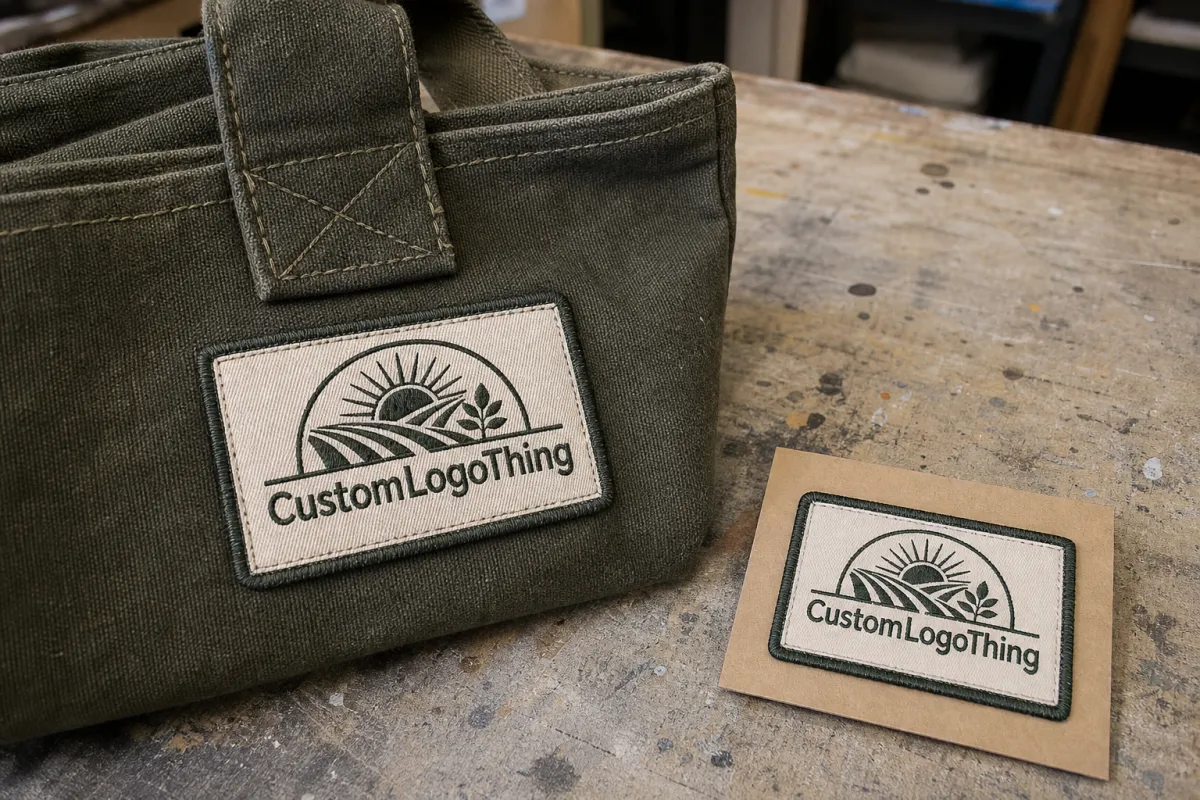
Market stalls are not static retail displays. They are busy, outdoor, and often humid, dusty, or cold depending on the season. Aprons get wiped down. Canvas totes are thrown into vehicles and dragged back out. Shirts are worn through setup, sales, and teardown, sometimes all before lunch.
A Logo Patches Supplier Quote for Farmers Market Sellers should reflect that reality, not a generic uniform program built for office staff or indoor retail. Patches are popular with sellers because they hold a shape better than a lot of printed decoration, especially on workwear and reusable merch. They also make a small operation look more established without requiring a full brand overhaul.
That appearance matters more than many new sellers expect. A clean chest patch on an apron helps staff stand out in a crowded aisle. A patch on a tote turns a reusable carrier into a walking sign. A patch on a cap makes the team easier to spot when customers are scanning several booths at once. In a market where attention moves fast, those small signals have real value.
“At a crowded market, a logo patch does two jobs at once: it identifies the seller and signals that the business is organized enough to care about presentation.”
There is also a practical reason patches work so well for small runs. Many farmers market businesses do not need thousands of units. They may need 50 pieces for a seasonal launch, 100 for staff and retail, or 150 to cover multiple product types. A supplier that only thinks in big apparel programs can miss the mark entirely. The quote should begin with the patch job itself, not just the logo file.
The first specs to define are straightforward:
- Patch size — readable on a cap, apron, or tote from a normal market distance
- Attachment method — sew-on, iron-on, Velcro, or sample-only adhesive
- Backing — standard, heat-activated, hook-and-loop, or none
- Stitch detail — bold logo, fine text, dense border, or mixed fill colors
- Fabric target — cotton apron, denim, fleece, canvas, or blend
Those decisions change both performance and unit cost. A quote without them is just a placeholder.
Patch styles, materials, and backing options for market-ready apparel
Not every patch type does the same job well. If the choice is made by appearance alone, the result can look good on day one and cause problems by week two. A useful supplier quote should separate style from function.
Embroidered patches suit sellers who want texture and a classic, handmade feel. They are a good match for aprons, hats, and heavier garments. They also tolerate regular handling well. The catch is detail: tiny text and thin lines can disappear into dense thread.
Woven patches handle small lettering and fine graphic elements better. If a logo includes the farm name plus a secondary line like “fresh eggs” or “small-batch soap,” woven construction usually gives better readability at smaller sizes. The surface is flatter than embroidery, but the detail is sharper.
PVC patches are useful where moisture and wipe-clean durability matter. They hold up well in damp conditions and are easy to clean. For outdoor booths, produce bags, or messy workwear, they can be a practical choice. The tradeoff is style: PVC does not suit every brand identity, especially if the look is intentionally rustic.
Leather patches fit a premium or heritage aesthetic. They work especially well on denim jackets, thick canvas totes, and heavier aprons. They are not a good match for bright multicolor artwork or logos with very fine linework, but they can elevate the overall presentation quickly if the brand leans natural, rustic, or upscale.
Backing choices matter more than most buyers expect
Sew-on is usually the most durable attachment. If the patch is going on garments that will be washed regularly or used hard, this is the safest option. For aprons and staff shirts that need to survive a whole season, sew-on tends to be the least fussy long term.
Iron-on is easier for in-house application and works well for some small runs. The limitation is fabric compatibility. Coated canvas, textured blends, and heat-sensitive materials do not always bond consistently. That is why a good supplier will ask what the patch is being applied to before recommending it.
Velcro is useful for event staff, temporary uniforms, or branding that needs to come off between shifts. It is less common for retail merch, but it makes sense when flexibility matters more than permanence.
Peel-and-stick should usually be treated as a sample or placement aid, not a final finish. It helps with proofing and mockup approval, not long-term use.
The use case usually points to the right construction. Aprons need wash resistance. Hats need a patch that follows a curve without wrinkling. Tote bags need readable branding from several feet away. Produce bags need lighter construction so the patch does not distort the fabric. If the item will be folded, packed, and carried daily, attachment strength matters as much as the graphic itself.
| Patch type | Best use | Strength | Watch-outs |
|---|---|---|---|
| Embroidered | Aprons, hats, denim | Classic look, durable stitching | Small text can get lost |
| Woven | Small logos, detailed art | Clear fine detail | Less texture than embroidery |
| PVC | Outdoor gear, wipe-clean items | Weather resistant | Does not suit every brand style |
| Leather | Premium totes, aprons, jackets | Rustic, high-end feel | Not ideal for bright or detailed logos |
Shape matters too. A patch can reinforce the brand story if the outline matches the identity: badge, shield, leaf, barn silhouette, fruit shape, or a simple rounded rectangle. Merrowed edges suit many embroidered patches because they frame the artwork clearly. Laser-cut edges are better for custom contours. One is not universally “better”; the design and the fabric decide that.
The logo itself also determines the patch format. Tiny type, thin borders, and multi-color gradients can push the project toward woven or printed patch solutions rather than thick embroidery. A supplier worth using will say that early instead of forcing a design into a construction that will not hold up.
Specifications that affect fit, durability, and brand visibility
Before requesting a Logo Patches Supplier Quote for farmers market sellers, gather the specs that actually move price and performance. The most useful ones are dimensions, stitch density or thread count, color count, border type, backing, and attachment method. Leave those vague and the quote will usually be vague too.
Size affects legibility more than many small businesses expect. A 2-inch patch can work well on a cap or chest label. A 3.5-inch or 4-inch patch is easier to read on an apron front or tote bag. If the logo includes a business name and a descriptive line, larger usually wins. If the patch is just a brand mark, smaller can be enough.
Durability is not theoretical here. Open-air markets expose branding to moisture, dust, repeated folding, and friction from bags and crates. Colorfast materials matter. So does abrasion resistance. If the patch will be washed weekly, ask how it behaves after repeated laundering. If it will stay on outerwear or reusable bags, ask how it handles compression and storage.
For staff garments, consistency matters just as much. Batch-to-batch color drift weakens brand recognition, and patch size changes that seem minor on paper can look obvious across a line of aprons or hats. A stable spec sheet reduces that risk.
Here is the short checklist worth sending with the request:
- Logo file in vector format, if available
- Preferred patch size in inches or millimeters
- Patch style preference, or two acceptable options
- Backing choice and intended fabric
- Quantity range, not only one number
- Color references, ideally Pantone matches
- Placement notes for aprons, hats, totes, or shirts
If you are comparing material standards while planning merch or packaging, the FSC framework is useful for wider sourcing context. It is not a patch spec guide, but it can help frame the sustainability side of procurement decisions that many small sellers now have to make.
Cost, pricing, MOQ, and what drives your quote
Patch pricing follows the usual pattern for custom short-run products: size, material, artwork complexity, backing, edge finish, and quantity all affect the number. More detail means more setup work. Smaller runs carry a larger share of the fixed cost.
That is why a logo patches supplier quote for Farmers Market Sellers often looks more expensive per unit at 50 pieces than at 200. The design may be identical, but the economics are not. A lower unit price only matters if the order volume matches actual demand.
In practical terms, a small embroidered sew-on patch can sometimes land around $0.90-$2.50 per unit in moderate quantities, while woven, PVC, or custom-shaped options can move higher depending on size and finish. Setup fees, digitizing, and shipping are often separate. Those are general ranges, not a promise, and the best quote should break each piece out clearly.
Ask for these items in writing:
- Unit price at each quantity break
- Setup or digitizing fee
- Sample or mockup cost
- Shipping cost
- Revision policy
- Reorder pricing
Reorder pricing deserves special attention. A seller who starts with 75 patches and restocks after the second market season should not have to absorb the entire setup cost again as if the file never existed. Reorder terms tell you a lot about the supplier’s systems and whether they can support growth without resetting the project every time.
Compare the order against your revenue model, not against the quote sheet alone. If the patches are being resold on aprons or hoodies, margin has to work against booth traffic, seasonality, and how much customers are willing to pay for branded merchandise. If the patches are only for staff uniforms, the decision is about appearance and utility. Those are different buying jobs.
One practical move is to start with the minimum viable quantity. That might be 50, 75, or 100 pieces depending on the supplier and patch style. If the patch performs well on market weekends, scale later. That is usually smarter than over-ordering a design that has not proven itself.
Process, turnaround, and production steps from artwork to delivery
The ordering workflow is usually simple if the artwork and specs are clear. Most suppliers follow the same chain: submit logo artwork, confirm specs, receive a digital proof, approve a sample or mockup, move into production, then ship. The delays usually come from incomplete files, unclear placement, or repeated revisions.
Simple designs move faster. Dense stitching, custom contours, and premium materials add time. So does any project that needs several proof corrections. If the logo includes fine type or unusual color separation, expect the proofing stage to take longer than a basic two-color badge.
Speed improves when the buyer sends production-ready information upfront. Vector files are better than screenshots. Pantone references are better than “close enough.” Placement notes save time, especially when the patch will be used on multiple products such as aprons, hats, and tote bags. If the same logo has three applications, say so early.
Physical samples can be worth the extra step. A digital proof shows layout and general color direction. A physical sample shows touch, edge finish, weight, and how the patch sits on fabric. If the patch will be sold on higher-priced goods or worn publicly by staff, that extra check lowers risk.
Seasonal timing matters more than some buyers expect. New booth launches, harvest weekends, holiday markets, and product drops all compress lead time. Waiting until the week before a major event is how small businesses end up paying for rush shipping. Build enough time for proofing and, if needed, one revision.
For simple orders, turnaround is often around 12-15 business days after proof approval, though custom shapes, dense artwork, or busy production periods can stretch that window. Ask before you commit. A realistic timeline is far more useful than an optimistic one.
For general shipment protection and handling standards, the ISTA resource library is useful if you are thinking about transit damage or packaging integrity. It is not a patch catalog, but it is relevant if the finished items need to arrive clean and ready for retail or staff use.
How to evaluate a supplier beyond the quote sheet
The cheapest quote is not always the best one. A supplier that hides shipping, setup, or revision charges can look attractive until the total lands. Transparent quotes are easier to compare, and they usually reveal whether the provider actually understands the work or just knows how to price a line item.
Color consistency is a basic test. If a supplier cannot hold the same brand red from one order to the next, the patch becomes a moving target. That matters when a seller restocks a best-selling apron, adds a second hat style, or expands from produce bags to staff uniforms.
Watch how the supplier handles artwork cleanup and proof corrections. Do they explain whether the file needs simplification? Do they suggest a better backing for the chosen fabric? Do they warn you if fine text will fail at the requested size? Those are signs of real production knowledge.
Durability claims should be tested against real use. Farmers market branding sees open-air moisture, repeated folding, friction from bags and crates, and frequent washing. A patch that looks excellent under showroom conditions but fails after routine wear is not a fit. Ask directly how the construction handles laundering and abrasion.
Scaling matters too. A good supplier can move from a test run to a reorder without changing the patch construction. That keeps presentation steady across seasons and reduces the risk that the second batch looks noticeably different from the first. Small business owners notice that. Customers do too.
The best suppliers usually give some pushback. If the logo is too detailed for the chosen size, they will say so. If the backing is weak for the fabric, they will say so. That is not resistance. That is the kind of answer that saves money later.
What to send next for a fast, accurate quote
If you want a usable quote quickly, send the supplier the right inputs in one pass. That cuts back-and-forth and usually improves pricing accuracy too. A logo patches supplier quote for farmers market sellers gets much cleaner when the request includes the real use case, not just a logo attachment.
Start with the artwork file. Then add the preferred patch style, target size, quantity range, and the item it will attach to. If you have photos of the apron, hat, tote, or shirt, include those as well. Curved hat fronts and thick apron seams often change the best attachment method.
Also specify the business purpose. Retail resale, staff uniforms, and booth branding are not the same job. Retail merch may justify a more premium finish. Staff-only patches may need better durability and lower cost. Booth branding may prioritize visibility above all else.
If you are unsure, ask for two or three options side by side. For example: embroidered sew-on versus woven iron-on. That comparison makes the tradeoffs visible. Texture, readability, and total cost are easier to judge when they are placed next to each other rather than buried in separate quotes.
Here is the cleanest action plan:
- Collect the logo file and product photos.
- Choose two patch styles if you are undecided.
- Set a quantity range, not only a fixed number.
- Request the proof and review it carefully.
- Approve the timeline only after the specs are confirmed.
- Build delivery into the market calendar before the next busy weekend.
If you are ready to move, Contact Us with your logo, the garment type, and the quantity range you want quoted. Clear inputs get clearer numbers, and clearer numbers lead to better buying decisions. That is the real value behind a good logo patches supplier quote for farmers market sellers.
What should I include in a logo patches supplier quote for farmers market sellers?
Provide your logo file, approximate patch size, preferred backing, quantity, and where the patch will be used. Add garment or product photos so the supplier can recommend the best shape and attachment method. Mention whether you need retail-ready durability or staff-only use, since that changes specs and pricing.
Which patch type is best for farmers market apparel and tote bags?
Embroidered patches work well for a classic handmade look and durable workwear. Woven patches are better when the logo has small text or fine detail. PVC or leather can be a good fit for outdoor branding and a more premium market-stall appearance.
How low can MOQ usually be for custom logo patches?
MOQ varies by patch style, material, and complexity. Smaller test runs are often possible, but the per-unit price is usually higher. A low-risk first order is smart if you are testing a new design at weekend markets.
How long does production usually take after I approve the proof?
Turnaround depends on patch type, order size, and artwork complexity. Simple designs usually move faster than dense, multi-color, or custom-shaped patches. Fast approval happens when the artwork is clean and specifications are finalized early.
Can I get samples before placing a larger order?
Yes, sample options are often available as a digital proof or a physical sample. Physical samples are especially useful if the patch will be sold on premium products or worn by staff. Samples help confirm size, color, backing, and readability before full production.


