One well-made patch can do more for a gift set than another layer of print ever will. A small embroidered emblem on a pouch, a soft PVC badge on a travel kit, or a woven brand mark on a folded textile insert can make the whole box feel considered, finished, and worth a higher shelf price. That is why a logo patches Supplier Quote for Gift Set brands deserves real attention instead of being treated like a minor line item.
From a packaging buyer’s point of view, patches are attractive because they add texture, brand presence, and perceived value without adding much bulk. They store easily, travel well, and work across apparel, bags, hats, accessory kits, and bundled retail items, so one sourcing decision can support multiple SKUs. The tricky part is balancing visual detail, cost control, and replenishment reliability, because most buyers asking for a Logo Patches Supplier Quote for gift set brands need all three, not just the lowest price.
How the right patch supplier makes gift sets feel premium fast
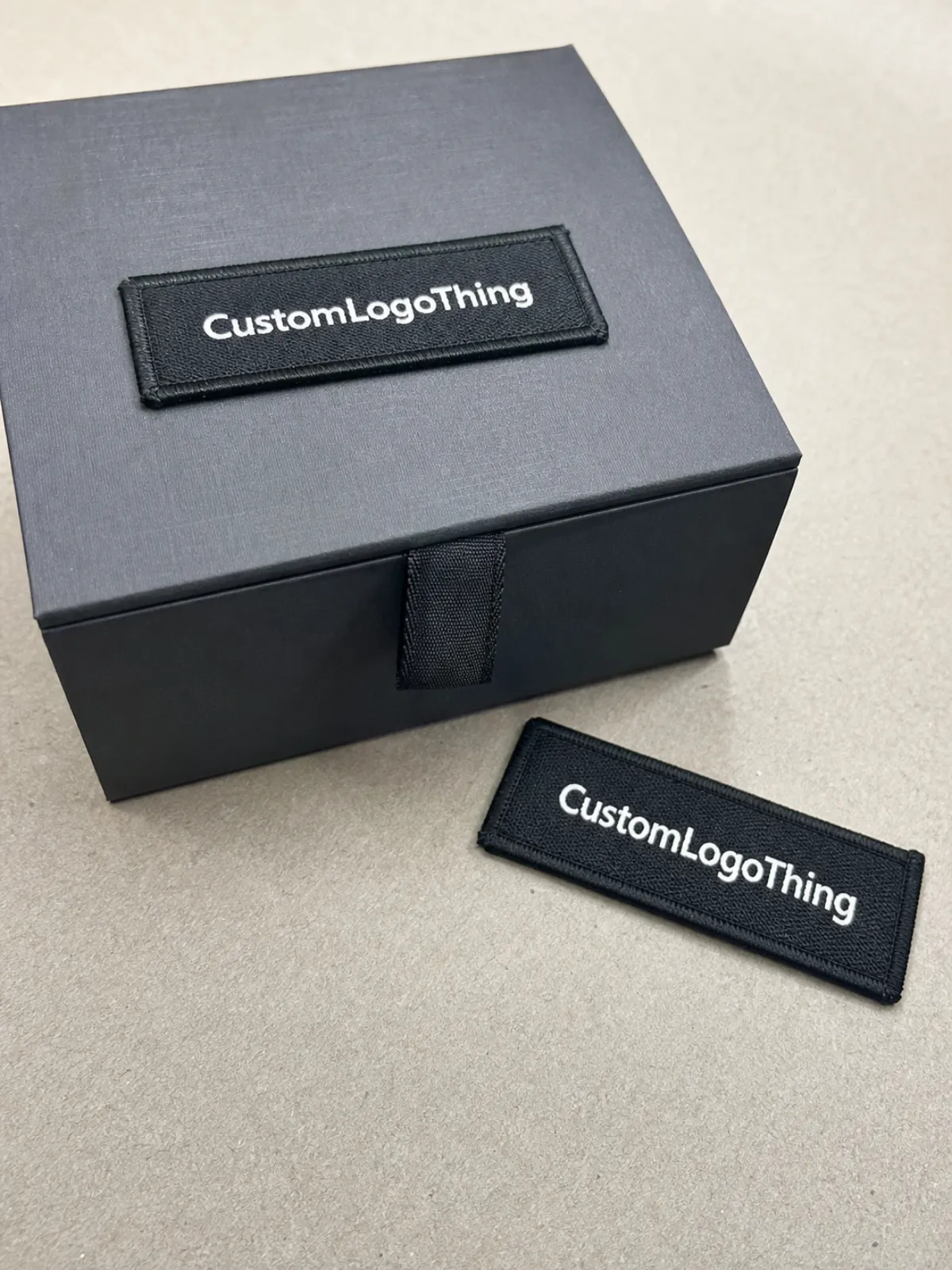
Gift sets sell on presentation. The outer box matters, but in practice the patch is often what people touch first, peel off a backing card, or keep after the rest of the packaging is discarded. That tactile moment changes perception quickly. A cleanly finished patch tells the customer someone paid attention to the details.
That is why patches show up so often in PR kits, subscription box add-ons, welcome bundles, influencer mailers, seasonal retail sets, and apparel gift packs. They do not require much space, they can be packed flat or loose, and they give a brand a custom touch without committing to heavy rigid components or expensive structural packaging changes. A buyer can use the same patch style across a hoodie set, tote bundle, or hat-and-scarf package, which keeps branding consistent across product families.
Many teams spend too much time polishing the box print and too little time thinking about the item inside the box that actually gets handled. The patch is what customers notice in the hand, photograph on social media, and often keep long after the set is opened. That makes the Logo Patches Supplier Quote for Gift Set Brands more than a procurement step; it is part of the presentation strategy.
Practical packaging rule: if a component is touched, seen up close, and kept after unboxing, its material and finish matter more than most buyers expect.
When the supplier understands gift-set use, they can recommend backing options, packing formats, and size tolerances that reduce assembly headaches later. That is especially useful for brands planning replenishment orders, because repeatability matters just as much as first-run appearance.
Patch styles, materials, and backing options that fit gift sets
Not every patch style fits every gift set. The best choice depends on how detailed the logo is, how premium the set needs to feel, how the item will be packed, and whether the brand wants a soft textile finish or a cleaner molded look. For a Logo Patches Supplier Quote for gift set brands, the material and backing often influence both price and performance as much as the artwork itself.
Embroidered patches remain a strong choice for classic branding because they bring raised texture and a familiar stitched look. They work well for logos with medium detail and bold shapes, especially on apparel, bags, and casual retail bundles. Fine text is harder to hold in embroidery, so small lettering can disappear if the design is too busy.
Woven patches handle finer lines better because the threads are tightly woven rather than raised in thicker satin stitches. That makes them useful for smaller logos, sharper outlines, and artwork with more detail. They usually look flatter and more refined than embroidery, which helps when the set is meant to feel neat and premium rather than sporty.
PVC patches are a strong option for durable accessories, travel sets, and outdoor-style gift bundles. They are molded, color-rich, and easy to wipe clean. A soft PVC patch can carry strong brand shapes and layered detail, but the mold and tooling requirements usually affect cost and minimum order quantity more than embroidered or woven styles.
Silicone patches give a modern, tactile finish and work well where a soft-touch, water-resistant surface fits the brand story. Faux leather patches are often chosen for luxury presentation, especially on bags, caps, boxes, and apparel accessories, because the debossed or printed mark can look restrained and polished. Chenille is more niche, but it adds a plush, collegiate feel that can work for fashion-led gift sets.
Backing choice is just as important. Iron-on is convenient for apparel or flat textile applications, though heat sensitivity needs to be checked. Sew-on is the most secure for permanent attachment. Velcro works well when the patch needs to be swapped or reused. Adhesive backing can help in kitting or temporary placement, but it is not always ideal for long-term retail wear. For bulk gift sets, some buyers prefer paper-backed loose packing so the kitting team can attach or insert pieces according to the set configuration.
Shape and border style also affect both appearance and quote. A clean oval or rectangle is usually easier to produce than an intricate die-cut with thin points. Merrowed borders suit some fabric patches, while laser-cut or heat-sealed edges are more common on woven and faux leather styles. For small logos, the border can make the difference between a crisp finished look and a patch that feels crowded.
- Premium gift sets: faux leather, woven, soft PVC
- Casual or heritage looks: embroidered, chenille
- Reusable or interchangeable use: Velcro-backed patches
- Simple kitting: loose packed or card-backed patches
Logo patch specifications that control detail, finish, and unit cost
The quote becomes much clearer once the specification is clean. Suppliers usually need vector artwork, preferred dimensions, shape, color count, backing type, and packing format before they can price accurately. If the logo is supplied only as a low-resolution image, the supplier has to interpret line thickness and edge behavior, which often leads to revision cycles and a weaker final result.
Vector artwork is the starting point because it preserves clean lines at any size. That matters when a patch is only 50 mm wide, since tiny text and narrow strokes can collapse visually. As a practical rule, lines thinner than about 0.3 mm can become hard to reproduce in embroidery or woven constructions, and small text below roughly 4 pt may be unsafe depending on the style.
Specification details that should be confirmed early include:
- Size range: for example, 40-60 mm, 70-90 mm, or a custom die-cut outline
- Shape: round, square, shield, custom contour, or badge style
- Border: merrowed, heat-cut, laser-cut, stitched edge, or molded edge
- Color count: fewer colors generally simplify production and help control cost
- Finish: matte, glossy, debossed, high-relief, or soft-touch
- Packing: bulk, pair packed, card-backed, or individually polybagged
The production method changes what the design can do. Embroidery gives depth and texture, but it has limits on fine detail. Woven construction can hold better line definition, which is why it often suits smaller logos. PVC can build shape and color contrast very effectively. Faux leather gives a quieter, more premium statement, especially if the logo is debossed instead of printed.
Packaging-specific instructions matter too. If a patch is going into a multi-item gift set, the supplier should know whether it needs to be packed with a hangtag, placed in a tray, inserted into a folded garment, or sealed separately for a kitting line. Individual polybagging adds labor and materials, but it can protect the patch and simplify assembly. Bulk packing is cheaper and faster, though it asks more of the fulfillment team.
Special finishes, custom molds, extra color changes, and highly irregular shapes usually push the quote upward. That is not a penalty; it is simply the reality of tooling, setup, and production control.
Pricing, MOQ, and quote factors buyers should compare
Patch pricing is not driven by one number. It is usually a mix of material, size, construction, mold or setup cost, finish, backing, and how much labor is needed to prepare the pieces for shipment. For a logo patches supplier quote for gift set brands, the unit price may look attractive at first glance, but the real comparison only works when the quote breaks out the whole cost structure.
Typical price bands vary widely, but the following table gives a realistic starting point for common configurations at moderate order quantities. These are not fixed rules; they move with design complexity, packing requirements, and country of origin.
| Patch style | Typical MOQ | Indicative unit price | Best fit |
|---|---|---|---|
| Embroidered | 100-300 pcs | $0.20-$0.70 | Casual branding, apparel, simple gift sets |
| Woven | 100-500 pcs | $0.18-$0.60 | Smaller logos, finer lines, neat presentation |
| Soft PVC | 300-1,000 pcs | $0.35-$1.20 | Durable kits, travel items, strong shape detail |
| Faux leather | 100-500 pcs | $0.25-$0.90 | Premium boxes, fashion gifts, understated branding |
| Chenille | 200-500 pcs | $0.40-$1.10 | Fashion-led sets, varsity styling, tactile appeal |
MOQ changes with construction. A simple embroidered patch may allow a lower entry quantity, while a molded PVC piece or custom faux leather finish can require more units to justify tooling and setup. A buyer should ask whether MOQ is based on one design, one colorway, or one size, because that detail changes how quickly the project gets expensive across multiple SKUs.
Beyond unit price, compare:
- Setup charges for digitizing, mold creation, or artwork prep
- Sample fees if a physical proof is required
- Shipping method and whether freight is included
- Packaging fees for card backing, polybags, or pair packing
- Reorder terms if the brand expects repeat runs
A standard shape, limited color count, and repeatable size across several gift sets can save real money. So can bulk packing instead of individual finishing, provided the kitting team has the capacity to manage it cleanly. The smartest quote is not always the lowest unit price; it is the one that shows total landed cost in a way that can be compared line by line.
Good quote discipline: request the same artwork, same size, same backing, and same packing format from every supplier, or the pricing comparison will be misleading.
Process, lead time, and production steps from proof to delivery
The normal process starts with artwork review and spec confirmation. The supplier checks whether the design is suitable for the chosen material, whether the line work is thick enough to reproduce, and whether the requested size is realistic. After that comes a digital proof, which should show dimensions, color references, backing type, border style, and packing format. That proof is the moment to slow down and read carefully.
Delays often happen because the artwork is not final, the size changes after proofing, or the brand is still deciding between finish options. Pantone matching can also add time if the color needs to be exact, especially on projects where the patch must align with box print, inserts, or hangtags. If the set is tied to a seasonal launch, a few days lost during proof approval can push the whole schedule off target.
For timing, the real answer is always “it depends,” but practical ranges help. Simple embroidered or woven patches can often move from approved proof to production in roughly 10-15 business days, while PVC, silicone, or more complex finishes can take 15-25 business days depending on tooling and workload. Sampling, if required, may add another week or more. Shipping then depends on route and service level, so a buyer should build the schedule around the full chain, not just the factory stage.
Clear packaging instructions reduce rework. If the patches need to be packed in pairs, attached to cards, or inserted into a larger kit in a certain order, that should be written into the quote and proof request. Good suppliers appreciate exact instructions because it helps them plan labor and control variation.
For brands that must meet compliance or sustainability goals, it can also help to ask about recycled packaging, FSC-certified card options, or materials that align with current environmental targets. The Forest Stewardship Council explains certified sourcing clearly at fsc.org, while general packaging design and material guidance is available through the Institute of Packaging Professionals. If the project involves waste reduction or packaging disposal considerations, the EPA’s packaging-related resources at epa.gov can also be useful.
What to check before approving a logo patch supplier quote
A quote is only useful if the supplier can actually deliver the same thing twice. Gift set brands live and die on consistency, because one patch with dull color, uneven edges, or a weak backing can affect the presentation of the whole box. Before approval, I would check material consistency, edge quality, color accuracy, communication speed, and how the supplier handles packing instructions.
Ask for photos or samples of similar work in the same material. A supplier may be excellent with woven patches but less convincing with molded PVC, or vice versa. That is not unusual. What matters is whether their actual output matches the intended finish and whether they are honest about the limits of a given construction.
It also helps to confirm tolerances in writing. Size variation, color variation, and placement tolerance should be stated clearly, especially when the patch will sit alongside other components in a premium gift set. If the patch is slightly larger than planned, it may interfere with tray cavities, folded inserts, or outer sleeve dimensions. Those details sound small until the assembly line is moving.
Reliable suppliers usually provide transparent proofing, sensible lead times, and no surprise add-ons after the quote is accepted. If the quote is vague about setup, packaging, shipping, or sampling, that vagueness often returns later as cost creep. For a buyer, clarity is worth paying for.
Buyer check: if a supplier will not state the material, backing, and packing format in writing, the quote is not ready to approve.
For teams comparing options, the best next step is often to review Case Studies and see how similar packaging pieces were specified before requesting pricing. That gives useful context on finish, format, and practical packaging choices.
Next steps to request a quote and lock in production
To get a useful quote quickly, send the essentials in one clean package: logo file, target size, preferred patch style, backing choice, order quantity, and packing format. If there is a hard delivery date, state it up front. If the budget has a ceiling, say that too. A strong logo patches supplier quote for gift set brands depends on real constraints, not guesswork.
When comparing suppliers, ask for two or three quote options with the same specs. One may offer a lower unit price but higher setup fees. Another may have a slightly higher unit cost but lower freight or better packing options. The goal is not to chase the cheapest line item; it is to select the offer that fits the gift set, the launch window, and the replenishment plan.
For premium programs or first-time artwork, request a digital proof before purchase approval, and if the design is especially important, ask whether a physical sample is possible. That extra step can prevent an expensive misread on texture, border thickness, or color balance. It is cheaper to adjust a proof than to correct a full run.
Before release, check the basics one more time:
- Confirm carton packing and piece count
- Verify shipping address and delivery contact
- Review retail labeling or barcoding requirements
- Make sure the patch size fits the gift set layout
- Approve the final proof in writing
If your team is ready to move, the cleanest path is to send the artwork and spec sheet and ask for a logo patches supplier quote for gift set brands that matches budget, finish, and schedule. Keep the request specific: material, size, backing, packing, quantity, and delivery window. The better the input, the tighter the pricing.
What do I need to get a logo patches supplier quote for gift set brands?
Provide vector artwork, patch size, preferred material, backing type, quantity, and packing method. If you have a target budget or delivery date, include that as well so the quote reflects real production constraints.
Which patch type is best for premium gift set packaging?
Faux leather, woven, and soft PVC are common for premium sets because they look polished and travel well. The best choice depends on whether you want texture, fine detail, or a more minimal luxury finish.
How does MOQ affect the final patch price?
Higher quantities usually lower the unit cost because setup and tooling are spread across more pieces. Special shapes, molds, or complex finishes may require a higher MOQ than standard embroidered or woven styles.
How long does production usually take after approval?
Timing depends on patch type, order size, and whether a sample or digital proof is required first. Clear artwork and fast proof approval help shorten the overall turnaround.
Can patches be packed individually for gift sets?
Yes, many suppliers can offer individual polybags, card backing, or bulk packing based on your kitting needs. Packaging format should be confirmed in the quote because it can affect labor, materials, and final cost.


