For fitness brands, Logo Patches Unit Cost for fitness brands is rarely about the patch alone. It is about what that patch does to the full product margin once you factor in MOQ, setup charges, freight, and how often the item will be reordered. A difference of $0.20 per patch can be noise on a one-off order, then turn into a real margin leak across thousands of hoodies, caps, or bags.
The better buyers do not start by asking for the cheapest quote. They ask which patch format will hold up to sweat, abrasion, repeated washing, and reorders while keeping cost per piece predictable. That is the difference between a disciplined product program and a line item that keeps drifting.
Why fitness brands buy patches as a margin play, not a decoration
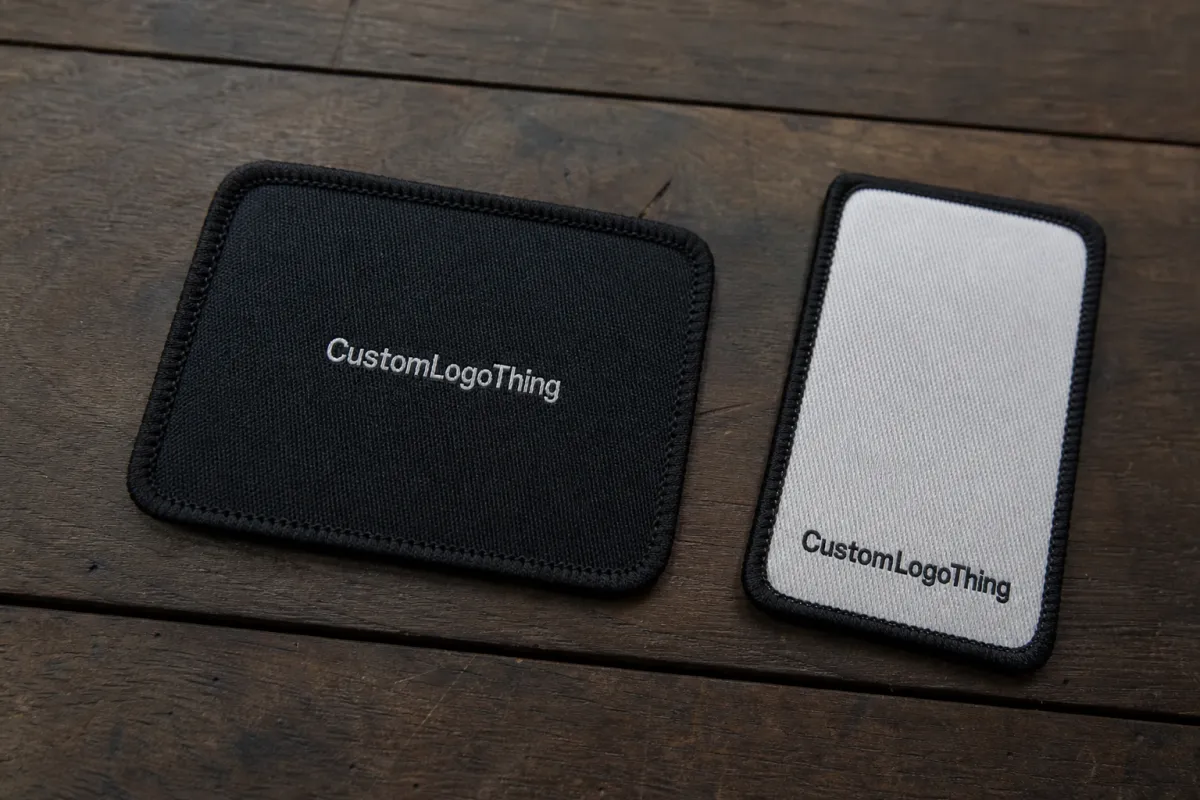
Patches earn their place because they make a garment feel more finished without forcing heavy direct embroidery across every SKU. On a hoodie, a small chest badge can signal premium positioning without covering usable print space. On a gym bag, a patch can survive the scuffing and rubbing that would wear down some printed marks.
The financial logic is simple. If a $48 hoodie carries a patch that costs $0.35 instead of $0.55, that $0.20 difference becomes meaningful as order volume rises. At 5,000 units, that gap is $1,000 before setup, freight, or rework enter the picture. The same arithmetic applies to caps, team kits, lifting belts, and accessory drops where buyers compare perceived value against actual unit cost.
Fitness brands usually buy patches for five product families:
- Hoodies and sweatshirts, where a chest patch creates a premium look without crowding the front panel.
- Gym bags and duffels, where abrasion resistance matters more than fine detail.
- Caps and beanies, where curved placement favors compact shapes and modest stitch counts.
- Lifting belts, where branding needs to stay visible under strain and handling.
- Performance tees, where low-profile branding avoids stiffness in high-movement areas.
There is a second reason buyers like patches: consistency. A patch program can be carried across styles, which simplifies reorder planning and gives the brand a repeatable visual signature. For teams comparing supplier proposals and trying to forecast landed cost, that consistency matters more than a headline price that only works on the first order.
“The cheapest quote is often the most expensive one once you add revisions, rush fees, and rework. The real question is whether the patch program stays predictable on reorder.”
From a product-development standpoint, a good patch is not a decorative extra. It is a controlled branding element with a defined attachment method, a defined durability profile, and a cost structure that can be managed. That is why smart buyers treat Logo Patches Unit Cost for fitness brands as a margin tool.
Patch formats and material choices that change the unit price
Patch types behave very differently in production. Some are labor-friendly. Some look premium but take longer to make. Some are better for sharp detail, others for harsh use, and that difference shows up immediately in pricing.
| Patch type | Typical strength | Cost tendency | Best fit for fitness brands |
|---|---|---|---|
| Woven patch | Fine detail, smooth surface | Moderate | Small logos, clean lettering, caps, apparel fronts |
| Embroidered patch | Textured, premium feel | Moderate to higher | Hoodies, team gear, heritage branding |
| PVC patch | Durable, weather resistant | Moderate to higher | Bags, belts, outdoor training accessories |
| Leather patch | Premium aesthetic | Higher | Lifestyle apparel, premium merch, caps |
| Sublimated patch | Color flexibility, full artwork | Lower to moderate | Complex graphics, gradients, detailed artwork |
Woven patches are often the most efficient choice when the logo has small text or narrow lines. Embroidered patches rise in price when stitch density increases, because dense thread coverage means more machine time and more material. PVC can look bold and holds up well on bags and accessories, but it usually costs more than a simple woven build because molding and finishing add labor.
Backing choice changes the economics as well. A sew-on patch is usually the simplest and most stable for repeated washing. Iron-on or heat-applied backing can reduce attachment labor on some garments, but it is not always the right call for stretch fabrics, heavy sweat exposure, or items that are washed often. Velcro backing works for tactical-style gym gear or removable branding, though it adds assembly steps and cost. Adhesive backing can help with temporary placement, but it is rarely the correct choice for a long-life fitness product.
Two details buyers underestimate are border style and color count. A merrowed edge can be efficient on simple shapes, while laser-cut or embroidered borders may raise labor. More colors can also increase handling time, especially if the artwork has small separations that need careful execution. A clean two-color logo behaves very differently from a six-color mark with tiny type and layered effects.
There is a quality issue tied to all of this. A patch that fails after repeated wash cycles creates replacement costs, customer complaints, and return risk. That is why brands should compare not just appearance, but also how the material handles sweat, flex, and abrasion. For a fitness brand, durability is part of the cost equation.
Logo patch specs buyers should lock before requesting quotes
Most quote mistakes begin with incomplete specs. Suppliers can only price accurately when the request is specific enough to become a production plan. For Logo Patches Unit Cost for fitness brands, the critical inputs are straightforward, but each one changes the number on the quote.
Lock these details before requesting pricing:
- Size in millimeters or inches.
- Shape such as round, square, shield, rectangle, or custom cut.
- Edge finish including merrowed, laser-cut, embroidered border, or heat-cut.
- Attachment method like sew-on, iron-on, Velcro, adhesive, or heat-applied backing.
- Color count with clear Pantone or PMS references where needed.
- Order quantity by SKU, not just a blended total across multiple styles.
Artwork readiness matters more than many buyers expect. A clean vector file with controlled outlines reduces quote ambiguity and makes production smoother. If the logo has tiny text, thin strokes, or layered shadows, a patch supplier may need to simplify elements to protect legibility at actual size. That can affect both unit price and approval timing.
For fitness products, these size bands are common starting points:
- Chest patch: roughly 2 to 3 inches wide.
- Sleeve patch: roughly 1.5 to 2.5 inches wide.
- Cap front patch: roughly 2 to 2.75 inches wide.
- Gym bag panel patch: roughly 2.5 to 4 inches wide.
Those are not rigid rules. They are practical ranges that often fit common placements without crowding seams or changing garment drape. On stretch tees, a patch that is too large can affect comfort. On belts and bags, a slightly larger patch can improve visibility without creating fit problems.
Sample approval should check four things: color match, border clarity, attachment performance, and how the patch sits on the final mockup. If any one of those is skipped, a sample can look fine on paper and still fail in real use. For items meant to be washed repeatedly, it helps to ask what test method the supplier uses for wash and abrasion checks. Industry resources such as ISTA and EPA textile resources are useful reference points for thinking about lifecycle performance, not just appearance.
Standardizing specs across SKUs is one of the fastest ways to compare quotes fairly. If one supplier prices a 55 mm woven patch with sew-on backing and another prices a 65 mm embroidered patch with heat-applied backing, you are not comparing like for like. You are comparing two different products.
Logo patches unit cost for fitness brands: what actually drives pricing
The phrase Logo Patches Unit Cost for fitness brands sounds simple, but pricing is built from several moving parts. Patch type, dimensions, color count, backing style, labor intensity, shipping destination, and the amount of setup work all influence the final number. Then there are the extras: sampling, design cleanup, packaging, and delivery terms.
For a standard fitness patch program, these ranges are a practical starting point:
| Program element | Typical cost effect | What to watch |
|---|---|---|
| Sample / prototype | $20-$80 per version | Can rise with complex artwork or multiple revisions |
| Setup charges | $25-$150+ | Depends on digitizing, mold prep, artwork conversion, or tooling |
| Unit price at 500 pieces | Often $0.60-$2.20 | Small runs absorb more fixed cost per piece |
| Unit price at 5,000 pieces | Often $0.18-$0.85 | Better spread of setup, depending on style and finish |
| Landed cost | Varies by freight and destination | Shipping, duties, carton count, and split delivery can change the real number |
Those are not universal prices. A woven patch with low color count and a simple shape will often sit near the lower end. A PVC patch with custom mold work, multiple layers, and special backing can sit much higher. That is where tooling fees matter. A lower piece price can be misleading if the setup cost is heavy and the run is small.
MOQ affects unit economics more than many teams expect. A low order can look affordable on paper, but if setup charges are divided across only a few hundred pieces, the true cost per piece climbs quickly. That is why a 500-piece order is not automatically half the unit price of a 1,000-piece order. Sometimes the difference is small. Sometimes it is not, especially if the artwork is simple and the supplier is already set up for repeat runs.
Another trap is quote mismatch. One supplier includes packaging and inland freight. Another excludes them. One quote assumes a basic sew-on back, while another includes heat-applied backing. If the specs are not normalized, the lowest number is often the least useful number.
A practical comparison should answer five questions:
- What exact patch type is being quoted?
- What size and shape are included?
- What backing method is included?
- What is the MOQ for that exact build?
- What is the landed cost to the warehouse or fulfillment center?
That framework exposes the real pricing structure. It also helps prevent surprise setup charges, redesign fees, and rush premiums. If a supplier offers a lower piece price but adds separate artwork fees, mold fees, or split-shipment fees, the quote may end up higher than a cleaner all-in offer.
For buyers, the best patch program is the one that holds a stable unit cost across several orders. Fitness apparel collections rarely stay still for long. If the same patch can move across hoodies, shorts, bags, and team kits without redesign, procurement gets cleaner and cost control gets easier.
Production steps, lead time, and sample approval
Patch ordering is usually a straightforward sequence, but delays tend to happen in the same places every time. The process starts with artwork submission, moves to quote confirmation, then digital proofing, sample production, approval, mass production, quality inspection, and dispatch. If the spec is clear, the order moves quickly. If it is not, every stage slows down.
Proof approval is usually faster than sample approval. A digital proof may come back within a day or two, while a physical sample can take longer because it has to be made, checked, and shipped. Revisions are the most common delay. One changed Pantone reference can ripple through the schedule. A late decision on attachment method can do the same.
For typical fitness patch programs, a realistic timeline often looks like this:
- Proofing: 1-3 business days after artwork submission.
- Sample production: 3-7 business days, sometimes longer for complex materials.
- Mass production: often 10-20 business days after approval, depending on quantity and queue.
- Freight: depends on method and destination; air is faster, sea is cheaper.
That schedule changes if the design is intricate, the MOQ is high, or the supplier is in a peak production window. New collection launches, especially around seasonal gymwear drops, can tighten capacity and extend lead time. If a campaign is tied to a product release date, a buffer is cheaper than a rush order.
Three checkpoints deserve extra attention:
- Pantone or PMS match, especially for brand-critical colors.
- Attachment method, so the patch works on the target fabric.
- Placement on the garment mockup, since size mistakes are expensive after production starts.
A simple rule holds up well: the faster the spec sheet is finalized, the faster the order moves from estimate to production. Buyers who send a complete file package usually get more reliable quotes and fewer revisions. Buyers who send “something close” tend to create delays and extra labor on both sides.
“A sample is not a formality. It is the only cheap place to find a mistake before that mistake becomes 2,000 finished units.”
Quality control should not stop at the sample. For larger runs, a good inspection plan checks finish consistency, color drift, border integrity, adhesive or stitching quality, and pack-out counts. If the patch is going onto apparel that sees frequent laundering, a wash test on a small lot is worth the time. Skipping that step can make a low-cost patch expensive in the field.
How to keep patch costs predictable across repeat orders
Repeat orders are where margin gets protected or lost. If a brand restocks the same patch six months later and the build has drifted, the unit economics can change quickly. The best protection is a master spec sheet that stays locked across reorder cycles.
That master spec should include size, shape, material, backing, border style, thread or color reference, and the approved artwork version. It should also record the approval date and any tolerance limits for color variation or finish. Without that, every reorder becomes a new sourcing exercise.
Fitness brands that launch seasonal lines should think in batches. If the same logo patch will appear on hoodies, tanks, and duffels, it is often smarter to order once for multiple SKUs than to rebuild the spec several times. That can improve bulk pricing and reduce admin cost.
There are three common inventory strategies:
- Order to demand: lower inventory risk, but higher chance of small-run pricing.
- Hold safety stock: better for continuity, though it ties up cash and storage space.
- Reorder threshold: a middle path that triggers replenishment before stockouts hit.
Packaging and carton planning can also lower the real cost. Better carton counts can reduce damage in transit, make warehouse receiving faster, and cut re-handling. For larger programs, even a small improvement in packing efficiency can shave labor from inbound processing. That is not glamorous, but it is real money.
Brands should track three metrics alongside quote price: defect rate, replacement rate, and reorder speed. A patch that is $0.05 cheaper but creates more defects may be the worse purchase. A patch that costs slightly more but gets through a season without replacement calls is usually the better one.
If sustainability matters to your brand, ask whether the supplier can provide FSC-certified packaging for packed patch sets or whether carton materials align with current fiber sourcing goals. For packaging claims, the FSC standard is a useful reference even if the patch itself is not paper. The packaging around it still affects waste and brand perception.
Next steps to request a precise quote and avoid cost overruns
If you want a clean quote, send a complete request the first time. The more precise the inputs, the easier it is to get a meaningful answer on logo patches unit cost for fitness brands.
Include these items in your request:
- Logo file in vector format.
- Target patch size.
- Preferred patch material.
- Attachment method.
- Order quantity.
- Delivery deadline.
- Any special packaging or carton needs.
Then compare at least two quotes using the same exact specs, the same shipping terms, and the same artwork revision. If one supplier prices a 3-inch woven patch and another prices a 2.5-inch embroidered patch, the comparison is not valid. Normalize the numbers before making a decision.
Ask for a digital proof before sample approval. That step catches most preventable corrections early, and it is cheaper to adjust artwork than to correct a finished run. Also confirm all add-ons upfront, including backing upgrades, packaging, expedited handling, and split delivery.
If a supplier offers tiered pricing, request the full ladder. Sometimes the difference between 500 units and 1,000 units is small enough that a larger order improves unit cost materially. Other times, it does not. You only know if you see the full structure.
For brands that want a tighter commercial process, the sequence is simple: finalize specs, approve a sample, then place the production order. Document it once and the next reorder becomes easier to forecast, easier to compare, and less likely to carry hidden cost changes.
The bottom line is straightforward. The smartest fitness buyers do not chase the lowest sticker price; they manage the full quote. That is how they keep logo patches unit cost for fitness brands under control on the first run and on every reorder after it.
What affects logo patches unit cost most for fitness brands?
Patch material, size, color count, backing type, and order quantity usually have the biggest impact. Setup, sampling, and shipping can change landed cost even when the unit price looks low.
What is the best patch type for gym apparel and bags?
Woven and embroidered patches are common for apparel, while PVC often performs well on bags and accessories. The best option depends on wash frequency, flexibility, and the look the brand wants to project.
How low can MOQ be for custom logo patches?
MOQ varies by material and complexity, but smaller runs usually cost more per piece. Ask for tiered pricing so you can compare a starter run against the cost of a larger reorder.
How long does patch production usually take?
Timing depends on artwork approval, sample sign-off, and order size. Complex designs, rush requests, or revisions can extend the schedule.
How do I get an accurate quote for logo patches?
Send the logo file, size, material preference, backing type, quantity, and needed delivery date. Matching the same specs across suppliers is the fastest way to compare real unit cost.


