Logo Patches Unit Cost for cosmetics brands is one of those packaging numbers that looks modest until it sits inside a real forecast. A two-cent shift sounds trivial on a sample sheet. Multiply that by 25,000 gift boxes, retail pouches, or launch kits and the difference becomes visible fast. That is before freight, sampling, and rework enter the picture.
Cosmetics buyers tend to evaluate patches on appearance first, then cost. That order is natural, but incomplete. A patch has to carry brand identity, survive handling, fit the substrate, and stay consistent from the first approved sample to the final carton in the last pallet. If any of those pieces drift, the unit cost stops being the whole story.
The useful question is not whether a patch looks premium in isolation. It is whether the patch earns its place in a packaging system that already has tight deadlines, tight margins, and very little tolerance for variation.
Why logo patches affect cosmetic packaging economics
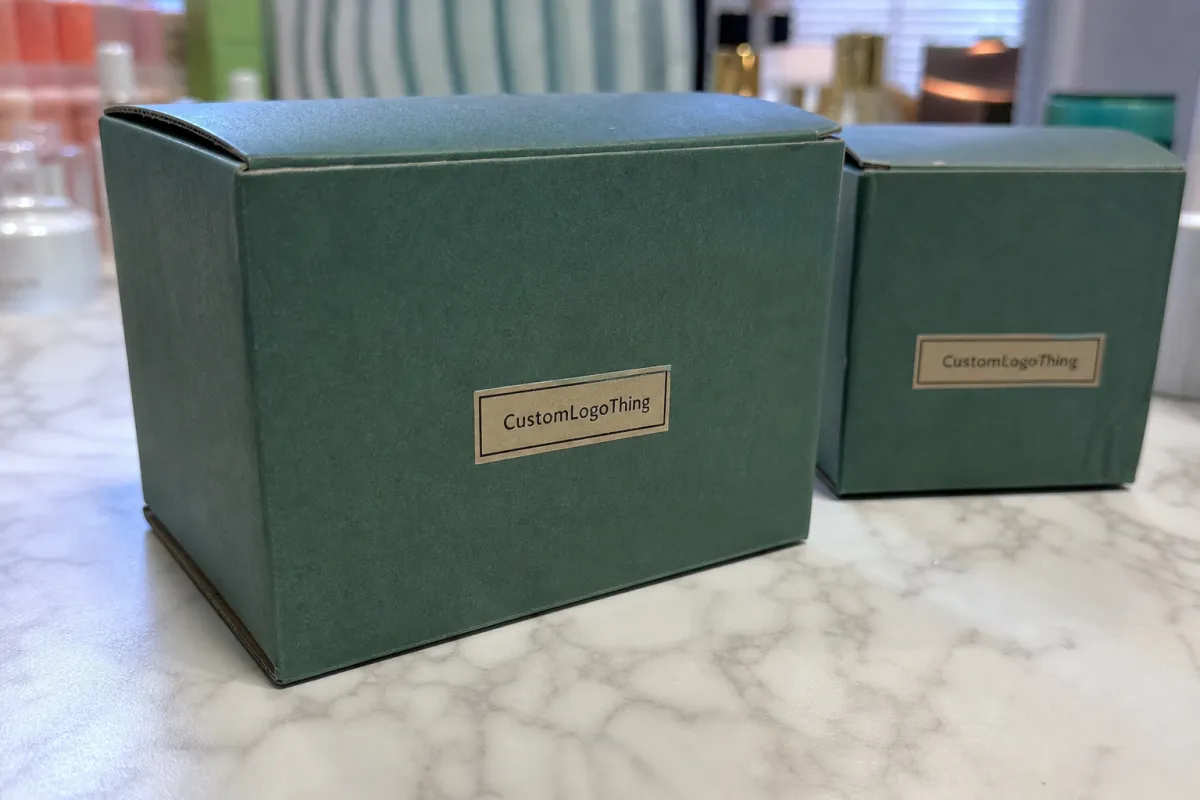
Cosmetics packaging is unusually sensitive to perception. A plain pouch with a woven emblem reads differently from the same pouch without one. A rigid box with a silicone badge can feel more deliberate even when the base structure is unchanged. Small embellishments often do more brand work than larger structural upgrades because customers notice texture, contrast, and placement almost immediately.
That is why Logo Patches Unit Cost for cosmetics brands deserves its own line in planning. The patch often becomes the visual signature while the rest of the packaging stays standard across shades, seasonal collections, or private-label programs. The economics are straightforward: one controlled embellishment can refresh a packaging family without requiring a full redesign.
The commercial logic varies by product type. A premium skincare line may only need a discreet leather-like patch on a reusable pouch. A clean-beauty brand may prefer woven construction for fine typography. A promotional kit may be better served by printed fabric because it keeps the artwork readable while staying in a lower cost band.
There is also a perception trade-off. Embroidery adds texture and a handmade feel. PVC and silicone communicate durability and a sharper modern finish. Woven patches are usually the safest choice when the logo includes thin lines or small type. Printed patches can preserve gradients and complex art, but they do not always carry the same tactile value. Cosmetics teams are buying a brand cue, not just decoration.
“The lowest quote is rarely the cleanest decision. The best patch is the one that survives handling, reproduces the logo accurately, and reorders without surprises.”
That last point matters more than many launch calendars allow for. Reorders, shade extensions, and seasonal sets all punish inconsistency. Once a patch becomes part of the product’s identity, matching the original spec is as important as the first approval.
Patch styles, materials, and brand fit
The patch types cosmetics buyers request most often are embroidered, woven, PVC or silicone, leather-like, chenille, and printed fabric. Each one brings a different combination of texture, detail, and production cost. Choosing between them is less about taste than about how the patch will behave on the final package.
Embroidered patches suit bold marks, raised texture, and a more tactile premium look. They work best when the logo is simple enough to hold up after stitching. If the mark depends on tiny letters or fine linework, embroidery can blur the edges unless the artwork is simplified first.
Woven patches are often the best fit for cosmetic bags, travel pouches, and retail soft goods when the brand wants cleaner detail. They handle small type better than embroidery and usually give a flatter, more polished appearance. For logos with intricate lines, woven construction often protects legibility without pushing cost too high.
PVC and silicone patches are chosen for moisture exposure, frequent handling, and modern-looking packaging. They are common on reusable pouches, gym-friendly beauty kits, and products that may sit near water or in humid environments. The material is easy to wipe clean, though the finish can feel less soft than textile options.
Leather-like patches are often selected for premium skincare and upscale gift packaging. They create a refined tactile cue without the maintenance issues of natural leather. For brands that want an elevated look without overly decorative details, this is often a practical middle ground.
Chenille patches are less common in cosmetics but can work for younger, more playful collections. They are soft, dimensional, and visible from a distance. The limitation is precision: chenille is not the right answer for compact logos, thin text, or highly detailed art.
Printed fabric patches are usually the most forgiving when artwork includes gradients, fine strokes, or multiple colors. They are also useful when speed and budget matter more than tactile depth. For launch sets, sampling programs, or temporary promotions, print can keep the design intact while controlling unit price.
Surface compatibility matters just as much as patch style. A design that looks balanced on a textile pouch may be too heavy on a narrow carton sleeve. A patch that feels crisp on a soft bag may look awkward on a rigid box if the proportions are off. In cosmetics packaging, the same logo rarely works equally well across every substrate without adjustment.
- Textile pouches and drawstring bags
- Rigid gift boxes with embellishment panels
- Reusable organizers and travel cases
- Promotional sleeves for launches and sampling programs
A simple rule helps narrow the choice. If the logo needs crisp text or fine linework, woven or printed formats usually make more sense. If the goal is texture, a premium tactile cue, or better durability under handling, embroidery, silicone, PVC, or leather-like material may justify the higher unit cost.
Specifications that drive look, durability, and fit
Before any quote can be trusted, the basic specs need to be locked down. Size, thickness, border finish, backing, and attachment method all affect the number you receive. If one of those is missing, the quote may look attractive but still be incomplete.
Patch size is usually the first cost driver. A 30 mm icon patch and an 80 mm logo panel are not the same manufacturing job. Larger patches use more material, more time, and sometimes a different production method. Thickness matters too, especially on narrow pouch seams or thin carton sleeves where a bulky patch can distort the package.
Artwork complexity is another common cost trigger. In embroidery, stitch density affects both clarity and production time. In woven construction, very small text may need simplification to stay readable. In printed patches, gradients and fine lines are easier to preserve, but the print method may still require calibration to avoid color shift. The artwork cleanup stage is part of pricing, not an optional extra.
Backing choice changes both function and unit cost. The most common options are:
- Sew-on for textile pouches, bags, and soft goods
- Iron-on for heat-tolerant fabric applications
- Adhesive for temporary use or short-run projects
- Hook-and-loop for reusable or changeable branding
- Heat-seal for controlled thermal application on compatible materials
Each one has a different operational impact. Sew-on is usually the simplest to cost and to apply. Adhesive can lower labor, but it is not suitable for every surface. Heat-seal and hook-and-loop can be useful in specific workflows, yet they also add application constraints that affect total program cost even when the patch itself seems inexpensive.
Durability deserves more attention than it usually gets. Cosmetics packaging is handled repeatedly: packed, unpacked, stacked, shelved, reopened, and sometimes shoved into bags or bathroom drawers. If the patch will live on a reusable beauty case or near moisture, resistance to humidity and abrasion matters. A soft-touch box paired with a low-grade patch can make the whole package feel cheaper than it is.
For higher-end lines, buyers should also ask about finish consistency, odor, edge quality, and how the patch will sit against nearby materials. A slight mismatch in sheen or texture can be enough to weaken the premium impression. That kind of detail often shows up only after the first physical sample, which is why proofing on the actual substrate is preferable to judging a standalone image.
Industry references such as ISTA testing protocols are useful when evaluating how embellishments behave during transit and handling. Packaging failures rarely start with the patch alone, but the patch often reveals whether the package was designed with real movement in mind.
Logo patches unit cost: pricing drivers, MOQ, and quote structure
The phrase Logo Patches Unit Cost for cosmetics brands sounds simple, but the number is assembled from several variables. Size, material, color count, backing, artwork complexity, and order volume all matter. Custom shapes and specialty finishes add more labor. On first orders, tooling fees, mold charges, and sampling costs can also appear.
Volume is the biggest cost lever. As quantity rises, unit cost usually drops because setup is spread across more pieces. A 2,000-piece run can price very differently from a 10,000-piece reorder even when the patch design is unchanged. That is standard production economics, not an anomaly.
For early planning, the ranges below are realistic reference points. They are not fixed rates. Artwork, finish expectations, and delivery terms can push a project above or below them.
| Patch style | Typical use case | Indicative unit cost at mid-volume | Notes |
|---|---|---|---|
| Printed fabric | Promotional sleeves, sample kits | $0.18–$0.35 | Useful for detailed artwork and lower-cost branding |
| Woven | Skincare pouches, retail bags | $0.22–$0.48 | Good balance of detail and polish |
| Embroidered | Gift sets, salon kits | $0.30–$0.70 | Raised texture, stronger tactile effect |
| PVC / silicone | Travel kits, moisture-prone items | $0.35–$0.85 | Durable, modern-looking, easy to wipe clean |
| Leather-like | Premium skincare packaging | $0.40–$0.95 | Often chosen for upscale lines and gift packaging |
MOQ matters as much as the quoted unit cost. If a brand plans to use the same patch across multiple shades, sub-lines, or seasonal sets, it is usually cheaper to consolidate into one master design than to place several small orders with slight artwork changes. One larger run often beats three tiny runs on total spend, especially once sampling and setup are included.
When comparing quotes, the cleanest method is to ask suppliers to break out every major cost component:
- Unit cost
- Sample cost
- Tooling fees or mold charges
- Setup charges
- Freight and delivery method
- Artwork revision fees, if any
That structure prevents false comparisons. A very low per-piece quote can become the more expensive option if it carries hidden setup or freight costs. For cosmetics programs, the best quote is usually the one with transparent pricing and a repeatable reorder path.
Color count and tolerance also affect price. Standard dimensions, fewer colors, and clean geometry are usually cheaper to produce. Tight color matching, unusual borders, layered constructions, and very small lettering increase labor and inspection time. In practice, the design that looks simplest on a screen is often the one that is hardest to make consistently.
One more practical point: if the patch will be used on a product line with sustainability targets, the materials and waste implications should be checked early. General materials guidance from the EPA can help frame packaging decisions, especially when a brand is trying to reduce unnecessary layers or avoid over-specifying a decorative element that does not improve performance.
Production process, timeline, and approval steps
Patch production follows a predictable sequence: artwork submission, digital proof, sample production, approval, bulk production, quality check, and shipping. The process itself is straightforward. The schedule depends on how quickly the brand can lock decisions.
Most delays come from the same few problems. The file is low resolution. The logo is resized after sampling. Color references arrive late. Someone new reviews the project after approval was already expected. None of that is unusual, but each issue can push the launch date.
A realistic timeline for cosmetics projects usually looks like this:
- Digital proof: often 1–3 business days after file receipt
- Sampling: commonly 5–10 business days, sometimes longer for complex builds
- Bulk production: often 12–20 business days after sample approval
- Shipping: depends on route, customs, and service level
Specialty materials, unusual shapes, and multi-layer constructions extend lead time. So do tight color matching requirements. Repeat orders are usually faster because the specification is already locked and the supplier does not need to recreate the artwork logic from scratch.
Before approving a sample, a cosmetics team should check more than the logo itself. Ask for measurements, color reference guidance, backing method, edge finish, and the final application context. If the patch is going on a pouch, box, or sleeve, the supplier should know the exact substrate and any dimensional constraints. A patch that fits the CAD file can still sit badly on the physical package.
Production control becomes even more important when the patch is part of a launch calendar. Late changes can create a mismatch between packaging inventory and embellishment inventory, which often costs more than the original upgrade ever justified. Once approval starts, specs should stay fixed unless there is a real performance reason to change them.
Quality-control checks usually focus on color consistency, border finish, adhesive integrity if relevant, logo placement, and overall dimensional accuracy. For cosmetics packaging, the patch should also be checked under the lighting conditions where the product will actually be seen. Natural light, shelf lighting, and camera flash can all reveal different issues.
How we support cosmetics brands from sampling to scale
Custom Logo Things works with cosmetics buyers who need practical guidance, not a list of vague options. The useful part of support is narrowing the decision set quickly: which material fits the substrate, which backing is appropriate, how large the logo can be before it feels heavy, and where the unit cost stops making sense.
That matters because the same logo can behave very differently across patch types. A woven version may preserve detail but lose impact if it is cut too small. An embroidered version may look rich but read poorly if the artwork is too intricate. A good production partner points out those limits before the order is locked, not after the first sample fails.
We also help buyers compare quotes across budget levels without hiding the trade-offs. Sometimes the lower-cost version is the correct choice. Sometimes a slightly higher-cost construction reduces artwork compromises, avoids a second round of sampling, or improves reorder consistency enough to save money later. The cheapest option is not always the most economical once the full project is counted.
Consistency across reorder batches is especially important for beauty brands with seasonal launches and core collections. Customers notice changes in tone, size, sheen, and edge finish. If the patch shifts from one shipment to the next, the whole package can lose some of its premium signal. That is a small defect with a larger brand cost.
For teams evaluating packaging execution, the lesson is usually the same: detailed specs beat assumptions. One of the most common reasons a package disappoints is not the concept, but the gap between the render and the production reality. Material choice, backing, and placement are what determine whether the design holds up in hand.
Communication matters too, especially under launch pressure. Clear sample validation, predictable production control, and direct answers on feasibility save more time than a long feature list. In packaging, uncertainty is expensive.
Order planning and next steps for your cosmetic patch project
If you are preparing a patch order, send the supplier the details that actually drive pricing: logo file, target size, preferred patch style, backing choice, and expected order quantity. If you have a budget target, include that as well. It helps narrow the recommendations before sampling starts.
Ask for at least two or three quote options. One can prioritize lower unit cost. Another can balance appearance and durability. A third may shorten lead time. Side-by-side comparison is more useful than a single number with no context, especially when the patch is part of a launch rather than a routine reorder.
Test one sample on the actual cosmetic package before confirming the full run. Put it on the pouch. Place it on the box. Check the visual weight in natural light and under retail lighting. A patch that looks fine on a render can read very differently once it sits on the real substrate.
A simple decision path usually works best:
- Choose the patch material
- Confirm dimensions and backing
- Approve the proof
- Lock the MOQ
- Schedule production against the launch calendar
Keep the specs fixed once approval begins. Every late change can affect unit cost, sampling time, and delivery date. For a cosmetics program, that is usually where budget discipline is won or lost.
If you are comparing suppliers, use Logo Patches Unit Cost for cosmetics brands as the starting benchmark, not the only benchmark. The better buying decision balances finish quality, MOQ, tooling fees, and production reliability without inflating the final cost per piece.
What affects logo patches unit cost for cosmetics brands the most?
Size, material, stitch or print complexity, backing type, and order quantity have the biggest impact on unit cost. Color changes and custom shapes can raise pricing, while standard dimensions usually lower it. First orders often include setup or sampling costs that do not repeat on reorders.
What MOQ should a cosmetics brand expect for custom logo patches?
MOQ depends on patch style and production method, but larger runs usually deliver better unit cost. Simpler woven or printed patches may allow lower minimums than highly detailed embroidered or silicone options. If you need multiple SKUs, it is often more economical to consolidate artwork into one master design.
Which patch material is best for premium skincare packaging?
Woven, embroidered, and leather-like patches often suit premium skincare because they create a tactile, upscale feel. Silicone or PVC patches can work when durability and moisture resistance matter more than textile softness. The best choice depends on the package surface, handling conditions, and brand aesthetic.
How long does custom patch production usually take?
Timeline depends on proof approval, sampling, and order size, but sampling usually takes longer than repeat production. Complex logos, special backings, or color matching can extend lead time. Approving artwork quickly and keeping specs fixed is the fastest way to protect launch dates.
Can I use one logo patch across boxes, pouches, and gift sets?
Yes, if the size, backing, and material are chosen to fit multiple surfaces consistently. A versatile patch design can reduce artwork costs and simplify procurement across several cosmetic SKUs. Testing the patch on each package type first helps avoid fit or adhesion problems later.


