Supplement brands sell into noisy channels. A new flavor, a limited drop, a retail reset, a trade-show stack of samples — none of it gets much attention unless the branding feels intentional. Small merchandise choices matter more than most teams admit, which is why buyers keep circling back to Logo Patches Unit Cost for supplement brands.
Patches work because they sit in an unusual middle ground. They are not as expensive as custom apparel, not as disposable as a flyer, and not as production-heavy as embroidered caps or full jacket runs. A good patch can move from a welcome kit to a staff hoodie to an event bag without changing the core art. That flexibility is what makes the unit cost worth studying instead of guessing at.
The question is not whether patches look good. They usually do. The real issue is whether the unit cost, MOQ, and attachment method fit the actual program: launch mailers, retail merch, gym events, or recurring subscription inserts. If those pieces are out of alignment, the quote can look fine while the program quietly gets expensive.
“A patch that survives the campaign has a better chance of justifying its cost than a throwaway insert ever will.”
That sounds obvious, but buying decisions often drift the other way. Teams chase a low line-item price and miss the cost of revisions, tooling, shipping, and the embarrassment of a reorder that does not match the first batch. Good patch buying is boring in the best way: clear spec, clear quote, predictable finish.
Why supplement brands use logo patches to cut packaging waste and boost shelf appeal
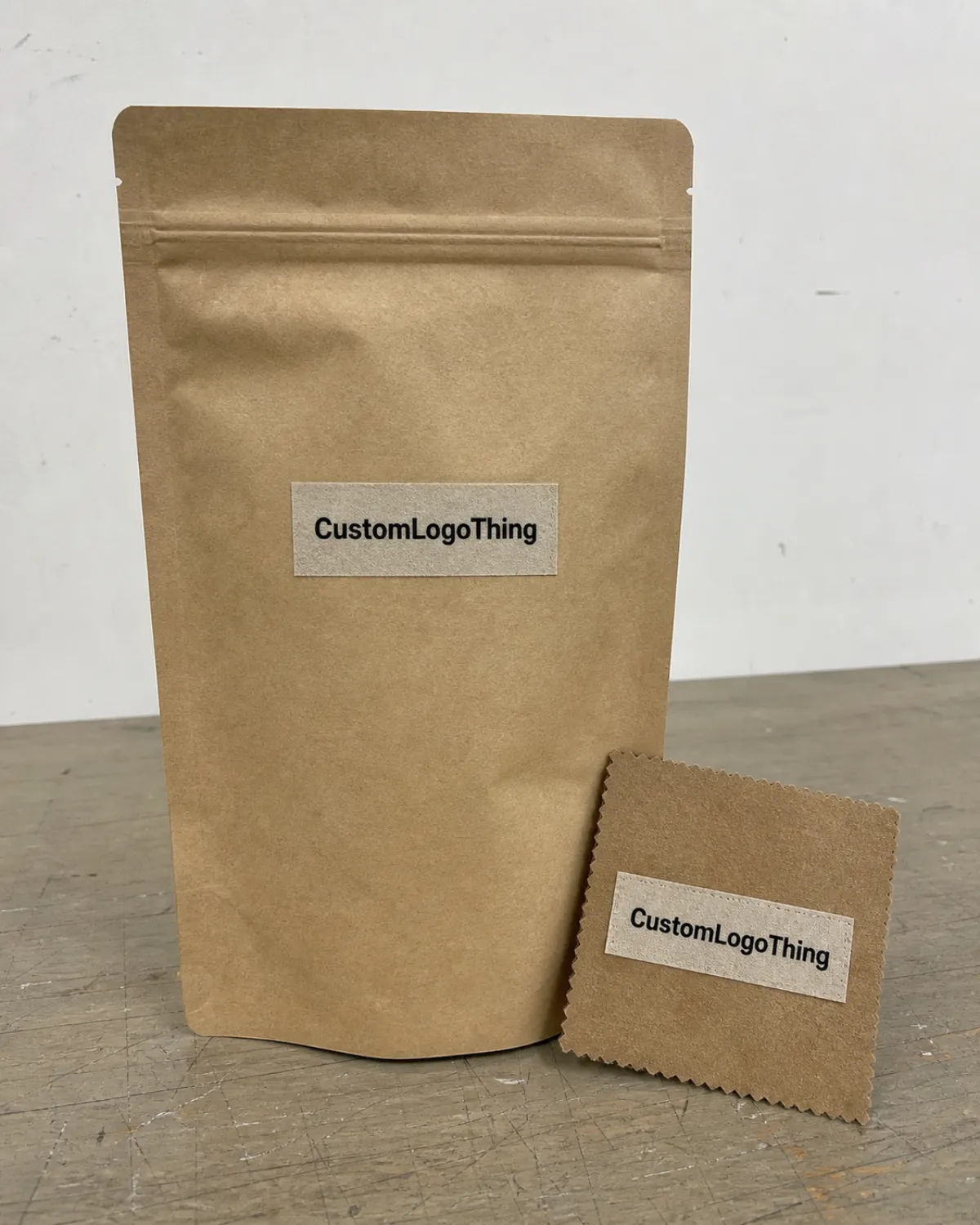
Supplement brands are often trying to do two things at once: look premium and keep overhead under control. Patches help because they are compact, reusable, and easy to deploy across multiple assets. One design can live on a tote, hoodie, vest, gym bag, or event uniform without forcing a separate production run for every use case.
From a packaging standpoint, that matters. A patch is not a substitute for good primary packaging, but it can reduce the need for extra printed inserts, laminated promo cards, or oversized one-time-only swag. For a brand that sends monthly boxes or attends regular field events, those little savings accumulate quickly.
There is also a shelf-perception angle. Buyers respond to materials that feel deliberate. A heavy woven patch or clean PVC badge often reads as more durable than paper add-ons, and durability is usually interpreted as quality even when the product itself is unchanged. That perception can be useful in categories like sports nutrition, wellness, and performance supplements, where brand identity does a lot of selling before the ingredient panel ever gets read.
But patches are only efficient if they get used repeatedly. If the design is tied to a single campaign and never returns, the value case weakens. The strongest programs treat patches as reusable brand assets, not seasonal clutter.
There is a sustainability angle too, though it deserves a careful frame. A patch does not magically make a packaging program greener. It can, however, reduce excess printed matter and lower the amount of single-use promotional material that ends up in the bin. That is a modest claim, but a defensible one.
Buyers who plan merch as part of a broader packaging system usually get better results than buyers treating it as an afterthought. The cleaner the plan, the fewer one-off charges show up later in the project.
Patch types, backing options, and what each one does for your brand
Patch style is where aesthetics and manufacturing reality meet. There are five common options worth comparing: woven, embroidered, PVC, leatherette, and printed. Each has a different texture, cost profile, and tolerance for fine detail. “Best” depends on the logo, the garment, and how much you can live with variation between runs.
Woven patches
Woven patches are the practical choice for cleaner text and tight artwork. They usually handle small letters better than embroidery because the threads are interlaced more densely, producing a flatter surface and sharper definition. For supplement brands with slim wordmarks, small taglines, or lab-inspired layouts, woven often makes the logo look more deliberate.
They are also easier to place on apparel where thickness matters. A low-profile woven patch sits well on lightweight hoodies, joggers, and tote bags without feeling bulky. That matters more than people think once the merch is worn, washed, and folded a few times.
Embroidered patches
Embroidered patches have the most familiar “sport” look. Raised stitching gives them texture and a sturdier visual footprint, which works well for fitness-oriented supplement brands, team apparel, and event uniforms. If the brand leans into performance, grit, or training culture, embroidery usually feels natural.
The tradeoff is detail. Fine lines, tiny type, and narrow negative spaces can soften or disappear. A design that looks crisp on screen may need simplification before embroidery makes sense. That redesign step is common, and it should be accounted for before the quote is finalized.
PVC patches
PVC patches are molded, dimensional, and durable. They are a strong choice for brands that want a more technical or outdoor look. They also resist moisture and abrasion better than many textile options, which is useful on bags, jackets, and gear that sees rough handling.
The caution is cost structure. Some PVC jobs involve tooling or mold fees that make small runs less attractive. If the design may change soon, or if you are testing a new sub-brand, PVC can be more expensive than it first appears.
Leatherette patches
Leatherette sits in a premium lane. It gives a cleaner, calmer look than embroidered patches and can pair well with wellness, clinical, or lifestyle brands that want a more restrained presentation. It is especially useful when the branding needs to feel elevated without turning sporty or industrial.
On the production side, leatherette can be cost-effective at certain sizes, but it is sensitive to artwork style. Very fine detail may not reproduce cleanly, and dark-on-dark combinations can disappear under poor lighting. Proofing matters here.
Printed patches
Printed patches are the right answer when the art has gradients, multiple hues, or image-like complexity that stitching would distort. They can be a good fit for promotional kits and short runs where color accuracy matters more than texture. If the artwork is elaborate, print may preserve it better than forcing the design into thread.
The finish, however, depends heavily on print method and surface treatment. Some printed patches look crisp and modern; others feel flatter and less premium than buyers expect. Ask for real samples or high-resolution proof images if the art has subtle transitions.
Backing choice changes function, not just convenience. Sew-on is the most durable and usually the safest for long-term wear. Iron-on is faster for apparel applications, but it depends on fabric type, heat tolerance, and proper application pressure. Velcro works well for tactical-style gear, staff uniforms, and event kits where patches may be swapped out. Adhesive backing is generally better for temporary placement, inserts, or packaging applications than for final wear. Combination backings add flexibility but can also add cost and complexity.
| Patch type | Best use | Typical cost effect | Strengths |
|---|---|---|---|
| Woven | Fine logos, small text, premium branding | Moderate | Sharp detail, smooth surface, low profile |
| Embroidered | Gym bags, hoodies, apparel | Moderate to higher depending on stitch count | Textured, durable, familiar athletic look |
| PVC | Outdoor, performance, modern branding | Higher tooling fees on some runs | Tough, weather-resistant, dimensional |
| Leatherette | Premium wellness or clinical merch | Moderate to higher | Clean look, upscale feel |
| Printed | Complex artwork, gradients, color-heavy logos | Usually efficient for detailed designs | High detail, flexible artwork |
For supplement branding, the style should match the promise. A hard-charging sports nutrition line can support a heavier texture and bolder contrast. A premium wellness brand usually looks better with flatter materials, softer edges, and tighter color control. Same category, very different visual language.
Specifications that change performance, feel, and reorder consistency
If you want repeatable results, lock the specs before you ask for pricing. Size, shape, border style, thickness, color count, and attachment method all affect the final look and the cost per piece. Vague specs create vague pricing, and vague pricing almost always gets expensive later.
Start with size. A 2-inch patch and a 3.5-inch patch do not share the same cost structure. Larger patches generally require more material, more labor, and in some cases a higher minimum order. Shape matters too. Standard circles, rectangles, and shields usually stay cheaper than highly custom cutouts with multiple points or internal openings.
Border style is another quiet driver. Merrowed borders are efficient for many classic shapes and give a finished edge with limited complexity. Laser-cut or heat-cut edges work better for custom outlines, but they can add production steps and make matching across reorders more sensitive. If your logo depends on the silhouette, the border spec needs to be fixed early.
Thickness changes how the patch feels in hand and how it sits on the final item. Thin woven patches are easier to package flat and tend to sit better on soft apparel. Thicker PVC pieces add dimension, but they can feel too heavy on lightweight garments or lose appeal if the surrounding product is minimal. The patch should fit the object it is attached to.
Artwork quality is often the difference between a smooth order and a chain of corrections. Vector files, clean outlines, and Pantone references make production much easier. Low-resolution raster files, tiny text, and decorative gradients often force simplification. If the art was built for web use instead of manufacturing, somebody has to clean it up, and the cost shows up in time, revisions, or both.
Durability and use case
Think about where the patch will live. Hoodies, tote bags, hats, outerwear, and packaging inserts all behave differently. A patch that sits well on a structured cap may buckle on fleece. A design that looks strong on a backpack may feel too rigid on a lighter garment. The substrate matters as much as the patch itself.
For wash resistance, woven and embroidered styles usually hold up well on apparel if they are attached correctly. For abrasion resistance, PVC often survives rougher handling better than stitched textiles. If the patch is going into subscription boxes or event kits, flatness, packability, and first impression become part of the spec. A patch that arrives curled, scratched, or misaligned can undermine the whole presentation.
Supplement brands using patch inserts should also think through fulfillment. Loose pieces need tidy packaging and a clear assembly plan. Pre-applied patches need the vendor to understand the final item, not just the decoration. Those details do not sound dramatic, but they are usually where small mistakes become repeat costs.
For teams that care about sourcing claims, check the documentation before using any recycled-content or responsible-fiber language. If you are comparing broader packaging practices, the EPA packaging guidance and FSC standards can help frame the conversation, even when the patch itself is not made from fiber-based packaging materials.
Logo patches unit cost for supplement brands: pricing, MOQ, and what drives the quote
Here is the part buyers actually need. Logo Patches Unit Cost for supplement brands usually falls as quantity rises, but not in a clean, linear way. Material choice, backing, stitch count, mold requirements, and shape complexity can outweigh a modest volume increase. A simpler woven patch at 1,000 units may be cheaper in total project cost than a highly detailed PVC version at 2,000 units.
It helps to break the quote into three buckets:
- Setup charges or artwork preparation fees
- Tooling fees or mold costs, especially for PVC and some custom shapes
- Production unit cost based on size, finish, color count, and quantity
That distinction matters because a low unit price can still produce the highest total bill if setup or tooling is heavy. The opposite happens too. A slightly higher unit price with a reasonable MOQ may be the cheaper option once you include revisions, shipping, and the cost of holding inventory.
For budgeting, small-run patch pricing often starts around $0.80-$1.80 per unit for simpler woven or embroidered patches at lower quantities. More complex PVC or shaped pieces can move into the $1.20-$3.50 per unit range depending on size, detailing, and backing. These are working ranges, not universal quotes. Different factories price differently, and freight can change the landed number fast.
The main buying mistake is staring at one line item. Better practice is to request pricing at multiple quantities and compare the total landed amount. If a supplier can quote 500, 1,000, and 3,000 units, use all three. The shape of the price curve tells you more than the cheapest number in the middle.
| Order scenario | Likely unit cost behavior | Common tradeoff | Buyer takeaway |
|---|---|---|---|
| Low MOQ test run | Higher cost per piece | Fewer savings on scale | Good for design validation and launch trials |
| Mid-volume order | Better bulk pricing | More capital tied up | Often the best balance for supplement merch |
| Higher-volume reorder | Lowest unit cost | More inventory risk | Best when artwork and demand are already proven |
MOQ is where many buyers feel the pressure. Lower minimums are useful for testing a design or running a short promotion, but they usually raise the per-piece price. Higher minimums can unlock better bulk pricing, though only if the inventory will actually move. A 5,000-piece order that sits in storage for two years is not a bargain.
Landeded cost deserves more attention than it gets. Factory price is only part of the story. Add freight, import handling if relevant, repacking, and any kitting or polybagging. If the patches are going into subscription boxes or fulfillment centers, ask how they will be packed and labeled. That can change the total cost more than a small discount on the unit price.
For supplement buyers, the best approach is usually to request a like-for-like comparison: same artwork, same size, different MOQ tiers, and possibly two different patch styles. That gives you a real sense of how Logo Patches Unit Cost for supplement brands behaves before you commit.
Production process and lead time from artwork approval to delivery
The production path is straightforward, but only if the buyer keeps decisions moving. A normal order starts with quote, then artwork review, digital proof, sample approval if needed, production, quality control, and shipping. Missed files or fuzzy instructions add time at every stage.
A practical turnaround range is 7-10 business days for simpler patch runs after proof approval and 12-20 business days for more custom work, sampling, or larger volume. Shipping time sits on top of that. For launches, retail resets, or event calendars, work backward from the delivery date rather than the date you hope approval will happen.
Most delays come from three places: unclear artwork, late color corrections, and too many approvers. Changes to size, backing type, or border style after proofing can push the schedule back quickly. A six-person approval chain may feel careful, but it often just turns a simple order into a scheduling problem.
Fast approvals help. Clean vector files help more. Exact dimensions help too. If a supplier is still asking whether the patch should be 2.25 or 2.5 inches while production is waiting, the delay is usually upstream, not downstream.
For brands shipping merch with product bundles or event kits, handling standards matter. Packaging resilience is not the same as patch durability, but the two interact. Organizations that think about shipment testing and pack-out quality often avoid avoidable damage and presentation issues later on. If you want a reference point, the ISTA framework is useful for thinking about transport stress and package protection.
How to compare suppliers without getting buried in vague quotes
A useful quote should tell you more than a price. It should list the unit cost, setup charges, sample fees, shipping, turnaround time, and what happens if defects appear. If the response is just one number with no detail, it is not a useful quote. It is a starting guess.
Watch the language carefully. “Premium patch” is marketing, not specification. “Woven patch, 2.5 inches, merrow border, sew-on backing, 4 colors, 1,000 units” is spec. The more precise the line item, the easier it is to compare across vendors without being misled by inconsistent formats.
Sample approval matters because supplement brands tend to be judged quickly. The patch may be a secondary item, but it still reflects the quality of the core brand. A rough patch can make a polished product line feel less considered. Buyers in this category usually know that instinctively, even if they do not say it out loud.
A clean supplier comparison usually comes down to four things:
- Cost: unit price, setup charges, landed cost
- Communication speed: how quickly questions are answered and how clearly changes are explained
- Proof quality: whether the digital proof matches the actual spec
- Repeat consistency: whether the reorder matches the first run in color, size, and finish
Consistency is where some suppliers quietly separate themselves. If the first batch uses one black tone and the reorder uses another, the merch program starts to feel improvised. That undermines a premium position faster than most teams expect.
For buyers who want to see how order structure and spec clarity affect outcomes, the examples in our Case Studies section show the pattern clearly: tighter briefs usually produce fewer revisions and more predictable production.
Next steps to place a low-risk patch order and avoid expensive revisions
Before asking for pricing, get the file and spec sheet in order. Prepare the logo file, preferred size, intended use, backing choice, quantity range, and delivery date. If the patches are meant for apparel, bags, subscription boxes, or event kits, say so. That context changes the recommendation.
Ask for two or three quote scenarios instead of one. A low MOQ test run, a mid-volume production run, and a larger bulk option will show how pricing moves with quantity. That is a much better way to evaluate Logo Patches Unit Cost for supplement brands than relying on a single number that may not fit the real program.
If the design is still flexible, start with the option that protects detail and reduces rework. Woven is often the safest choice for intricate logos. Embroidered works well for bold, athletic marks. PVC makes sense when the brand wants a tougher visual and can absorb any tooling fees. Leatherette can be a strong fit for calmer, more premium positioning. The right choice depends on usage, artwork, and budget — not just the cheapest quote.
For first orders, keep the spec tight. Avoid tiny text. Limit unnecessary colors. Confirm the backing early. Those three decisions alone can prevent a surprising amount of extra cost. They also make the reorder easier, which matters more than people realize once a merch program starts repeating.
That is the real way to control logo patches Unit Cost for Supplement brands: clear specs, multiple quantity breaks, and a realistic view of landed cost. A quote that looks good because it hides setup, shipping, or spec drift is not a good quote. It is just a delayed problem.
FAQ
What affects logo patches unit cost for supplement brands the most?
Patch size, material, backing type, artwork complexity, and order quantity usually have the biggest effect. Setup charges and revisions can also move the price more than buyers expect. If the design changes after proofing, the quote usually changes with it.
What is the typical MOQ for custom logo patches?
MOQ varies by patch type and supplier. Lower minimums usually come with a higher unit price, while larger quantities often unlock better bulk pricing. For a first order, compare at least two quantity tiers so you can see whether the savings are worth the extra inventory.
Which patch style is best for supplement brand merch?
Woven and embroidered patches are common for apparel and bags because they feel durable and familiar. PVC works well for a tougher, more modern look, while printed patches suit complex artwork. The right choice depends on brand tone and how the item will be used.
How long does production usually take for custom patches?
Simple runs can often be completed in about 7-10 business days after proof approval, while custom shapes, samples, or larger quantities may take 12-20 business days or more. Shipping time is additional. Fast approvals and clean files usually shorten the timeline the most.
Can I lower my unit cost without lowering quality?
Yes. Standardize the size, simplify the artwork, reduce unnecessary color changes, and compare quotes at multiple quantities. Also ask for landed cost instead of only factory price, because shipping and packing can erase the savings quickly.


