Wine shops do not order patches because they look nice in a product sheet. They order them because aprons, tasting-room shirts, tote bags, and caps need branding that survives service, laundering, and long shifts. That is why Logo Patches Unit Cost for wine shops matters before anyone approves artwork or signs off on a purchase order.
The mistake is easy to make. A patch can appear inexpensive in a quote, then climb in price once size, backing, stitch density, packaging, and minimum order quantity are added in. Buyers often compare the headline unit price and miss the real landed cost. Setup fees, sample charges, and freight can change the math more than the patch itself.
For a single shop, a small chain, or a tasting-room team, the goal is not the lowest number on paper. It is repeatable pricing, reliable construction, and a patch style that suits how the garment is worn. A staff apron patch has different demands than a cap patch. A retail tote patch has different wear than a shirt badge. Those differences show up in the quote whether the buyer notices them or not.
Why wine shops care about patch cost before they order
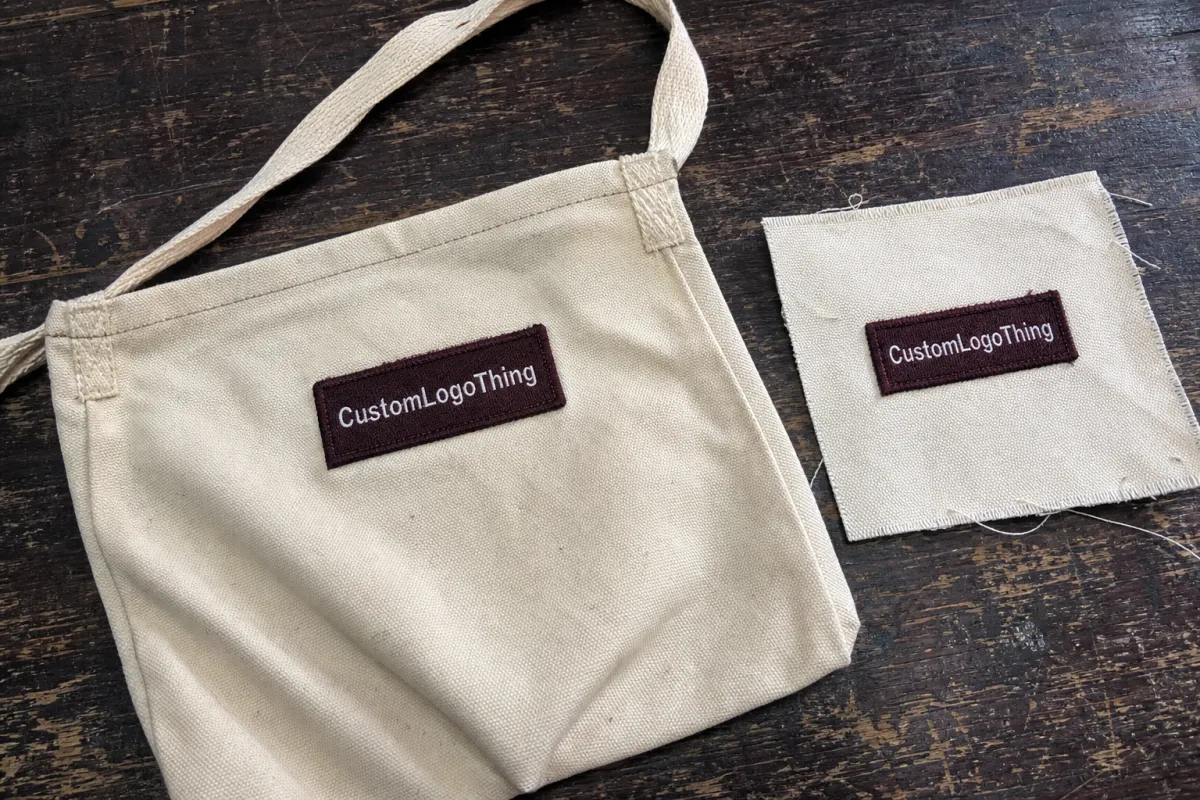
A patch looks small on an approval sheet. On the floor, it becomes part of the brand people see every day. Staff wear it. Customers get close enough to judge the stitching. If it curls, frays, or fades too early, the shop saves a few cents and loses much more in presentation.
Wine shops usually use patches across several items: aprons, button-downs, polos, tote bags, cellar uniforms, and caps. That means the same logo has to function on different fabrics and under different stresses. A sew-on patch on a heavy apron is straightforward. The same patch on a stretch polo or a structured cap can behave very differently.
From a buyer’s point of view, the smartest purchase is not the cheapest catalog line. It is the one that holds up after repeated wash cycles, keeps color stable, and avoids a costly reorder because the first batch was too flimsy. At 500 pieces, a ten-cent swing is noticeable. At 5,000 pieces, it is hard to ignore.
Most first-time buyers also underestimate the difference between quoted price and delivered price. Finished unit cost includes artwork review, sampling, finishing, packaging, and freight. If any of those are vague, the quote is incomplete. The result is familiar: the patch budget looks fine until the invoice lands.
“If the patch has to survive regular laundering and still look clean on the floor, cheap is the wrong target. Predictable is the right one.”
For wine shops, the buying standard should be practical. Decorative is fine. Fragile is not.
Patch styles and product details that affect the final quote
The four patch styles that come up most often for wine shop use are embroidered, woven, leather, and PVC. Each one changes the quote for a different reason, and each has a different sweet spot.
Embroidered patches are the classic choice. They have texture, strong brand visibility from a short distance, and a familiar retail look. They suit simple logos, bold text, and traditional wine-shop aesthetics. If the logo is clean and not overloaded with tiny details, embroidery is often the best value.
Woven patches usually cost a bit more to produce, though not always by much. They handle small text and fine lines better because the weave can capture detail that thread stitching cannot. If your logo uses bottle-label typography, a vine graphic, or narrow border lines, woven can prevent the artwork from turning muddy.
Leather patches lean premium. They fit artisan labels, boutique merchandising, and higher-end aprons or tote programs. They are not the lowest-cost option, and they are usually not the best choice for a patch that needs to tolerate frequent washing. On the right garment, though, they create a strong visual cue without looking flashy.
PVC patches are the easiest to wipe clean and are often chosen for durable staffwear, outdoor events, or merch that may see moisture. They do not have the textile feel of embroidery, but they hold shape well and stay readable when a fabric patch would start to look tired.
Size and shape matter more than most buyers expect. A 2-inch round patch does not cost the same as a 4-inch custom contour cut. More surface area means more material, more stitch path, and more handling. Custom shapes usually cost more than circles, squares, or rectangles because trimming and setup take longer.
Backing changes the unit cost too. Sew-on is usually the lowest-cost option. Iron-on adds convenience, but not every garment tolerates heat well. Velcro is useful for interchangeable uniforms or rotating role labels, though it pushes the price up. If the patch is fixed to one apron or shirt, sew-on is still the most efficient option.
Artwork complexity is another quiet cost driver. Thin lettering, bottle details, gradients, and multiple thread colors all increase labor or reduce clarity. When a design is busy, a woven or printed-style construction can be more practical than forcing embroidery to reproduce details it was never going to handle cleanly.
| Patch style | Best use | Typical unit cost tendency | Durability |
|---|---|---|---|
| Embroidered | Classic staff uniforms, bold logos | Usually lower to mid-range | Good for regular wear |
| Woven | Fine text, detailed brand marks | Mid-range | Very good for detail retention |
| Leather | Premium retail feel, boutique branding | Higher | Good, but style-driven |
| PVC | Wipe-clean use, outdoor or event wear | Mid to higher | Very strong for moisture exposure |
Specifications that change durability, appearance, and reorder consistency
Before a sample is approved, the core specs need to be written down clearly: size, shape, border type, backing, thread colors, and attachment method. That sounds obvious because it is. Most pricing headaches begin when one of those items was assumed instead of specified.
Dense stitching usually looks richer, but it also makes a patch stiffer. That matters on shirt fronts and aprons, where the patch sits against the body. A staff member may not describe the issue in technical terms, but they will notice bulk, scratchiness, or a corner that keeps lifting. Those are quality problems, not style preferences.
Wash resistance is non-negotiable for staffwear. Ask how the patch handles repeated laundering, heat exposure, and abrasion. Embroidered and woven patches usually perform well if the backing is matched to the garment. Iron-on alone can work for lighter use, but it is not the first choice for items washed every week.
Color matching deserves real attention. If the wine shop brand uses burgundy, forest green, warm gold, or a specific neutral, ask for the tolerance range before production starts. Thread matching is close, not magical. A slight shift is normal. A poor match reads as careless, especially under warm retail lighting.
Logos with text need practical sizing. If the patch is too small, the letters disappear. As a working rule, logos with more than two or three words need enough width to keep the copy legible at arm’s length. Caps often force a simpler version of the mark. Aprons usually allow more room.
Multi-location orders benefit from early planning. If the patches are going to several retail shops or tasting rooms, ask for location-by-location bagging or size sorting. It prevents errors when the shipment is distributed and saves internal labor on receipt.
Reorder consistency is where a clean spec sheet pays off. If the final approval file records size, backing, artwork version, and any color targets that were agreed upon, future runs are much easier to reproduce. Without that record, the second batch can drift just enough to create questions. Usually the answer is not mystery. It is a changed spec.
For buyers who want a neutral reference on packaging and material responsibility, the Packaging School and FSC are useful starting points for sourcing language and material awareness.
logo patches unit cost for wine shops: pricing, MOQ, and quote drivers
Here is the part buyers usually want first: Logo Patches Unit Cost for wine shops is driven by quantity, size, complexity, material, backing, and packaging. Change any one of them and the quote changes too. Sometimes the shift is small. Sometimes it is enough to move the order out of budget.
For standard embroidered patches, small-to-mid runs often land around $0.35-$1.20 per piece, depending on size, stitch density, and quantity. Woven patches commonly fall in a similar band, sometimes slightly higher for detailed artwork. Leather and PVC usually push higher, especially on low quantities or custom contours. Small runs under MOQ can move well above those ranges because tooling fees and setup charges are spread across fewer units.
The MOQ is the quiet pressure point in many first orders. If production is set up for 1,000 pieces, a 100-piece order may still be possible, but the unit cost climbs quickly. That is not unusual. It is simply how fixed setup costs behave when the order is small.
Here is a practical comparison of how choices affect budget.
| Order scenario | Approx. unit cost tendency | Why it moves | Buyer takeaway |
|---|---|---|---|
| 100-250 pieces, simple sew-on embroidered patch | Higher per piece | MOQ pressure and fixed setup charges | Useful for a test run, not ideal for cost control |
| 500-1,000 pieces, standard size, fewer thread colors | Mid-range | Better spread of production and tooling fees | Often the best balance for growing wine shops |
| 2,000+ pieces, standard shape, standard backing | Lower per piece | Bulk pricing starts to work in your favor | Best for chains, seasonal promotions, or reorders |
| Custom contour, premium backing, small text | Higher regardless of quantity | More labor, more detail, more risk | Choose this only if the brand benefit is worth it |
If the goal is to reduce cost without making the patch look cheap, the usual levers are straightforward: choose a standard shape, reduce the number of thread colors, keep the size sensible, and use the simplest backing that fits the garment. That is where the savings are. Not in hoping a complicated design can be priced like a plain circle.
Hidden cost traps deserve attention. Rush fees are common when the opening event is next week and the artwork is still waiting for approval. Sample revisions can add both time and money if the logo keeps changing. Split shipments to several locations may trigger additional freight charges. If custom retail packaging is requested, that is also a line item.
Quotes improve when the buyer is specific. Send the exact logo file, explain which garment the patch will sit on, and share the target quantity per location. A patch for a thick apron is not the same as a patch for a soft polo. When the supplier understands the end use, they can recommend the right construction instead of overselling the wrong one.
Production steps, lead time, and sample approval for fast reorders
The standard process is simple: artwork review, digital proof, sample or pre-production approval, production, quality control, packing, and shipping. If delays happen, they usually come from approval, not from the machine time itself.
For most custom patch orders, lead time often runs about 10-20 business days after proof approval, depending on patch type, quantity, and shipping method. Simple embroidered runs can be faster. Leather, PVC, or highly detailed woven work can take longer. If the order is small and urgent, freight choice becomes a major part of both timeline and cost.
A physical sample is worth requesting when the logo has tiny text, unusual colors, or a premium finish that has to be right the first time. For straightforward artwork and a supplier with dependable output, a digital proof may be enough. Paying for a sample on every reorder usually adds delay without improving the result. Use it where the risk is real.
Clean vector artwork saves time. EPS, AI, or a properly prepared PDF is best. A low-resolution JPG forces redraw work, and redraw work creates avoidable back-and-forth. The most common cause of schedule drift is not production complexity. It is a file that should have been fixed before quoting began.
For urgent wine-shop orders tied to a grand opening, tasting event, or seasonal staffing rollout, ask whether partial production or priority scheduling is possible. It may cost more, but that cost is visible. What hurts more is discovering that speed was needed after the deadline has already moved.
If reorders are likely, save the approved spec sheet and final proof files. That is how future orders stay quicker and cheaper. Same size. Same backing. Same artwork. Less room for mistakes.
For buyers comparing shipping risk, the ISTA framework is a useful reference point for transit testing and packaging performance. See ISTA for industry context on how packaging is evaluated during transport.
What wine shops should expect from a supplier, not just a factory
A supplier should do more than collect a logo and return a number. The useful ones explain what will reproduce well, what will not, and what design changes can lower unit cost without weakening the brand. That is the difference between a quote and actual support.
Good support starts with clear quoting and clear documentation. If the quote does not spell out size, backing, MOQ, production time, and whether setup charges apply, keep asking questions. Vague quotes create bad surprises. Bad surprises usually turn into reorders. Reorders are expensive.
Quality control matters too. A supplier with proper checks should review edge finish, stitch consistency, color accuracy, and backing adhesion before shipment. Those are not luxury checks. They are basic controls for anything that will sit on customer-facing staffwear.
Packaging support matters more than many wine shop buyers expect. If patches are being distributed to multiple shops, ask for labeling by size, location, or team. Clean pack-out saves labor and prevents mix-ups when the shipment is opened on a busy receiving counter.
The difference between a seller and a real production partner is simple: one takes the order, the other helps reduce costly mistakes. If a supplier agrees with everything without discussing tradeoffs, be cautious. Honest pushback usually means they understand the product, not just the paperwork.
And yes, a supplier should be direct about pricing tradeoffs. Better detail costs more. Stronger backings cost more. Small runs cost more per piece. That is normal. Pretending otherwise helps no one.
Next steps to lock in your order without overpaying
Start with the artwork. Send the cleanest file you have, ideally vector. If the only file available is raster, send the highest-resolution version and expect a redraw step. That is fine. It is still better than pretending a fuzzy logo will magically print itself into sharpness.
Next, decide on the patch style, size, backing, and target quantity before requesting pricing. If those variables are still moving, the quote will not be useful. A quote needs a target spec, not a mood board.
Compare two scenarios: one built around budget and one built around durability or premium appearance. For a wine shop, the budget version might be a simple embroidered sew-on patch at a standard size. The premium version might be woven or leather with a specialty backing and finer finishing. Seeing both makes the tradeoffs visible instead of theoretical.
If the logo includes small text, thin lines, or strict brand color requirements, request proofing. There is no reason to overbuy the sample process, but there is good reason to protect the brand from a first run that is technically acceptable and visually off. That matters most on customer-facing staffwear.
Before approval, confirm the deadline, shipping destination, and whether split fulfillment is needed for multiple locations. Last-minute shipping changes are where budgets get strange fast. Simplify the logistics if you can.
For future orders, keep the approved spec sheet. That is how you stabilize Logo Patches Unit Cost for wine shops over time. Same spec. Same artwork. Same backing. Better predictability. Fewer surprises.
FAQs
What affects logo patches unit cost for wine shops the most?
Quantity and MOQ usually have the biggest effect on unit cost. Material choice, patch size, and artwork complexity also change pricing quickly. Backings such as Velcro or specialty adhesives often cost more than standard sew-on.
What is the lowest-cost patch style for wine shop staff uniforms?
Simple embroidered patches are often the best value for classic staffwear. If the logo has fine detail, woven may be the better choice even if it costs slightly more. The lower-cost option is not always the one that works best on the garment.
What MOQ should wine shops expect for custom logo patches?
MOQ varies by material and production setup, but smaller orders usually cost more per piece. Standard runs are more efficient than one-off boutique quantities. Ask for two quotes: one at your target quantity and one at a slightly higher quantity.
How long does production usually take after approval?
Typical production starts after artwork and sample approval. Lead time depends on patch type, quantity, and shipping method. Rush orders are possible, but they usually add cost.
Can wine shops reorder the same patch later without changing the price much?
Yes, if the original specs, artwork, and backing stay the same. Any change in size, colors, or attachment method can change unit cost. Keeping the final approval file helps future reorders stay consistent.
If the goal is to avoid overpaying, the path is straightforward: keep the design simple, choose the right patch style for the garment, and ask for pricing against the exact spec rather than a vague idea. That is how you control Logo Patches Unit Cost for wine shops without paying extra for avoidable complexity.


