Buyer Fit Snapshot
| Best fit | Low MOQ Custom Boxes Supplier projects where brand print, material claims, artwork control, MOQ, and repeat-order consistency need to be specified before quoting. |
|---|---|
| Quote inputs | Share finished size, material target, print colors, finish, packing count, annual reorder estimate, ship-to region, and any compliance wording. |
| Proofing check | Approve dieline scale, logo placement, barcode or warning zones, color tolerance, closure strength, and carton packing before bulk production. |
| Main risk | Vague material claims, crowded artwork, missing packing details, or unclear freight terms can make a low unit price expensive after revisions. |
Fast answer: Low MOQ Custom Boxes Supplier: Pricing, Specs, Timeline should be specified like a repeatable production item. The safest quote records material, print method, finish, artwork proof, packing count, and reorder notes in one written spec.
Production checks before approval
Compare the actual filled-product size with the drawing, then confirm tolerance on folds, seals, hang holes, label areas, and retail display edges. Reserve space for logos, QR codes, warning copy, and material claims before decorative graphics fill the panel.
Quote comparison points
Review material grade, print process, finish, sampling route, tooling charges, carton quantity, and freight assumptions side by side. A quote is only useful when the supplier can repeat the same color, closure quality, and packing count on the next order.
A low moq custom boxes supplier becomes genuinely useful the moment a brand needs a small batch of printed packaging without getting buried in inventory. Maybe the launch date moved up, maybe the artwork is still being tweaked, or maybe the team wants to test a new offer before committing to thousands of cartons. In that kind of setup, the right low moq custom boxes supplier is not just producing boxes. They are helping protect cash flow, reduce storage pressure, and get the packaging into the market without forcing a huge buy too early.
That is the real strength of low minimums. They let a brand move with more freedom, revise the box after the first sell-through, and keep packaging aligned with the product instead of locking into a large print run before the market has had a chance to respond. For e-commerce launches, seasonal collections, subscription trials, and limited editions, a low moq custom boxes supplier gives the buyer room to learn before scaling. If you want to see the kinds of structures that can support that approach, browse our Custom Packaging Products.
There is a tradeoff, and it should be stated plainly. Smaller quantities can affect unit pricing, decoration choices, and the box style that makes the most sense for the product. A good low moq custom boxes supplier will explain those limits early, because the smartest order is usually not the flashiest one. It is the order that protects the product, respects the budget, and fits the timeline without creating avoidable waste.
Low MOQ Custom Boxes Supplier: Why Smaller Runs Can Be Smarter
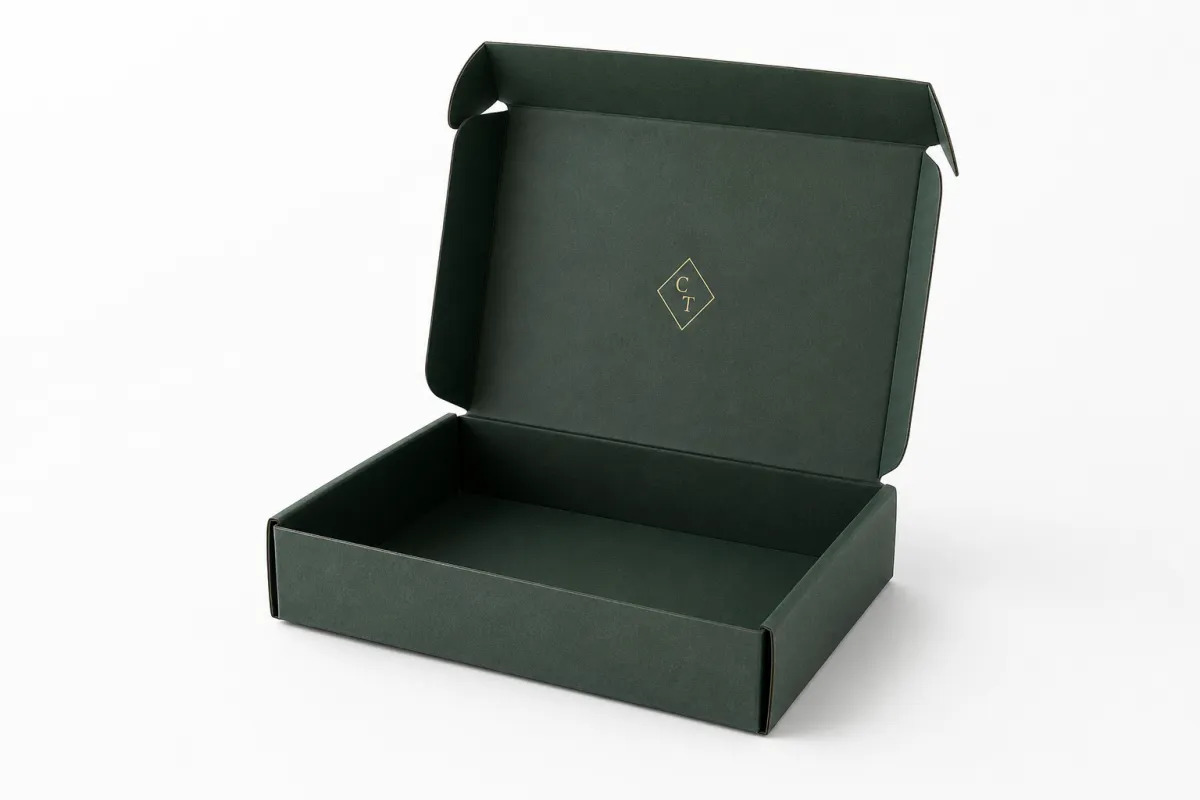
A launch can move from concept to shelf faster than a lot of teams expect. One week the sample is approved, the next week the retailer wants cartons, and suddenly the brand needs 250 to 1,000 boxes with sharp graphics, exact sizing, and no room for a storage mistake. That is where a low moq custom boxes supplier earns its place. Smaller runs let a buyer test demand without filling a back room with overprinted packaging, and they make it easier to adjust dimensions, finishes, or artwork if the first batch reveals a problem.
From a packaging buyer's point of view, lower minimums are often a practical way to reduce risk. Seasonal products benefit from short runs because the packaging may only need to serve one selling window. Brands that are still shaping their offer can use a low moq custom boxes supplier to keep the order flexible enough for design changes. Limited editions and influencer kits only need to be right for the current campaign, not for the next three years. That kind of flexibility has real value, especially when the product strategy is still changing.
There is also a straightforward financial reason smaller runs can be smarter. A launch that uses 500 Custom Printed Boxes instead of 5,000 avoids tying up cash in cartons that may sit idle. The brand may pay more per box, but the project can still cost less once storage, obsolescence, and redesign risk are included. Many buyers focus on the lowest unit price and miss the cost of holding inventory that no longer matches the product or the season.
A low moq custom boxes supplier is especially useful for:
- Seasonal product packaging that changes every selling window.
- Limited editions where the art or messaging is intentionally short-lived.
- Subscription trial packs that need a smaller opening order.
- Influencer and PR kits where the presentation matters, but the quantity is controlled.
- E-commerce SKU launches that need a quick proof of market before scale-up.
One point comes up again and again with new buyers: lower MOQ does not mean lower standards. The box still has to survive transport, open cleanly, and support package branding in a way that feels deliberate. A reliable low moq custom boxes supplier should talk about board grade, print method, finish choice, and structural fit before the quote is finalized. If those details stay vague, the order often gets expensive in the wrong places.
A lower MOQ is useful only if the box still fits the product, survives transit, and prints cleanly. If any one of those three fails, the savings disappear fast.
For teams that want to go a layer deeper on packaging structure and material choices, the Packaging School and the EPA packaging recycling guidance are both helpful references. They are not glamorous reads, but they do keep the conversation grounded in how packaging behaves in storage, transit, and recovery.
Packaging Formats a Low MOQ Custom Boxes Supplier Can Produce
A capable low moq custom boxes supplier should not push every project into the same format. The box style needs to match product weight, shipping method, shelf presence, and the opening experience. A lightweight cosmetic set does not need the same build as a glass bottle kit, and a retail display carton does not need the same structure as a corrugated mailer. Structure is not decoration. It is the part that keeps the product safe and makes the carton work in the real world.
The most common small-run options are mailer boxes, Tuck End Cartons, sleeve packaging, product boxes, and selected rigid styles. Mailer boxes are a strong choice for direct-to-consumer shipping because they hold up in parcel transit and can still create a memorable opening moment. Tuck end cartons usually work better for lighter retail packaging, especially when the box needs to sit neatly on a shelf. Sleeve packaging makes sense when the container or inner tray already provides protection and the sleeve mainly carries branding. Rigid boxes stay closer to the premium presentation side of packaging, though they can still be produced at modest quantities when the budget allows it.
Here is how a low moq custom boxes supplier might guide the decision:
- Mailer box - best for shipping protection and branded unboxing.
- Tuck end carton - best for lighter product packaging and retail display.
- Sleeve - best when the inner pack already carries the load.
- Rigid box - best for premium presentation and gift-oriented sets.
- Foldable carton with insert - best for compact protection without overbuilding the pack.
The product itself should drive the structure. A 250 g skincare jar may travel well in a paperboard carton with a snug insert, while a glass candle often needs an E-flute shipper or a more protective inner fit. A good low moq custom boxes supplier will ask about product weight, dimensions, fragility, and shipping channel before recommending a structure. Retail packaging that only sits on a shelf can use lighter board. Product packaging that moves through parcel carriers needs more careful engineering.
Insert and fit-up decisions matter just as much as the outer box. Paperboard inserts are often enough for lighter products and keep the order cost manageable. Corrugated dividers help when bottles, jars, or multi-piece kits need separation. Die-cut nests hold fragile items in place without overengineering the design. In some cases, a simple tissue wrap or molded inner support gives enough protection with less cost than a custom molded component. That kind of practical judgment is exactly what a strong low moq custom boxes supplier should bring to the table.
Not every project needs a fully custom shape. Some buyers assume special means better, but the most economical move is often to start with a standard style and tailor the print, insert, or opening mechanism. That keeps tooling simpler and usually shortens the approval cycle. A seasoned low moq custom boxes supplier knows when a standard mailer or carton will do the job better than a custom engineered structure that adds cost without adding value.
| Box Style | Best Use | Typical Low MOQ Range | Common Unit Cost Range | Notes |
|---|---|---|---|---|
| Mailer box | E-commerce, subscription, kit packaging | 250-1,000 pcs | $0.95-$2.40 | Good for shipping durability and full-color branding |
| Tuck end carton | Retail packaging, light product packaging | 500-2,000 pcs | $0.28-$0.95 | Usually the most economical printed carton at low volume |
| Sleeve + tray | Presentation packs, sleeve branding over inner pack | 300-1,000 pcs | $0.60-$1.80 | Good balance of appearance and moderate material use |
| Rigid box | Premium sets, gift packaging, luxury retail | 100-500 pcs | $3.50-$9.00 | Higher labor and material cost, stronger presentation value |
If a team is unsure which format makes sense, the smartest move is to ask the low moq custom boxes supplier to compare two or three structural options on the same spec sheet. That often shows where the cost is really coming from. In many cases the difference is not the print itself. It is the amount of board, the amount of hand assembly, or the complexity of the inner fit.
Materials, Printing, and Finishes That Work at Low MOQ
Material selection changes everything. The right board gives the package strength without wasting money on unnecessary thickness, and the wrong board can make a low-volume order look cheap even when the print is good. A practical low moq custom boxes supplier will usually start with substrate choice before talking about finishes, because the board has to support the image quality and survive the product load.
For many custom printed boxes, paperboard is the best starting point. SBS and C1S paperboard are common for light retail packaging where print quality matters and the product does not need heavy structural support. A 300gsm to 400gsm board can be a good fit for cartons, sleeves, and light product boxes. When shipping performance matters more, E-flute corrugated is often the better answer because it adds protection without getting bulky. For premium presentation, chipboard or rigid board around 1.5mm to 2mm creates a more substantial feel, though the cost rises quickly once wrapping, lining, and assembly are included.
Printing method matters just as much as the substrate. Digital printing is often the best route for short runs because it avoids the larger setup burden of plate-based processes. It also works well when artwork changes often or when multiple SKU versions are needed. Offset printing can still make sense for larger low-MOQ orders where color consistency is critical and the unit cost starts to improve. Litho-lam construction is another path for jobs that need a high-end printed face sheet on corrugated board. The right low moq custom boxes supplier should explain which method fits the artwork instead of simply quoting the fanciest one.
Finishes are where budgets can slip if the buyer is not careful. Matte coating gives a softer, more restrained presentation. Gloss coating makes color pop, though it can also highlight fingerprints and scuffs. Soft-touch film feels premium, yet it adds cost and can complicate recyclability depending on the build. Spot UV, embossing, and foil stamping all create visual impact, but each effect brings more setup and more room for variation between runs. If the box is a short-lived promotional item, a simpler coating may deliver better value than a stack of special effects. A thoughtful low moq custom boxes supplier will say that plainly, which is kind of refreshing compared with the usual sales talk.
There are also practical file-prep details that matter a great deal at low volume. A dieline should be verified before artwork is placed, and bleed should be set so no white edges appear after trimming. Safe zones need to be respected, especially near folds and glue areas where text can disappear or shift. Color matching should be discussed early, because digital proofs and final printed cartons will never look identical on every screen. Ask for a proof approval step, and if the artwork is color-sensitive, ask what method the low moq custom boxes supplier uses to control consistency from sample to production.
For brands that care about sourcing standards, FSC-certified board can be worth requesting, especially for retail packaging or higher-visibility branded packaging programs. If shipping performance needs verification, the ISTA test methods are useful references because they help teams think about drop, vibration, and transit stress rather than only the visual side of the box. A low-MOQ order still deserves that level of discipline.
Many packaging problems start with vague specs. The buyer says "small box" or "premium finish," the supplier fills in the blanks, and the project drifts. The cleaner approach is to define dimensions, product weight, closure style, print coverage, finish, and insert details up front. A reliable low moq custom boxes supplier can move much faster when the brief is specific.
Cost, Pricing, MOQ, and Quote Factors
Price is never one number in packaging. It comes from structure, material, print method, finish complexity, assembly, and the amount of labor needed to turn a flat sheet into a finished box. A low moq custom boxes supplier has to spread setup and prepress work over fewer units, so the unit cost is naturally higher at lower quantities. That is not a penalty. It is simply how production economics work.
The clearest way to think about MOQ is this: MOQ is the smallest order a supplier will accept, but not always the most economical order to place. The real question is where the price curve starts to improve. On many jobs, the jump from 250 to 500 pieces drops the unit cost more than the jump from 500 to 1,000. On other jobs, the cost curve flattens only after the print setup is fully absorbed. A good low moq custom boxes supplier can show those break points instead of hiding them.
Several variables shape the quote:
- Box style - mailers and cartons are usually cheaper than rigid styles.
- Board grade - heavier or premium board raises material cost.
- Print coverage - full-bleed art and multiple ink areas add cost.
- Finish complexity - foil, embossing, and soft-touch raise the price.
- Insert requirements - custom die-cuts or dividers add labor and tooling.
- Assembly level - hand folding, gluing, and kitting increase unit cost.
It helps to think in terms of thresholds. A simple tuck carton in one or two colors may stay in a lower price band because the setup is modest and the board is straightforward. Add foil, spot UV, or a complicated insert, and the quote can move quickly. A low moq custom boxes supplier should be able to explain where those jumps occur so the buyer can decide if the visual gain is worth the added spend.
Here is a practical way to compare order economics:
| Order Size | Typical Effect on Unit Cost | What Improves | What Needs Watching |
|---|---|---|---|
| 250 pcs | Highest unit cost | Fast testing, low inventory risk | Setup charges weigh heavily on each box |
| 500 pcs | Noticeably better pricing | Better balance of flexibility and value | Still sensitive to specialty finishes |
| 1,000 pcs | Often strongest low-MOQ value | Better spread of setup and more stable production | Storage and demand forecast matter more |
| 3,000+ pcs | Lower unit cost, more inventory commitment | Best for repeat SKUs and established demand | Risk of overbuying if the design changes |
Hidden costs are where buyers get surprised. Prepress adjustments can add time and sometimes cost if the file needs cleanup. Samples can be charged separately, especially if the box uses special board or a difficult finish. Freight should always be part of the comparison because a low quote on the box itself can become a poor deal once shipping is added. Storage, assembly, and rush fees also belong in the total landed cost. A serious low moq custom boxes supplier will be transparent about these items instead of burying them in a generic line item.
One more detail matters here: multi-SKU orders. If a brand needs the same structure printed in several artwork versions, some suppliers treat each version as its own MOQ. Others can combine volume across the structural shell while keeping the print variations separate. That difference can change the economics dramatically. When a buyer asks a low moq custom boxes supplier for pricing, the quote should clarify whether MOQ is per structure, per artwork, or per finish.
If the project is shipping to customers, it is worth checking packaging waste and recycling expectations alongside the quote. The exact build may influence both cost and recovery. The FSC site is useful for brands that want to understand certified sourcing, especially when the box is part of a broader retail packaging or sustainability story.
Process, Timeline, and Lead Time From Brief to Delivery
Lead time is easier to control than many buyers think, but only if the brief is tight. A low moq custom boxes supplier usually moves through the same basic stages whether the order is 200 boxes or 20,000: inquiry, artwork review, structural confirmation, proofing, sample approval if needed, production, finishing, packing, and shipment. The difference is that a short run can often move faster if the files are clean and the approval loop stays tight.
A realistic timeline often looks like this:
- Brief review and quote - 1 to 2 business days if dimensions and artwork needs are clear.
- Artwork and dieline check - 1 to 3 business days depending on file quality.
- Digital proofing - 1 to 2 business days for straightforward jobs.
- Sample or mockup - 3 to 7 business days if a physical sample is needed.
- Production - often 7 to 15 business days after approval, depending on finish and volume.
- Freight - varies by destination and service level.
That is not a promise. It is a planning range. A low moq custom boxes supplier can usually tighten the schedule when the job is simple, but missing dimensions, late artwork changes, or unclear color targets can stretch the job even at small volume. In my experience, the biggest schedule killer is not the press time itself. It is waiting for someone to decide whether the logo should sit 3 mm higher or whether the insert needs one more cutout.
Clean specs shorten the path. The supplier needs the exact box dimensions, the product weight, the destination, the intended shipping method, the artwork files, and any finish requirements before the clock starts. If the package must survive parcel transit, say so early. If the box is for shelf display only, say that too. The more precise the input, the better a low moq custom boxes supplier can recommend the right material and process without back-and-forth that eats the calendar.
Sample approval is another point where low-run projects can either move cleanly or get bogged down. A digital proof is useful for layout and copy, but it does not tell the whole story about board feel, fold behavior, or finish appearance. If the project is important enough to affect launch timing, ask for a physical sample or at least a folded mockup. That small extra step often prevents bigger problems later. A careful low moq custom boxes supplier will encourage that instead of rushing past it.
Freight deserves real attention too. A box that leaves the plant in perfect condition still has to arrive on time and intact. If the packaging is going directly to a fulfillment center, the supplier should know whether the cartons are palletized, carton-packed, or drop-shipped. That affects how the order is built and how quickly it can move. For fragile or premium retail packaging, ask the supplier what transit test or handling standard they use internally, and compare that with applicable ISTA guidance if shipping performance is critical.
Plan backward from launch. If the website goes live on the first of the month, the boxes should not be approved on the twenty-eighth. A low moq custom boxes supplier can often support a compressed schedule, but compressed schedules leave less room for artwork correction, freight delays, or a second proof. Smart buyers protect the calendar by building in buffer time, especially for first runs of custom printed boxes.
Why Choose Us as Your Low MOQ Custom Boxes Supplier
Custom Logo Things is built for buyers who want practical guidance, not packaging theater. If you need a low moq custom boxes supplier, the value sits in the judgment as much as the print. That means helping you Choose the Right board, the right closure, the right finish, and the right quantity so the order makes sense on paper and in production. A box that looks good but fails in use is not a good box.
What clients usually need most is clarity. They want someone to explain why a 350gsm carton might be enough for one product but not for another, why digital print is the better short-run choice in one case, and why a foil stamp may be beautiful but unnecessary on a small seasonal program. A dependable low moq custom boxes supplier should make those tradeoffs visible. That kind of honesty saves money and usually improves the final result.
We also pay close attention to prepress because that is where many low-volume orders either get easy or get expensive. Clear dieline checks, careful file review, and direct communication on proof changes reduce the risk of delays. On a smaller order, there is less margin for error. A missed fold line or a misplaced barcode can matter more than it would on a large run because the buyer has fewer boxes to absorb the mistake. That is why a competent low moq custom boxes supplier should treat the first proof as a working document, not a casual draft.
Consistency matters as well. Once a small-run package performs well, the buyer should be able to reorder the same artwork and spec without rebuilding the whole structure from scratch. That matters especially for product packaging that may begin as a test and later become a repeat SKU. A strong low moq custom boxes supplier keeps records clean, maintains the dieline, and preserves the material and finish details so the next order stays aligned with the first.
There is a reason buyers return to a supplier that understands low-MOQ economics. The relationship becomes faster and more useful over time. Less explaining, fewer surprises, better estimates, and better packaging design decisions. If you are comparing options, our FAQ page is a good place to start for common quote, artwork, and production questions, and the conversation gets even more useful once you have your actual dimensions and quantity target.
For many brands, the right low moq custom boxes supplier is not the one that promises the loudest result. It is the one that knows how to balance unit cost, presentation, and timing without forcing the project into an oversized manufacturing model.
Next Steps: Build a Quote-Ready Box Brief
If you want accurate pricing, start with a complete brief. A low moq custom boxes supplier can quote much faster when the core inputs are already assembled: exact dimensions, product weight, target quantity, packaging style, artwork files, finish preference, shipping destination, and delivery deadline. That single step usually saves several rounds of email and keeps the quote from drifting on assumptions.
Send the same spec sheet to every supplier you compare. That way the Pricing, Lead Time, and included services are actually comparable. One quote might include a digital proof, another might not. One supplier may assume a simple fold-and-ship carton, while another may include insert assembly. When the specs match, the answer from a low moq custom boxes supplier becomes much easier to judge.
Ask three things before you approve anything: the dieline, the proof, and the full explanation of MOQ, setup charges, and freight. Those details affect the final budget more than most buyers expect. If the supplier cannot explain them clearly, the quote is not ready yet. A solid low moq custom boxes supplier should be comfortable walking through each item in plain language.
There is a simple rule that holds up on small-run orders: the more complete the brief, the fewer surprises in production. That is true for branded packaging, retail packaging, and e-commerce boxes alike. Send the measurements, confirm the material, state the finish, and be honest about the deadline. That gives the low moq custom boxes supplier enough information to quote correctly, recommend the right structure, and move the order from rough idea to real packaging without wasting time.
The practical takeaway is straightforward: decide the minimum quantity that supports your launch, choose the simplest structure that protects the product, and lock the brief before asking for pricing. If you do those three things, a low moq custom boxes supplier can usually give you a cleaner quote, a more realistic timeline, and a package that is ready to work in the market instead of just looking good on screen.
What is the usual MOQ for a low moq custom boxes supplier?
MOQ changes with box style, print method, and finish, but a low moq custom boxes supplier often supports smaller starting quantities than a traditional packaging plant. Digital print and simple structures usually allow lower entry points than rigid boxes with specialty wraps or heavy finishing. Ask whether the MOQ applies to each SKU, each artwork version, or the total structural order, because that detail can change the real buying threshold.
Can a low moq custom boxes supplier print full color and add special finishes?
Yes, many can print full color on short runs, but the best method depends on the artwork, board choice, and the finish you want. A low moq custom boxes supplier may recommend matte or gloss coating first, then decide whether foil, embossing, or soft-touch film is practical at your quantity. If shelf impact matters, ask which finish options are realistic before you finalize the design.
How much does a low moq custom boxes supplier charge per box?
Unit cost depends on quantity, board grade, print coverage, structure, finish, and whether inserts or assembly are included. A low moq custom boxes supplier usually charges more per box on smaller runs because setup and prepress costs are spread across fewer units. For a useful quote, send the exact dimensions, artwork needs, finish choice, and shipping location so the numbers reflect the real job.
What should I send to get an accurate quote from a low moq custom boxes supplier?
Send box dimensions, product weight, quantity target, packaging style, artwork files, finish requirements, shipping destination, target delivery date, and any need for samples or inserts. A low moq custom boxes supplier can price the project more accurately when the brief is complete, and that usually cuts down on back-and-forth. The cleaner the input, the faster the quote.
How long does production usually take for low moq custom boxes?
Timing depends on proof approval, material availability, print method, finishing, and whether a sample is needed. A low moq custom boxes supplier can often move a small order faster than a large one, but rush schedules still need clean files and quick approvals. Ask for a lead-time breakdown so you can separate artwork review, production, and freight from the full delivery window.

