Most Matte Pouch Quotes Fail Before Artwork Starts
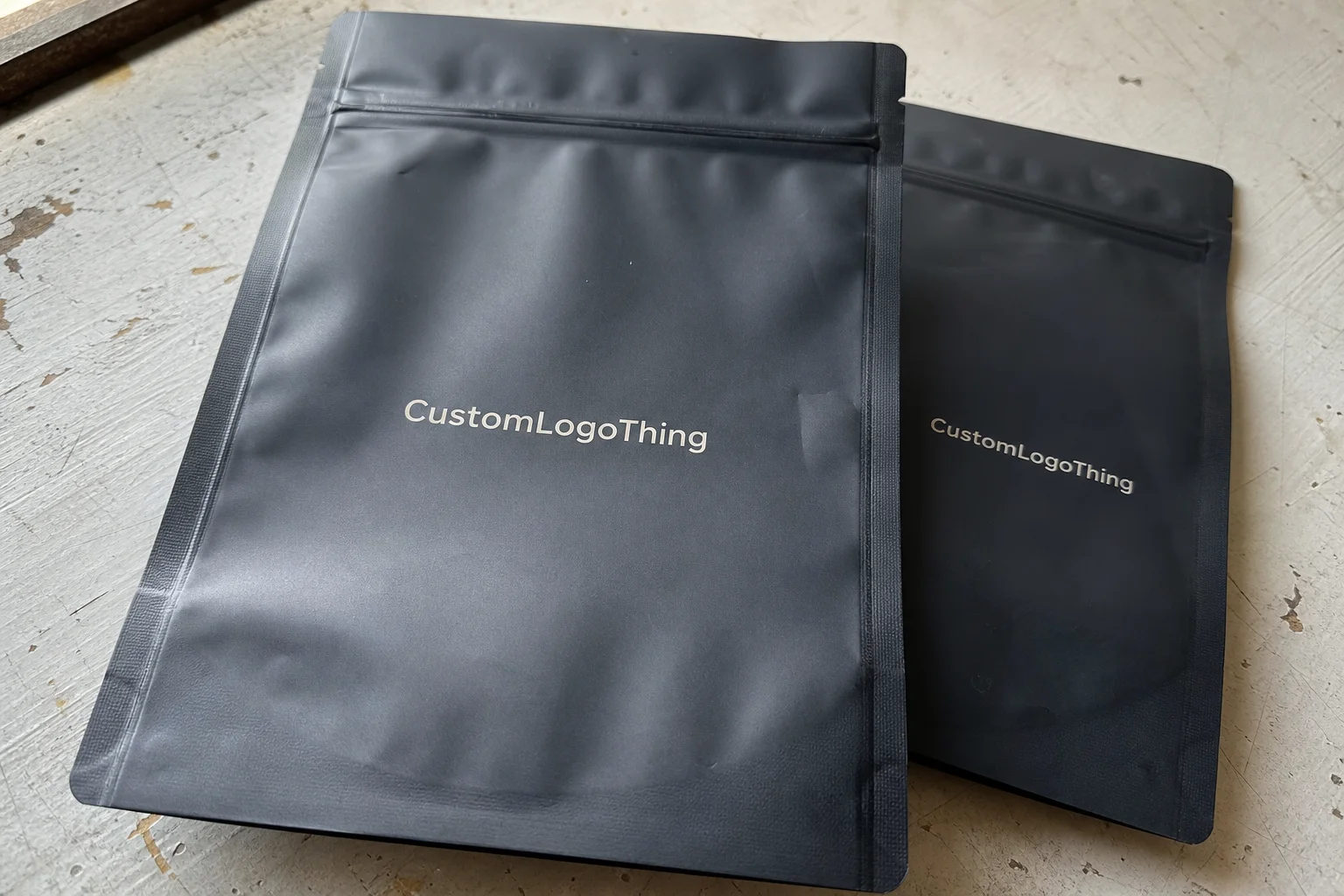
Two brands can order the same 6 x 9 inch matte zipper pouch and pay very different prices. Buyers searching for a Matte Zipper Bags Unit Cost MOQ Pricing Plan usually need less catalog fluff and more production math. Pretty mockups are nice. They do not tell you why one pouch costs $0.22 and another lands at $0.74.
Matte zipper bags look simple from the outside. Non-gloss finish. Resealable top. Logo on the front. Maybe a window. Done, right? Not even close.
The real quote is built from film structure, bag dimensions, zipper type, print method, order quantity, tear notch, hang hole, packing method, freight terms, and whether the design needs plates, cylinders, or digital setup. A small change in one spec can move the price. A few changes together can blow up the budget before the artwork ever reaches proofing.
One brand might ask for a standard matte stand-up pouch with a press-to-close zipper, 3-color print, and 10,000 pieces. Another asks for soft-touch matte, full-coverage print, a powder-resistant zipper, clear window, high oxygen barrier, and 3 SKUs at 3,000 pieces each. Same general size. Not the same cost. Packaging math is annoying like that.
A useful quote should show what changes the unit cost, what affects the MOQ, and which features are worth paying for based on the product and reorder plan. Custom Logo Things helps buyers compare real production choices instead of guessing from vague marketplace listings. Shocking concept, I know.
This matters for food brands, supplement companies, cosmetics sellers, coffee brands, pet treat brands, retail product teams, and cannabis-adjacent packaging buyers where legally allowed. If you are sourcing custom matte resealable bags, the goal is simple: get the right pouch, at the right volume, without paying for decoration pretending to be engineering.
Matte Zipper Bags Unit Cost MOQ Pricing Plan
A solid matte zipper bags unit cost MOQ Pricing Plan starts with one basic truth: the more bags you print, the more setup, waste, material ordering, machine time, and proofing cost gets spread across the run. That usually lowers the cost per piece. Usually. Not always.
A strange shape, premium zipper, heavy ink coverage, difficult material structure, or several tiny SKU splits can keep costs stubborn. Buyers often assume that raising the quantity automatically fixes the price. It helps, but it does not erase bad specs.
For custom Printed Matte Zipper bags, common MOQs often start around 5,000 to 10,000 pieces, depending on size, material, finish, print coverage, zipper type, and production schedule. Digital printing may support lower quantities, especially for multiple SKUs or launch testing. Traditional flexographic or rotogravure printing often makes better financial sense at higher volumes because plates, cylinders, press setup, and make-ready waste have to be absorbed somewhere. They do not vanish because someone used the word “wholesale.”
Sample or prototype runs can be expensive per unit. A short digital test run might land anywhere from $0.60 to $2.50+ per pouch depending on size, finish, and complexity. A common small matte food pouch at 10,000 pieces might range from roughly $0.18 to $0.45 per unit. Larger high-barrier pouches with full print, premium matte coating, and special zipper features can push into $0.50 to $1.20+ per unit.
Those are planning ranges, not a promise. Film markets move. Freight moves. Rush schedules move. If the pouch needs foil, a certified child-resistant closure, a custom die, or a specific recyclable mono-material structure, the quote needs to reflect that. The “average pouch price” is useful only until the real pouch appears.
| Quantity Tier | Typical Buyer Goal | Cost Behavior | Best Fit |
|---|---|---|---|
| 1,000–3,000 pieces | Prototype, test launch, small SKU run | Higher unit cost; digital print may be needed | Brands testing demand or packaging size |
| 5,000–10,000 pieces | Common custom MOQ range | Better unit cost, but setup still matters | Early retail, ecommerce, food, supplements |
| 25,000 pieces | Stronger bulk pricing | Setup spreads out; freight planning matters | Growing brands with repeat sales |
| 50,000+ pieces | Lowest practical unit price | Best production efficiency, more inventory risk | Established SKUs with predictable velocity |
Ask for price breaks at 5,000, 10,000, 25,000, and 50,000 pieces when those quantities make sense for your inventory. That gives you the savings curve. Sometimes the jump from 5,000 to 10,000 is meaningful. Sometimes the real drop starts at 25,000. The cheapest MOQ can be expensive if it creates dead inventory, but a tiny run can make the bag cost look ridiculous. Again, rude math.
Separate one-time costs from per-unit costs. Plate fees, digital setup, die costs for non-standard shapes, proofing, sample shipping, freight, duties, and customs handling should not be buried unless you specifically ask for a landed quote. A clean pricing plan should show setup charges, tooling fees, per-bag pricing, and delivery assumptions clearly enough that you can compare options without a spreadsheet migraine.
Buying rule: do not approve a pouch quote until you know whether the price includes setup, proofing, freight, and the exact material structure. “Matte pouch, food safe” is not a spec. It is a shrug with punctuation.
Product Details That Change the Bag Price
Matte zipper bags are flexible plastic pouches with a resealable zipper and a non-gloss exterior. They can be made as stand-up pouches, flat pouches, three-side-seal bags, side-gusset bags, or specialty formats. The format affects film use, converting time, carton packing, shelf presence, and filling behavior.
Stand-up pouches are common for retail because the bottom gusset helps the bag sit upright. Flat pouches use less material and can be efficient for samples, single-use items, accessories, or lightweight products. Side-gusset bags fit coffee, snacks, and bulkier fills, but they can require different filling and sealing considerations. Specialty shapes look fun until the die cost and packing efficiency show up. Then everyone gets quiet.
Finish is one of the first visible choices. Standard matte is usually the practical default. Soft-touch matte feels more premium but can raise cost and may scuff more easily if the surface treatment is not specified well. Spot gloss over matte adds contrast for logos, product names, or pattern details. Metallic matte, kraft-look matte films, and frosted clear windows can work beautifully, but they change material selection and proofing expectations.
Zipper choice matters more than buyers expect. A standard press-to-close zipper is common and cost-effective. Powder-resistant zippers help with products like protein powder, drink mix, collagen, spices, flour blends, or anything that creeps into the closure channel. Child-resistant zippers add compliance concerns and can raise both cost and MOQ. Double zippers, sliders, and specialty closures add convenience, but they are not free. Funny how that keeps happening.
Functional add-ons should have a job. Tear notches improve opening. Hang holes and euro slots support peg displays. Degassing valves are common for coffee because roasted beans release gas. Rounded corners can improve handling. Clear windows help shoppers see texture or product color. Bottom gussets improve shelf stability. None of these should be added just because a competitor used them.
Print method is another major cost driver. Digital printing fits smaller runs, fast SKU variation, and lower setup needs. Flexographic printing works for many mid-to-large runs and can be efficient for repeat jobs. Rotogravure can deliver strong quality at higher volume, especially for detailed graphics and large solid coverage, but cylinder costs and prep time are real. If a quote includes “full color” but says nothing about print process, ask.
Ink coverage also matters. A white pouch with a small logo is not priced like a full-bleed matte black pouch with heavy ink on both sides. Large dark panels can expose scuffing, registration, and color consistency issues more easily than lighter designs. Metallic effects, opaque white underprint, varnish patterns, and window shapes all add proofing decisions. The bag may still be worth it. Just do not pretend it is the base model.
Custom Logo Things focuses on matching construction to the product, shelf environment, and reorder plan. A coffee pouch does not need the same barrier as a bath salt pouch. Pet treats may need oil and aroma control. Supplements may need moisture protection, clean seals, and accurate regulatory copy placement. The bag should fit the product, not someone’s favorite template.
Specifications to Confirm Before Requesting a Quote
Good quotes start with good inputs. Send the bag style, width, height, gusset depth, fill weight, product type, target barrier level, zipper type, print colors, finish, artwork status, target quantity, number of SKUs, and shipping destination. Do not send only “Need 8 oz pouch, matte black, logo front” and expect precision. That is not enough.
Size discipline matters. Buyers often describe bags by ounces or grams, but pouch dimensions depend on product density. Ten ounces of granola and ten ounces of powder do not behave the same. Obviously. A bulky snack may need a wider gusset. A dense powder may need less volume but stronger seals and better zipper protection from residue.
Material structures should be chosen based on what the product needs to survive. Common layers include PET, PE, CPP, nylon, aluminum foil, metallized films, and recyclable mono-material options. A snack might need moisture control. Coffee may need aroma and oxygen protection. Oily products need compatible sealant layers. Sharp or hard products may need puncture resistance. Light-sensitive products may need foil or metallized barrier.
Thickness is not the whole story. A thicker pouch can still perform poorly if the barrier layer, sealant layer, or lamination is wrong for the product. A thinner structure can perform well if it is engineered correctly. Ask for the layer structure and intended barrier purpose, not just a number in microns or mils.
For food and supplement packaging, confirm food-contact compliant materials, heat-seal performance, freezer tolerance if needed, and barrier requirements. Standards and testing language can vary by market, but buyers can use references from groups such as ISTA for transport testing concepts and FSC when paper-based or certified components enter the discussion. Flexible packaging is still mostly about fit-for-product performance, not buzzwords printed on a sell sheet.
Artwork also needs structure. Provide vector logos, dielines, Pantone or CMYK color references, barcode placement, regulatory copy, nutrition panels if required, warning language where applicable, and bleed margins. If your artwork is still in Canva screenshots and good intentions, say that early. Proofing delays usually cost more time than buyers expect.
Tolerances are normal in flexible packaging. Size, color, seal alignment, print registration, and final quantity can vary within accepted manufacturing ranges. A serious supplier should discuss those expectations before production. If exact color is critical, request a physical proof or color target process. Digital screen previews are useful, but your laptop is not a calibrated press. Harsh, but true.
For filling, confirm whether the bags will be hand-filled, semi-automated, or run through filling equipment. Machine filling may require tighter size consistency, specific seal areas, rollstock instead of pre-made pouches, or open-top packing. Heat sealing also needs attention. The sealant layer, fill residue, temperature, dwell time, and pressure all affect whether the finished package actually stays closed.
If possible, send a current bag sample, competitor reference, or shelf photo. Physical references reduce guesswork faster than ten emails describing “premium but not too premium.” For more general ordering questions, Custom Logo Things also keeps a practical FAQ for buyers who want to understand basic production and quote details before sending files.
Production Steps, Timeline, and Lead Time Expectations
A typical custom matte zipper bag project moves through a clear sequence: quote request, specification review, material recommendation, dieline setup, artwork check, digital proof, sample approval if needed, production, quality inspection, packing, and freight. Skip steps and you may save two days now, then lose two weeks later. That trade rarely looks smart.
Quote review may take 1 to 3 business days when specs are complete. Artwork proofing can take several days depending on revisions, barcode changes, missing bleed, color questions, or regulatory copy edits. Production commonly ranges from 2 to 6 weeks after approval, depending on quantity, print method, material availability, and production schedule.
Lead times move for boring but real reasons. Plate making takes time. Film stock may need to be ordered. Zippers may have their own availability. Holiday schedules can compress production slots. Quality holds can delay packing. Freight method changes the delivery calendar. Late artwork approval is the classic culprit. Everyone blames the factory, then someone finds the missing legal line on the back panel.
Sampling has tradeoffs. Digital proofs are fastest and usually enough for layout checks, copy position, barcode size, and general appearance. Pre-production samples provide better confidence for fit, feel, finish, zipper function, and filling tests, but they add time and cost. Physical color matching may be useful for brand-critical retail packaging, especially if the pouch has large solid color coverage.
Quality control should not be vague. Common checks include seal strength, zipper opening and closing, tear notch position, lamination appearance, print registration, color consistency, scuff resistance, bag dimensions, gusset formation, odor, carton labeling, and quantity count. For food or supplement packaging, buyers may also need documentation tied to material compliance, traceability, or retailer requirements.
Shipping needs a decision early. Air freight is faster and painful on cost, especially for bulky cartons. Ocean freight is slower and better for larger runs. Domestic delivery timing depends on destination, carton count, palletization, and receiving rules. If you need a landed estimate, ask whether the quote includes freight, duties, customs handling, and delivery to your final address.
Back up from your launch date. Include time for filling, fulfillment, retailer approvals, label review, photography, and that inevitable copy change someone discovers after the first proof. A practical pricing plan should include both pricing and timing, because a cheap bag arriving two weeks late is not cheap. It is a storage problem with a logo.
The supplier’s job is to help buyers choose the shortest safe path. Custom Logo Things can recommend when a digital run is smarter, when a larger production run lowers cost enough to justify inventory, and when a feature should be cut because it adds delay without improving the product.
How to Compare Suppliers Without Getting Trapped
The lowest line-item unit price is not automatically the best deal. It may exclude setup charges, tooling fees, proofing, freight, duties, material upgrades, packing requirements, or realistic lead time. A quote that looks cheap because half the costs are missing is not a bargain. It is accounting cosplay.
Compare suppliers on the same terms: same size, same material structure, same thickness, same finish, same zipper, same print coverage, same quantity, same SKU count, same packing method, and same delivery terms. If one quote says PET/AL/PE and another says “premium matte plastic,” those are not equal quotes. One is a specification. The other is a mood.
- Material: ask for layer structure, approximate thickness, barrier purpose, and food-contact status if needed.
- Printing: confirm digital, flexographic, or rotogravure production, plus setup, plate, or cylinder costs.
- Finish: define standard matte, soft-touch matte, spot gloss, metallic, kraft-look, or frosted window.
- Closure: specify standard zipper, powder-resistant zipper, child-resistant zipper, slider, or double zipper.
- Delivery: compare ex-factory, delivered, or landed pricing so freight does not ambush the budget.
Quality checks should be part of the conversation before the order is placed. Ask about seal testing, zipper function, print registration, scuff resistance, odor, color consistency, carton labeling, and quantity count. ASTM methods are often used across packaging and materials testing, depending on the product and claim being evaluated, so a supplier should be comfortable discussing test expectations without pretending every pouch needs a lab report.
Communication speed is a real cost factor. Delayed proof responses, vague revision notes, and slow quoting create launch risk even when the bag price looks attractive. If a supplier takes five days to answer a basic material question during quoting, imagine how charming that gets during production.
Watch for quotes that dodge the hard details. “High quality material” is not a structure. “Fast delivery” is not a lead time. “Eco-friendly” needs a material definition, disposal context, and realistic market claim. Recyclable mono-material pouches can be a good fit for some products, but they may come with barrier tradeoffs, MOQ changes, or retailer-specific requirements. Sustainability language should survive contact with the actual pouch.
Choose Custom Logo Things when you need custom logo printing, practical MOQ guidance, packaging recommendations, and a quote that explains tradeoffs instead of hiding them. No supplier is perfect for every job. Anyone claiming that probably also has “best quality cheapest price” on a banner somewhere. Structured quoting beats random marketplace shopping because it lets buyers make decisions using specs, not hope.
Next Steps to Get an Accurate Matte Bag Quote
Start with a simple checklist. Choose the bag style. Estimate fill weight. Confirm product type. Pick target dimensions if known. Decide on matte finish. List required features. Prepare logo files. Choose target quantities. If you do not know the exact size, send the product weight and a reference pouch so Custom Logo Things can recommend realistic dimensions.
Request multiple quantity tiers instead of one number. Ask for 5,000, 10,000, 25,000, and 50,000 pieces where appropriate. That shows the bulk pricing curve and helps you plan inventory with actual math. If you have multiple SKUs, explain whether they share the same bag size and material. Mixed-SKU production may be possible, but artwork changes, print setup, and minimum splits still matter.
Send photos of any current pouch, competitor pouch, or target retail shelf. Photos help with size, finish, zipper choice, gusset style, and print expectations. Better still, send a physical sample if timing allows. A real pouch in hand answers questions that email keeps dancing around.
Custom Logo Things can respond faster when you provide artwork files, dimensions, material preference if known, print sides, number of SKUs, delivery location, and launch deadline. Flag must-have requirements early: recyclable film, high barrier, child-resistant zipper, freezer use, food contact, retailer compliance, or special filling equipment needs. Do not reveal these after pricing and expect the cost to stay frozen. That is not how production works.
If you are still gathering information, review the Custom Logo Things FAQ before requesting a quote. It can help you sort basic file, timing, and ordering questions before the pouch specs get technical.
If you want a matte zipper bags unit cost moq pricing plan that reflects real production, send specs and ask for tiered pricing rather than guessing from a generic pouch listing. A clean quote should show the bag construction, MOQ, unit cost, setup charges, timeline, and freight assumptions clearly enough that you can Buy With Confidence instead of crossing your fingers.
FAQ
What is a realistic MOQ for custom matte zipper bags?
Common custom printed MOQs often start around 5,000 to 10,000 pieces, but the exact number depends on size, material, print method, zipper type, production schedule, and whether multiple SKUs can share setup. Digital printing may support lower runs, while traditional printing usually makes more sense at higher volumes because setup costs are spread across more bags.
How do I calculate matte zipper bag unit cost before ordering?
Ask for tiered pricing at several quantities, then separate per-bag cost from setup, sampling, freight, duties, and any special tooling, plate, or cylinder charges. Compare landed cost when possible, because a cheap ex-factory unit price can look less charming once shipping and customs costs show up.
What affects the pricing plan for matte resealable pouch bags?
The biggest pricing drivers are bag size, film structure, barrier level, print coverage, finish type, zipper style, order quantity, number of SKUs, and shipping method. Premium features like soft-touch matte, spot gloss, windows, valves, or child-resistant zippers can raise both unit cost and MOQ.
How long does production take for custom matte zipper bags?
After artwork approval, many custom matte zipper bag orders take about 2 to 6 weeks for production, depending on quantity, print method, material availability, and factory schedule. Sampling, plate making, artwork revisions, quality checks, and freight can add extra time, so buyers should build in a launch buffer.
What should I send to get an accurate matte zipper bags quote?
Send bag dimensions, product type, fill weight, material or barrier needs, zipper requirements, finish preference, print artwork, quantity targets, number of SKUs, delivery address, and deadline. If dimensions are not final, send a product sample weight and a reference pouch so the supplier can recommend a realistic size. For general ordering questions before quoting, the FAQ is a useful starting point.


