For ecommerce operations, oem Clear Garment Bags wholesale pricing for ecommerce teams is less about packaging and more about speed, fit, and repeatability. A clear sleeve lets pickers confirm the item without reopening the package, which reduces touch time and helps keep the line moving. On a busy pack-out line, even a 5-10 second reduction per unit can matter when the daily volume reaches 1,000-5,000 orders.
The right bag also affects presentation and damage control. It should protect the garment, stay neat in transit, and not slow packing with unnecessary bulk or awkward closures. The best spec is usually the one that fits the workflow with the fewest compromises, whether that means a 1.5 mil LDPE sleeve for folded tees or a 2.5 mil LLDPE bag with a hanger hole for heavier outerwear.
Why clear garment bags can reduce touch time at pack-out
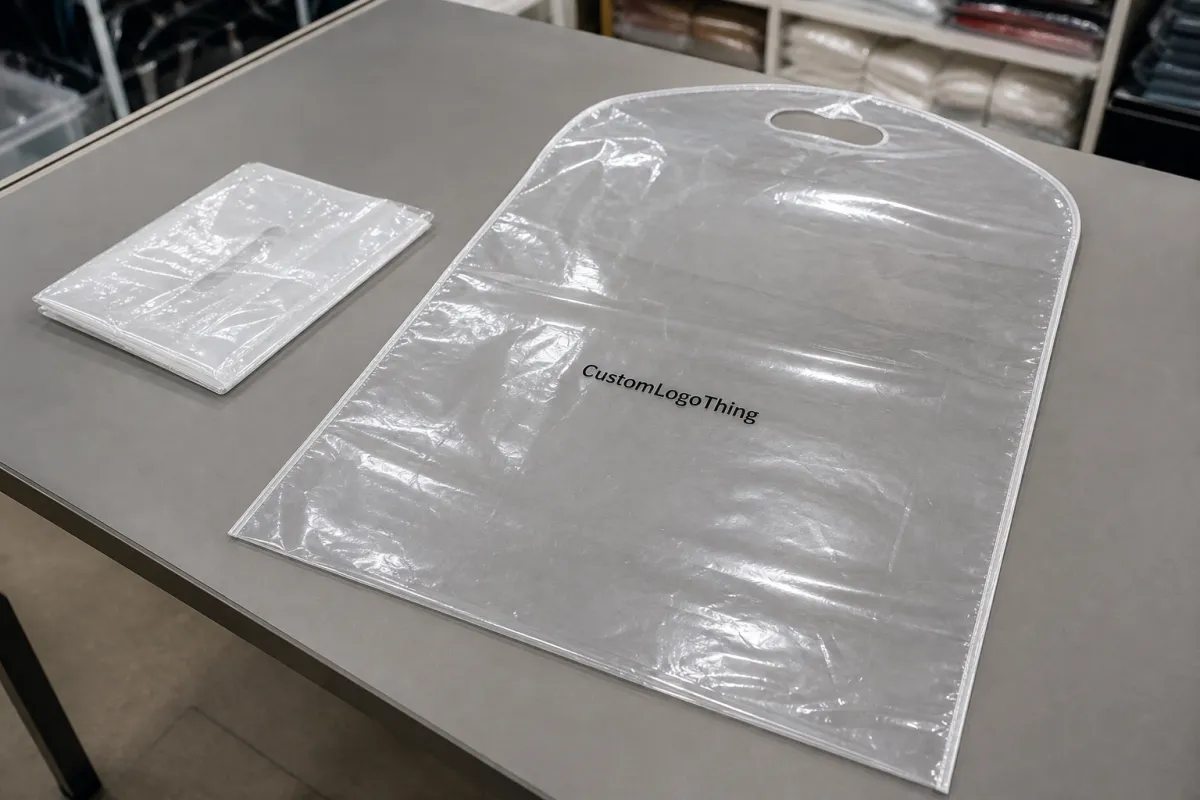
A clear garment bag lets the team verify size, color, and style without unsealing the package. That matters on a busy line because each extra reopen, refold, or reseal adds labor. At scale, those small delays show up fast. A team packing 2,000 units per day can lose several labor hours a week if the packaging makes identification slower by just a few seconds per item.
Visibility also helps with staging. Teams can sort by SKU family, size run, or color without breaking the package open. That reduces handling errors and keeps garments cleaner through pack-out. It is especially useful for multi-line orders where one carton may contain 6-12 sizes or several colorways.
There is a second operational benefit: returns processing is easier when the item stays visible and orderly. The receiving team spends less time identifying what is inside, and less time rebuilding a damaged fold. For programs with a high return rate, that can reduce rework and help preserve resale presentation.
If you need a place to compare quantity structure and format before requesting a quote, the Wholesale Programs page is the quickest starting point.
Product details that matter for ecommerce fulfillment
Most Clear Garment Bags are made from LDPE, LLDPE, or a blend. LDPE is common because it is affordable and easy to seal. LLDPE usually offers better puncture resistance and handles sharper hanger points or heavier garments more reliably. For recycled-content programs, some buyers also specify rLDPE or rLLDPE and ask for GRS documentation if the recycled content claim needs third-party support.
Closure choice is just as important as resin. Zipper closures work well for bags that will be opened again during inspection or returns handling. Adhesive flaps are faster for one-way packing. Tuck tops stay simple and low cost. Venting can help with bulky items that trap air, while hanger holes and reinforced tops improve handling for hanging apparel. If the bag touches finished apparel directly, buyers often ask for OEKO-TEX Standard 100 on the film or on any printed ink system used in the bag specification. If the program includes broader social compliance checks, WRAP and BSCI are common factory audit references.
- Flat-folded apparel: Works best with a lighter film, usually 1.5-2.0 mil, and a compact width.
- Hanging garments: Need hanger access, shoulder allowance, and enough length for hems and sleeves.
- Coats and outerwear: Usually need a heavier gauge, often 2.0-2.5 mil or 50-63 micron, and more room at stress points.
- Sets and bundles: Benefit from visible size marks, barcode windows, or handling text.
Clarity affects both operations and presentation. Crystal-clear film supports quick visual checks and a cleaner retail-ready look. Frosted film softens the appearance, but can make identification slower. If your team uses warehouse photos or client-facing QC images, that difference matters. For most ecommerce programs, buyers ask to compare haze level, gloss, and weld clarity side by side before approving the final spec.
Static is worth checking too. Thin film can cling to fabric in dry conditions, which slows insertion and can disrupt the fold. It is a small issue until it becomes a daily one on the line. Anti-static additives can help, but they may add cost and should be tested with the actual garment type before release.
Specifications that control fit, protection, and presentation
Dimensions drive both protection and efficiency. A bag that is too short compresses the garment. One that is too wide wastes material and stacks badly in cartons. Before asking for pricing, measure garment length, shoulder width, sleeve bulk, and any extra volume from hoods or layered items. For custom programs, buyers usually specify width x length plus flap or gusset allowance, then confirm the final usable opening after sealing.
Film gauge is the next major lever. Lighter film lowers unit cost, but can feel flimsy if the garment is handled more than once. Heavier film improves durability and seal confidence, especially for outerwear or repeated handling. For many ecommerce programs, 1.5 mil to 2.5 mil is a practical range to compare. In micron terms, that is roughly 38-63 micron, depending on resin blend and line settings.
Printing changes the spec more than many buyers expect. Logos, size identifiers, barcode windows, and handling text can shift usable width and affect how the film folds. If the artwork is part of the program, it should be locked early instead of added after the size is already chosen. For film printing, suppliers often use gravure or flexographic presses, and the final approval should confirm ink adhesion, legibility, and whether the print sits inside or outside the seal zone.
Carton configuration matters as well. Even a good bag can arrive crushed if the pack count is too high or the carton is loaded too tightly. The final package is not just the bag; it is the bag, the fold, and the way it survives storage and freight. Buyers often set carton pack counts at 100-500 pieces depending on bag size, then ask for carton compression and drop checks before approving the master pack.
For buyers comparing materials or waste impact, the guidance from the EPA is useful. If the bags will move through parcel networks or mixed freight, transit testing methods published by ISTA help reduce surprises after vibration, compression, or temperature swings. A practical sample review also includes a 1.2 m drop test on a filled carton, seal pull checks, and a visual scan for wrinkling, haze, and zipper-track alignment.
What drives wholesale pricing and MOQ
Wholesale pricing is usually driven by material choice, dimensions, gauge, closure style, print, pack count, and shipping method. A stock sleeve and a custom-printed hanger bag may look close on paper, but production cost is very different. The biggest jumps usually come from larger film widths, thicker gauge, zipper insertion, recycled-content verification, and any print that requires plates or setup.
MOQ matters because setup cost is spread over the run. Smaller orders are useful for launches, seasonal capsules, or test SKUs, but the unit price is usually higher. Larger orders lower the unit cost, but only make sense if the spec is stable enough to reorder. For a premium reusable garment cover, a buyer might see $2.50-$4.00 per unit at 500 MOQ; for a simple LDPE sleeve, the price should be far lower, but the minimum order may move up to absorb tooling and setup.
| Option | Typical MOQ | Typical Unit Price | Best Fit |
|---|---|---|---|
| Stock clear garment bag | 1,000-3,000 pieces | $0.07-$0.12 | Simple protection, fast replenishment, minimal setup |
| Custom size, unprinted | 3,000-5,000 pieces | $0.11-$0.18 | SKU-specific fit and cleaner pack-out |
| Custom printed or heavier gauge | 5,000-10,000+ pieces | $0.16-$0.32 | Branding, handling marks, outerwear, repeated handling |
| Premium reusable zipper cover | 500-1,000 pieces | $2.50-$4.00 | High-touch retail presentation, thicker PEVA/EVA style, repeated use |
These figures are directional. A quote can move if the film width increases, the zipper changes, a hanger hole is added, or the pack style changes. Freight can also erase a low unit price if cartons cube inefficiently. If the plant runs blown film on a 3-layer co-extrusion line, then converts on an automatic side-seal or bottom-seal bag machine, the tooling and setup can still vary a lot by width and gauge.
Artwork setup is another cost driver on smaller runs. Print screens, plates, or digital setup work must be recovered somewhere, so the run size affects how much that setup is felt in the unit price. That is why a 500-piece run can look expensive even when the material cost is modest.
When you request pricing, include bag dimensions, garment type, quantity, closure preference, print needs, pack style, sample requirements, and destination. If the team already works from internal specs, the Wholesale Programs page helps align quantity and format before the quote is built. A complete RFQ should also note whether the bag needs recycled content, a current OEKO-TEX Standard 100 certificate, or social compliance documents such as WRAP or BSCI.
Production steps, lead time, and approval checkpoints
A normal order moves through inquiry, spec review, sample or proof approval, production, carton packing, and shipment. The process is faster when the buyer provides complete dimensions and a clear use case for the bag. It also moves faster when the supplier knows whether the film is LDPE, LLDPE, recycled content, or a blend, because that changes extrusion settings and seal behavior.
- Spec review: Confirm size, gauge, closure, print, and pack count.
- Proof or sample: Check clarity, fit, seal behavior, and opening ease.
- Production: Confirm quantity and carton configuration.
- Shipment: Add transit time to the factory schedule before launch or replenishment deadlines.
For a custom run, a common sample path is a digital proof within 24 hours, then a physical pre-production sample in 3-5 business days, then a golden-sample signoff before mass production starts. If the artwork is simple and the bag is stock size, the approval loop can be shorter. If there is print registration or a special zipper, the buyer should expect at least one revision cycle.
Lead time depends on setup and volume. Stock items can move quickly. Custom sizes and printed film take longer. For many custom runs, a practical planning window is 18-22 business days after sample approval for production, plus freight. If the order includes recycled resin, special packaging, or extra QC hold points, add a few more days for material confirmation and final inspection.
Approval checkpoints save money. Material confirmation should happen before production, not after. The buyer should approve a size spec, a film gauge target, a zipper or closure sample, and the print proof. On the factory floor, the operator should also verify line speed, seal temperature, and sample retention from the first 50-100 pieces.
QC checks ecommerce teams should not skip
Good QC starts with the material and ends with the carton. For clear garment bags, the most useful checks are simple, measurable, and repeatable. Ask the supplier to confirm film thickness, width tolerance, seal width, zipper alignment, and carton pack count on every batch.
Common inspection checkpoints include a visual check for gels, fish-eyes, streaks, and haze; a thickness check with a micrometer; a seal-strength check on the side or bottom seam; and an opening/closing test if the bag has a zipper. If the bag has a hanger hole or reinforced top, the tear resistance around that area should also be checked.
- Incoming material: Resin lot match, recycled content documents, and color/clarity consistency.
- In-process: Film gauge, seal temperature, zipper track alignment, and print registration.
- Pre-pack: Piece count, fold direction, scratch marks, and static cling.
- Final carton: Carton count, carton dimensions, label accuracy, and pallet stability.
If the bags are for ecommerce and may be opened multiple times, ask for a minimum zipper cycle test of 10 open-close cycles on the sample lot. If the bags are for one-way shipping, check seal integrity after compression and drop testing instead. For outerwear bags, buyers often also request a 1.2 m drop test and a 24-hour storage check under load to make sure the fold stays neat.
Certification checks should be specific. If a supplier claims OEKO-TEX Standard 100, ask for the current certificate number and scope. If the run uses recycled resin, ask for the GRS transaction certificate or equivalent chain-of-custody proof. If social compliance matters, request the latest WRAP or BSCI audit summary rather than relying on a verbal claim.
What experienced buyers verify before volume orders
Experienced buyers do not approve a bag just because it is clear and the price looks low. They check whether the film is consistent across the full width, whether the closure still works after the bag is folded, and whether the finished pack still fits the carton plan. A small deviation in the seal line can create a larger issue once the bag is filled and stacked.
They also verify how the bag handles with the real garment inside. A lightweight tee, a structured blazer, and a padded coat behave very differently. A good sample should be tested with the actual SKU mix, not just a placeholder item. If the line handles 10-20 SKUs per day, the team should test the three most common silhouettes before approving the final spec.
When sustainability is part of the brief, the buyer should decide whether the priority is recycled content, downgauging, or long-life reuse. A thinner film can lower material use, but only if it still protects the garment through the whole shipment cycle. If the program leans on recycled content, the buyer should verify the resin source and document retention, since a recycled claim is only useful when it can be supported on paper.
Another useful check is carton efficiency. A bag that saves a fraction of a cent per unit can still cost more overall if its size forces inefficient cube or oversized freight charges. A better quote is the one that works for the actual fulfillment network, not just the factory floor.
Planning quote requests, samples, and rollout
The best quote request is short but complete. Include the garment type, folded dimensions, required bag dimensions, preferred film, closure, print areas, carton pack count, target delivery date, and whether the bag needs recycled content or a specific compliance document. That lets the supplier price the job without guessing.
Ask for at least two sample options if the program is still flexible: one low-cost version and one higher-durability version. Comparing a 1.5 mil sleeve against a 2.5 mil sleeve often makes the trade-off obvious within minutes. If the bag includes print, request a plain sample plus a printed sample so you can check clarity, legibility, and how the print affects the fold.
For rollout, stage the first order as a pilot if the SKU is high-risk or the pack-out team is new to the format. A pilot run of 500-1,000 pieces is often enough to catch handling issues before a 5,000-10,000 piece order is released. Once the process is stable, the next order can move up to the run size that gives the best unit economics.
If the program needs a faster launch, stock items usually move first. Custom sizes, print, and stronger gauge should be locked only after the team confirms the sample fits the actual garment and the fulfillment line can pack it without friction.
FAQ
What MOQ should I expect for clear garment bags?
Stock items often start around 1,000-3,000 pieces. Custom sizes usually begin around 3,000-5,000 pieces. Premium reusable zipper covers can be built at 500-1,000 pieces, but the unit price will be much higher.
What is a realistic lead time?
Stock orders can move quickly if inventory is available. For custom orders, plan on 18-22 business days after sample approval, plus freight. Add time if the order needs recycled content paperwork, print revisions, or extra QA checks.
Which certifications matter most?
For clear garment bags, the most common checks are OEKO-TEX Standard 100 for restricted substances, GRS for recycled content, and WRAP or BSCI for social compliance. GOTS is usually relevant only if the program includes a textile component such as a fabric cover or cotton accessory.
What should be in the sample review?
Check fit, clarity, seal quality, zipper alignment, opening ease, print quality, and carton count. If the bag will be reused, add a repeat-open test and check the zipper after at least 10 cycles.
How do I keep pricing from drifting?
Lock the dimensions, gauge, closure, print, and pack count before the quote is finalized. Even a small change in width, zipper style, or carton pack size can move the unit price and the freight cost.


