For ecommerce teams, packaging usually fails in small ways: a sleeve that slows picking, a cloudy film that hides the SKU, or a closure that opens before the order reaches the next station. That is why custom Clear Garment Bags Wholesale pricing for ecommerce teams is really a decision about labor, damage risk, and how much rework the warehouse can absorb before margin starts to leak.
Clear Garment Bags have one job that matters most: they protect apparel while keeping it visible. That visibility helps on a packing line because a quick glance can confirm color, style, and size without opening the pack. In practice, the bag is less about presentation and more about reducing unnecessary handling.
A low unit price only matters if the bag survives folding, sealing, staging, cartonization, and transit. If it fails in any of those steps, the savings disappear into labor.
Why ecommerce teams switch to clear garment bags before peak season
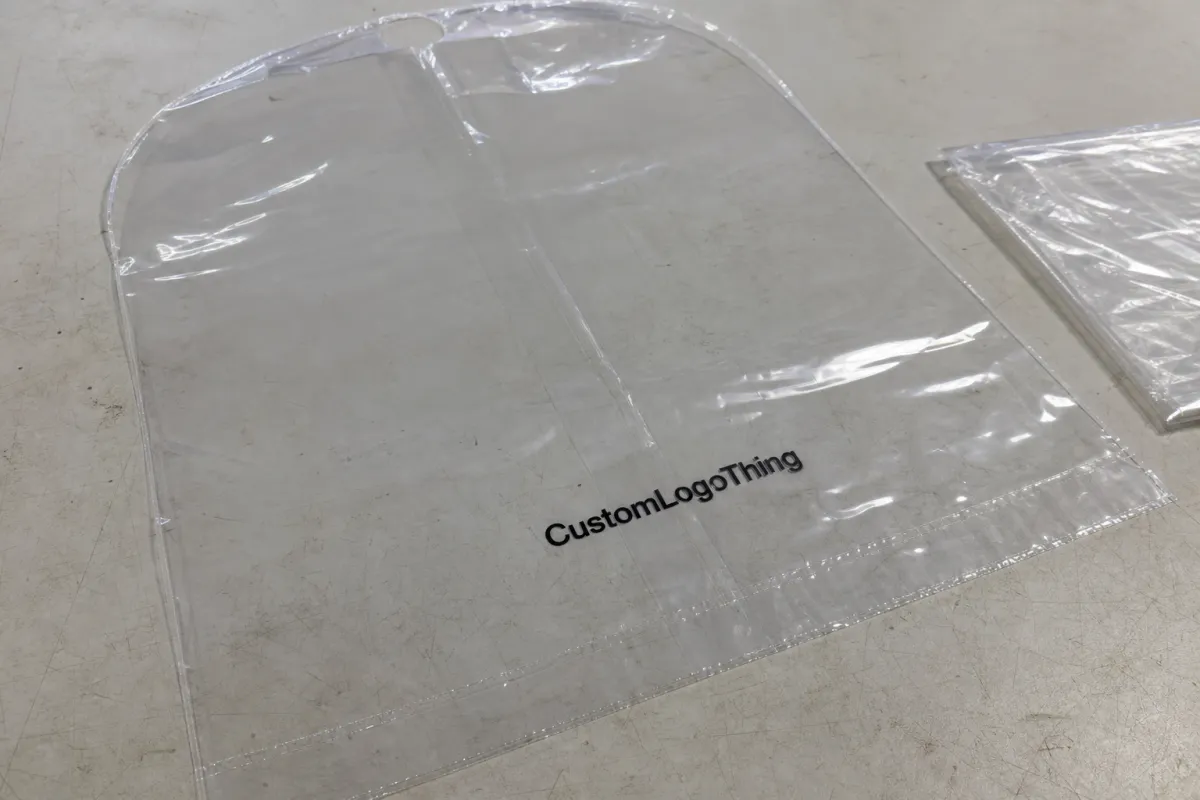
Peak season exposes weak packaging decisions quickly. A transparent garment sleeve can turn a slow verify-open-reseal cycle into a visual check, which matters when order volume spikes and training time is limited. For teams packing hundreds or thousands of apparel units per day, even a few seconds saved per order adds up fast.
The operational value is easy to miss if you only look at the packaging bill. Clear bags reduce dust exposure, limit unnecessary handling, and help teams spot the right SKU before it leaves the table. They also make repack decisions simpler. If the garment is already visible and protected, there is less incentive to unwrap it just to verify contents.
There is a branding angle, but it works best when the packaging is restrained. A transparent sleeve gives the product room to stay visible while the outer carton, label set, or insert carries the brand voice. Customers notice orderliness more than excess.
The timing matters. Teams that lock specs before the rush avoid substitutions, rush freight, and last-minute size changes that create delays downstream. Peak season does not forgive ambiguity; it exposes it.
Product details that determine fit, protection, and presentation
Most Clear Garment Bags are made from polyethylene film, but that label hides a lot of variation. Gauge, stiffness, clarity, and seal quality all affect performance. Lightweight basics often work in the 1.25 to 1.75 mil range. Heavier garments, folded outerwear, or return-friendly bags usually need 2 to 3 mil so the film has more body and less stretch.
Closure style changes the workflow as much as the appearance. Self-seal strips are usually the fastest option for flat-packed apparel. Zipper closures make more sense when the same bag may be reopened for a return or quality check. Flap closures sit in the middle. Open-top designs still have a place for hanging inventory or internal transfers.
Size is where many buying teams lose precision. Measure the largest SKU in its packed state, then add allowance for fold bulk, hanger space, and sealing clearance. A tee may fit in a 14 x 18 inch sleeve, while a dress, blazer, or padded jacket may need 24 x 36 inches or more. Gusset depth matters too; without enough depth, the bag twists at the seams or pulls against the garment at the shoulders.
Printing should serve function first. A small logo, size mark, or product code can help with internal sorting and customer-facing presentation. Heavy print coverage raises cost and reduces visibility, so keep it minimal unless the bag is doing double duty as presentation packaging.
Custom clear garment bags wholesale pricing: what changes your quote
Custom Clear Garment Bags wholesale pricing for ecommerce teams usually moves on five variables: film gauge, finished size, print coverage, closure type, and order volume. The less obvious drivers are setup time, carton density, tooling requirements, and how much manual handling the spec creates on the production line. A quote that looks tidy on paper can become messy once those details are added back in.
Volume helps, but only after the spec is stable. A supplier can spread setup costs across more units, which is why price breaks often appear at higher quantities. But if the bag is revised after sampling, that break may disappear. Changing from 1.5 mil film to 2.5 mil film, or adding a zipper after the first proof, affects resin use and machine setup. Buyers often compare two quotes that do not describe the same product.
| Option | Typical spec | Indicative unit price | Best fit |
|---|---|---|---|
| Stock clear garment bag | Standard size, no print, 1.25-1.5 mil | $0.08-$0.14 | High-volume basics, low-touch packing |
| Custom size with light branding | Custom dimensions, small logo, self-seal strip | $0.16-$0.28 | Most ecommerce apparel programs |
| Heavier-duty branded bag | 2-3 mil film, reinforced opening, more print | $0.26-$0.48 | Jackets, dresses, higher-value returns |
| Special closure or premium build | Zipper, hanger reinforcement, custom carton pack | $0.35-$0.60+ | Reusable presentation or return-friendly use |
Those ranges are directional, not absolute. Freight, carton count, pallet pattern, and whether setup fees are bundled can move landed cost faster than the material itself. A quote that wins on piece price can lose once shipping and receiving labor are included. Ask for pricing at the unit level, carton level, and delivered level so the comparison is honest.
There are also quiet cost drivers. If artwork is not press-ready, file cleanup may add fees. If the supplier needs a new cutting die or sealing tool, tooling can appear as a one-time charge. If multiple SKUs require separate packouts, carton cube can drive freight more than film gauge does.
If a supplier cannot explain why the quote changed, the issue is usually in the spec sheet, not the market.
Specifications ecommerce buyers should lock before approving samples
The sample stage should remove uncertainty, not create another round of debate. Start with the largest and most delicate garment in the line. Measure the packed version, not just the flat product. If the item ships folded, test the exact fold pattern the warehouse will use. A sleeve that looks correct in a mock-up can still snag at the shoulder seam or leave too much slack at the top.
Before approving a sample, lock the film thickness, closure structure, and any reinforcement points. If the bag needs a hanger hole, vent, zipper, or seal strip, define it now. A few millimeters may not sound like much, but on a busy line, small fit issues slow loading and sealing. That means fewer units per hour, which is where packaging decisions turn into labor costs.
Use a short approval checklist:
- Largest SKU dimensions and fold method
- Film thickness target in mils
- Closure type and seal strength
- Hanger-hole placement and reinforcement
- Carton count, inner pack count, and pallet layout
- Barcode or label placement for receiving
Receiving problems usually start with missing instructions. If carton counts are unclear, mixed packs slow put-away. If the barcode is buried or inconsistent, scanning takes longer. If the pallet pattern is loose, loads shift in transit and create avoidable damage. Teams that already manage wholesale shipping materials know the pattern: the document often controls the outcome more than the product does.
If the apparel line also uses custom boxes, inserts, or hang tags, keep the bag spec in the same master file. That makes reorders cleaner and reduces the chance of one supplier updating a dimension while another works from an old version.
Process and timeline: from spec sheet to production release
The cleanest workflow is uncomplicated: send dimensions and quantity targets, review the quote, approve a sample or proof, then release production. What slows teams down is usually not the factory. It is the back-and-forth over missing details, late artwork, or a quantity change after the order has already been scheduled.
Plan the timeline in three separate blocks. Sample turnaround often takes a few business days if the supplier already has the right film and tooling. Production time depends on quantity and line capacity. Transit time is its own variable and should never be merged into the production estimate. When those three are blurred together, launch dates become fiction.
Rush orders are possible, but they depend on stock film, open machine time, and how fast the buyer approves revisions. One decision-maker on the buyer side helps more than most teams expect. It shortens the loop and reduces the slowest part of the process: waiting for consensus over a detail that should have been settled in the spec sheet.
If the order is traveling through parcel or mixed freight, ask whether the carton structure has been checked against common transit stress points. ISTA practices can be a useful reference for that conversation, even if the final test plan is more limited. For programs that include paper components, FSC certification may matter for cartons, inserts, or hang tags.
What separates a reliable supplier from a low-quote risk
A low quote is not the same as a dependable supply relationship. Reliable suppliers speak in measurable terms: film consistency, dimensional tolerance, seal performance, carton pack, and repeat-order documentation. If a vendor cannot tell you what happens when a sample fails, that is a warning sign. Problems happen in packaging. The difference is whether the supplier can correct them without forcing the buyer to start from zero.
Communication matters because ecommerce schedules move quickly. A good supplier confirms revisions in writing, keeps the spec aligned with the proof, and does not treat every question like a new project. Buyers switching from opaque mailers or custom printed boxes to Clear Garment Bags need fewer surprises, not more.
Operational fit matters too. Can the supplier support repeat orders without changing the spec? Can they hold unit pricing across multiple runs? Do they label cartons in a way the warehouse can receive without manual sorting? Those details are easy to ignore during procurement and expensive to ignore later.
One useful test is simple: if this order repeats three times, will run two and run three look the same? If the answer is uncertain, the quote may be attractive but the program is fragile. Packaging programs live or die on consistency.
Next steps to request samples, compare quotes, and place a PO
Start with a quote packet that removes guesswork. Include garment dimensions, item type, target quantity, closure preference, shipping ZIP, and any branding requirements. If the line includes multiple SKUs, list the largest and most delicate one first. That gives the supplier the hardest case to solve, which is usually the safest place to begin.
Ask for two or three sample constructions if the budget allows. Compare clarity, fit, seal behavior, and how the bag handles the real garment, not a placeholder. A good sample should make packing faster and cleaner. If the closure is slow or the film clouds when folded, that shows up quickly on the bench.
Then compare every quote on the same grid:
- Finished dimensions
- Film thickness
- Closure type
- Unit price and MOQ
- Freight and carton pack details
- Repeat-order pricing
- Proof timing and sample timing
That process turns a vague sourcing task into a controlled purchase. It also makes budgeting easier across apparel, inserts, and shipping materials. Once the spec is locked, the price becomes easier to defend. Once the landed cost is clear, the launch schedule becomes easier to trust.
FAQs
What details do I need for an accurate quote?
Send garment dimensions, target quantity, closure style, film thickness, print needs, and the delivery ZIP so the quote reflects landed cost, not just factory price. If there are multiple SKUs, list the largest and most fragile item first so the supplier sizes the bag for the hardest case.
Can ecommerce teams use one clear garment bag spec for folded and hanging apparel?
Sometimes, but only if the length, width, and closure style work for both formats without stretching, bunching, or crushing the garment. Hanging items usually need more top space and better reinforcement, while folded items may need different width or gusset depth.
What is a realistic MOQ for wholesale clear garment bags?
MOQ varies by size, film gauge, and whether the bag is stock-based or fully custom. Custom printing and nonstandard dimensions usually raise the minimum compared with a plain clear bag using a standard closure. Tiered pricing is often more useful than a single MOQ number.
How should I compare two quotes for custom clear garment bags?
Compare finished dimensions, mil thickness, closure type, carton counts, freight, and repeat-order pricing on the same line items. A lower piece price can be misleading if setup fees, shipping, or rework costs are higher.
How long do samples and production usually take for ecommerce garment bag orders?
Samples often move in a few business days, while production depends on approval speed, order size, and factory capacity. Build separate time for proof review and freight so the receiving date is realistic, not just the production finish date.

