Buyer Fit Snapshot
| Best fit | Offset Printed Corrugated Cartons projects where brand print, material claims, artwork control, MOQ, and repeat-order consistency need to be specified before quoting. |
|---|---|
| Quote inputs | Share finished size, material target, print colors, finish, packing count, annual reorder estimate, ship-to region, and any compliance wording. |
| Proofing check | Approve dieline scale, logo placement, barcode or warning zones, color tolerance, closure strength, and carton packing before bulk production. |
| Main risk | Vague material claims, crowded artwork, missing packing details, or unclear freight terms can make a low unit price expensive after revisions. |
Fast answer: Offset Printed Corrugated Cartons: Board, Finish, Dieline, and Unit Cost should be specified like a repeatable production item. The safest quote records material, print method, finish, artwork proof, packing count, and reorder notes in one written spec.
Production checks before approval
Compare the actual filled-product size with the drawing, then confirm tolerance on folds, seals, hang holes, label areas, and retail display edges. Reserve space for logos, QR codes, warning copy, and material claims before decorative graphics fill the panel.
Quote comparison points
Review material grade, print process, finish, sampling route, tooling charges, carton quantity, and freight assumptions side by side. A quote is only useful when the supplier can repeat the same color, closure quality, and packing count on the next order.
Offset Printed Corrugated cartons do a strange little double act. They protect the product, then show up looking like they meant to be seen. That matters more than people admit. The box is often the first physical thing a customer touches, and the first thing a buyer, warehouse team, or retail receiver judges in a split second. A plain brown shipper says “functional.” A well-made printed carton says the brand paid attention.
For brands that care about presentation, offset Printed Corrugated Cartons offer a practical middle ground. You get the strength of corrugated board and the cleaner, sharper graphics that offset printing can deliver. Fine text reads better. Logos hold together. Color has a fighting chance of staying where it belongs. The catch is simple: the carton has to be planned properly from the start, or the pretty surface ends up fighting the structure underneath it.
That tradeoff is where the real work lives for Custom Logo Things. A carton can look excellent in a mockup and still fail in production if the board grade is wrong, the flute profile is too soft, the scores are off, or the graphics ignore how the carton folds. Offset printed corrugated cartons work best when the brand side and the shipping side are treated like they belong in the same meeting. Because they do.
Offset Printed Corrugated Cartons: What They Are and Why They Matter
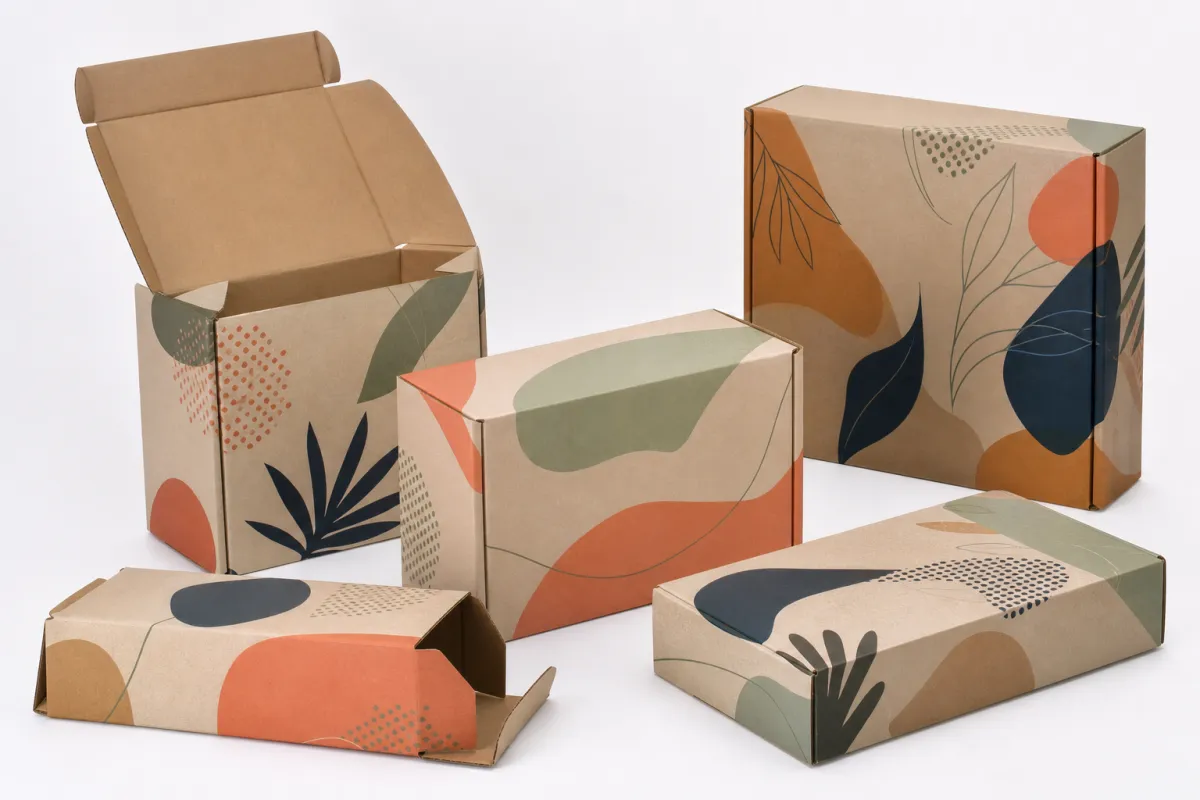
Offset printing starts with a paper sheet, not a finished box. The artwork is printed onto liner stock first, then that printed liner is laminated to corrugated board. After that, the board gets cut, scored, folded, and glued into the carton shape. That process is why offset printed corrugated cartons usually have a cleaner finish than many direct-print options. Small type stays legible. Images hold detail. Brand colors are easier to control when the work is handled with discipline.
That difference matters because corrugated packaging rarely exists for decoration alone. A plain shipper is fine for storage and transport. Once the box needs to show up in retail, appear in product photography, support shelf-ready display, or carry a premium brand impression, the outer surface becomes part of the product experience. That is the point where offset printed corrugated cartons stop being a nice-to-have and start earning their keep.
Common uses include subscription kits, ecommerce shipping boxes with brand presence, retail-ready packs, seasonal promotions, and higher-value products that need the packaging to signal quality before the item is even opened. In those cases, the carton is not just a wrapper around the product. It is a message. It can carry logos, warnings, product names, compliance copy, barcodes, and the kind of visual cues that help the receiving team and the end customer understand what they are looking at.
The useful thing about this format is that it sits between two very different disciplines: print and structure. Good graphics do not save a weak box. Strong board does not rescue sloppy artwork. Offset printed corrugated cartons are chosen by brands that need both sides of that equation to behave. Not because it is glamorous. Because it works.
I have a soft spot for packaging that does more than one job without pretending that is easy. Offset print is not magic. It is just a smarter way to get a carton to look intentional. That still requires tighter prepress, cleaner file setup, and coordination across marketing, operations, and packaging engineering. When those pieces line up, offset printed corrugated cartons can look polished and survive actual shipping conditions. Rare combo. Worth the effort.
There is also a consistency angle that brands ignore until it starts causing headaches. A carton produced this way can match other packaging pieces more closely, especially when a brand uses mailers, inserts, retail cartons, and shippers that should feel like they belong to the same system. Offset printed corrugated cartons often become the visual anchor for that system. That is not a small role.
“A carton should protect the product first. If it also tells the brand story without shouting nonsense, that is a better box.”
How Offset Printed Corrugated Cartons Are Made
The production process starts before anyone touches a press. Artwork has to be built around the actual dieline, not a generic box template someone found floating around in a folder named final-final-v3. Bleeds, safe zones, folds, glue flaps, wrap points, and tuck areas all need to be handled early. With offset printed corrugated cartons, the visual layout has to respect the structure. If it does not, the carton will punish you later.
Once the design is locked, printing plates or carriers are made for the offset press. The outer liner stock gets printed first, and that printed sheet is then laminated to the corrugated medium. That lamination step is what gives offset printed corrugated cartons their cleaner surface and more refined look. It also adds another place where quality can go sideways if the process is rushed.
After lamination, the board moves into converting. The plant die-cuts the blank, scores the folds, removes waste where needed, then folds and glues the carton into its finished shape. Every one of those steps can introduce small shifts. A few millimeters of movement may not sound like much until a logo gets cut into a fold or a panel that looked perfect in proof now reads crooked on the finished box. That is why the earlier prep work matters so much.
Color control sits near the top of the quality list. Many brands want the same colors across cartons, inserts, labels, and outer shipping packs. Offset gives more control than plenty of other methods, but it still depends on paper white, ink density, coating choice, and press setup. Strong offset printed corrugated cartons projects usually include proofs, clear approval points, and realistic color tolerances. Guessing is not a strategy. It is a mess with a deadline.
Trapping and registration sound technical because they are, but the idea is straightforward. Trapping helps avoid tiny white gaps where colors meet. Registration keeps the color layers aligned. If either one drifts, fine text and logos can look muddy or sloppy. In offset printed corrugated cartons, those details matter because the box is seen up close, not across a room in soft focus.
Finishing changes the look and the production load. Gloss coatings can brighten graphics and improve scuff resistance. Matte finishes can quiet the design down and make the box feel more premium without trying too hard. Spot coatings can call out specific elements. Windows can reveal the product inside. Each of those choices affects how the sheet behaves later in converting, so offset printed corrugated cartons need finish decisions that help the box, not just the render.
If you want a wider view of how cartons fit into packaging production, Custom Logo Things also keeps a useful overview of Manufacturing Capabilities and related carton formats like Custom Shipping Boxes. That context helps when the real question is whether the pack needs shelf appeal, shipping strength, or both.
Key Factors That Shape Quality and Performance
Board selection comes first. Single-wall corrugated works for a lot of shipping and retail applications. Double-wall makes more sense for heavier products, rougher routes, or tighter stacking demands. Flute profile matters too. E-flute gives a smoother print surface and a thinner profile. B-flute, C-flute, and combinations like BC or EB bring different mixes of print quality and compression strength. For offset printed corrugated cartons, the board choice should follow the product and the route, not the art file.
Strength numbers matter just as much as the print. Edge Crush Test values, burst strength, and box compression performance help predict whether the carton can survive pallet stacks, warehouse handling, and transit vibration. Beautiful graphics do not help if the carton caves in under load. That problem gets expensive fast, especially for offset printed corrugated cartons expected to serve as both shipping packaging and customer-facing presentation.
Artwork complexity changes the risk profile. Big solid color areas show inconsistencies more easily than busy graphics. Tiny legal text, barcodes, and fine line art need disciplined file prep. Photo-heavy designs need attention to contrast and saturation. Brand colors that must stay consistent across packaging formats should be based on a real color target, not “close enough.” That rule sounds boring. It saves reprints. It is also one of the main reasons offset printed corrugated cartons look good when the project is handled well.
Size and panel layout influence both the design and the structure. Large panels give the brand more presence, but they also expose more room for warp, image distortion, or movement across scores and glue areas. Smaller cartons feel simpler, yet the available space gets tight fast and every millimeter starts acting important. In offset printed corrugated cartons, the dieline is not just a production file. It is part of the design.
Environmental conditions deserve more respect than they usually get. Corrugated board reacts to humidity, and storage conditions can change the carton before the product ever touches it. Cold-chain handling, damp loading docks, and long-term stacking all affect how the board behaves. A sample that looks great in a dry room can behave differently after two days in a humid warehouse. That is why offset printed corrugated cartons should be judged against the actual supply chain, not a perfect lab fantasy.
Sustainability can be part of the decision, but it has to be real. Recycled content, recyclable inks, and coating choice all matter, yet none of them excuse a carton that crushes in transit. Brands often want packaging that supports recycling goals, and that is fair. The carton still has to do the boring part well. When the spec is handled properly, offset printed corrugated cartons can support both responsibility and performance without making either one look fake.
For technical validation, it helps to refer to organizations such as the International Safe Transit Association for shipping test methods, or the EPA recycling guidance when end-of-life claims and materials messaging enter the room. Those references do not replace a packaging spec. They do keep the conversation honest.
Offset Printed Corrugated Cartons: Cost, Pricing, and Timeline
Pricing usually begins with board grade, carton size, and how much of the box gets printed. After that, the biggest drivers are color count, artwork complexity, coating choices, and the die-cut structure. A basic branded shipper is not priced the same way as offset printed corrugated cartons with full coverage graphics, specialty finishing, and multiple visible panels. The process is more involved. The price knows it.
Quantity changes the math in a big way. Offset printing carries setup work, and setup cost gets spread across the run. As volume rises, the unit price tends to improve because the fixed work is divided by more cartons. That is why offset printed corrugated cartons often make the most sense at medium to higher runs, especially when the same structure will be reordered later.
Lead time depends on proofing, structural approval, board availability, and the production schedule at the converting plant. A straightforward job with final art and no structural revisions can move through in roughly 12 to 18 business days after approval, though that changes with capacity and freight timing. More complex offset printed corrugated cartons jobs take longer if new tooling, multiple revisions, or specialty finishes are involved.
Most delays come from a few very predictable places. Late artwork changes after proof approval can force the job back to square one. Unavailable board stock can delay the run or trigger a substitution. A sample that fails fit or compression testing may need a redesign before production starts. None of that is unusual. It is the actual work of producing offset printed corrugated cartons that have to look good and function properly.
Comparing quotes gets easier once you know what is included. Does the number cover printed outer liners only, or does it also include lamination, die-cutting, folding, and gluing? Are coatings extra? Are tooling and plates separate? Does freight include palletization? A cheap line item is not a bargain if the carton still needs fixing later. A useful quote for offset printed corrugated cartons should make the performance and finish clear, not vague.
| Packaging Option | Typical Strength | Visual Quality | Common Use Case | Cost Profile |
|---|---|---|---|---|
| Plain corrugated shipper | High, depending on board grade | Low | Utility shipping and warehouse use | Lowest setup and unit cost |
| Direct-printed corrugated box | High to moderate | Moderate | Simple branded mailers and shipper boxes | Moderate |
| Offset printed corrugated cartons | High when properly spec'd | High | Retail-ready packaging, premium shipping, subscription kits | Higher setup, better unit economics at volume |
| Rigid set-up box | Moderate to high | Very high | Luxury presentation packaging | Usually highest per unit |
One practical warning: do not compare offset printed corrugated cartons to a simple printed box by looking only at the print layer. Ask about compression strength, print durability, scuff resistance, and whether the carton is meant for pallet stacking or single-unit shipping. A cheaper box can turn expensive very quickly if the product arrives damaged or the unboxing experience feels careless.
Step-by-Step: Choosing the Right Offset Printed Corrugated Cartons
Start with the product, not the package. Weight, fragility, dimensions, temperature sensitivity, and packout method all shape the right spec. A glass bottle set needs different protection than apparel. A subscription kit with several components needs different internal fit than a single SKU. Offset printed corrugated cartons work best when the product profile drives the packaging choice instead of the other way around.
Then map the supply chain. Will the carton move by parcel, LTL, palletized freight, or a mix? Will it sit in a warehouse for weeks, or move quickly from production to customer? Will it be displayed on a shelf, or stay sealed until the end user opens it? Those questions are not busywork. They determine the board grade, flute choice, print finish, and closure style for offset printed corrugated cartons.
After that, match the carton style to the use case. A regular slotted carton may be the best choice for shipping-heavy applications. A mailer style fits ecommerce better. A shelf-ready structure can work in retail settings where the outer carton becomes part of the display. Hybrid approaches make sense too, especially when the box needs to look premium and still survive a rough route. That is where offset printed corrugated cartons can be tailored instead of forced into a generic shape.
Build the artwork around the structure. That sounds obvious because it is obvious, yet it still gets ignored. Logos that cross folds can distort. Barcodes placed near scores can scan badly. Important copy can vanish into glue areas. When the design team understands the dieline early, offset printed corrugated cartons come out cleaner and the converting team gets fewer surprises.
Samples are worth the time. A flat proof can catch spelling mistakes, but it cannot tell you whether the carton closes correctly or stacks the way it should. A structural sample lets you check fit, closure performance, print legibility, and how the box feels in real handling. For offset printed corrugated cartons, that sample stage often saves the most expensive problem from ever reaching production.
Here is a simple checklist that keeps the project moving:
- Product dimensions, weight, and fragility level
- Carton style and closure method
- Board grade and flute profile
- Print finish, coating, and color targets
- Quantity, target freight method, and delivery date
- Compliance labels, barcodes, and handling marks
Once those details are defined, the spec gets much easier to confirm. That is usually the point where offset printed corrugated cartons stop being a loose idea and become a buildable production plan.
Common Mistakes to Avoid With Offset Printed Corrugated Cartons
The first mistake is treating the carton like a poster. Corrugated board bends, scores, and folds. A layout that ignores that reality will not convert cleanly. I have seen centered logos split by folds, oversized background images broken by scores, and text placed right where the carton needs to move. The result always looks less polished than the mockup. Offset printed corrugated cartons need design discipline. Pretty graphics alone do not cut it.
The second mistake is picking board based only on appearance. A smoother liner can improve print quality, but the carton still has to handle compression, puncture risk, and the route it will actually travel. A premium-looking box that fails in transit hurts the brand more than a plain one ever could. That is why offset printed corrugated cartons should be judged on the visual side and the structural side at the same time.
Color expectations cause plenty of frustration. Screen color is not print color, and print color changes with substrate, coating, and press conditions. Brand colors that need to match across packaging formats should be defined with realistic tolerances and clear proof approval. Otherwise, offset printed corrugated cartons may be judged as “wrong” even when the production is within spec.
Timeline mistakes happen when everyone assumes there is more time than there is. Artwork revisions, structure changes, proof sign-off, and freight booking all take time. A fixed launch date should drive the packaging schedule backward with enough room for revisions. Offset printed corrugated cartons are far easier to produce well when the last approval is not squeezed into the last minute because someone was optimistic.
Poor communication between teams causes the rest of the noise. Marketing may care about color and shelf impact. Operations may care about stacking and pallet count. Procurement may care about unit cost. All of that is valid. It just needs to be reconciled early. The best offset printed corrugated cartons projects happen when the packaging decision is treated as a cross-functional decision, not a turf war with a dieline.
For brands with sustainability goals, claims need to be specific. If a carton uses recycled content, recyclable coatings, or FSC-certified paper sources, those details should be verified before anyone puts them into copy. If you need a reference for responsible sourcing, the FSC site is a useful starting point. Packaging claims should be solid, not decorative.
Expert Tips and Next Steps for Offset Printed Corrugated Cartons
My best advice is blunt: lock the product details first, then build the carton around them. That order saves time, cuts down revisions, and makes it easier to Choose the Right board grade and finish. When offset printed corrugated cartons are developed from the real shipping and display requirements, they usually look better and perform better. Funny how that works.
If the budget is tight, spend where the customer sees the carton first. A strong front panel, clean logo placement, and clear handling information usually matter more than decorating every hidden surface. The inside panels can be simpler without weakening the brand. That is the kind of restraint that keeps offset printed corrugated cartons from turning into expensive overdesign.
If speed matters, keep the artwork final and skip unnecessary extras. Specialty coatings, unusual die-cuts, and overly precise registration rules all add time. A clean structure with clear art usually moves faster than a carton trying to do six jobs at once. In practice, the fastest offset printed corrugated cartons jobs tend to be the ones with clear priorities and very few late changes.
Testing is worth the hassle, especially for cartons that will be stacked, palletized, or shipped through changing climates. If the product is valuable, fragile, or temperature sensitive, ask for a sample and review the full package behavior, not just the print. Closure performance, panel bowing, compression, and scuff resistance all tell you something useful. That is the kind of discipline that keeps offset printed corrugated cartons from becoming a pretty idea with bad instincts.
Here is a practical path forward:
- Confirm product dimensions, weight, and packout method.
- Choose the carton style that fits the shipping route and presentation goal.
- Set the board grade, flute, print finish, and coating requirements.
- Request a sample or proof and review it with operations and marketing.
- Approve final art only after the structure and handling needs are settled.
That process may look careful from the outside, and it is. The cartons that perform best are usually the ones built with restraint and practical thinking instead of hope and deadlines. When those decisions line up, offset printed corrugated cartons can protect the product, support the brand, and survive shipping without creating extra drama in fulfillment.
If you are comparing options for a launch, a refill program, or a branded shipping system, focus on the carton as a complete package, not just a printed surface. The right offset printed corrugated cartons should feel intentional from the first touch, but they should also survive the warehouse, the truck, and the final handoff. That is the standard worth aiming for.
Are offset printed corrugated cartons better than flexo printed cartons?
Offset printing usually delivers sharper images, cleaner type, and tighter brand color control, which is why it often wins for premium presentation. Flexo can make more sense for simple graphics, shorter lead times, or utility-focused shipping boxes. The better choice depends on the visual target, the order volume, and how much the carton needs to do for the customer experience.
What affects the price of offset printed corrugated cartons most?
Board grade, carton size, print complexity, and finishing options usually drive price the hardest. Higher quantities often lower the unit cost because setup work gets spread across more cartons. Fast turnaround, specialty coatings, and intricate die-cuts can push cost up as well.
How long does it usually take to produce offset printed corrugated cartons?
The timeline depends on artwork approval, proofing, board availability, and production scheduling. Simple projects move faster when files are final and no structural changes are needed. Custom sizes, specialty finishes, or sample revisions can extend the lead time.
Can offset printed corrugated cartons still handle shipping stress?
Yes, as long as the board grade, flute profile, and carton design are matched to the product weight and handling conditions. The printed liner does not replace structural engineering, so the carton still has to be built for compression and transit protection. Testing matters if the box will be palletized, stacked, or exposed to moisture or temperature swings.
What files should I prepare for offset printed corrugated cartons?
Use final artwork with accurate dimensions, bleeds, safe zones, and clear placement for barcodes or regulatory copy. Vector logos and print-ready images help preserve quality during prepress. It also helps to share the product weight, packout method, and handling requirements so the carton can be spec’d correctly.
Offset printed corrugated cartons work best when print, structure, and supply chain are all pointed at the same target. Get those pieces right and you end up with packaging that looks polished, ships safely, and supports the brand without creating extra headaches in production or fulfillment. That is the real value of offset printed corrugated cartons—not just a better-looking box, but a smarter one.


