Buyer Fit Snapshot
| Best fit | Offset Printed Folding Cartons projects where brand print, material claims, artwork control, MOQ, and repeat-order consistency need to be specified before quoting. |
|---|---|
| Quote inputs | Share finished size, material target, print colors, finish, packing count, annual reorder estimate, ship-to region, and any compliance wording. |
| Proofing check | Approve dieline scale, logo placement, barcode or warning zones, color tolerance, closure strength, and carton packing before bulk production. |
| Main risk | Vague material claims, crowded artwork, missing packing details, or unclear freight terms can make a low unit price expensive after revisions. |
Fast answer: Offset Printed Folding Cartons: Board, Finish, Dieline, and Unit Cost should be specified like a repeatable production item. The safest quote records material, print method, finish, artwork proof, packing count, and reorder notes in one written spec.
Production checks before approval
Compare the actual filled-product size with the drawing, then confirm tolerance on folds, seals, hang holes, label areas, and retail display edges. Reserve space for logos, QR codes, warning copy, and material claims before decorative graphics fill the panel.
Quote comparison points
Review material grade, print process, finish, sampling route, tooling charges, carton quantity, and freight assumptions side by side. A quote is only useful when the supplier can repeat the same color, closure quality, and packing count on the next order.
Offset Printed Folding Cartons are chosen for practical reasons, not because they are trendy. The appeal sits in the print itself: crisp type, smooth solids, predictable color, and a paperboard package that still has to fold cleanly, ship in stacks, and behave in converting without turning into a headache.
For buyers at Custom Logo Things, the real question is whether the structure, print, finish, and budget all fit the product that will go inside the carton. Offset Printed Folding Cartons often answer that need well when a brand wants a polished shelf presence, a package that supports a retail launch, and a format that still behaves properly during die-cutting, gluing, palletizing, and handling downstream. I've watched more than one launch get saved by fixing the structure before plates were ever made; the carton looked simple on screen, but the board and closure details were doing most of the heavy lifting.
The details decide the result. A carton may look straightforward once it is folded, but that clean finish depends on prepress discipline, tight registration, the right board grade, and a schedule that reflects how print and converting actually work. The sections below walk through how offset printed folding cartons are made, what drives pricing, how production timing usually moves, and what buyers should check before artwork gets approved.
Offset Printed Folding Cartons: Why They Stand Out
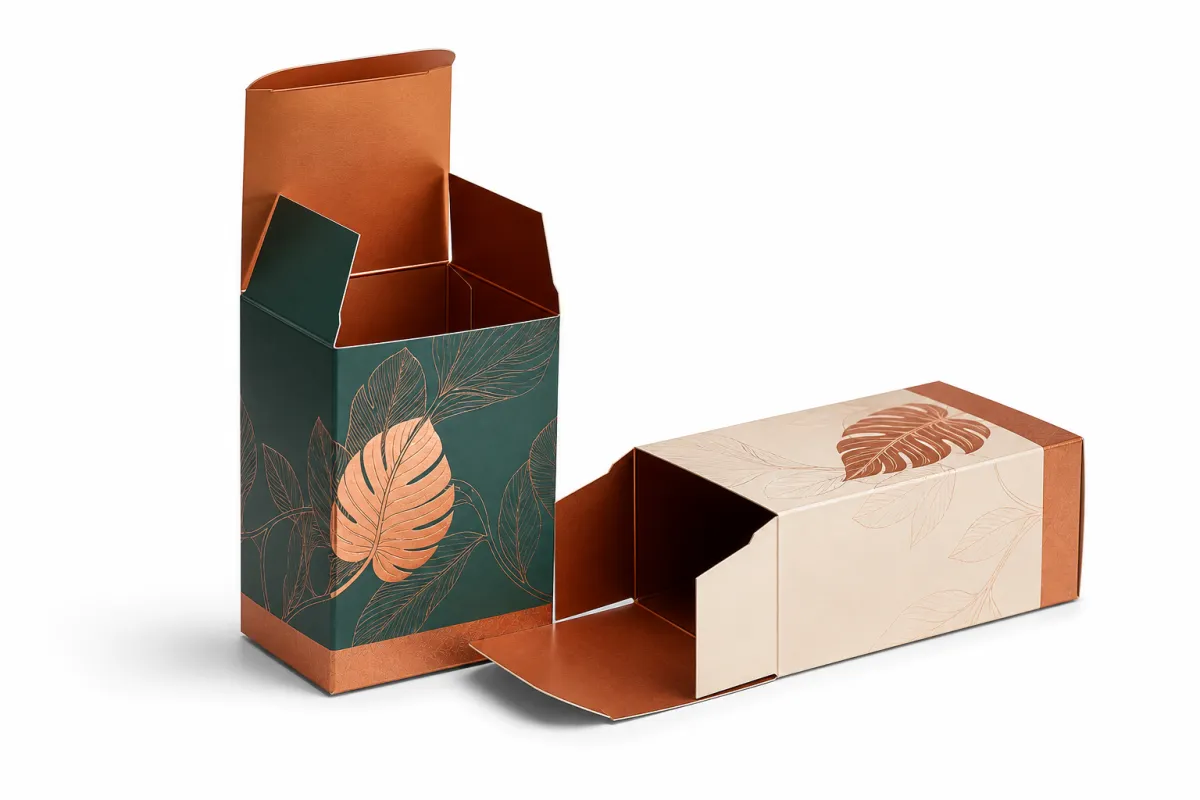
Offset printed folding cartons stand out because offset printing has a long record of producing sharp detail and even ink laydown on paperboard. That matters more than many teams expect. Product names, ingredient panels, claims, barcodes, and brand marks read better when the press can hold registration tightly and keep solids consistent from sheet to sheet. For a premium package, that consistency becomes part of the product story, not just a technical detail tucked away in the spec sheet.
A folding carton is a paperboard package that ships flat and is then folded and glued into shape, either at the converter or during filling, depending on the design. Buyers run into them constantly in cosmetics, nutraceuticals, food, pharmacy, electronics accessories, and retail products that need shelf impact without stepping up to a rigid box. Offset printed folding cartons fit those categories well because they balance presentation and efficiency in a way that heavier package styles often cannot.
Part of their staying power comes from flexibility. A straight tuck, reverse tuck, auto-bottom, lock-bottom, sleeve, or windowed carton can change the feel of the package, yet the print method stays familiar and controllable. That gives the brand team and the packaging buyer a clearer path through planning, proofing, and quoting. It also means the job is a lot less guessy once the structural intent is nailed down.
A carton can be inexpensive and still be the wrong carton if the board, finish, and structure do not match the product.
From a packaging buyer's point of view, offset printed folding cartons make sense when the package has to do three jobs at once: protect the product, support shelf presence, and survive production without creating a long list of exceptions. The print method is only one piece of that equation, but it often separates a carton that merely gets the job done from one that looks carefully built.
Repeatability is another reason buyers return to offset printed folding cartons. Once the plates, board, and color targets are set, the process can hold a high standard from one run to the next. That matters even more on reorders, where a brand does not want the next shipment to look like a different item because the solids drifted, the copy filled in, or the coating changed the surface character.
If the structure is still being defined, the broader production picture helps a lot. Our Manufacturing Capabilities page is a useful starting point because structure, print, finishing, and converting are connected long before a quote is finalized. Offset printed folding cartons work best when those choices are planned together instead of being handled one at a time.
How Offset Printed Folding Cartons Are Made
At the simplest level, offset printed folding cartons are made by moving ink from a plate to a rubber blanket, then from that blanket to the paperboard. That blanket step is what gives offset its clean image quality. The image does not strike the board directly from a hard plate, so the process has enough flexibility to produce smooth solids and fine type across a wide range of coated boards.
Prepress is where most problems are removed
Prepress is quiet work, but it is where a lot of the outcome is decided. Files need cleanup, color separations have to be correct, bleed must extend past the trim line, and trapping needs to account for how inks meet on press. Spot colors need clear definitions. Process color needs realistic expectations, especially if brand tones are being reproduced in CMYK on a chosen board. If the file is rushed, the press is gonna spend time compensating for something that should have been fixed before output.
Offset printed folding cartons also rely on proofing. A proof is not a box to check and move past; it is the buyer's chance to catch a barcode that is the wrong size, a typo in the ingredient copy, a weak reverse type area, or a finish note that never reached the production file. For regulated products and retail items, that review step protects the job from expensive rework later. I have seen tiny copy changes trigger avoidable delays because nobody caught them until the approval round, and that is the kind of miss that can get kinda expensive.
For brands that want a broader packaging vocabulary, the reference material at packaging.org is a useful neutral source for terminology and package basics. If the carton needs to survive parcel shipment, vibration, or compression after filling, the test methods and distribution guidance from ISTA are worth reviewing as well. In practice, offset printed folding cartons perform better when print decisions and transport decisions are part of the same discussion.
Press, drying, and finishing all have to agree
Once the sheets reach press, the printer has to manage ink density, registration, and drying or curing. Conventional inks need enough time or air movement to set properly; UV systems cure differently and can change the feel of the surface. Offset printed folding cartons can also receive aqueous coating, matte coating, soft-touch coating, spot UV, foil stamping, embossing, debossing, or a window patch, depending on the brand goal and budget.
After printing and coating, the sheet moves to die-cutting, scoring, stripping, gluing, and inspection. That stage puts structure and print under real production conditions. A strong image can still fail if a glue area is too tight, a score cracks the coating, or a flap interferes with the product insert. Offset printed folding cartons are never just printed paperboard; they are the result of a sequence of connected steps that have to work together. If any one of those steps gets pushed too hard, the rest starts showing strain.
If the brand wants fiber sourcing documentation, FSC-certified paperboard may be part of the brief. That does not automatically raise cost in every case, but it does add a sourcing requirement that the paperboard supplier and converter have to support. Offset printed folding cartons can be built around those requirements as long as they are specified early enough for the sourcing team to react.
In many plants, the final output ships flat so the cartons can be stored efficiently and fed where needed. That is one of the understated strengths of offset printed folding cartons: they create a premium presentation without forcing the brand into bulky storage, awkward handling, or excess freight volume. The package looks substantial, yet it still behaves like a folding carton should.
For a project with unusual dimensions or tighter construction needs, our packaging manufacturing capabilities page can help frame the right discussion before files are locked. Offset printed folding cartons are far easier to quote accurately when the structure, board, and finish are clear from the start.
Offset Printed Folding Cartons Cost and Pricing Factors
Pricing for offset printed folding cartons comes down to a handful of major drivers, and most of them are easy to underestimate if you only look at the headline number. Board grade is one of the biggest. A 14pt or 16pt SBS board will not price the same as a heavier 18pt or 24pt stock, and C1S, CCNB, and premium virgin board all behave differently on press and in finishing. Carton size matters too, since larger panels use more material and usually create more waste at die-cutting.
Print coverage is another major variable. A simple two-color carton with modest coverage is not the same as a full-bleed four-color design with dark solids, metallic accents, and several spot colors. Offset printed folding cartons can look exceptionally clean with dense coverage, but dense coverage usually means more ink, more drying control, and more attention to registration. Add foil, embossing, spot UV, or a window patch, and the unit cost moves again.
Tooling and setup are easy to overlook because they often sit inside the quote structure. Plates, dies, proofs, and make-ready time all create an upfront cost that must be spread across the run. That is why the first carton never costs the same as the ten-thousandth carton. Offset printed folding cartons become more efficient as quantity rises because the setup burden gets divided across more units.
Here is a practical way to think about pricing:
| Spec Item | Common Choice | Typical Cost Impact | Buyer Check |
|---|---|---|---|
| Board grade | 16pt SBS, 18pt SBS, or CCNB | Heavier and premium boards raise material cost and can improve stiffness | Confirm the exact caliper, surface, and recycled content target |
| Print coverage | Simple 4-color or full-bleed CMYK | More coverage usually means more ink, more make-ready, and tighter control | Make sure the quoted coverage matches the final artwork |
| Finish | Aqueous, matte, gloss, soft-touch, spot UV | Special finishes can add material, setup, and drying time | Ask whether the finish changes appearance, scratch resistance, or fold quality |
| Embellishment | Foil, emboss, deboss, window patch | Raises tooling and labor, and may lengthen lead time | Confirm each embellishment is priced separately and built into the schedule |
| Quantity | 2,500 / 5,000 / 10,000+ | Higher quantity usually lowers unit cost | Watch for minimum order assumptions and overrun terms |
As a rough working range, simple offset printed folding cartons in moderate quantities can land around $0.18-$0.35 per unit at 5,000 pieces, depending on board, print coverage, and finish. A smaller 2,500-piece run with more coverage or more finishing steps can sit higher, while a larger 10,000-piece run may move down into the low teens per unit or below if the structure is straightforward. Those are not promises, just practical ranges that help buyers sanity-check a quote.
Tooling can add a few hundred dollars or more before a carton is ever packed. Plates may be charged per color, die-cut tooling depends on the shape and complexity, and premium samples or press proofs can add to the upfront amount. Offset printed folding cartons often look inexpensive only after the setup costs are spread out properly, so the real cost conversation has to include both the unit price and the fixed charges.
Quote comparison is another place where buyers get tripped up. One supplier may include plates, waste, and freight. Another may leave those out. One may quote on 14pt board, another on 18pt. One may include aqueous coating while the other assumes a bare sheet. If the numbers are not built on the same assumptions, offset printed folding cartons are impossible to compare fairly.
The hidden cost variables are usually the ones that hurt the most. Late artwork changes can force extra proof rounds. Rush schedules can create overtime or disrupt the press calendar. A foil panel that looks small on screen can add a surprising amount of setup complexity. Offset printed folding cartons reward clean planning because every last-minute change tends to carry a real production cost.
The cheapest carton on paper is often the most expensive one once rework, delays, and print mismatch are counted. That is why buyers should ask one simple question before accepting the lowest quote: what, exactly, is not included? Offset printed folding cartons only compare cleanly when the board, finish, size, waste, and pack-out method are all aligned.
Step-by-Step Production Process and Timeline
A clean production process starts before artwork is even drawn. The first step is discovery: define the product size, fill weight, shelf objective, regulatory requirements, and shipping method. If the product has a fragile container, a heavy closure, or a tight retail display slot, that needs to be known early. Offset printed folding cartons are easier to engineer when the converter understands the actual use case instead of only the desired appearance.
Next comes structural planning. The dieline should match the product and the pack-out method, not the other way around. Panel dimensions, tuck style, seal style, glue flaps, and board thickness all need to work together. If the carton will be hand-packed, the structure may need a different opening sequence than a line-fed version. Offset printed folding cartons can look nearly identical on the outside while behaving very differently on the line.
A realistic timeline helps everyone
For a straightforward offset job with standard coating and no special embellishments, a typical schedule can be around 12-15 business days from proof approval to finished cartons, assuming press capacity is available and the artwork is locked. Add foil stamping, embossing, or a custom window, and the schedule often stretches to 15-25 business days because those steps create extra tooling and inspection points. If the job needs structure sampling first, add a few days more.
That timeline is one reason buyers should avoid late copy changes. A corrected ingredient list, a revised barcode, or a modified net weight statement can trigger a new proof round, which pushes plate making, press time, and converting later than planned. Offset printed folding cartons do not tolerate a moving target very well; every change has a way of rippling through the rest of the schedule.
Artwork approval is usually the most delicate stage. The buyer should review copy, color references, legal text, barcode size, readability, die lines, and finish callouts before the press is booked. If the proof shows a rich black, a metallic ink, or a reverse type block, that should be checked against the actual board and finishing plan. Offset printed folding cartons are built on exactness, so approvals need to be exact too.
After approval, the press and converting sequence usually follows a familiar path: print, dry or cure, apply coating or decoration, die-cut, score, strip, glue, and inspect. The cartons are then packed flat for shipping. During inspection, the converter looks for registration drift, cracking at the score, glue squeeze-out, or surface defects that would stand out on a retail shelf. Offset printed folding cartons can only earn their premium feel if the finishing stage stays disciplined.
For cartons that will face transport stress after they are packed, testing matters. Compression, vibration, and drop concerns can be evaluated against relevant methods such as ISTA 3A or ASTM D4169, depending on the shipment profile. That does not mean every carton needs lab testing, but it does mean the package should be designed with the actual distribution chain in mind. Offset printed folding cartons may be decorative on the outside, but they still have to survive the trip.
One more practical note: if the job is going to a retail chain or a regulated channel, leave time for approval gates. Retail compliance, barcode verification, and document sign-off can add days even when the print house is ready to go. Offset printed folding cartons usually run smoothly only when approvals stay ahead of production instead of chasing it.
Common Mistakes to Avoid With Folding Cartons
The first mistake is designing the carton before the structure is settled. A layout can look beautiful on a monitor and still fail once the flaps, glue zones, and fold lines are real. Offset printed folding cartons need a finished dieline before artwork goes too far, or the brand can end up with copy on a panel that is too narrow, a logo too close to a score, or a barcode crossing a seam.
The second mistake is treating color as a last-minute decision. Paperboard, ink density, and coating all influence how a brand color behaves. A rich black may print beautifully on one board and look dull on another. A metallic accent may shift when a matte coating is added. Offset printed folding cartons are sensitive to these surface choices, so color targets should be approved with the final substrate and finish in mind.
The third mistake is comparing only headline prices. Two quotes can look similar and still differ in board grade, number of plates, finish type, die complexity, waste allowance, freight, or overrun policy. That is why a cheap price is not automatically a good price. Offset printed folding cartons should be judged against the full spec, not against a single line item.
- Do not ignore readability. Tiny reverse type, low-contrast text, or barcode art that has not been checked can cause real production headaches.
- Do not hide the glue area. A beautiful panel can become unusable if the adhesive zone is crowded by art or copy.
- Do not over-spec the finish. If a finish adds glare, makes the carton harder to read, or slows the line, it may be solving the wrong problem.
- Do not assume every supplier means the same thing. Ask exactly what board, coating, and waste assumptions sit behind the quote.
Late approvals are another common source of pain. Many buyers think the press is the slow part, but in practice the schedule often slips because copy, legal notes, or dieline changes arrive too late. Offset printed folding cartons tend to punish late changes more than people expect because each revision can affect plates, proofs, and converting setup.
If your project has a difficult size, a tight closure fit, or a premium finish requirement, it is smarter to involve the supplier earlier. Our folding carton production capabilities page is a good place to frame the structural and finishing conversation before the job is locked. Offset printed folding cartons reward early coordination because structural mistakes are far more expensive than a few extra minutes spent on planning.
Expert Tips and Next Steps for Better Results
The best way to improve offset printed folding cartons is to start with a clean spec sheet. List the carton dimensions, board preference, finish, quantity, color target, product weight, and any retail or shipping constraint. If the carton has to fit a tray, a bottle neck, a blister, or a display shelf, write that down too. A complete brief lets the converter quote the real job instead of guessing at it.
Ask for a printed proof or sample whenever color fidelity, finish appearance, or tactile feel matters to the brand. A soft-touch surface can feel elegant, but not every logo or barcode reads the same way on that coating. Foil can look sharp, but it can also overpower small typography if the layout is crowded. Offset printed folding cartons are much easier to approve when the buyer can see how the material and the finish interact, not just how they look in renderings.
It also helps to think about final use before the carton is approved. Will it sit on shelf, ship in a master case, go into a subscription kit, or move through a fulfillment center with automated scanning? Those answers influence the right board thickness, closure style, and coating choice. Offset printed folding cartons can serve all of those channels, but they should not be built the same way for each one.
Here is the short version of the next steps I recommend:
- Gather the product sample or final dimensions.
- Confirm the quantity target and any reorder expectation.
- Lock the dieline before artwork is finished.
- Specify the board, finish, and any embellishment early.
- Request a quote based on the same assumptions from every supplier.
- Leave room in the schedule for proofing and approval.
That checklist may sound basic, but it is exactly what keeps offset printed folding cartons from turning into a scramble. The cartons themselves are often straightforward; the problems usually come from missing information, not from the print process. If the spec is clean, the job tends to move smoothly. If the spec is vague, every stage becomes harder than it needs to be.
The strongest cartons are usually the ones planned with a little humility. There is no prize for overcomplicating a folding carton if the product only needs clarity, protection, and a good shelf face. Offset printed folding cartons look best when the structure is practical, the artwork respects the process, and the schedule leaves room for proper approvals.
For brands that want a polished package without drifting into excess, offset printed folding cartons remain one of the most dependable choices in the packaging toolbox. They give you crisp print, solid construction, and the flexibility to add finishes when the brand story needs more depth. Keep the spec grounded, and they can deliver a result That Feels Premium without creating unnecessary waste, cost, or production stress.
Frequently Asked Questions
Are offset printed folding cartons better than digital for small runs?
Digital can be more economical for very short runs because setup is lighter and there are no offset plates to create. Offset printed folding cartons usually become more attractive when quantity rises, the color standard has to stay tight, or the job needs finer detail and cleaner solids. The best comparison is not only unit price; it is the full mix of setup, finish level, and expected run length.
What affects offset printed folding cartons lead time the most?
Artwork approval is often the biggest variable because copy changes, barcode corrections, and color changes can push the entire job back. Special finishes such as foil, embossing, or spot UV can add tooling steps and scheduling complexity, while press availability and shipping distance also influence the final turnaround. Offset printed folding cartons move fastest when the file is clean and the approval process stays ahead of production.
What do I need to request an offset printed folding cartons quote?
Provide the carton dimensions, board preference, estimated quantity, and the intended use of the package. Include the print files, dieline status, color references, and any finish requirements, then share your target delivery date and packing needs. The more complete the brief, the more accurately offset printed folding cartons can be priced and scheduled.
Can offset printed folding cartons include special finishes?
Yes, common options include aqueous coating, spot UV, foil stamping, embossing, debossing, and window patches. Each finish changes the look, feel, Cost, and Lead Time, so it should be specified early rather than added at the last minute. Test the finish against the brand artwork to make sure the final carton still reads clearly on shelf.
How do I compare offset printed folding cartons quotes fairly?
Make sure every quote uses the same carton size, board grade, print coverage, and finish list. Check whether plates, dies, waste, freight, and overrun terms are included, because those items can change the real cost more than the unit price suggests. That is the cleanest way to compare offset printed folding cartons without being misled by a low number that hides different assumptions.
The practical takeaway is simple: lock the dieline, the board, and the finish before artwork goes final, then compare quotes on the same assumptions. Do that, and offset printed folding cartons stay predictable instead of turning into a chain of avoidable corrections.


