For many brands, offset Printed Hang Tags wholesale is one of the earliest packaging decisions that affects how a customer judges the product in hand. A tag with sharp type, controlled color, and a finish that matches the brand can make a garment, accessory, or gift item feel considered. A weak tag does the opposite. It can make a decent product look underdeveloped before anyone reads the label.
That is why buyers who manage retail presentation usually compare paper stock, finish, and print method with the same discipline they apply to product development. Offset printing remains a practical choice for apparel, accessories, gift items, and specialty retail goods because it holds fine detail well, keeps brand colors consistent across reorders, and becomes cost-efficient once quantity rises.
Why offset printing matters when your tag has to sell the product
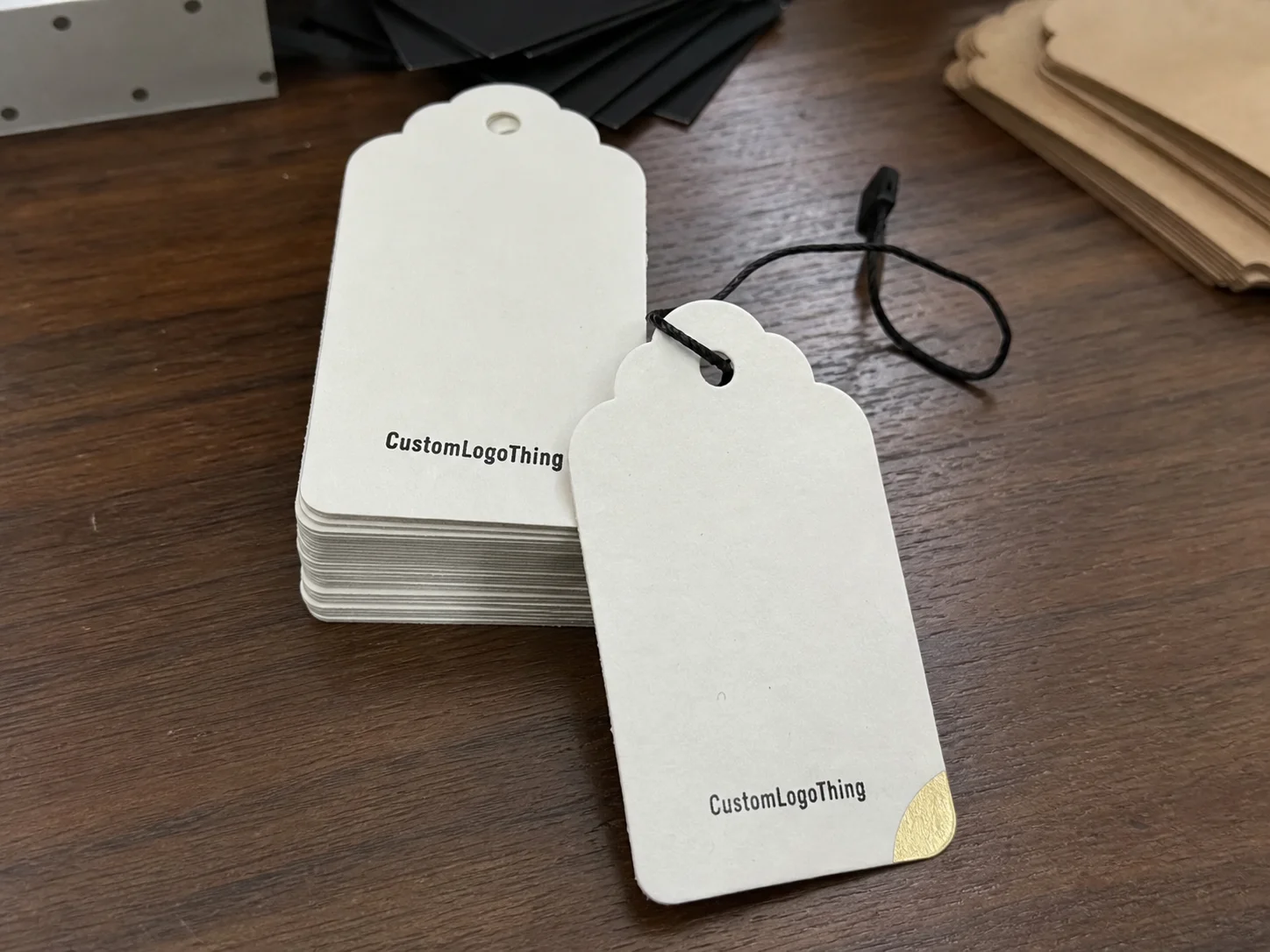
Hang tags do more than identify an item. They can carry pricing, brand voice, care instructions, barcode data, country of origin, and a short message about materials or craftsmanship. In stores, showrooms, and trade event displays, the tag is often handled before anyone asks a question. That makes print quality part of the selling process, not just a decorative detail.
Offset printing is strongest when a tag needs a polished, repeatable look across a larger quantity. The press handles fine typography, solid brand colors, gradients, and detailed logos with a level of control that lower-end methods struggle to match. If the design uses exact PMS colors, delicate linework, or dense imagery, offset usually gives a cleaner, more stable result.
Consistency matters more than most people expect. A clothing brand rolling out seasonal collections may need the same red, the same logo placement, and the same overall tone across several product lines. Offset Printed Hang Tags Wholesale can keep that system intact from one reorder to the next, which helps shelf presentation and prevents the brand from looking fragmented.
There is also a practical price effect. Buyers often assume the tag is a minor line item, but it influences perceived value quickly. A straightforward tag printed well on 400gsm cover stock can feel more premium than a complicated design printed badly on thin paper. Customers notice that difference immediately, even if they cannot explain why.
A hang tag is not decoration. It is part of the product story, and weak print quality lowers that story’s credibility fast.
Wholesale purchasing helps the economics. Once artwork is finalized and the press setup is complete, setup costs are spread across the run. That is why brands planning repeat orders or seasonal replenishment usually get better unit pricing from offset Printed Hang Tags wholesale than from short-run alternatives.
For brands that need broader packaging support, Custom Labels & Tags can be paired with hang tags to build a more complete brand system, especially when the same visual language needs to carry across garments, accessories, and retail inserts.
Offset printed hang tag construction and finish options
The best hang tag starts with the right substrate. Coated paper gives sharp image reproduction and crisp type, which is useful for fashion labels, cosmetics accessories, and retail products that need a clean, modern look. Uncoated stock feels more natural and understated, and it often suits organic, artisanal, or eco-minded brands. Kraft stock brings a warmer texture, while premium cover stock adds stiffness and a more substantial hand feel.
Most retail hang tags fall in the range of 300gsm to 450gsm, though the right choice depends on the shape, hole size, and how the tag will be attached. Thicker board feels premium, but it needs to be engineered properly so the hole area does not tear during handling, shipping, or repeated store use.
Shape and format matter almost as much as stock. Standard rectangles are efficient and easy to stack, but rounded corners, custom die-cuts, and angled cuts can reinforce a brand identity if the layout stays readable. Decorative edges can be useful, but too many cuts or cutouts increase cost and may reduce legibility.
Common finish choices buyers compare
- Matte lamination for a smooth, restrained surface with reduced glare.
- Gloss lamination for brighter color and stronger visual pop under store lighting.
- Aqueous coating for protection with a lighter environmental and tactile footprint.
- Spot UV to highlight logos, product names, or key graphics.
- Foil stamping for metallic detail on premium collections.
- Embossing or debossing when tactile branding matters as much as visual branding.
- Soft-touch coating for a velvety premium feel that suits upscale apparel and gift packaging.
Backside printing is often overlooked, though it adds useful space. A tag can hold care instructions, barcode or QR code data, MSRP, SKU information, country of origin, or a short brand statement. In practice, the back panel often carries the operational details while the front stays clean and focused on the logo and product identity.
Offset printing works especially well when the design uses multiple colors, precise alignment, and detailed graphics. Simpler layouts usually print more efficiently, though. A composition with enough white space often looks more premium than a crowded layout trying to do too much.
For brands comparing production paths, it helps to review broader Wholesale Programs and confirm how finishing choices affect price and timeline.
Key specifications buyers should lock in before requesting a quote
Most pricing delays happen because a quote request is missing one or two core details. Before asking for a price on offset Printed Hang Tags wholesale, confirm the finished size, paper thickness, print sides, number of colors, finish type, hole style, and attachment method. Those details determine the manufacturing path and the final unit cost.
Artwork readiness matters just as much. Press-ready files should include correct bleed, safe area, and resolution, and the file should use the right color mode. If logos, fine lines, or small legal text are part of the layout, something that looks fine on screen can still fail in print if the type is too thin or the contrast is too low.
Barcode and QR code legibility need early attention. Compact hang tags do not leave much room for error, and a code that scans poorly creates retail headaches later. Check barcode size, quiet zone, and contrast before the file is approved. The same applies to small care copy, origin text, and size information.
Specs that should be confirmed before production
- Finished dimensions and shape
- Paper stock and thickness in pt or gsm
- Single-sided or double-sided printing
- Color count, including PMS or CMYK use
- Finish type and any special effects
- Hole diameter and placement
- Attachment type: cotton string, elastic loop, plastic fastener, or shipped flat
- Barcode, QR code, SKU, or variable data needs
If the same tag will be used across multiple SKUs, a modular layout can save time later. A fixed front design with variable back-panel data makes reorders easier and helps inventory planning, especially for brands with seasonal drops or colorway changes.
| Specification Area | Why It Matters | Common Buyer Mistake |
|---|---|---|
| Size and shape | Controls readability, stacking, and brand impact | Choosing a shape that looks nice but hides important copy |
| Stock thickness | Affects stiffness, durability, and perceived quality | Specifying a board that is too thin for hole punching |
| Finish | Changes texture, protection, and visual tone | Adding premium effects without budgeting for them |
| Barcode placement | Impacts scan success and retail workflow | Putting codes too close to edges or folds |
| Attachment method | Determines handling, packaging, and store readiness | Not confirming whether tags ship strung or flat |
Offset printed hang tags wholesale: pricing, MOQ, and what changes the unit cost
Unit cost on offset Printed Hang Tags wholesale usually comes down to five variables: quantity, color count, stock choice, finishing, and whether the tag uses a standard shape or a custom die. Setup costs for plates, press make-ready, and finishing preparation are real, so a small order may look expensive per piece even if the print itself is simple.
Once quantity rises, the math changes. A run of 5,000 tags will usually price better per unit than a run of 500 because setup is distributed across more pieces. That is why wholesale pricing makes the most sense for brands that can plan around seasonal demand, production calendars, or recurring replenishment.
As a practical range, simple offset printed tags on standard paper with single- or double-sided printing may land around $0.10 to $0.22 per unit at higher quantities. More premium builds with foil, embossing, custom dies, or multiple finishing steps can move into the $0.25 to $0.60 per unit range or higher, depending on order size and specification. Those are broad ranges, not fixed quotes, because stock and finish choices change the outcome materially.
MOQ varies by format, but simple projects usually start lower than premium projects. A standard rectangle with coating is easier to run than a custom shape with foil stamping and a special hole punch. If budget matters, the cleanest way to control cost is to keep the design focused and avoid stacking too many specialty effects on one tag.
What usually changes the price fastest
- Full-color coverage versus restrained design
- Foil stamping, embossing, or debossing
- Custom die-cut shapes
- Double-sided printing
- Premium stock or heavy board
- Special coatings or soft-touch finishes
- Stringing or assembly requirements
Always compare quotes on a like-for-like basis. One supplier may quote a lighter stock, another may include a coating, and a third may omit assembly or finishing from the headline price. A lower number is not always the better value if the tag ends up feeling flimsy or missing a required detail.
For brands that need more than a one-off order, Manufacturing Capabilities can help you review what a supplier can support in repeat runs, finish matching, and production consistency.
Production steps, proofing, and turnaround expectations
A solid production flow keeps the order from drifting. The usual sequence starts with specification review, then artwork checking, then proof approval, then plate preparation, press run, finishing, inspection, packing, and shipment. A small error in any one of those steps can create delays, so clarity at the start matters.
Digital proofing is useful for layout confirmation, copy review, and barcode placement, but it does not always match production color perfectly. When brand color accuracy matters, a press proof or approved sample is the safer route. That is especially true for logos with exact PMS targets, dark neutrals, or image-heavy designs that must hold detail cleanly.
Typical turnaround depends on quantity, finishing, and artwork readiness. Straightforward runs with standard coating often move faster than projects that need foil, embossing, soft-touch coating, or custom die cutting. In many wholesale packaging jobs, a realistic production window is often 12 to 15 business days after proof approval, though complex work can take longer and urgent jobs may require schedule changes.
File readiness shortens the whole timeline. If the buyer sends final artwork with correct bleed, clear crop marks, and confirmed copy, the supplier can move faster and spend less time chasing revisions. If there are multiple SKUs, it helps to approve the variable data structure before production starts.
Ways to avoid rework
- Confirm all copy, pricing, and legal text before proof approval.
- Check barcode and QR scan performance on the proof.
- Review the hole position relative to artwork and trim.
- Make sure the finish matches the intended shelf or showroom look.
- Approve one master layout before creating SKU variations.
For sustainability-minded buyers, packaging decisions sometimes include FSC-certified paper options or recycled content, and many brands also ask whether inks and coatings align with current environmental priorities. If that matters to your program, the Forest Stewardship Council at fsc.org and the EPA at epa.gov are useful references for broader material and sustainability context.
What a reliable wholesale packaging partner should do for your project
A strong packaging partner does more than take an order. They review files for printability, spot layout problems early, and tell you when a design is too complex for the budget or the target lead time. That kind of feedback saves money before the press ever starts running.
The best support usually includes practical guidance on stock selection, finish choice, and assembly. If a soft-touch coating sounds good but pushes the tag beyond the price target, a good supplier should say so directly and suggest a better fit. That honesty is more useful than a polished sales pitch.
Quality control is another place where good suppliers earn their keep. Trim accuracy, hole alignment, color consistency, and finish inspection all affect how the tag performs on the garment rack or display table. A tag that is off by even a small amount can look sloppy once it is attached to a neatly folded shirt or a premium accessory box.
Repeatability matters too. If your brand orders tags for spring, summer, and holiday collections, the supplier should be able to keep the look consistent across different seasons. That does not mean every run must be identical in every detail, but the color, board feel, and overall presentation should remain close enough that the customer sees one brand system, not a series of unrelated prints.
For buyers who want a broader view of packaging options, Custom Labels & Tags and Wholesale Programs are useful places to review before committing to a final spec.
How to place an order and move from quote to production
The cleanest path from quote to production is simple. Gather your size, quantity, stock preference, finish, print sides, attachment method, and any barcode or variable-data requirements. Send the artwork if you have it, or at least provide the logo and layout direction so the supplier can estimate accurately.
If you are deciding between a premium version and a cost-conscious version, ask for both. That comparison is often the fastest way to see where the money goes and whether the finish package is worth the extra spend for your specific product line.
Shipping details should be confirmed early, not at the last minute. Delivery timing, destination, and whether the tags need to arrive flat or assembled all affect planning. A buyer who confirms the final ship-to address and production requirements upfront usually gets a cleaner schedule and fewer surprises.
Best next step: request a wholesale quote, share your dieline or target dimensions, and confirm whether the project needs a standard finish or a more premium retail look. If you are sourcing offset printed hang tags wholesale for apparel or retail packaging, that early clarity usually improves pricing and reduces back-and-forth.
FAQ
What makes offset printed hang tags wholesale better for larger apparel runs?
Offset printing gives consistent color and crisp detail across large quantities, which is valuable when the tag has to look the same from one box or garment batch to the next. It also becomes more cost-efficient as quantity increases because setup costs are spread across the run. For brands that care about polished retail presentation, that combination is hard to match.
What information do I need to request a quote for offset printed hang tags wholesale?
Provide the finished size, quantity, paper stock preference, print sides, color count, and finishing needs. Include hole style, attachment method, barcode or QR requirements, and any special effects such as foil or embossing. If you have print-ready artwork, include that too so pricing and timing can be confirmed faster.
What is a typical MOQ for custom offset printed hang tags?
MOQ depends on size, paper, finishing, and design complexity. Simple tags usually have lower entry points than premium tags with foil, embossing, or custom dies. The best pricing usually shows up when the order matches a planned sales or seasonal volume rather than a one-off emergency reorder.
How long does production usually take for wholesale hang tags?
Turnaround depends on proof approval, artwork readiness, quantity, and finishing complexity. Standard offset runs with simple finishing are faster than jobs that include custom die cuts or specialty effects. Approving artwork quickly and sending final files early helps keep the schedule on track.
Can offset printed hang tags include barcodes, QR codes, or variable data?
Yes, hang tags can include barcodes, QR codes, pricing, SKU data, and care instructions. Variable data is possible when the layout is planned correctly and the production method supports it. The artwork should be checked for scan clarity and legibility before approval so the tag works well in retail use.