Private Label Buyer OPP Header Bags Factory Quote Guide — The private label buyer Opp Header Bags factory quote checklist matters because a 5 mm change in header width or one extra color can move the price more than the bag body itself. For retail hanging displays, club packs, and countertop impulse items, the bag has to look clear, seal cleanly, and survive handling without turning the quote into a guessing game.
Why the private label buyer opp header bags factory quote checklist changes margins fast
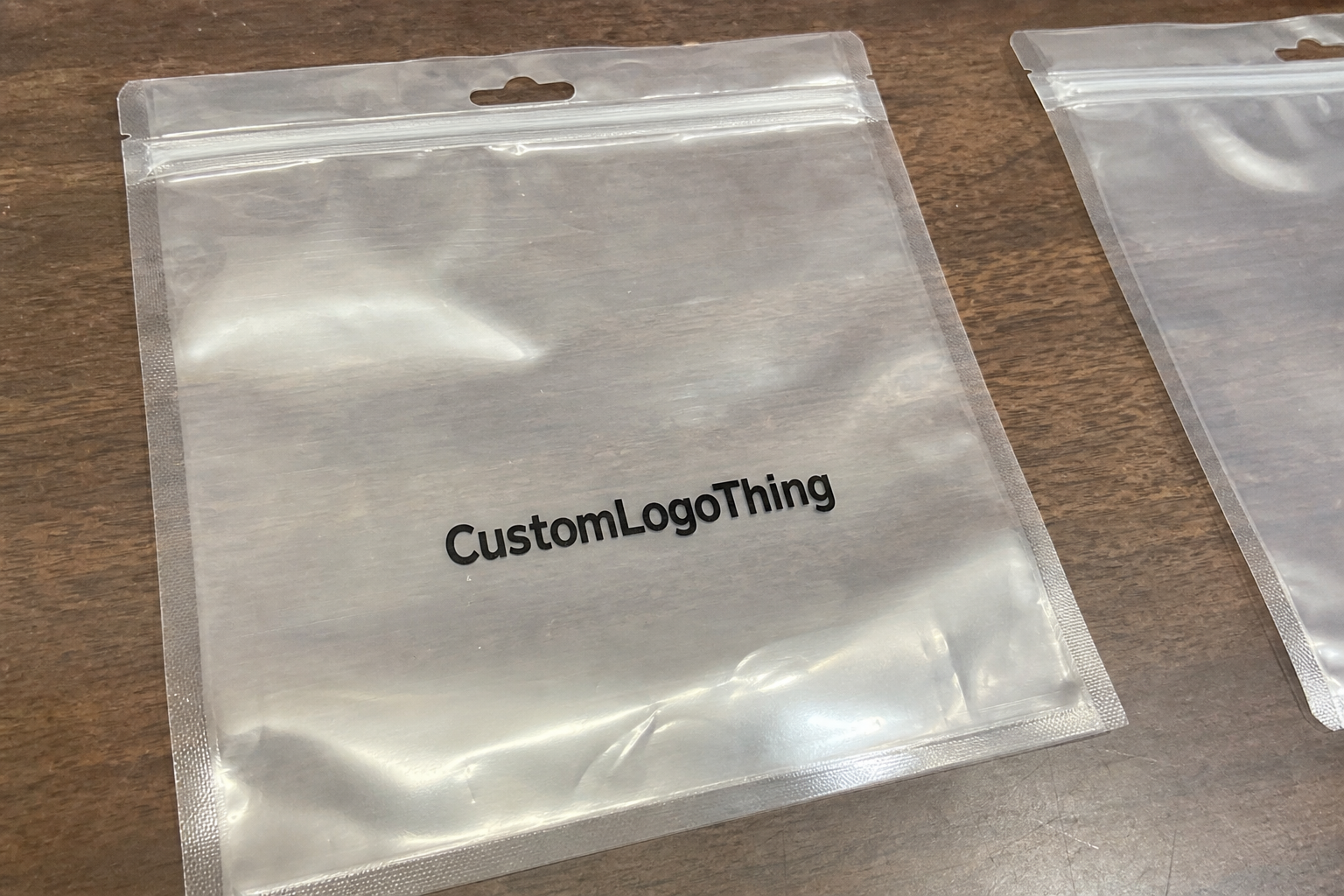
Header bags look simple from a distance. In practice, they are one of those packaging formats where tiny changes show up immediately in the quote. A slightly taller header can add material and alter the die line. A heavier print coverage can force a different press setup. On a private label program, that difference matters because the bag is usually carrying brand value, not just product protection.
That is why a vague request usually creates a wide price spread. One factory may assume a standard hole punch and single-side print. Another may price a reinforced header, a barcode, and extra carton labeling. If the buyer does not define the job, the quotes do not compare cleanly, and the team ends up in revision loops that eat time and credibility.
From a packaging buyer's point of view, header bags are sold into retail hanging displays, club packs, and impulse shelves where the visual read has to be immediate. Clear film, straight seals, and a crisp header do as much work as the artwork. The private label buyer Opp Header Bags factory quote checklist gives you a way to ask the factory the same question every time: what exactly are you pricing, and what is still missing?
The goal is not perfection. The goal is fewer assumptions. Once the checklist removes guesswork, the buyer can compare suppliers on the same basis, catch unspoken extras, and protect margin before the order is released.
Product details buyers should lock before quoting
Start with the structure. Is the bag flat, gusseted, or tamper-evident? Is the film OPP, which many suppliers also call BOPP, or some other polypropylene film? What style of header is needed, and how is the hanger hole cut? Those details sound basic, but they change waste, tooling, and packing speed.
Then decide what the bag has to do on shelf. A stationery pack needs high clarity and tidy print registration. Small hardware needs stronger seal performance and more tolerance for rough handling. Apparel often needs a cleaner hang presentation and better anti-scuff behavior so the pack still looks fresh after transport and stocking.
For buyers who ship through parcel networks or mixed distribution, ask whether the supplier can reference test methods from ISTA and basic material data such as ASTM D882 tensile behavior or ASTM D1894 slip performance. You do not need a lab report for every order, but you do need enough evidence to know the bag will not fail in ordinary handling.
If the header bag is part of a wider private label program, pair it with matching branding assets early. Many teams find it useful to align the bag order with Custom Labels & Tags so the shelf look, barcode placement, and SKU system stay consistent across product lines.
Buyers who define the retail function before the artwork usually get better quotes. That is not a theory; it is a pattern. Factories quote more accurately when they know whether the bag is for a clip strip, a peg hook, a countertop tray, or a display box.
Specifications that belong on the quote checklist
The quote checklist should read like a production brief, not a sales note. Include the exact body width, body height, and header height. If your SKU family varies, add the tolerance range so the factory knows whether the same bag can cover two product fills or whether each size needs its own die line.
Film thickness belongs on the sheet as well. A 25-micron film will not behave like a 40-micron film, even if both are clear and glossy. Print coverage matters too. One color on the header is a different conversation from full bleed printing on both sides. The same applies to one-sided versus two-sided print, because that choice affects registration, setup, and yield.
- Bag dimensions: body size, header size, and acceptable tolerance
- Film spec: OPP/BOPP grade, gauge, clarity, stiffness, and slip requirement
- Closure and opening: seal type, hanger hole shape, and whether the bag must be resealable
- Print data: one-side or two-side print, PMS targets, barcode location, and bleed requirements
- Pack format: bulk packed, banded, boxed, or SKU labeled
Artwork inputs need to be just as clear. The factory should know the file format, whether the logo is vector or raster, the bleed allowance, and which side carries the main brand block. If compliance copy, warning text, or age-grade language is required, add it before proofing so nobody has to rebuild the layout later.
That is where the private label buyer opp header Bags Factory Quote checklist saves time. It forces the team to think through the same questions the factory would ask anyway, which shortens the round-trip between inquiry and quote.
Practical rule: if a spec line could change material use, press setup, carton count, or freight volume, it belongs on the checklist.
Pricing, MOQ, and quote variables that move unit cost
Unit price on header bags is usually driven by a handful of variables, not by some mysterious factory mood. The main ones are film grade, thickness, print count, header complexity, die-cut style, and how the bags are packed into cartons. Add one more ink color or a custom hole pattern and the quote can move more than many buyers expect.
Ask every supplier to separate the line items. Setup charge, plate charge, sample fee, unit price, freight, and any packaging surcharge should be shown on different lines. Without that split, a low base price can hide a higher landed cost. If the factory gives only one number, the comparison is incomplete.
MOQ should also be quoted by version, not just by bag family. A stock size with no print might have one minimum. A custom header with a new logo may have another. Buyers get burned when they assume one MOQ covers all SKUs and discover later that each design is treated as a separate run.
| Quote scenario | Typical MOQ | Indicative FOB price | Best fit | Common risk |
|---|---|---|---|---|
| Stock clear OPP header bag, no print | 5,000-10,000 pcs | $18-$35 per 1,000 | Plain retail packing, fast turns, low artwork complexity | Assumed size fit or seal strength mismatch |
| Custom header with one-color logo | 10,000-20,000 pcs | $28-$50 per 1,000 | Private label basics with visible branding | Extra plate or color charge not captured upfront |
| Full-color print, two sides | 20,000+ pcs | $45-$85 per 1,000 | Retail programs where shelf appeal matters most | Longer proof cycle and higher waste risk |
| Custom size with special hole or tamper-evident feature | Varies by tooling | $55-$110 per 1,000 | Hardware, specialty goods, and security-sensitive packs | Tooling, yield loss, and lead-time creep |
These ranges are indicative, not universal. A thinner film, a simpler pack format, or a larger run can pull the number down. A heavier gauge, complex artwork, or small carton quantities can push it up. The point is not to guess the market; the point is to ask for quotes that show exactly why the price is where it is.
One more buyer trap is overspecifying thickness because it feels safer. Thicker film is not always the best answer. It can increase cost, slow packing, and create a stiffer bag that hangs poorly. The right spec is the one that protects the product and still keeps the retail display clean.
Process and lead time: what happens after approval
A good quote should map the workflow from inquiry to shipment. The usual sequence is inquiry, quotation, artwork review, proof approval, sample confirmation, production, QC, packing, and shipping. If the factory cannot explain that path clearly, the order is likely to face preventable delays later.
In normal production planning, a clean project with complete specs can move from proof approval to production in about 12-15 business days. Sampling may take 3-7 business days depending on the method. Freight adds its own timeline, and that part should be confirmed before the order is released, not after cartons are already in motion.
Most delays come from avoidable gaps. Missing measurements are common. So are color references that were never defined with enough precision. Late changes to header height after proof approval can force a new layout and, sometimes, a new tooling decision. One decision-maker on the buyer side usually shortens the cycle because the factory does not have to wait for three separate approvals.
Buyer rule of thumb: the faster quote is not always the cheapest quote, but the cleanest quote usually leads to the fewest surprises once production starts.
For teams that want a benchmark on transport testing, ISTA's current procedures are a useful reference point. For broader packaging context and terminology, packaging.org is a practical starting place. Neither replaces a supplier-specific specification sheet, but both help buyers ask sharper questions.
How to compare factory quotes without guesswork
The fastest way to compare suppliers is to score the response quality, not just the price. Did the factory answer every line item? Did it confirm the dimensions, film thickness, hole style, pack format, and artwork assumptions? A reply that says "yes" to everything without qualifiers is often less useful than a reply that flags one real limitation.
That transparency matters because it shows how the supplier thinks. If the factory notices that your print coverage may push waste higher, or that your MOQ is low for a custom header, you learn something valuable before money changes hands. A good supplier protects the buyer from silent surprises. A weak supplier waits until order confirmation to reveal the problem.
Response speed also tells a story. A quote returned in one business day with clean line items usually means the sales team has a direct path to the production planner. A quote that arrives after several back-and-forth emails may be a sign that the factory does not have a stable internal process. Speed alone is not proof, but combined with clarity, it is a useful signal.
Use a simple comparison sheet with columns for unit price, setup fees, MOQ, lead time, sample terms, and shipping assumptions. That makes it much easier to see which supplier is quoting the same job and which one is quietly quoting a different job.
If one supplier is cheaper by 12% but has vague terms on proofing and freight, the cheaper number may disappear quickly. The private label buyer opp header bags factory quote checklist is useful precisely because it cuts through that noise and turns the conversation into a controlled comparison.
Common cost traps in private label header bag orders
The most common mistake is approving a quote before every dimension is locked. A few millimeters can change nesting, yield, and carton count. That sounds minor on paper. In a production room, it changes how much film gets consumed and how efficiently the bags are packed.
Artwork errors are the second major trap. Low-resolution logos, unplanned color changes, and late barcode moves often trigger another proof round. That means extra time, and sometimes extra cost. If the buyer has not checked the file before sending it, the factory will price the correction into the schedule whether it is labeled that way or not.
Freight is another place where a good base price can get diluted. If the order is packed inefficiently, the carton count rises. If the shipping method was never confirmed, the buyer may discover that air freight or faster ocean service was assumed by one side but not the other. On a small to medium run, freight can easily erase a very attractive unit cost.
There is also a quieter cost trap: over-customization. A custom hole shape, a special header height, and two-sided print may each seem manageable on their own. Combined, they can push the run into a more expensive class of production. Buyers often ask for these changes because the bag is "just" a package. The factory sees tooling, yield, and QC complexity.
That is why the private label buyer opp header bags factory quote checklist matters so much. It exposes the hidden costs before the job is booked, when the buyer still has options.
Next steps for a faster factory quote
The cleanest next step is simple: put every critical detail into one file before you request quotes. Dimensions, film type, print art, quantity, packaging format, and delivery destination should all live in the same brief. If the factory has to search through five emails to reconstruct the job, the quote will be slower and less reliable.
Ask for one line-item quote per SKU. That gives you a clean view of unit cost, MOQ, lead time, and sample terms. If the factory can also quote a sample option, even better. A digital proof, press proof, and pre-production sample answer different questions, so be explicit about which one you need and what decision it is supposed to support.
When possible, send a reference image or a current sample pack. Visual context helps the supplier understand where the bag will sit in retail, how the header should read from a distance, and whether the hang hole needs reinforcement. That one step can remove a surprising number of revision cycles.
If you want help tightening a spec sheet before you send it out, Contact Us and compare notes with your current draft. Buyers who want to pair header bags with coordinated branding can also review Custom Labels & Tags so the full private label package stays aligned.
Use the private label buyer opp header bags factory quote checklist before the next request for pricing, and the quotes you receive will be easier to compare, easier to approve, and less likely to hide expensive assumptions.
What should a private label buyer include in an OPP header bags factory quote checklist?
Include size, header height, film thickness, print colors, hanger hole type, packaging method, and ship-to location. Add artwork files, target MOQ, sample request needs, and whether pricing should include freight or be factory ex-works.
How is MOQ usually set for private label header bags?
MOQ is usually based on film width, print setup, and whether the design uses a custom header or a stock configuration. Ask the factory to quote MOQ by SKU and by print version so you do not get surprised by a different minimum for each design.
What drives unit cost in private label OPP header bags?
The biggest drivers are film grade, thickness, print coverage, color count, header complexity, and carton pack format. Freight, sample fees, and setup charges should be shown separately so you can compare real landed cost instead of just the base price.
How long is the typical lead time after artwork approval?
Lead time depends on factory capacity, sample approval speed, and whether the quote was finalized with complete specs. A clean approval path usually moves faster than a quote with missing measurements, unresolved colors, or late layout changes.
Can I order samples before a full production run?
Yes, and it is usually the safest way to verify size, seal quality, print placement, and header strength before mass production. Ask whether the sample is a digital proof, a press proof, or a pre-production sample, because each one answers a different question.