A folded tee can look premium or disposable before anyone touches the fabric. For ecommerce apparel teams, packaging is often the first physical proof of brand discipline, and clear header bags do more work than most buyers expect. The right OPP Header Bags wholesale supplier for Ecommerce Apparel Buyers is not just supplying plastic; that supplier is helping shape presentation, pack-out speed, and the customer’s first impression at the unboxing stage.
The hard part is not finding a bag. The hard part is finding a bag that fits the garment, prints cleanly, stays consistent on reorder, and does not create labor headaches on the packing floor. A smart wholesale program can help, but only if the buyer asks the right questions up front and compares suppliers on the same spec. That is where margin is protected and avoidable rework is cut out.
OPP is often used as shorthand in purchasing conversations for oriented polypropylene film, and in apparel packaging the term usually points to a clear, crisp film with good presentation quality. The bag itself may look simple. The supply chain behind it rarely is.
Why OPP Header Bags Improve Ecommerce Apparel Packing
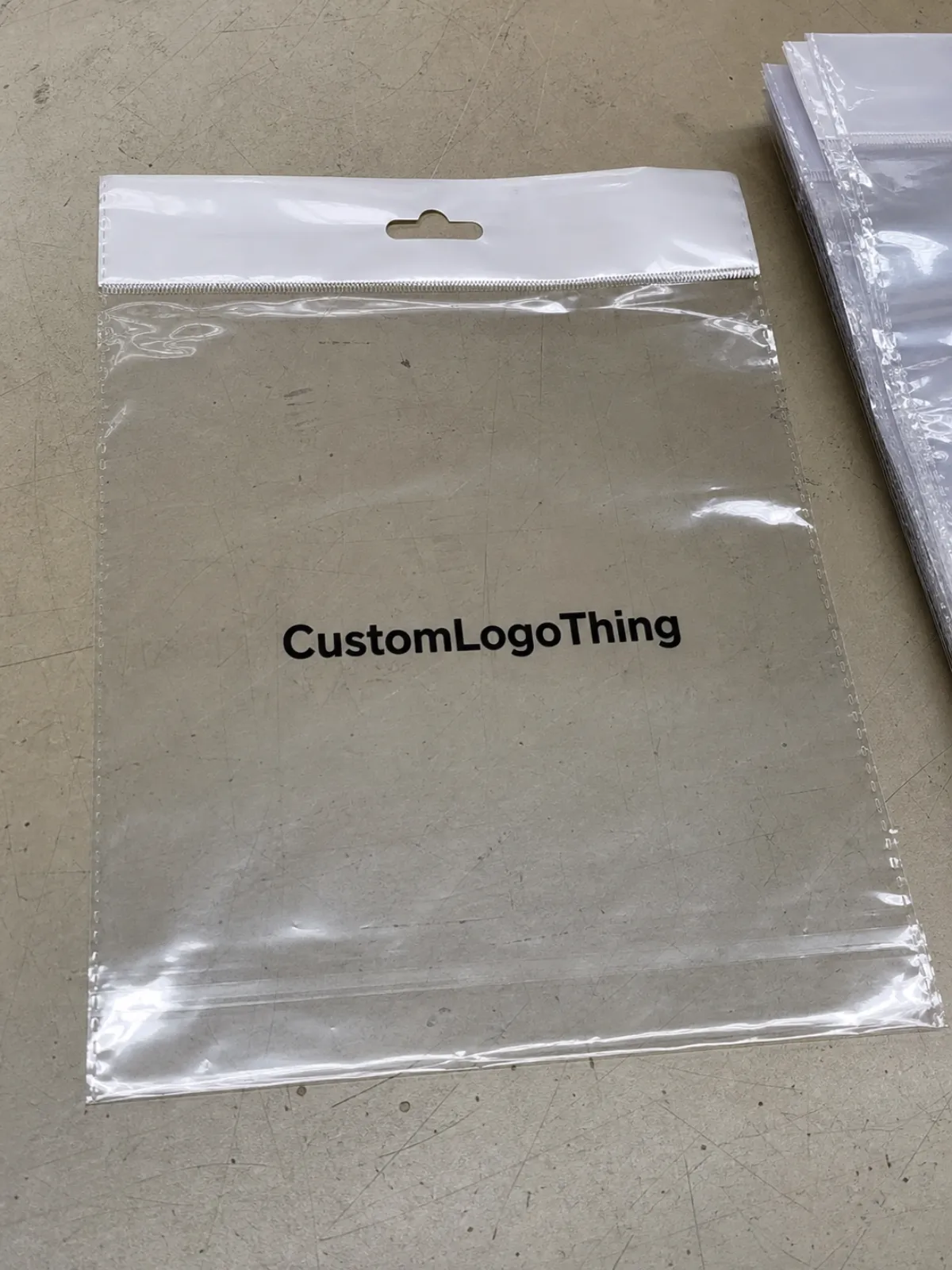
Packaging has a strange effect on perceived value. A garment folded into a clear, flat bag reads as organized and retail-ready; the same garment tossed into a loose, cloudy sleeve can feel like an afterthought. That visual difference matters because ecommerce apparel is judged before it is worn. Customers see the packaging, scan the front panel, and make a quick assumption about quality.
That is one reason a strong OPP Header Bags wholesale supplier for ecommerce apparel buyers needs to think like an operations partner. The bag has to fit the folded product cleanly, stay stable in a carton, and allow a packer to load it without fighting static cling or curling edges. Those small friction points add up. Save even a few seconds per order, and the labor impact becomes visible across a high-volume day.
Presentation is only one layer. Header bags also help with handling and identification. A front panel can carry a logo, barcode, size note, or SKU mark without crowding the garment itself. That is especially useful for multi-SKU apparel lines, accessory sets, and fulfillment operations that need a quick visual check before dispatch. A well-structured bag reduces confusion later, and confusion is expensive.
There is also a practical protection angle. Clear header bags help shield apparel from dust, handling marks, and fold disruption during transport. They are not shipping cartons and should not be treated as such, but they do create a clean buffer between the garment and the outside world. For items that move through multiple touchpoints, that buffer matters more than most buyers realize.
Simple is not the same as low value. In packaging, simple usually means the supplier has less room to hide weak material, sloppy tolerances, or vague print control. If the film is cloudy, if the header distorts, or if the edges curl under warehouse light, the product looks cheaper even when the garment quality is strong.
Film, Header, and Closure Options Buyers Should Compare
Most buyers start with dimensions, then realize the differences are in the structure. OPP film is valued for clarity and a crisp feel, while the header can be paperboard or film depending on how the bag will be used. The real question is what the header needs to do: hold a hang hole, carry print, stiffen the top edge, or all three.
Header format changes performance more than the sample photo suggests. A round hole works for basic display. A euro slot is better if the bag may move from warehouse use to retail peg display. A sombrero-style punch can improve hanging stability for heavier folded garments, though it is not always necessary. For sets or bundled items, the header height should leave enough room for branding without stealing from the pack area.
Closure choice affects fulfillment speed and product security. A self-seal strip is common for large apparel programs because it is fast and consistent for operators. A flap closure can be acceptable for low-volume handling, but it is usually less secure if cartons shift in transit. Heat-seal compatibility adds tighter closure control, though it also adds equipment, labor steps, and a higher chance of process variation if the line is not set up well.
Film feel matters too. Buyers should look at clarity, stiffness, and edge finish under warehouse lighting, not just office light. Clear film should read clear, not milky. The edges should feel clean rather than rough. More stiffness helps the bag lie flat, but too much stiffness can make the package look rigid and overbuilt. The best sample is the one that disappears behind the garment while still holding shape.
There is one more wrinkle: OPP and BOPP get used interchangeably in many buying conversations, but some suppliers treat them differently in Specs and Pricing. That is not a semantic issue. It affects print behavior, clarity, and how the film behaves during folding and sealing. Buyers should ask exactly what material is being quoted, what the gauge is, and whether the product is designed for apparel presentation or general-purpose packaging.
For teams that want a neutral reference point on packaging terms and testing, the Institute of Packaging Professionals is a useful source. It is a better filter than a product-only page because apparel packaging should be judged by use case, not one isolated feature.
Thickness, Size, and Print Specs That Prevent Reorders
Fit is the first spec that saves money. A slim tee, a sock set, and a heavyweight sweatshirt do not need the same bag footprint. If the bag is too tight, the fold bows and the seal line gets stressed. If it is too loose, the garment slides around and the pack looks sloppy. The goal is controlled fit, not an envelope with excess air.
Thickness should match the product weight and the handling path. A common starting point for apparel header bags is 30 to 50 microns for light items and 50 to 70 microns for heavier or higher-touch packs. That is not a universal rule, but it is a practical one. Thinner film can work well for low-weight garments and lower-cost programs. Heavier gauge usually improves stiffness, resists curling, and holds its shape better in transit and on the packing bench.
Size needs to be checked against the folded garment, not the flat garment dimensions on a spec sheet. A shirt that measures 28 inches in length may fold into a much shorter packed profile once sleeves are tucked and the body is compressed. Buyers often overbuy width and underthink depth. That leads to oversized bags that move around in cartons, increase shipping volume, and make the finished package look less disciplined.
Print area deserves the same level of care. A logo that looks clean in a PDF can crowd the hang hole, clash with the seal line, or sit too close to a barcode in production. Keep the usable print area clear, decide early whether the logo should be restrained or promotional, and make sure the layout leaves room for regulatory marks, size callouts, or internal inventory codes. For most apparel brands, one strong logo treatment is better than a cluttered front panel.
Artwork also needs to be planned around transparency. Fine lines can disappear against a bright garment, while dense blocks can overwhelm the clean look that made the bag attractive in the first place. If the header alone is printed, use that area efficiently and keep the film clear. If the film carries graphics, ask for a proof against a folded garment mockup so the team can see where the art lands in actual use.
A tight buyer checklist helps prevent reorder mistakes:
- Bag size: match the folded garment depth, not the flat garment length.
- Film thickness: choose stiffness and tear resistance based on handling.
- Header height: leave space for logo, hole punch, and barcode placement.
- Print method: confirm one-color, two-color, or full coverage before quoting.
- Tolerance: ask how much variation is allowed in width, height, and header placement.
If the order will travel through parcel networks, ask whether the sample or production spec was checked against a transport profile such as ISTA test methods or a relevant ASTM procedure. That is not a theoretical question. A bag that looks perfect in a still photo can still fail once it sits inside a corrugated shipper, rides a conveyor, and gets handled several times before delivery.
Pricing, MOQ, and Unit Cost Drivers for Bulk Orders
Pricing gets much easier to interpret once the variables are separated. The biggest cost drivers are size, film gauge, header complexity, print colors, and total quantity. A standard size with one-color branding is usually more efficient than a custom shape with multiple colors and an oversized header. Add a special die cut, extra insert, or unusual pack configuration, and the price moves quickly.
MOQ should never be treated as a single number that applies to every spec. A supplier may have one minimum for a stock size, another for a custom width, another for printed headers, and yet another for a new die or material structure. Ask for the minimum by spec, not by product family. That is the only way to compare a first order against a reorder without creating a false picture of the unit economics.
Sample cost and freight should sit in separate buckets. A sample pack may be inexpensive, but it is not the same as production, and shipping can distort the landed cost more than buyers expect. This is especially true for light but bulky packaging. A quote that hides freight inside the unit price is harder to audit and easier to misread later.
| Spec Profile | Typical MOQ | Approx. Unit Cost | Best Fit |
|---|---|---|---|
| Stock size, no print, light gauge | 3,000-5,000 pcs | $0.08-$0.14 | Basic tees, socks, test runs |
| Custom logo, one-color header print | 5,000-10,000 pcs | $0.14-$0.26 | Brand-led ecommerce apparel |
| Custom size, heavier gauge, two-color print | 10,000 pcs | $0.18-$0.34 | Sets, sweatshirts, repeated replenishment |
| Reinforced header, higher clarity film, export carton pack | 10,000+ pcs | $0.22-$0.40 | Higher-value apparel and international shipping |
Those numbers are directional, not fixed. A smaller order with a complicated print can cost more per unit than a larger plain run with simpler packaging. Still, ranges help buyers frame the discussion and stop judging a quote by one line only. If a supplier offers wholesale programs, compare the quoted price against the expected reorder volume, not just the first shipment.
Cheap does not always mean efficient. A low sticker price that produces edge curl, weak seals, or poor print registration can cost more in labor and returns than a slightly higher spec ever would. For apparel teams, the real question is not whether the bag is inexpensive. The real question is whether the bag performs the same way on every reorder.
Process and Lead Time: From Artwork Approval to Shipment
A clean order flow cuts risk. The usual sequence is inquiry, spec confirmation, artwork proof, sampling if needed, production, inspection, packing, and dispatch. When each step is defined, inventory planning becomes easier. When one step is vague, the timeline slips and the buyer ends up carrying the uncertainty.
The fastest jobs are usually repeat orders with no dimensional changes. First-time custom runs move slower because the supplier has to confirm the film, header die, print plate, and carton pack. Artwork revisions also create drag. One misplaced barcode or an oversized logo can send a proof back for another round, so vector files and a clear dieline save time.
Typical timelines often fall into this range:
- Inquiry and spec review: same day to 1 business day.
- Artwork proof: 1 to 2 business days, longer if the layout is new.
- Sample or pre-production approval: 3 to 7 business days when a new size is involved.
- Production: often 12 to 18 business days after proof approval.
- Inspection and packing: 1 to 2 business days.
- Transit: air freight can take only a few days; ocean freight adds a much longer lane depending on route and port flow.
Lead time is not only a factory matter. It is a planning matter. If a launch date is fixed, build in buffer time for artwork, sampling, production, and customs movement. Buyers often think the bag is a minor component, then discover it sits on the critical path because the product cannot ship without it. That is especially true for seasonal apparel, launch collections, and replenishment orders tied to a marketing calendar.
Quality control belongs in the process from the beginning, not as a last-minute inspection note. Ask how the supplier checks film clarity, width tolerance, print registration, hole placement, seal integrity, and carton counts before dispatch. The strongest suppliers can describe those checks plainly. They do not need to use a script, and they do not need to overstate perfection. They do need to show that variation is measured, not guessed.
For sustainability or compliance-driven programs, some buyers specify FSC-certified paperboard headers, request material declarations, or ask for recycling guidance where relevant. Those details do not solve every issue, but they make offers comparable on equal ground. They also force the supplier to document what was actually shipped, which is useful when the same packaging has to be reordered months later.
What Separates a Reliable Packaging Partner From a Reseller
A reseller can quote a bag. A packaging partner can explain how it will behave on the line, inside the carton, and at reorder. That difference matters more than it seems at first glance. Apparel teams that buy repeatedly need consistency across production lots, not a fresh interpretation every time a purchase order lands.
Look for proof in the basics: stable film quality, clear communication, documented QC checks, and the ability to repeat the same spec later without confusion. If the supplier cannot tell you the film gauge, header die, print placement, and packing count without bouncing between several messages, they may still be useful for one-off sourcing but weak for ongoing fulfillment.
A strong supplier asks about the folded garment size, the seal type, the print placement, and the reorder plan before the quote is finalized.
That kind of questioning is useful because it prevents a bad fit before production starts. It also shows the supplier understands that packaging is part of the customer experience, not an afterthought. From a buyer’s perspective, that lowers risk more than any marketing claim ever could.
Transparency is another practical test. A serious supplier should be able to describe how they inspect clarity, measure tolerance, check print registration, and pack cartons for export. The explanation does not need to be technical theater. It does need to be specific. Reorder consistency should preserve the same bag size, same hole punch, same print position, and same carton count unless the buyer requests a change.
Variation is unavoidable in manufacturing, but it should be controlled and explained. If the answer is vague, the buyer often ends up solving the problem after the goods arrive. That costs time and money, and it is avoidable. Reliable partners reduce surprises. Resellers tend to pass them along.
What to Send for a Fast Quote and Next-Step Order Review
The best quote requests are short, specific, and usable. If you want a fast answer from an opp header bags wholesale supplier for ecommerce apparel buyers, send the details in a format that lets the supplier confirm fit, finish, and branding without chasing follow-up questions.
Use this checklist before requesting pricing:
- Bag dimensions: finished width and length, plus the folded garment size.
- Film thickness: target gauge or the weight class of the apparel.
- Header style: paperboard or film header, plus hole type.
- Closure type: self-seal, flap, or heat-seal requirement.
- Print details: logo, colors, barcode space, and any brand rules.
- Quantity: first order and expected reorder volume if known.
- Delivery location: destination country or warehouse region.
- Target date: the actual delivery window, not only the desired ship date.
- Artwork files: vector art, dieline, and a reference sample if one exists.
One small habit saves a lot of back-and-forth: include a photo of the folded garment next to a ruler. That single image often answers more questions than a long email. It helps the supplier judge depth, packing height, and how much header space is actually available for branding. If you already have a current bag sample, send that too. A physical reference often reveals fit issues that are easy to miss in a drawing.
Before approving an order, compare the quote against three things: spec clarity, lead time, and repeatability. If one supplier is cheaper but cannot commit to the same print placement on a reorder, the lower price may be a false economy. If another supplier is slightly higher but can support a clean proof, documented QC, and export-safe packing, that is often the better business decision.
Apparel packaging works best when it is treated as a repeatable system rather than an improvisation. Keep the dimensions, print rules, and approval process fixed, then ask every supplier to quote against the same brief. That is how buyers get cleaner comparisons, fewer surprises, and a header bag that supports the product instead of distracting from it.
What details should I send to an opp header bags wholesale supplier for ecommerce apparel buyers?
Send bag dimensions, film thickness, header style, print requirements, quantity, and delivery location. Include garment type and folded size so the supplier can confirm fit before quoting.
How do I choose the right OPP header bag thickness for apparel orders?
Match thickness to product weight, handling frequency, and the level of stiffness you want in presentation. Thinner film suits lightweight items; heavier garments usually need a sturdier gauge to reduce tearing and curling.
What MOQ is normal for custom OPP header bags?
MOQ usually depends on size, print complexity, and whether the bag is standard or fully custom. Ask for the minimum by spec, not just a general minimum, because different sizes can have different thresholds.
How long does production take after artwork approval?
Lead time depends on customization, order volume, and whether samples or revisions are required. A simple repeat order is usually faster than a first-time custom run with new artwork or dimensions.
Can OPP header bags be printed for ecommerce apparel branding?
Yes, many suppliers offer logo printing, barcode space, and simple brand marks tailored to apparel fulfillment. Keep artwork clean and positioned within the usable print area to avoid distortion near seals and edges.

