A coffee roaster can approve the same logo file and still end up with two very different beanies. That is why the coffee roaster embroidered Beanies Material Sample guide matters: yarn, knit tension, cuff depth, and embroidery density change how the same mark feels in the hand and on the head. One version reads like a retail piece. Another looks rushed, even if the art file is identical.
The difference shows up quickly at a cafe counter, in a subscription box, or on a shelf beside bags and tumblers. A beanie gets folded, stretched, worn, and handled far more than a flat mockup suggests. The sample has to answer a practical question, not a theoretical one: will this still feel like the brand after it leaves the package?
"A good sample does not just show the logo. It shows whether the product survives real use and still looks deliberate."
Coffee Roaster Embroidered Beanies Material Sample Guide Basics
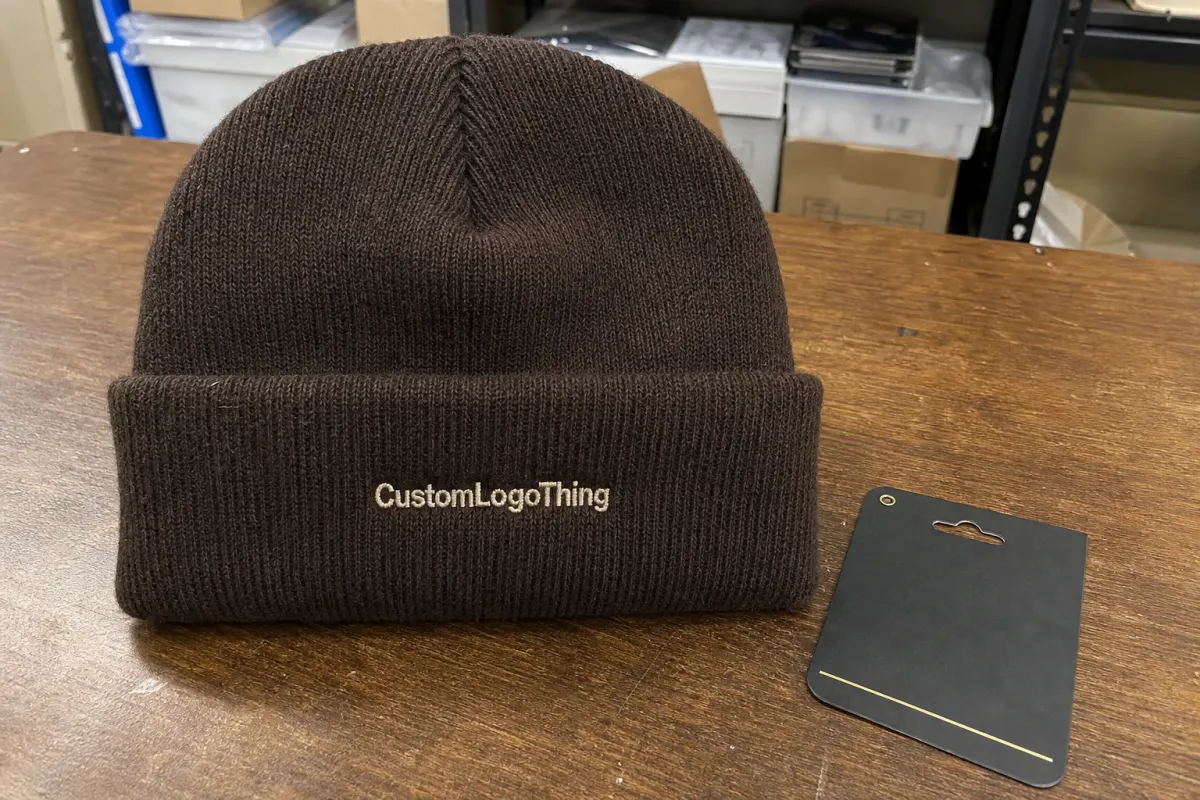
A material sample is a test object, not a promise. For a coffee merch buyer, it should reveal how the fabric behaves under pressure: how much the knit stretches, whether the yarn feels dense or airy, how the color holds under different light, and how the embroidery sits once the beanie is handled a few times. Even the fold lines matter. If the cuff curls oddly or the crown loses shape, that problem often gets worse in bulk.
The coffee roaster Embroidered Beanies Material Sample guide becomes useful because roaster merch lives in different settings. A retail display needs visual appeal next to packaging and apparel. Staffwear needs comfort and repeat use. A bonus gift in a subscription box needs to arrive intact after shipping and still feel intentional, not like leftover inventory. The product may be the same category, but the job is different each time.
Most buyers start with the logo. That is understandable, but the fabric usually does more of the talking. A coarse knit can make a simple wordmark feel heavy. A smooth, tighter knit can make the same artwork look sharper and more expensive. The goal is not just approving a color or a stitch. It is checking whether the full combination of fiber, knit, and embroidery matches the brand language.
There is also a hidden timing issue. Samples are often the first place where the team learns whether a design is too detailed for the material. Small lettering, thin icons, or stacked text can disappear on thick rib knits. That is a production constraint, not a design failure. Catching it during sampling is far cheaper than discovering it after 500 units are finished.
How Fabric, Knit, and Embroidery Change the Final Look
Acrylic, cotton blends, recycled yarns, and wool mixes all carry different trade-offs. Acrylic is common because it is accessible and warm enough for most retail use, but it can pill if the knit is loose or the finish is weak. Cotton blends usually feel softer and less synthetic, though they may not hold the same winter weight or recovery. Recycled yarns can support a sustainability story, but that claim only matters if the yarn source, finishing, and construction still perform well.
Wool blends sit closer to the premium end. They generally feel more substantial, and they tend to hold warmth well. The downside is familiar: higher cost, more care sensitivity, and occasional itch for some wearers. A sample should expose that trade-off before the order is placed. If the handfeel is excellent but the margin collapses, the product may be wrong for the channel even if it looks great on a desk.
Knit structure matters as much as fiber content. Tighter rib knits usually support cleaner embroidery, especially for small lettering or simple emblems. Looser knits can relax around the stitch area and distort the logo after wear. That effect can be subtle in a sample and obvious after a few weeks in the wild. Cuff height also changes the visual balance. A taller cuff gives more room for embroidery and usually reads more retail-ready. A shorter cuff can feel modern, but it leaves less room for detail and is less forgiving if placement shifts even slightly.
Embroidery itself brings another layer of risk. Stitch density, underlay, thread type, and backing all affect the final look. Dense fill stitches can sit well on a smooth knit, but on a bulky fabric they may sink in or lose edge definition. Thread sheen is easy to overlook until the sample arrives. Too glossy, and the logo can look promotional. Too matte, and it can disappear under indoor lighting. For many specialty coffee brands, the best result sits in the middle: visible from across the room, but not shiny enough to fight the rest of the merchandise.
Placement deserves the same attention. A center-front logo may be the easiest to read, but a cuff placement can feel more restrained and mature. Side embroidery can work for a small mark, though it may be less visible at a distance. Each option changes how the beanie photographs, folds, and wears. A sample should show the actual planned position, not a convenient approximation.
Cost, Pricing, MOQ, and Quote Drivers
Price conversations often get distorted because buyers compare the first quote they receive and stop there. The main drivers are material grade, embroidery size, stitch count, thread colors, packaging, and whether the sample fee is credited toward production. A small front logo on a stock acrylic beanie will almost always cost less than a large cuff embroidery on a wool blend. That gap is normal, not a markup trick.
For many stock-style embroidered beanies, a realistic production range looks like this: $3.80-$6.50 per unit for basic acrylic options at moderate volume, $5.50-$8.50 for cotton or blended yarns, and $7.50-$12.50 for premium wool or recycled yarn constructions. Smaller orders usually sit above those ranges. Larger orders can move down if the base material is already in stock and the artwork is simple. MOQ often lands around 50-100 units for stock beanies, while custom knit or custom-dyed requests can push that to 250-500 units.
Sample pricing is different. A development sample may cost $20-$80, plus shipping and any revision work if the first pass needs adjustment. Embroidery may also require a separate setup fee for digitizing or test stitching. Some suppliers credit that cost back after bulk production, some do not. That is a small detail on paper and a meaningful one in a budget review.
| Option | Typical sample or unit cost | What it tells you | Best fit |
|---|---|---|---|
| Basic acrylic beanie | $3.80-$6.50 per unit | Warmth, stretch, embroidery visibility, shelf appeal | Retail add-ons, giveaways, larger runs |
| Cotton or cotton blend | $5.50-$8.50 per unit | Softness, drape, comfort, everyday wear | Staffwear, shoulder-season merch |
| Recycled yarn blend | $6.50-$9.50 per unit | Texture, brand story, sustainability positioning | Eco-minded cafes and subscription boxes |
| Wool blend | $7.50-$12.50 per unit | Premium handfeel, warmth, logo crispness | Higher-margin retail collections |
Ask for a line-item quote. A useful breakdown should separate blank hat cost, embroidery cost, sample fee, packaging, and freight. That makes it easier to compare landed value rather than chasing the lowest sticker price. It also keeps later changes from becoming confusion. If the team wants a folded retail card, a tissue wrap, or a simple shipper, the price effect should be visible before production starts.
For shipping-heavy programs, packaging deserves the same scrutiny as fabric. If the beanies are moving through e-commerce fulfillment or indirect retail, transit testing matters. ISTA standards are a useful reference point for compression, abrasion, and drop exposure. A product that looks clean in a studio can still arrive creased, crushed, or linty if the packaging is too light.
Production Steps and Lead Time From Sample to Bulk Order
A controlled sample process should be boring in the best possible way. It starts with a brief intake: logo file, target quantity, price range, preferred colors, and the role the beanie has to play. From there, the supplier selects the base material, prepares the knit or blank, and runs a small embroidery test. The first sample should tell you enough to judge shape, texture, and placement. If it does not, a revision sample follows.
Stock materials move faster than custom ones, and that difference is not minor. A stock beanie sample can often be turned around in 5-10 business days. Custom material or color matching may take 2-4 weeks before the approval sample even arrives. After approval, bulk production usually adds another 12-20 business days for knitting, embroidery setup, trimming, inspection, and packing. Special cartons, hang tags, or retail wrap can stretch that schedule further.
Approval speed matters. Fast feedback on color, placement, and any revision notes keeps the schedule stable. Slow feedback pushes the calendar in the opposite direction. If one person is waiting on a merch manager while another is still debating cuff height, the order loses time quickly. The fastest projects are not the ones with the fewest questions. They are the ones where the questions are specific, answered once, and captured in a clean spec sheet.
After approval, the factory usually moves into bulk knitting or blank allocation, then embroidery setup, trimming, inspection, and packing. On larger orders, a pre-production photo or sewn reference can be worth asking for, especially if the logo is small or the yarn texture is unusual. That extra check can catch a placement error or a thread-color mismatch before the full order is committed.
Packaging language should be clear too. A sample may arrive in a plain shipper for internal review, but the final order may need a different presentation. Some roasters want corrugated mailers, kraft paper wrap, or printed inserts. Others want the lightest possible shipper for cost and waste reasons. If the packaging is part of the brand promise, state that up front. Recycled content, post-consumer waste, FSC-certified inserts, and biodegradable wraps are only useful if the final order actually uses them consistently.
Common Mistakes When Reviewing Beanie Samples
Flat-lay photos hide too much. Texture, stretch, and embroidery relief only become obvious when the beanie is handled or worn. A polished image can make a thin knit look substantial, or a dense knit look softer than it is. That is why approving from a screen alone is risky. Someone should put the sample on, fold the cuff, and check the logo from a few feet away. It takes under a minute and often exposes problems that would be expensive later.
Lighting creates another trap. Neutral gray can read cool in daylight and warm under cafe lighting. Brown, charcoal, olive, and oatmeal shades are especially sensitive. If the brand wants a rich, earthy result, review the sample under the lighting where it will actually be sold or worn. A coffee bar, a warehouse desk, and a phone camera all tell slightly different stories. Only one of them is relevant to the customer experience.
Recovery is easy to miss until it is too late. A beanie that loosens, curls, or pills after a few wears can damage the whole order even if the first impression is strong. Ask whether the sample has been worn, folded, and reshaped more than once. If the knit does not spring back, bulk units probably will not improve on their own. Simple stretch testing is better than guessing, and fabric test data is even better if the supplier provides it.
Another common mistake is comparing the sample to an idealized mockup rather than the real use case. Staffwear has different requirements than a retail release. A promotional gift has different expectations than a premium winter collection. The right sample is not the one that looks best in isolation. It is the one that fits the actual job.
Finally, buyers sometimes treat embroidery like a fixed detail instead of a variable system. Thread thickness, backing, digitizing style, and stitch direction all affect the result. If a sample looks clean but the production order changes one of those inputs, the final piece may not match. Lock the spec before approval. Otherwise the sample becomes a rough reference instead of a real benchmark.
Expert Tips for Choosing a Sample Set That Fits the Brand
Request two or three options that represent different cost tiers. That gives the team something useful to compare instead of one sample that has to do all the work. A lower-cost acrylic version, a mid-tier blend, and a premium knit often reveal more than three near-identical samples with tiny changes. The aim is not quantity. It is contrast.
Ask for the actual logo size and placement you plan to use. A front mark, a cuff embroidery, and a side placement all behave differently. One can look balanced. Another can feel awkward even if the artwork is unchanged. If the roaster already knows the brand voice is rustic, modern, minimal, or heritage-driven, say so plainly. Those cues help the supplier choose a material that supports the story rather than competing with it.
Review the sample with more than one perspective in the room. A merch buyer notices margin and reorder logic. A store manager notices daily wear and handling. A designer notices spacing, scale, and balance. When those viewpoints are compared together, the final choice is usually stronger. The best-approved sample is not just liked. It is understood.
Ask how the sample reflects the final order in packaging and presentation. If the sample is folded one way but the bulk order will ship another way, the difference should be documented before approval. A beanie that looks polished in tissue should still feel acceptable in a simpler mailer or a retail carton. That consistency matters when the order has to balance sustainability claims, cost control, and display quality at the same time.
There is one more useful check: wear it long enough to spot a weak point. A quick try-on will not show whether the cuff stretches out, whether the embroidery feels scratchy, or whether the knit starts to tilt after handling. A sample that looks fine for thirty seconds can still fail after a few hours on a busy counter. That is the kind of failure a photo never catches.
Next Steps: Turn Sample Feedback Into a Clean Order
Once the sample is in hand, keep the feedback in one place. Record the fabric choice, embroidery file, Pantone targets, cuff height, quantity, packaging, and shipping destination. If the supplier revises the spec sheet, restate it back in plain language. That may feel basic, but it is one of the most reliable ways to avoid a production mismatch later.
Then decide whether the sample needs a revision or whether the team is ready to approve. If the knit feels right and the logo reads cleanly, move forward. If the color is off by a shade or the embroidery sits too low, request a corrected sample before production begins. A short delay now is far cheaper than a rerun later. The difference between “close enough” and “approved” tends to show up in inventory, not in the sample room.
The strongest orders are the ones where the sample stage, pricing discussion, and packaging plan all point in the same direction. If sustainability is part of the brief, confirm whether the outer shipper uses recycled materials, whether inserts are FSC-certified, and whether any wrap is kraft paper or another recyclable stock. If the brand story is premium and minimal, make sure the embroidery density, cuff shape, and color finish support that tone. The product should not have to carry a message that the construction contradicts.
For many buyers, the coffee roaster embroidered Beanies Material Sample guide is really a way to reduce expensive ambiguity. It helps separate what looks good from what will actually work. Approve, revise, or request a second sample while the details are still fresh, and the final order is much more likely to land with the right feel, the right margin, and the right shelf presence.
What should I check in a coffee roaster embroidered beanies material sample?
Check handfeel, stretch, thickness, color accuracy, and how the embroidery sits on the knit. Look for pilling, curling, loose stitching, or logo distortion after the beanie is worn and handled a few times. Compare the sample against the real use case: staff uniform, retail merch, or promotional gift. A coffee roaster Embroidered Beanies Material Sample guide should help you judge how the piece performs in that exact setting, not just how it photographs.
How many material samples do I need before approving a beanie order?
Two to three options is usually enough to compare fabric feel, budget, and brand fit. If the logo is complex or the color is critical, request a revision sample before bulk production. More samples only help if each one answers a different decision, such as price, warmth, or finish.
Do coffee roaster embroidered beanies material samples change the final price?
Yes. Sampling can reveal whether a more premium knit, denser embroidery, or custom color will raise unit cost. Ask whether the sample fee is credited back after the production order is placed. Use the sample stage to compare true landed cost, not just the base beanie price.
What is a typical turnaround for material samples and bulk production?
Simple stock-material samples are usually faster than custom-knit or custom-dyed options. Lead time grows when the design needs revisions, alternate thread colors, or new embroidery setup. Bulk production starts after approval, so quick feedback is the fastest way to protect your schedule.
What if the embroidery looks good on the sample but not on the production beanies?
Ask for the exact production spec sheet so stitch count, placement, and backing match the approved sample. Confirm the factory is using the same yarn, knit gauge, and thread type in bulk as in sampling. Request a pre-production photo or sewn reference if the order is large or the logo is highly detailed.

