A tea embroidered Beanies Material Sample guide is most useful at the exact moment a beanie stops being an idea and starts behaving like a product. A flat mockup can hide a lot. The knit may look smooth on screen, the logo may appear centered, and the colors may look close enough. Then the sample arrives and the real questions show up: does the fabric recover after stretching, does the embroidery pucker, and does the inside feel acceptable against skin?
That is why physical sampling matters so much in headwear. A beanie is small, but it combines three variables that often fight each other: stretch, warmth, and decoration. Add a cuff, lining, or dense logo, and the margin for error narrows quickly. A sample gives buyers something concrete to measure instead of relying on promises that sound tidy in a quote.
For sourcing teams, the sample is not just a quality check. It is also a way to verify whether the production method matches the intended price point. A budget acrylic knit, a wool blend, and a recycled yarn build may all look acceptable in a product sheet, yet behave very differently once embroidery, backing, and wear are added. The sample exposes those differences early, while changes are still manageable.
Tea embroidered beanies material sample guide: what it reveals
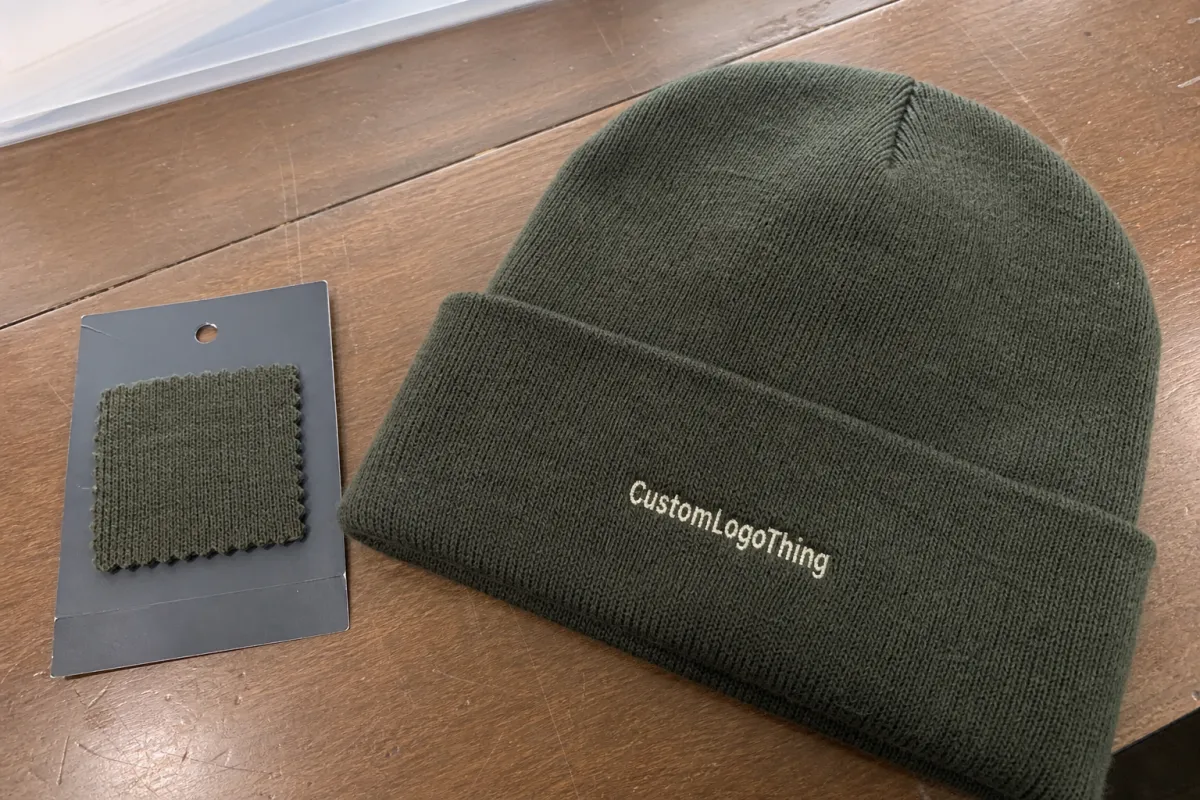
A beanie sample is a working proof, not a display piece. That distinction matters. One sample can look neat on a table and still fail in wear because the embroidery is too heavy for the knit, or because the fabric stretches enough to distort the logo after a few pulls. Buyers usually discover that the issue is not the artwork alone; it is the interaction between yarn, stitch density, and backing.
Good samples answer practical questions fast. Does the knit recover after being stretched? Does the logo stay readable when the beanie is folded and unfolded? Does the backing feel soft enough, or does it create a rigid patch on the forehead? If the product is meant to be worn all day, those details are not minor.
The sample also reveals whether the decoration method suits the fabric. Fine lettering on a loose rib knit often looks acceptable in a digital proof and then breaks apart in the real world. On a tighter knit base, the same design may hold its shape and edge clarity. That is why a tea Embroidered Beanies Material sample guide is more than a request for “one sample please”; it is a decision tool that shows whether the build can survive actual use.
In practical terms, the review should cover four things:
- Surface feel and stretch recovery.
- Logo clarity, alignment, and edge sharpness.
- Inside comfort, backing size, and trim quality.
- Overall proportion once the beanie is worn, not just laid flat.
There is another layer buyers sometimes miss: presentation. If the sample arrives in a plain protective carton, that is fine for technical review. If the project needs a packaging preview too, then the outer shipper, hangtag, tissue, or insert should be checked alongside the beanie itself. A recycled paper insert or an FSC certified card can support a sustainability brief, but that only helps if the product quality is already solid.
How the process and timeline usually unfold
The sample process starts with specificity. Style, material, yarn color, knit structure, logo file, placement, and size all need to be set before production starts. If any of those are vague, the first sample may be “technically correct” and still not useful. A front-panel logo that is 8 mm too low on a cuff beanie can look off even if the embroidery itself is clean.
Most teams move through two sample stages. The first is the material or blank knit sample, which confirms handfeel, recovery, and color. The second is the decorated sample, which adds stitch count, thread sheen, and placement. For a stretchy item like a beanie, that second stage usually carries the real risk. The sample may need a revision if the logo sits too large, too small, or too close to a seam.
Lead time depends on more than factory speed. Yarn availability, digitizing, embroidery setup, shipping distance, and revision count all matter. A basic sample often lands in the 5-10 business day range once artwork is approved. More complex builds, custom yarn, or multiple correction rounds can stretch to 12-15 business days or longer. Cross-border transit can add another layer of delay that is easy to overlook during planning.
Small changes are usually quick. Moving the logo 5 mm, reducing stitch density, or swapping thread shade is often manageable in one revision. Material swaps take longer because they affect the entire behavior of the sample. Changing from acrylic to wool blend, for example, can alter stretch, warmth, surface texture, and how the embroidery sits on the knit. That means the revised sample is not a small cosmetic update; it is a new test.
In-house review timing matters too. If the sample is going to purchasing, marketing, and compliance, the review window should be set before the sample is made. Otherwise the item sits in email limbo while everyone waits for everyone else. A clear timeline is one of the simplest ways to keep a tea embroidered Beanies Material Sample guide useful instead of theoretical.
Material factors that change fit, stretch, and stitch clarity
Material choice is where most approval decisions get decided. Acrylic is the most common base because it is predictable, widely available, and relatively cost-efficient. It holds shape well enough for casual headwear, and it usually supports repeatable color matching across bulk runs. Wool feels warmer and more natural, but it can be less forgiving during decoration and may need closer attention to shrink behavior. Cotton blends are comfortable, though they do not always snap back as strongly as synthetic yarns. Recycled yarns are increasingly requested, especially for brands that want a lower-impact story without changing the basic look too much.
Knit gauge and density have a direct effect on embroidery quality. A tighter knit gives the thread more support, which usually means cleaner letter edges and less distortion. A looser knit can let the embroidery sink into the surface, especially if the logo has small text or thin outlines. Standard beanies often fall somewhere in the 7-12 gauge range depending on style, but gauge alone does not decide quality. The combination of gauge, yarn thickness, and stitch tension is what matters.
Fit and recovery matter just as much as appearance. A beanie that stretches and springs back will keep the logo looking stable from wearer to wearer. One that grows and stays stretched can make the decoration drift, especially near the cuff or around a high-tension front panel. That is not just a comfort problem; it changes how the branding reads in real use.
Construction details deserve the same level of attention. Rib knit behaves differently from a smoother body knit. Crown shaping affects how much clean space exists for decoration. A lining can improve comfort, but it can also change the silhouette and make the embroidery feel heavier. The more layers added, the more the sample needs an inside inspection, not just a front view.
Thread choice is part of the same equation. Polyester thread is common because it handles wear well and keeps color consistently. Rayon can produce a softer sheen that some brands prefer for a more premium feel. Backing is equally important. Too little backing and the logo can distort; too much and the area feels stiff. A good sample shows both the outside appearance and the inside touch, because a product that looks great but irritates the wearer is a weak approval.
For a tighter build spec, the sample should document the knit color, thread code, logo dimensions, and placement point. That makes the approved version repeatable. Without that record, the production team ends up recreating the sample from memory, and memory is a poor substitute for a measured spec sheet.
Cost, pricing, MOQ, and unit cost drivers
Sample pricing usually breaks into four or five parts: sample fee, digitizing or embroidery setup, material cost, labor, and shipping. Buyers often ask for one total number, but the breakdown is more useful because it separates one-time development from recurring production cost. A low sample price can look attractive until the setup fee reappears later in the order.
Complexity drives cost more than almost anything else. A one-color logo with moderate stitch count is less expensive than a multi-color design with tight registration and small text. More colors mean more thread changes. More stitches mean more machine time. A curved or highly stretchy placement can also raise labor because the decoration needs more care to stay aligned.
MOQ affects unit cost directly. A 100-piece run is rarely priced like a 1,000-piece run because the fixed setup work is spread across far fewer units. For standard custom embroidered beanies, production pricing at scale often falls around $2.40-$4.80 per unit, while premium yarns, multi-location embroidery, specialty finishing, or added labeling can push that higher. Small runs can be materially more expensive per piece, even if the style looks simple.
Here is a useful way to compare sample paths:
| Sample option | What you learn | Typical sample cost | Typical turnaround | Best use case |
|---|---|---|---|---|
| Flat knit swatch | Yarn feel, color, density | $15-$45 | 3-5 business days | Early material selection |
| Embroidered prototype beanie | Fit, stitch clarity, placement | $45-$120 | 7-12 business days | Full approval before bulk order |
| Revised approval sample | Final corrections, repeatability | $25-$75 | 3-7 business days | One last change before production |
Packaging and labeling also move the quote. Woven labels, printed hangtags, private-label marks, and folded presentation wraps add cost, even if the beanie itself stays unchanged. If the sample includes a branded insert or a custom protective sleeve, ask whether the intent is technical protection or presentation. Those are different levels of finish, and they should not be priced as if they were the same thing.
Shipping should be treated as part of sample quality, not an afterthought. A sturdy corrugated cardboard shipper protects shape better than a loose mailer. Minimal filler reduces bulk. A simple recycled paper insert can keep the kit neat without making the sample feel overproduced. If sustainability is part of the brief, those choices should be visible in the sample package so the review reflects the real product story.
Step-by-step sample review before approval
Start with color and surface. Check the beanie under bright light and indoor light, because thread sheen changes with the room. What looks like a near-perfect match in one setting can look slightly off in another. Then inspect logo placement, proportion, and edge clarity. If the design is supposed to sit centered on the cuff or front panel, even a small offset will stand out once the beanie is worn.
Next, test the fit. A sample that looks good flat may sit too shallow on the head or fold awkwardly when worn. Use a head form if available, but a real wearer is better because it shows how the shape behaves in motion. If the product is unisex, try at least two head sizes. That catches issues that a single form will miss.
Then turn the sample inside out. The backing should feel secure, not abrasive. Trimmed thread ends should be neat. Any reinforcement patch should stay small enough that it does not form a pressure point. This is one of the places where a sample can pass visually and still fail in wear. The outside may look clean; the inside may tell a different story.
A brief wear test is worth the time. Stretch the knit, fold and unfold the cuff, press on the embroidered area, and let the beanie recover. The stitch field should remain stable, and the knit should spring back without visible warping. If the piece will be handled often, ask for a simple friction check too. Some combinations look sharp on day one and soften faster than expected.
"If the sample needs another round, change one variable at a time. Otherwise the next version tells you nothing useful."
Document everything before approval closes. Record the yarn type, knit color, thread code, logo size, placement, and any special finishing. If the same item is reordered later, that record is what keeps the next run aligned with the approved sample instead of drifting into a near-match.
Packaging checks belong in the same review if the shipment travels between offices or to a remote approver. A sturdy outer box, clean packing discipline, and minimal movement inside the carton reduce the risk of crush marks or bent shape. Standards such as ISTA are useful references for thinking about drop and vibration risk. If the approval kit includes paper components, FSC certification can support the sustainability brief without adding unnecessary complexity.
Common mistakes that slow down sample approval
The first mistake is approving from photos alone. Images help with proportion, but they do not reveal knit texture, thread sheen, or how the decoration behaves when the fabric moves. A monitor can make a puckered logo look fine and a slightly loose stitch field look more consistent than it really is. If the artwork matters, the physical sample matters more.
Vague artwork direction is the next common problem. If the buyer does not specify exact placement, final size, or minimum line thickness, the sample may come back close but still feel wrong. A beanie gives very little room for error. Logos that work on outerwear can become crowded or muddy once they are reduced to fit a cuff or front panel.
Skipping stretch testing is expensive. Embroidery on a high-stretch area can distort after only a few wears if the knit is too open or the logo is too large. Thin lines, small text, and sharp corners are the first details to suffer. Bold shapes tolerate movement better, but they still need a stable base.
Wash and friction behavior are easy to overlook, yet they shape long-term perception. Some yarn and thread combinations fuzz faster than others. Some backings become noticeable after handling. If the beanie is for retail rather than a one-time event, the sample review should include at least a basic conversation about wear and care, even if full laundering is not part of the test.
Changing materials after approval creates avoidable rework. New yarn changes handfeel. New density changes stitch behavior. New backing changes comfort. By the time those revisions are folded back into the order, the price and timeline have moved too. A tea Embroidered Beanies Material sample guide works best as a decision gate, not a loose starting point that gets rewritten halfway through production.
Expert tips and next steps for a cleaner approval
Use one approval sheet for the entire team. It should include the base material, knit color, thread numbers, logo dimensions, placement, and any special finishing. If sales, merchandising, and marketing are all reading from the same record, version drift becomes less likely. That sounds basic, but many sample delays come from three people approving three different mental versions of the same item.
Ask for two kinds of photos: a close-up and an on-head view. The close-up shows stitch density, edge sharpness, and backing behavior. The worn view shows proportion and real-world readability. Styled images are less useful at this stage because they tell you how the product was photographed, not how it was made.
Keep the approved sample and notes in a physical or clearly indexed digital archive. Reorders drift when teams depend on memory instead of a reference. If the exact knit color, thread code, and backing choice are stored with the sample, future production becomes easier to repeat. That matters even more when multiple buyers or departments touch the same program over time.
If the first sample is close but not right, adjust one variable only. Move the logo before you change the yarn. Tighten stitch density before you change the placement. This is slower in the moment, but it gives the next round real diagnostic value. Otherwise a revised sample can look better for reasons that are impossible to isolate.
Packaging should stay honest and functional. A modest corrugated cardboard shipper, a simple kraft paper insert, and a clear label usually do more for the approval process than a decorative box that distracts from the product. If recycled materials or biodegradable packaging are part of the brief, use them in a way that supports the item rather than inflating the sample into a marketing prop.
The most reliable workflow is still the simplest one: request the sample, inspect it in hand, document the result, and move to production only after the reference is clear. Used that way, the tea Embroidered Beanies Material Sample guide becomes a repeatable approval system instead of a one-time check.
What should a tea embroidered beanies material sample include?
It should include the selected knit base, the embroidery in the requested placement, and the exact thread colors or codes used for the logo. A strong sample also shows the inside finish, backing feel, and enough of the beanie shape to judge fit and stretch. If possible, ask for a note that records the material type, construction details, and any special finishing used on the sample.
How long does a beanie material sample usually take to make?
The timeline usually depends on artwork readiness, yarn availability, and whether the sample needs one round or multiple rounds of revision. Simple samples can move quickly, while custom yarns, complex embroidery, or shipping delays can add several days. A clear lead time before approval helps internal reviewers know when to expect the sample.
Which material is best for embroidered beanie samples?
A tighter knit often works best for crisp embroidery because it holds stitch detail and reduces distortion. Acrylic and blended yarns are common because they balance cost, stretch, and consistency, while wool offers a different hand feel and warmer finish. The best choice depends on the look you want, the stitch count, and how much the fabric needs to stretch in wear.
Why does pricing change between beanie sample options?
Pricing changes when the yarn type, embroidery complexity, stitch count, or thread color count changes. Setup work such as digitizing, sample handling, and shipping also affects the total. Lower quantities usually raise unit cost because fixed setup work is spread across fewer pieces.
What should I check before approving embroidered beanie samples?
Check color accuracy, embroidery alignment, and whether the logo remains clear when the fabric stretches. Inspect the inside finish for comfort and make sure the beanie fits as expected on a real head or form. Confirm the approved sample details in writing so production matches the exact reference.
What is a reasonable production timeline after sample approval?
For a straightforward order, production can begin soon after approval and may take a few weeks depending on quantity, decoration count, and shipping method. Larger runs, special yarns, or added packaging extend the schedule. A cautious buyer should treat sample approval as the start of the production clock, not the end of the project.


