A beauty launch has a short runway to make a first impression. The shelf decides part of it, the hand decides part of it, and the camera roll decides the rest. That is why Custom Matte Laminated Paper Bags for beauty retail launches matter more than many teams expect: they do not just carry a purchase home, they carry the visual proof that the brand thought through the details.
For skincare drops, fragrance debuts, seasonal gift sets, and in-store events, the bag is not a leftover accessory. It is a piece of packaging that has to hold up under fluorescent retail light, survive a few minutes of handling, and still look composed once a customer posts a photo. A bag that looks generic at the counter can weaken a launch that otherwise feels carefully built.
Why Matte Bags Outperform Bare Kraft at Launch
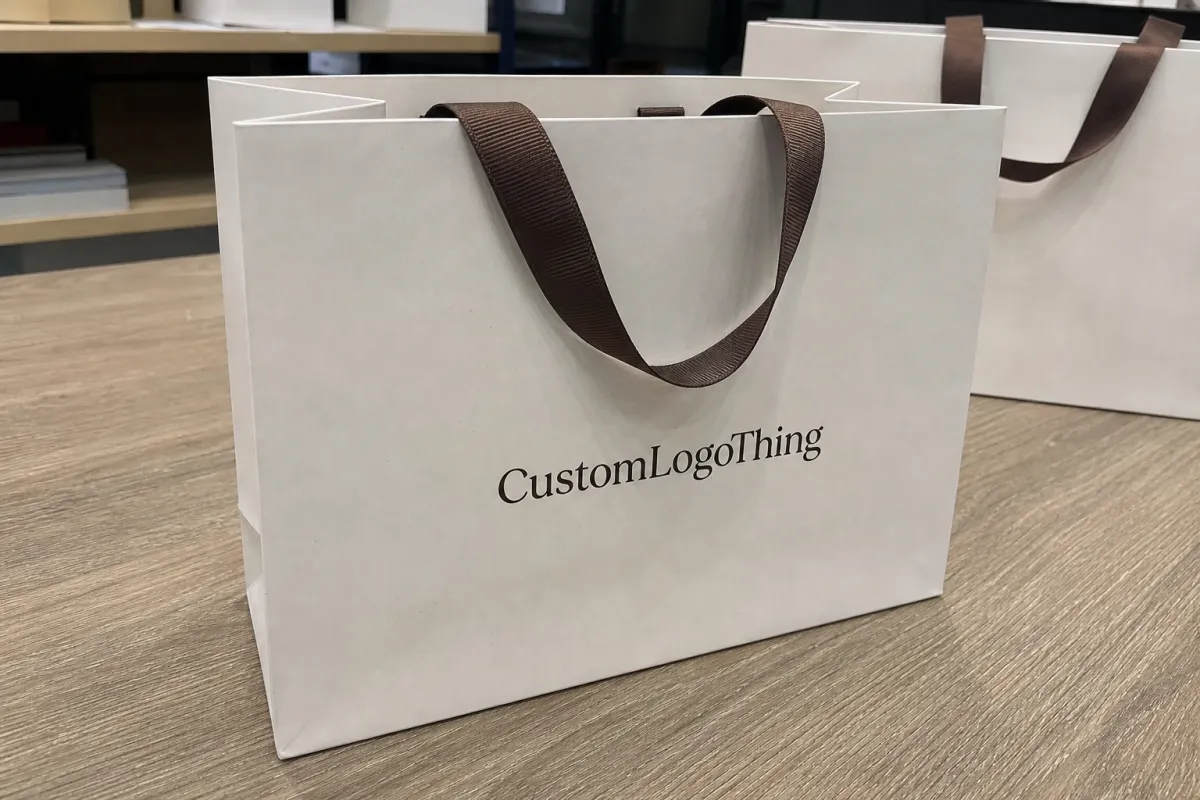
Matte finishes keep showing up in premium beauty packaging for a reason. They lower glare, soften visual noise, and give typography more room to breathe. Bare kraft can be a smart choice for brands leaning into natural ingredients or earthy positioning, but once a launch starts aiming at prestige skincare, fragrance, or gift-worthy presentation, matte usually reads as more controlled and more expensive.
The difference is not only visual. A glossy surface catches every light source, fingerprint, and small crease. Matte slows that down. It lets the logo, color field, and spacing do the work instead of asking shine to carry the design. That matters in retail, where the bag may be seen on a display table, in a fitting room mirror, in a shopping basket, and in a phone camera all on the same day.
custom matte laminated paper Bags for Beauty retail launches start as printed paper sheets, then receive a matte film layer that changes both appearance and handling. The finish helps protect the print surface while giving the bag a smoother, more polished feel. The result is still paper packaging, but it behaves more like part of the launch campaign than a generic carrier.
That distinction is practical. A launch bag is often seen before the product is opened. If the brand is trying to establish a premium price point, the bag has to support that position rather than sit beside it awkwardly. The carry bag should feel related to the bottle, carton, insert card, or custom printed boxes on the shelf. If the packaging system is inconsistent, customers notice the gap even if they cannot name it.
There is also a small operational benefit. Matte finishes are forgiving in the real world. Launch bags get stacked, moved, touched, and photographed more than anyone plans for. A matte surface can hide minor handling marks better than gloss, which gives the brand a little more protection during a busy selling period.
How Matte Lamination Changes Look, Feel, and Durability
The process is straightforward, but each step affects the final bag. Artwork is printed onto the paper sheet first. The matte laminate is added after printing. Then the sheet is cured or pressed, cut, folded, glued, and fitted with handles. If one step is rushed, the bag may still look acceptable in a flat proof while feeling disappointing once it is assembled and loaded.
Matte lamination changes how color reads. Navy becomes denser. Cream tones soften. Metallic accents or foil highlights stop shouting under store lighting and instead feel intentional. That is one reason the finish appears so often in premium skincare and fragrance packaging: it supports rich color without needing bright contrast everywhere.
The tactile effect matters too. Matte feels calmer and less slippery than gloss. A customer may not describe that difference out loud, but they register it in the hand. That first touch becomes part of how they judge the brand. Luxury cues are often quiet cues, and surface feel is one of the quietest.
There are real durability gains, though they have limits. Matte lamination helps with scuff resistance and hides fingerprints better than gloss. It can also make the surface easier to wipe clean. It is not waterproof, and it will not rescue a weak build. If the board weight is too light or the handle reinforcement is under-specified, the bag still fails where it matters most.
That is why structure matters as much as finish. Paper weight, adhesive quality, bottom board strength, and handle attachment all have to be matched to the filled weight. A premium finish on a flimsy body feels off immediately. The hand notices poor build faster than the eye notices good print.
For brands rolling out a full packaging set, consistency is the real test. The same standards that shape cartons, inserts, and outer packaging should carry into the retail bag. The bag is not a side item. It is part of the package branding system, and it should behave that way in the store and in transit.
If the team is comparing finishes, physical samples beat screen photos every time. Digital images flatten texture and can make a matte surface look too soft or too dull. A swatch tells the truth faster, especially when the launch depends on a particular tone or a specific level of sheen reduction.
Cost, Pricing, and MOQ: What Drives the Quote
The price of Custom Matte Laminated Paper Bags for beauty retail launches usually comes down to a handful of variables: size, paper stock weight, print coverage, handle style, and any special finishing. Once foil stamping, embossing, ribbon handles, or a more complex internal mount enters the spec, the number climbs quickly. There is no mystery in that, just added labor, setup, and material cost.
Quantity matters just as much. Higher volume spreads setup work across more units, which lowers unit cost. Smaller runs do the opposite. That tradeoff is easy to overlook when a launch team is focused on price per piece. Overordering can create a different problem: dead stock sitting in storage after a campaign has already moved on. Packaging that misses the product cycle is not cheap, even if the unit cost looked good on paper.
For many beauty launches, a pilot run of 500 to 2,000 bags makes sense. It keeps risk lower while the product line is still being tested or the retail rollout is limited. The unit price is usually higher, but the buyer gains flexibility. Larger runs often make more sense once the design is locked and the launch calendar is stable.
These broad U.S. market ranges are only starting points, not quotes:
| Option | Typical Look | Common Unit Range | Best Fit |
|---|---|---|---|
| Bare kraft | Natural, casual, earthy | $0.18-$0.45 | Clean, eco-leaning launches |
| Matte laminated paper bag | Quiet, premium, controlled | $0.55-$1.20 | Skincare, fragrance, gift sets |
| Gloss laminated paper bag | Bright, reflective, high-shine | $0.50-$1.10 | Promotional or color-led launches |
| Matte lamination with foil, emboss, or ribbon handle | Luxury-forward and tactile | $0.90-$1.80 | Hero launches and press events |
A quote should also show the parts that often get buried: setup charges, proofing, sample fees, freight, and reprint terms. If those are missing, the landed cost is not visible yet. A low unit price can still become the more expensive option once the actual build and shipping are counted.
It helps to request tiered pricing at several breakpoints, such as 1,000, 3,000, and 5,000 pieces. That gives a clearer view of the reorder path and shows whether the supplier’s pricing improves with scale or only looks favorable at one quantity. For brands comparing multiple Custom Packaging Products, that view matters because the bag should fit into the broader packaging budget, not compete with it.
Production Steps and Turnaround: From Proof to Delivery
Buyers often think of bags as a print order, but the schedule is really a chain of checks. Dieline confirmation comes first, because the artwork has to match the exact dimensions, gusset depth, and handle placement. After that come artwork setup, proof review, approval, printing, lamination, die cutting, gluing, handle insertion, packing, and shipping. Skip the order, and the bag usually shows the mistake later.
The proof stage deserves more attention than it gets. Beauty brands are sensitive to color accuracy for good reason. A blush tone that looks elegant on screen can shift under store lighting. Fine type can disappear if contrast is too soft or line weight is too light. Matte surfaces do not hide those issues; they expose them more clearly because the finish reduces glare and lets the print quality stand on its own.
Typical turnaround for a standard order is often around 12 to 18 business days after final proof approval. That can stretch once sample requests, artwork revisions, or seasonal production queues enter the picture. Freight adds another layer. Domestic transit may only add a few days, while international shipping can push the schedule much farther. Launch calendars need room for that reality.
Rush jobs exist, but they narrow the options fast. Certain finishes become harder to source. Some shipping methods cost more. If artwork is still changing, the time saved by rushing can disappear in revisions. A short buffer is cheaper than a reprint.
There is also a handoff between receiving the cartons and getting the bags onto the selling floor. A shipment that arrives on time is not the same thing as packaging that is ready to use. Count the cartons, inspect a sample, confirm the handles, check the print, and verify the size before the launch opens. Those steps take minutes, but they prevent a lot of visible problems.
For shipments that need to survive stacking and handling before reaching retail, ISTA testing standards are a useful reference point. They help evaluate vibration, compression, and edge wear in a way that reflects the actual stress of transit rather than a best-case assumption.
Key Spec Choices for a Retail Launch That Needs to Sell on Sight
Size should start with the product, not the mood board. A fragrance carton, a skincare duo, and a layered gift set all need different internal clearance. A bag that is too tight bulges at the gusset. A bag that is too large lets the product shift around and look underfilled. For beauty launches, many workable sizes sit somewhere between 5 x 3 x 8 inches and 12 x 5 x 13 inches, but the product itself should always set the final dimensions.
Handles deserve the same attention. Twisted paper handles are clean and economical. Cotton rope feels more elevated. Ribbon handles signal giftability, though they are not right for every weight class. The handle choice should match both the filled load and the brand tone. If the bag looks premium but the handle feels weak, the whole piece loses credibility.
Packaging design works better on matte surfaces when the layout is disciplined. Strong contrast helps. Negative space helps. One clear message on the front panel helps. A crowded layout can work on a promotional bag, but it usually fights the quieter character of matte lamination. The finish already brings restraint; the artwork should not undo that.
Interior details also shape the launch experience. Tissue paper, insert cards, and printed liners can extend the story after the bag leaves the counter. The shopper may not remember the exact dimensions, but they will remember whether the package felt assembled or improvised. Beauty buyers are often sensitive to that difference, even if they do not name it directly.
- Fit: size the bag for the tallest or heaviest item, not the average item.
- Structure: match stock weight and gusset depth to the filled load.
- Finish: use matte when the launch needs restraint, depth, and cleaner photography.
- Message: keep one hero claim visible instead of stacking every benefit on the front panel.
- Operations: make sure the bag stacks cleanly in back stock and hands out quickly at the counter.
Retail teams care about repetition. If the same bag is going to be handed out hundreds of times, it needs to survive friction at the counter, shipping pressure, and repeated handling without losing shape. That is why good buyers test filled samples, not just flat art proofs. A sample shows how the bag behaves under weight, not just how it looks in a file.
If the launch also includes cartons or inserts, keeping the bag within the same visual language pays off. Customers read the set as one system. When the bag, carton, and insert share the same design logic, the brand feels composed instead of assembled piece by piece.
Common Mistakes That Make Premium Bags Feel Cheap
Visual overload is the first mistake. Matte lamination creates a quieter, more premium tone, so stuffing the front panel with too many badges, gradients, claims, and decorative elements works against the finish. A launch bag should not look like a flyer. It should feel like a considered part of the purchase.
Underbuilding the structure is the second. A premium surface on a weak bag can break the luxury signal fast. Thin stock, a flimsy bottom board, or handles that pull under normal use all become visible in the real world. The flaw ends up living in the customer’s memory longer than the color palette does.
Scuff-prone placement causes another type of failure. Corners, folds, and handle attachment points take the most wear during shipping and handoff. Putting delicate foil or dense ink coverage in those areas can look sharp on a mockup and rough in practice. A better layout respects those pressure points instead of pretending they do not exist.
Measurement errors are easy to miss and expensive to fix. A bag that is slightly off can misfit the box, shift in the carton, or throw off the visual rhythm at the retail counter. For beauty packaging, small errors show because the products themselves are compact and exact. A few millimeters can change the impression more than the artwork does.
“The first sample told the truth. The surface looked right, but the bag only started to feel premium after the stock weight and handle were corrected.”
Another common issue is approving a quote without checking what is included. Setup, samples, freight, and reprint terms can change the landed cost more than expected. A lower unit price is not a better deal if the hidden charges push the total beyond budget. That is true for Custom Matte Laminated Paper Bags for beauty retail launches just as much as it is for cartons or custom printed boxes.
For brands comparing options across Custom Packaging Products, the sensible approach is to compare total landed cost and real-world performance together. One without the other creates a false sense of control.
Expert Tips and Next Steps for a Clean Launch Rollout
Start with a locked spec sheet before artwork begins. Dimensions, stock, finish, handle type, quantity, and destination should all be fixed early. That prevents the slow, repetitive corrections that tend to show up once the proof is nearly approved and everyone is trying to keep the launch moving.
Ask for a material sample if the brand is deciding between matte, gloss, soft-touch, or uncoated options across different product tiers. Photos are not enough. Even experienced teams can misjudge how much light a finish absorbs or how texture appears after print.
If sustainability is part of the message, ask for documentation instead of assuming. FSC chain-of-custody records matter more than broad claims. The FSC site is useful for understanding certification language and paper sourcing expectations. In beauty, shoppers increasingly compare package ethics with product claims, so the paper trail matters.
Build a launch checklist that includes carton counts, receiving windows, sample checks, store setup timing, and backup inventory. A retail bag is only useful if it arrives in the right quantity and condition. The operational side of packaging is easy to ignore until it causes a delay on the floor.
Set a re-order trigger based on sell-through and event cadence, not panic. A trigger around 20% to 30% remaining stock often leaves enough runway for a repeat order, depending on freight lead time and how often the line is restocked. That buffer keeps the packaging program steady instead of reactive.
Measure what happens after the bags go live. Track customer response, handling damage, social visibility, and any mismatch between the intended premium position and the actual store presentation. Those observations tell you whether the finish is earning its place.
For brands planning the next launch cycle, the strongest result is consistency. The same custom Matte Laminated Paper bags for beauty retail launches can support debut runs, replenishment, press mailers, and event gifting if the specs are disciplined from the start. That is where the bag stops acting like packaging noise and starts functioning as part of the product story.
Frequently Asked Questions
How do matte laminated paper bags compare with glossy bags for beauty launches?
Matte usually reduces reflections in store lighting and photography, which helps premium branding look calmer and more controlled. It also tends to hide fingerprints and small scuffs better than gloss, which matters when bags are handled repeatedly at events or on busy retail floors. Gloss can feel brighter and more promotional, while matte often suits skincare, fragrance, and minimalist beauty positioning.
What MOQ should I expect for custom matte laminated paper bags for beauty retail launches?
MOQ depends on the supplier, the structure, and the finishing details, so ask for pricing at several quantity breaks instead of one number. Smaller runs can be useful for launch testing, but the unit cost usually drops as quantity increases because setup work is spread out. If the line may expand quickly, compare a conservative pilot order with a larger reorder plan before committing.
How long does production usually take for a beauty launch bag order?
Typical timing includes artwork prep, proof approval, printing, lamination, converting, packing, and transit, so the schedule is longer than the print date alone. Special finishes, revisions, or sample requests can add days or weeks, especially during busy retail seasons. Build buffer time into the launch calendar so a delay does not force a less desirable finish or rushed freight choice.
What should be included in a quote for matte laminated beauty paper bags?
Include dimensions, paper stock, quantity, handle style, print colors, and any special finishes so the quote reflects the real build. Confirm whether setup, proofs, samples, freight, and taxes are included, because those costs can change the landed price significantly. Ask for tiered pricing and lead time together so the quote can support both budget planning and launch scheduling.
Can matte laminated bags handle heavier beauty products?
Yes, if the paper weight, reinforcement, and handle attachment are specified for the actual filled weight. Heavy glass bottles or gift sets may need stronger stock, wider gussets, or upgraded handles to prevent strain. Test with filled samples before approving production so the bag performs the way the launch team expects. For a well-planned line, custom matte laminated paper bags for beauty retail launches can handle the load and still carry the premium signal the brand needs.

