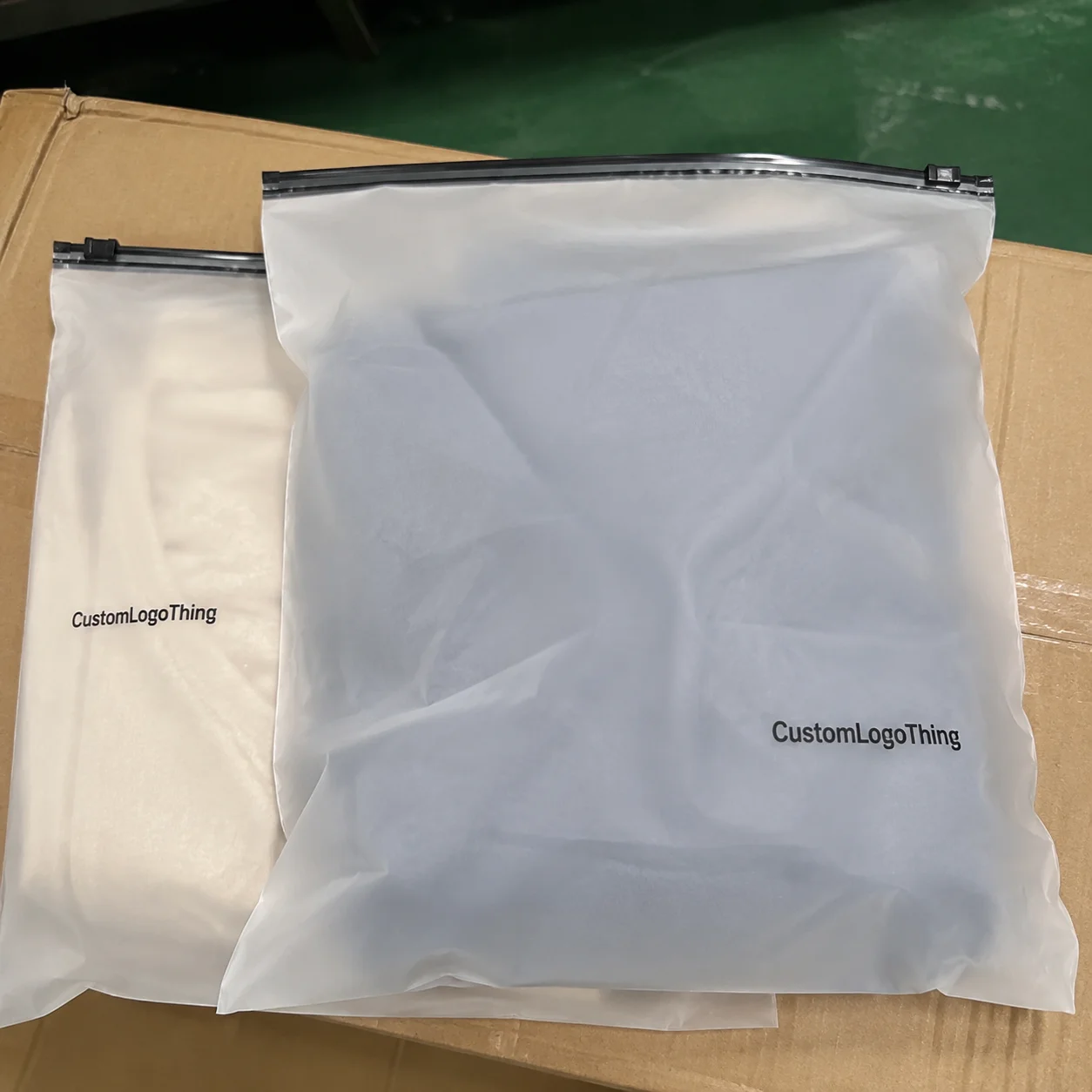
A customer usually notices the package before they touch the fabric, read the care label, or register the stitching. That is why custom Slider Lock Clothing Bags for boutique brands deserve more attention than they tend to get; they protect the garment, carry the brand, and set the tone for how carefully the product was handled.
For boutique apparel, the bag is not disposable filler. It is part of the handoff. A dress folded for shipping, a two-piece set stored in a stockroom, or a seasonal top displayed near checkout all need packaging that stays tidy after more than one touch. A loose polybag can do the basics, but a slider lock bag gives staff a cleaner open-and-close action, which matters when samples are being checked, sizes are being verified, returns are being repacked, or gift-ready orders are being assembled.
The best packaging is the kind that disappears into the experience in a good way. It does not fight the garment, snag delicate trims, or turn messy after a single reopening. It keeps the product contained and the presentation under control.
Why Boutique Buyers Notice the Bag Before the Garment
Presentation starts earlier than many brands expect. In a boutique setting, apparel may be stacked, hung, folded, shipped, and handled by several people before it reaches the final customer. A clear or frosted slider lock garment bag keeps the item contained, reduces friction during packing, and lowers the chance that a sleeve, strap, hem, or belt gets caught during handling.
In practical terms, a slider lock clothing bag is a resealable plastic garment bag with a sliding closure along one edge. The film protects apparel from dust, light scuffing, and moisture exposure during storage and shipping. The slider moves across the closure track and opens or closes the bag without tearing the film or depending on adhesive.
That repeated-use behavior is one reason boutique teams prefer this format. Adhesive closures can pick up lint, lose tack, or wrinkle the bag after a few openings. Fold-over flaps are inexpensive, but they can look loose once the garment shifts inside. A slider closure usually reads as more finished because the bag can be opened, checked, and closed again while keeping the same basic presentation.
The strongest use cases are garments that benefit from careful handling: dresses, tops, lingerie sets, seasonal capsule pieces, gift-ready items, scarves, lightweight jackets, and returns-friendly packaging. For apparel that gets touched more than once, custom Slider Lock Clothing Bags for boutique brands help the product arrive looking closer to how it left the pack line. That matters more than most brand copy admits.
Packaging callout: If the garment may be opened more than twice before it reaches the customer, a slider closure is usually worth pricing against adhesive or fold-over options.
How the Slider Lock Closure Works on Apparel Bags
The closure is simple, but the details decide whether it feels premium or annoying. The bag has an interlocking track molded or sealed into the opening edge. A small plastic slider travels across that track and presses the two profiles together as it moves. To open the bag, the slider goes back the other way and separates the profiles without ripping the film.
That motion is faster than aligning a press-to-close zipper by hand, especially when staff are packing hundreds of units in a day. It is also more durable than a peel-and-seal strip for repeat handling, because the closure strength does not depend on exposed adhesive. A good slider should move with a steady feel. If it catches, sticks, or feels gritty, the bag will slow the pack-out and create avoidable complaints later.
For fulfillment teams, this changes the rhythm of packing. A garment can be folded, inserted, checked through the clear panel, closed, labeled, and placed into an outer mailer or carton. If the item needs a size check or quality review, the same bag can be reopened without damaging the closure. That saves small bits of time, and those small bits matter across a full production run.
Several related features are worth deciding early. Hanger holes support retail display or warehouse sorting. Venting helps release trapped air during packing, which is useful for bulky knits or layered garments. Frosted film softens the visual effect while still showing enough product detail. Smooth edges reduce snag risk on satin, lace, rayon blends, and lightweight mesh.
Packaging teams that test for shipping performance often refer to procedures from the International Safe Transit Association, especially when apparel is part of a larger ecommerce system. Not every boutique order needs a formal lab run, but the standards help frame drop risk, vibration, compression, and handling damage in practical terms.
Cost, Pricing, and MOQ: What Changes the Quote
Pricing for custom Slider Lock Clothing Bags for boutique brands depends on far more than the logo. The biggest drivers are bag size, film gauge, print coverage, slider style, order quantity, and whether the dimensions are stock-based or fully custom. A basic clear bag with one-color logo printing will price very differently from a frosted, thick-gauge, multi-size program with opaque print areas and reinforced edges.
A realistic working range for a boutique order around 5,000 pieces is often somewhere near $0.18 to $0.38 per unit for common apparel sizes, depending on film thickness, print coverage, and closure spec. Smaller test runs can climb higher, sometimes $0.45 to $0.80 per bag, because setup and production time are spread across fewer units. Larger runs, such as 25,000 or 50,000 pieces, usually reduce the unit cost if the specification stays stable.
MOQ is the quiet lever in the quote. A supplier may have one minimum for custom printing, another for custom film extrusion or converting, and a separate practical minimum for slider insertion. If you need three bag sizes, ask whether the quantities can be grouped under one artwork setup or whether each size carries its own production minimum. That one question can change the economics of the whole project.
| Spec Choice | Typical Range or Detail | Cost Impact | Best Fit |
|---|---|---|---|
| Film gauge | 2.0-4.0 mil for many apparel uses | Higher gauge raises material cost and carton weight | Heavier garments, repeat handling, shipping programs |
| Print coverage | 1-color logo to multi-color branded packaging | More colors and coverage increase setup and ink cost | Logo-only retail packaging or stronger package branding |
| Dimensions | Stock size or custom width and length | Custom sizing may add setup, tooling, or longer lead time | Precise garment fit, premium presentation, multi-style programs |
| Closure style | Standard slider, wider slider, colored slider | Special sliders may raise MOQ and extend sampling | Premium apparel, color-coded collections, gift-ready packaging |
Hidden budget items deserve a line on the estimate. Sample charges, plate fees, proof fees, freight, carton pack-out, overage allowances, and special finishing can all move the landed cost. A $0.26 bag is not always cheaper than a $0.29 bag if the first quote excludes freight, setup, or carton formats that increase storage labor.
Compare quotes line by line. Same dimensions. Same film gauge. Same print count. Same closure. Same carton quantity. A low number without those details is not a useful comparison; it is only a starting point.
Process and Timeline: From Spec Sheet to Delivery
A good order starts with a clean spec sheet. The supplier needs the folded garment dimensions, target bag size, film gauge, closure preference, print artwork, quantity, launch date, and shipping destination. If you send a flat garment measurement but pack the product folded with tissue, a hanger, or a hangtag, the first sample may miss the mark.
The approval path usually begins with artwork review and a digital proof. That proof should show logo position, print size, color callouts, clear or frosted areas, closure direction, and any barcode or label zones. If color matters, use Pantone references or physical color targets rather than a screenshot. Screens are useful, but they are not production standards.
Sampling comes next. A pre-production sample lets you feel the film, test the slider, check clarity, and confirm how the garment sits inside. For many boutique projects, one physical sample plus digital proofing is enough. For a larger launch, or for custom Slider Lock Clothing Bags for boutique brands across several sizes, it is safer to see one final sample in the exact gauge and closure width before production begins.
Production usually follows a practical sequence: material preparation, printing, converting, slider insertion, side or bottom sealing, quality checks, carton packing, and dispatch. QC should include seal strength, slider movement, print registration, scuffing, carton count, and obvious contamination. Nobody wants to discover a rough slider track after 10 cartons have already been packed for a launch.
Lead time varies. Stock-based printed bags may take about 12-18 business days from proof approval, assuming artwork is clean and the material is available. Fully custom dimensions or specialty finishes may run closer to 25-40 business days, especially if tooling, custom film, or ocean freight is involved. Peak retail seasons, artwork revisions, holiday closures, and freight routing can stretch that schedule, so build in breathing room.
If the apparel launch has a fixed date, packaging should not be the last item confirmed. Tie the packaging schedule to garment production, not to the marketing calendar alone.
Key Material, Size, and Print Choices That Affect Performance
Film gauge should match the garment and the shipping path. A lightweight cami may work in a 2.0 or 2.5 mil bag, while a structured dress, embellished piece, or heavier knit may need 3.0 mil or more. Thin film can puncture, haze, or crease quickly. Overly heavy film can feel stiff, add cost, and make pack-out less efficient.
Size is just as practical. Measure the garment after it is folded the way it will be packed. Add enough room for fabric thickness, seams, tags, hangers, and the slider area. Too tight, and the closure pushes against the garment. Too loose, and the product swims inside the bag, which can make a nice presentation look careless.
Print decisions affect both branding and use. A simple logo near the top or lower corner often works better than a dense all-over design, especially if the customer needs to see color, fabric texture, embroidery, or size labels through the film. Leave clean zones for barcodes and warehouse labels. A barcode printed over a frosted or patterned area can scan poorly, which creates friction during fulfillment.
Clear film gives maximum product visibility. Frosted film gives a softer retail presentation and can make package branding feel more considered. Opaque panels can be useful for privacy, but they can also hide the apparel and push the price up. In practice, many boutique teams overprint bags because the mockup looks exciting on screen; in hand, a cleaner layout often feels more premium.
Optional features should solve a real problem. Vents reduce trapped air and help cartons pack flatter. Gussets add room for bulkier folded items. Reinforced edges can help with heavier garments or frequent handling. Hanger holes support display and sorting. If a feature does not improve packing, protection, compliance, or presentation, question whether it belongs in the spec.
Sustainability claims need care as well. If you are using recycled-content film, ask for documentation. If paper tags, inserts, or mixed materials are involved, confirm how the full pack will be handled after use. The EPA recycling resources are a useful reference for general recovery and consumer recycling guidance, though local acceptance varies widely.
Custom Slider Lock Clothing Bags for Boutique Brands: A Practical Ordering Checklist
Start with the garment, not the bag. Fold the actual item the way your team will pack it, then measure width, height, and thickness. If your size range runs from XS to XL, test the largest and thickest version first. A bag that fits the smallest size beautifully may strain at the slider when used for the larger size.
Next, confirm the selling and shipping method. Will the garment ship flat in a mailer, hang in a stockroom, sit in a drawer, or be presented as part of a gift set? Those details influence gauge, closure width, print placement, and whether you need vents, hanger holes, or a gusset.
- Garment details: folded dimensions, fabric thickness, trims, hangtags, inserts, and hanger use.
- Bag details: width, length, bottom style, slider type, film gauge, finish, venting, and carton pack-out.
- Artwork details: vector logo files, Pantone colors, print size, barcode zones, and label placement.
- Commercial details: quantity, ship-to location, target approval date, launch date, and reorder expectations.
Before approving custom Slider Lock Clothing Bags for boutique brands, test the sample like a packer, not like a designer. Open and close it 10 times. Rub the printed area with clean tissue. Insert the folded garment, remove it, and insert it again. Stack 20 packed bags if you can. A sample that looks good alone on a desk may behave differently once it is part of a real pack-out.
Use that approved sample to lock the final specification. Keep one sample with purchasing, one with fulfillment, and one with whoever approves packaging design. For teams ordering other formats alongside apparel bags, the Custom Packaging Products page can help compare related options such as mailers, inserts, and custom printed boxes that may sit in the same shipping system.
Common Mistakes That Lead to Delays, Damage, or Weak Presentation
The most common mistake is sizing from the garment label instead of the folded product. A medium dress label tells you almost nothing about the packed size. Fabric weight, sleeve shape, lining, embellishment, and fold method all change the way the garment occupies the bag. Measure the packed shape.
Another problem is under-specifying film. A thin desk sample can look acceptable under office lighting, then scuff badly during carton packing or wrinkle after temperature changes in transit. If the bag will be opened repeatedly by retail staff or customers, slider smoothness and seal strength matter as much as clarity.
Overprinting is a quieter issue. Strong branded packaging does not mean covering every inch of film. Too much artwork can hide the garment, crowd the label area, or make the packaging louder than the apparel. Boutique customers usually want the product to feel curated, not buried under graphics.
Skipping sample testing creates the most expensive surprises. Print may scratch. The slider may feel rough. The bag may haze after handling. The closure may sit too close to the garment fold. None of these issues is dramatic on a single mockup, but across 5,000 units they become customer-facing problems.
Do not ignore carton pack-out either. Ask how many bags fit per inner pack and master carton, and check carton weight if your team handles storage manually. A bag that saves two cents per unit can still cost more operationally if it slows packing or creates bulky cartons that are awkward to store.
Expert Tips and Next Steps to Lock Your Final Spec
Use one final sample at the exact film gauge and closure width you plan to order. Small material changes can affect clarity, stiffness, print appearance, and reseal performance. A 2.5 mil bag and a 3.0 mil bag may look close in a photo, but the hand feel and packing behavior can be noticeably different.
Build a short approval checklist and keep it consistent. Size fit, closure action, print placement, finish, barcode readability, pack-out speed, carton count, and appearance after handling should all be checked before sign-off. Five minutes of structured testing can prevent weeks of back-and-forth later.
For fast-moving collections, standardize one or two sizes that work across multiple styles. This reduces re-approval time, helps with reorder planning, and may improve pricing because you are buying a more repeatable spec. It also keeps your retail packaging system cleaner, especially if you sell dresses, tops, and sets that share similar folded dimensions.
If you want to compare how packaging decisions show up in finished programs, the Case Studies section is a useful place to review presentation goals, product formats, and branding choices. Different categories need different packaging decisions, but the same principle holds: the package should protect the product and make the buying moment feel intentional.
The next step is straightforward. Gather garment measurements, choose the finish, confirm quantity, prepare artwork, and send that package to your supplier so you can compare quote, sample timing, freight, and lead time before approving custom slider lock clothing bags for boutique brands for production.
FAQ
What size should custom slider lock clothing bags be for folded dresses?
Measure the dress after folding it the way it will actually be packed, not from the flat garment dimensions. Leave room for seams, hems, labels, and the slider area so the closure does not press hard against the fabric. If the dress ships with a hanger, tissue, belt, or insert, test the bag with those items in place before final approval.
Are slider lock clothing bags better than zipper bags for boutique apparel?
Slider locks usually feel smoother to open and close, which helps retail staff and fulfillment teams handling many bags each day. They can also keep the presentation cleaner after repeated opening and resealing. The better choice depends on budget, film thickness, closure strength, and how often the packaging will be reused.
How does MOQ affect custom slider lock clothing bag pricing?
A higher MOQ usually lowers the unit cost because setup, printing, and production expenses are spread across more bags. Smaller orders often cost more per piece, but they reduce storage risk and make it easier to test a new size or print design. If you need several sizes, ask whether the supplier can combine them into one production run to improve pricing.
Can I print logos on clear slider lock clothing bags?
Yes, clear bags can be printed while keeping the garment visible and the presentation clean. The strongest layouts usually keep artwork in controlled areas so the logo reads clearly without covering the product inside. One- or two-color print layouts often balance branding, visibility, and cost better than dense full-coverage artwork.
What should I send before requesting a quote for boutique packaging?
Send garment measurements, target quantity, closure preference, film thickness, print files, and whether the bags will be used for shipping, storage, retail display, or all three. Include your ideal launch date so the supplier can map sample timing and production against your schedule. If you know your budget range, share that too, because it helps the supplier recommend a spec that fits the project instead of overbuilding it.