Nylon camp hats Lead Time and MOQ are usually the first two questions buyers ask, because they determine whether a seasonal launch lands on time and at the right cost. The fabric is only one part of the timeline. More often, delays come from missing logo files, an undecided closure, or a packing spec that changes after quoting.
A nylon camp hat can be a fast program when the build is clear: one crown shape, one decoration method, one packing plan. Vague instructions do the opposite. They create extra revisions, sample rounds, and a schedule that looks short on paper but stretches in practice.
Why Nylon Camp Hat Lead Times Move Faster Than Most Buyers Expect
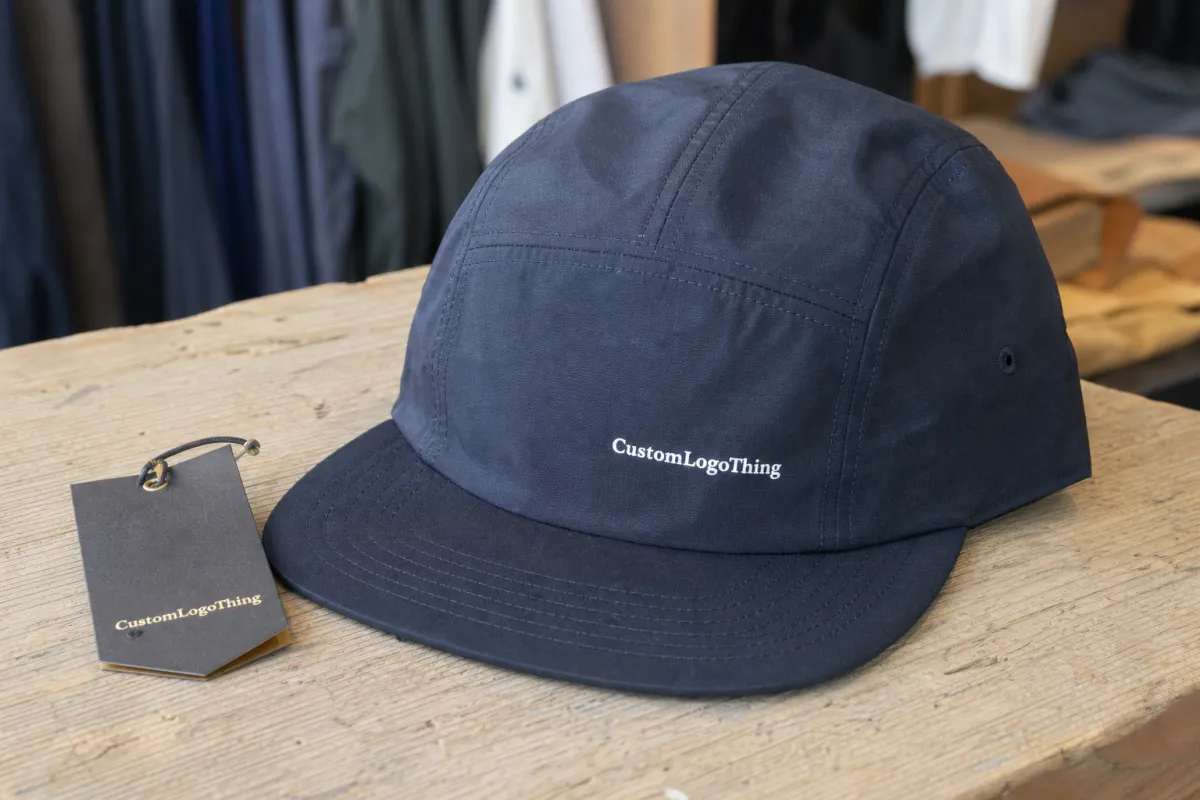
Most delays are not caused by nylon itself. They come from the decisions around it. Once the hat shape, closure, logo placement, and color are fixed, a straightforward order can move quickly because the factory is not waiting on materials to behave; it is waiting on approval.
Start the clock from the date the goods need to arrive, not from the inquiry date. For a real deadline, count backward from the receiving date, then add time for proofing, production, transit, and a buffer for customs or warehouse delays. That is the only useful way to judge Nylon Camp Hats lead time and moq.
Clean specs save more time than rushed messages. Missing details usually return later as extra cost.
For a simple order, sampling may take about 5-10 business days, and bulk production can often finish in roughly 12-20 business days after approval. Those ranges change with trim sourcing, logo complexity, factory queue length, and freight method. Add custom packaging, new hardware, or multiple decoration locations, and the calendar moves again.
The pattern is consistent: the more standardized the order, the faster it behaves. A standard shape with a single embroidery hit is easier to move than a layered retail build with custom labels, hangtags, and color-matched trim. Time is usually lost before production starts.
What to Lock in Before You Request a Spec-Based Quote
A useful quote starts with a real spec. Begin with construction: five-panel or six-panel, flat brim or curved brim, structured or unstructured crown, and the approximate fit depth. Then decide on brim length, venting, sweatband, and whether the interior needs lining. Those choices affect comfort, appearance, and cost.
Decoration should be fixed early too. Embroidery, woven patch, PVC patch, woven label, and print all behave differently on nylon. They carry different setup steps, proofing time, and durability profiles. A fine-line logo that looks simple on screen may need a patch instead of direct stitch.
The use case matters as well. Retail launch, staff uniform, teamwear, and promotional giveaway are not interchangeable. Retail often needs cleaner finishing, barcode labels, and consistent carton presentation. Promo programs can tolerate simpler construction. Uniform programs usually care most about repeatability and color control.
For a faster comparison, send these five items first:
- Quantity and required delivery date
- Hat shape, fabric color, and closure preference
- Decoration method and logo file
- Packaging or labeling requirements
- Ship-to address and any receiving restrictions
Fabric, Structure, and Decoration Choices That Change the Result
Two hats can look similar and still cost very differently. Nylon is not one material in practice. A lighter nylon usually feels softer and packs flatter, while a heavier denier holds shape better and resists crushing in transit. Water resistance, mesh backing, and lining all change the price and the final hand feel.
Structured and unstructured crowns are a real split, not a cosmetic one. Structured builds keep their shape and read cleaner for retail or staff programs. Unstructured hats feel softer and often fold more easily for shipping or event giveaways. The right choice depends on presentation, comfort, and how the hat needs to travel.
Decoration deserves its own caution. Embroidery is durable and usually the cleanest option, but dense stitching on slick nylon can pucker if the stabilizer is wrong. Woven patches handle detail better when a logo has small text or gradients. Direct print can work for certain graphics, but it needs testing for adhesion and clarity.
Typical tradeoffs look like this:
| Option | Typical MOQ | Unit Cost Range | Typical Lead Time | Best For |
|---|---|---|---|---|
| Basic embroidery on standard nylon | 100-300 pcs | $3.20-$5.80 | 2-4 weeks | Simple promo or team orders |
| Woven patch with custom trim | 300-500 pcs | $4.10-$7.25 | 3-5 weeks | Retail-style branding |
| Printed logo with special packaging | 500 pcs+ | $4.50-$8.20 | 3-6 weeks | Launches and merch programs |
Those numbers are directional, not universal. They shift with fabric grade, trim count, logo size, and whether the order needs testing or labeling. If transit performance matters, ask about carton compression and stacking behavior before production starts. For packaging test references, the ISTA organization is a useful place to understand common distribution tests. For paper inserts or certified material claims, the FSC site is the right reference for language and documentation.
MOQ and Unit Cost: The Numbers Buyers Need Up Front
MOQ is not random. It usually comes from fabric ordering, decoration setup, and how efficiently a line can run without constant changeovers. Multiple colors, several logo placements, custom closures, or unusual trim combinations all push the minimum upward.
For a straightforward nylon camp hat, a simple build may start around 100-300 pieces. Add a custom patch, special trim, or more demanding packaging, and the practical MOQ often moves toward 300-500 pieces. Orders with multiple components or heavier customization may need 500 or more to make sense.
Unit pricing usually drops once the spec stops changing. A 300-piece run might sit in the $4.10 to $7.25 range per unit, while 1,000 pieces on the same build can move closer to $2.75 to $4.90. The spread reflects labor, decoration method, fabric grade, and carton complexity.
Break the price into components:
- Setup charges cover artwork prep, stitch programming, or patch making.
- Tooling fees may apply to custom hardware, molded badges, or unusual closures.
- Sample fees often cover one-off mockups or pre-production pieces.
- Packaging upgrades raise cost per piece even if the hat construction stays the same.
Tiered pricing is the clearest way to compare options. A useful quote should show where cost drops at higher volume and which changes move MOQ upward. That gives buyers a real planning tool instead of a single number that only works until the spec changes.
Lead Time, Sampling, and Production Steps From PO to Ship
Once the purchase order is approved, the process should be orderly. Quote confirmation comes first, then artwork approval, then sampling or pre-production approval, then cutting, sewing, finishing, inspection, and packing. If any of those steps are not locked, days disappear.
Sampling is where many projects drift. A digital mockup is fast, but it does not prove how stitching will sit on nylon or how a patch edge will read in real light. A stitched sample or pre-production piece takes longer, yet it protects the rest of the schedule. If the sample is approved on the first pass, production can move.
Freight changes the real delivery date more than many buyers expect. Air can preserve a deadline, but it raises landed cost. Ocean or ground freight may be better for margin, though it needs a wider schedule. If the event date is fixed, say so early and build backward from that date.
Some teams also keep the approval trail in one place. That makes repeat orders easier and prevents disputes about which version was signed off. It also helps when a purchase team changes hands mid-program. A clean paper trail is not glamorous, but it saves money.
For planning references, some buyers also compare packaging expectations against industry standards through sources such as the Packaging Machinery Manufacturers Institute. The useful habit is the same either way: define the pack before the order ships.
Packaging, Labeling, and Freight Details That Prevent Delays
Shipping issues usually start with small omissions. Individual polybags, size stickers, barcode labels, carton counts, pallet height, and master carton dimensions all matter. "Pack normally" is not enough direction.
Carton density affects both damage risk and freight cost. Too many hats in one box can crush a brim. Too few and the unit cost rises because of air space and extra cartons. The right pack-out depends on the nylon weight, the brim shape, and whether the hat is folded, nested, or left open.
Destination also changes the timeline. Domestic dock delivery is not the same as cross-border shipment with customs paperwork, pallet rules, or appointment scheduling. If a forwarder needs carton details, send them early. If a warehouse requires split shipments, say that before packing starts.
A practical delivery checklist should include:
- Final ship-to address and contact
- Receiving hours and appointment requirements
- Carton count and pallet preference
- Label format and barcode needs
- Any split shipment or staging instructions
That is how buyers protect both pricing and schedule. A low unit cost means little if cartons sit on a dock because the receiver needs an appointment that nobody requested.
Why Reorders Get Easier When the Program Is Built Well
Reorders should be simpler than the first run. If they are not, the original program was not built well enough. The best repeat orders usually have one clear spec sheet, one approval trail, and one stable pack format.
Communication discipline matters more than polished sales language. Buyers remember whether the proof matched the delivered product, whether revisions were tracked, and whether the supplier explained tradeoffs before the deadline. They do not remember the fluff.
Retail programs depend on repeatable color and finish. Promo programs depend on cost control and reliable transit. Teamwear depends on consistent logo placement and size feel. The pressure changes, but the expectation does not: the second order should not require a new argument about what the first order already proved.
That is why stable specs matter. A fixed front patch size, a standard closure, and a known carton count keep nylon camp hats Lead Time and MOQ predictable from one purchase cycle to the next. Predictability is not flashy, yet it is what bulk buyers actually need.
Keep the artwork file, approval notes, and packing requirements together. Reorders become a lookup exercise instead of a rebuild.
Next Steps to Confirm Quantity, Budget, and Delivery
If the order is moving toward quote, send quantity, target delivery date, decoration method, and packaging rules first. Those four items turn a rough request into something a manufacturer can price with confidence. Without them, the answer is usually a guess dressed up as certainty.
Approve the mockup and sample schedule before deposit so the timeline is clear from the start. A buyer should know whether the project needs only a mockup, a stitched sample, or a full pre-production piece, and how long each step adds to the calendar.
Then compare tiered pricing and lock the spec. Ask where MOQ shifts, what pushes up the unit cost, and whether setup charges are separate or blended into the piece price. A clean comparison beats a vague promise because it shows the real cost of every change.
For bulk orders, the strongest move is still the least dramatic one: lock the build, confirm the artwork, check the packing plan, and request a production timeline tied to the actual order date. That is how buyers get a useful answer on nylon camp hats Lead Time and MOQ without wasting time on avoidable revisions.
What is the usual lead time for nylon camp hats in bulk?
Lead time depends on how final the spec is and how quickly artwork is approved. A simple build may sample in 5-10 business days and move through bulk production in about 12-20 business days after approval. Trim sourcing, decoration complexity, and freight method can extend that schedule.
What MOQ should I expect for custom nylon camp hats?
Simple runs may start around 100-300 pieces. More detailed builds, custom trims, or special packaging often move the MOQ into the 300-500 piece range, and complex programs can need 500 or more. A tiered quote makes the break points easier to compare.
What affects nylon camp hat pricing the most?
Fabric grade, decoration method, and the number of components drive most of the cost. Setup, sampling, and packaging requests can raise the total even when the hat itself looks basic. Quantity helps only when the spec stays stable.
How long does sampling take before production starts?
A basic mockup is fast, but a stitched sample or pre-production piece takes longer because it has to reflect the real build. Fast buyer approval matters as much as factory turnaround. Any post-sample artwork change usually adds time back onto the schedule.
Can nylon camp hats be rushed if the event date is fixed?
Rush orders are possible when the design is simple and the production slot is available. The tighter the deadline, the fewer the options for custom trims, extra packaging, or late artwork changes. If the date is firm, lead with that date and ask for the fastest workable plan.

