Poly Mailer Bags Small Batch Custom Order: What Buyers Should Verify
If you are comparing Poly Mailer Bags small batch custom order options, the main question is not whether the bag looks good on a mockup. It is whether the size, seal, print, and quantity will still make sense once the product is packed, stacked, and shipped. Small batches reduce the cost of getting the first run wrong.
That matters most when the product is still moving. Apparel, accessories, subscription inserts, and seasonal drops often need packaging that can be tested before the full rollout. A bag that fits in theory may behave differently once it is folded, filled, and handled on a real packing line.
The decision is usually about control. A first run should tell you whether the mailer seals cleanly, whether the artwork reads after packing, and whether the chosen spec supports fulfillment without wasting film or creating rework.
Buyers usually lose more by overordering before the packaging process is proven than by running a smaller test batch that reveals what needs to change.
Why poly mailer bags small batch custom order reduces waste at launch
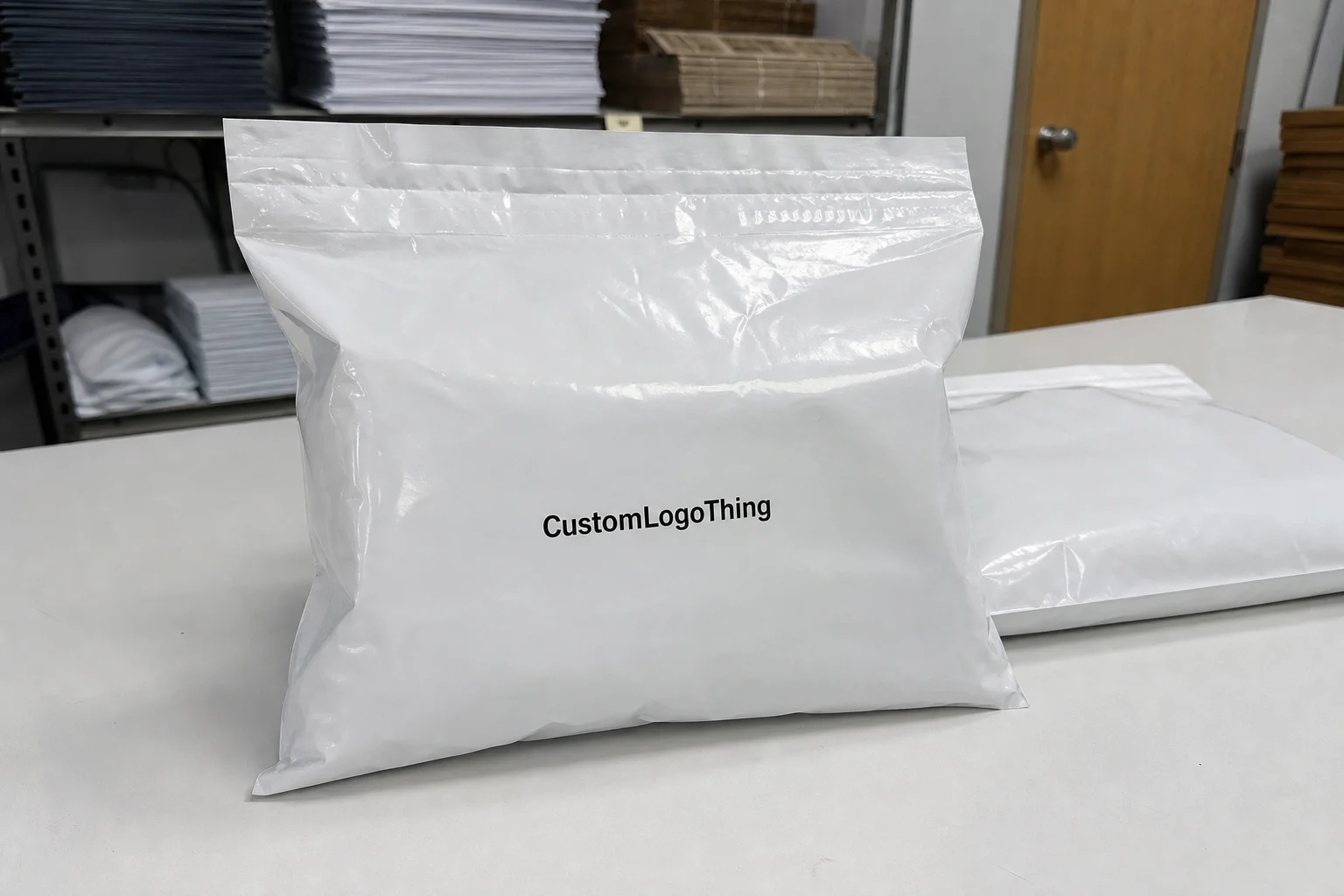
A first run tests fit, handling, and demand at the same time. If any one of those is wrong, inventory can lose value quickly. A Poly Mailer Bags small batch custom order limits that risk because it keeps the mistake small while the product is still being validated.
The costliest error is usually not the unit price. It is the pile of printed mailers that no longer match a revised logo, a changed size, or a product mix that turned out to be different from the original plan. A smaller batch turns those unknowns into data. If the bag is too short, too narrow, or too thin, you learn that before the order becomes a storage problem.
That matters because mailers expose fit issues faster than boxes do. Soft goods compress differently from rigid products. A T-shirt line may ship well in one format and need a different mailer once polybags, inserts, or return labels are added. Small batches help buyers avoid designing for the ideal case instead of the actual packing process.
There is also a cash-flow benefit that gets overlooked. A 1,000-piece run with a slightly higher unit cost can still be cheaper than a much larger run that ties up space and forces a reprint later. When the launch is uncertain, flexibility has value.
If you are sourcing multiple formats, the same logic applies to Custom Packaging Products, labels, inserts, and custom printed boxes. Start with the format that exposes problems fastest, then scale once the pack-out is stable.
Film weight, seal strength, and print finish that affect pack-out
Most poly mailers use layered film to resist puncture, tearing, and scuffing during transit. The right film needs enough body to hold its shape on the line, but not so much stiffness that it fights folding or creases badly at the seam. That balance matters more than chasing the thickest gauge available.
Film weight should match the product. Lightweight accessories, socks, and soft garments can often ship in thinner film. Folded hoodies, boxed kits, or items with corners and edges usually need a heavier structure. A mailer that works for one SKU can fail for another simply because the edges behave differently under pressure.
Seal strength deserves the same attention as the printed face. A pressure-sensitive adhesive strip should close on the first pass, hold during handling, and release from the liner cleanly. Weak adhesive slows pack-out. Excessively aggressive adhesive can cause rework if it grabs unevenly or sticks before the bag is aligned.
Print finish changes how the package reads in the warehouse and after shipment. Matte and gloss films reflect light differently, so the same design can look crisp on one stock and muddy on another. White underprint matters when the base film is dark or translucent. If the artwork includes a barcode, a return panel, or care instructions, those elements should still be legible after the bag is filled and the surface is under tension.
For buyers who want a technical baseline, tensile and elongation data can be checked against film test methods such as ASTM D882. For shipment behavior, ISTA drop, vibration, and compression methods are useful references. Those tests do not replace real pack-out samples, but they help separate a reassuring claim from a material that can survive normal transit.
Size, gauge, and artwork details to confirm before quoting
Size is more than flat width and length. The packed product, the fold, the closure overlap, and any insert all change the usable interior space. A bag that seems correct on paper can be too tight once the item is packed the way a fulfillment team actually ships it.
Gauge should be treated as an operational specification, not a marketing claim. A thicker film may improve durability, but if it is heavier than needed, the bag can become harder to fold and more expensive to ship and store. If the product has sharp corners, hard edges, or inconsistent thickness, a slightly heavier film may be justified. If the item is soft and compressible, extra thickness often adds cost without solving a real problem.
Artwork needs the same precision. Before any quote on Poly Mailer Bags small batch custom order, confirm the number of print colors, whether the design bleeds to the edge, whether white ink or an underbase is needed, and where the barcode or address block will sit. Variable data should be called out before proofing starts, not after the layout has already been approved.
Here is the information that keeps quotes accurate and revisions short:
- Finished bag size and packed-product dimensions
- Target film weight or durability level
- One-side or two-side printing
- Number of colors and any white ink requirement
- Barcode, QR code, or return-address placement
- Target quantity and desired ship date
That level of detail prevents a common error: quoting a price on a bag that cannot actually be used on the line. It also makes it easier to compare one supplier’s offer against another for package branding, custom printed boxes, and other packaging design decisions.
Pricing, MOQ, and unit cost: what drives the number
Small runs usually cost more per unit than larger runs. That is not a mystery; it is setup, press time, and handling spread across fewer pieces. If the run is very small, the fixed work becomes visible.
The main drivers are size, film thickness, print coverage, color count, and total quantity. A full-bleed design with multiple colors and white underprint will cost more than a simple one-color mark on a stock-size bag. A custom size adds another layer because film conversion and cutting are not interchangeable with stocked dimensions. Freight, cartons, and proof charges can also shift the landed cost enough to matter.
MOQ is where comparison shopping gets messy. One supplier may quote a low minimum for a standard size on a common film. Another may quote a similar minimum, but only because the print format is simple and the material is stocked. A true apples-to-apples comparison requires knowing exactly what is included in the minimum and what is treated as an add-on.
A better way to compare is by tier rather than by a single quote. That shows how much you are paying to reduce storage risk. If a 1,000-piece run costs a bit more than a 5,000-piece run, the difference can still be worth it if the product line is not stable yet.
| Quantity | Typical Use Case | Approx. Unit Price | Best Fit |
|---|---|---|---|
| 500 | Artwork test, launch sample, short promo | $0.38-$0.62 | Very early validation or limited campaign |
| 1,000 | Small launch or seasonal sell-through | $0.24-$0.40 | Balanced test run with modest setup cost |
| 5,000 | Established SKU with repeat demand | $0.14-$0.26 | Better unit economics if storage is available |
Those figures are ranges, not promises. They move with film choice, artwork complexity, and print coverage. Still, they give a realistic frame for judging a Poly Mailer Bags Small Batch Custom order against a larger replenishment buy. If a quote looks unusually low, check whether freight, cartons, or proofing are missing from the total.
Production steps, proofing, and lead time from art to shipment
The workflow should stay simple: confirm specs, approve the proof, produce, inspect, and pack. Delays usually happen when the art file is incomplete, the dimensions are still changing, or the buyer signs off before the design is ready.
For a standard small run, lead time often lands around 12 to 15 business days after proof approval. Standard materials and straightforward layouts can move faster. Full-bleed artwork, specialty finishes, custom colors, or multiple revision rounds add time. The schedule usually slips not because the press is slow, but because approvals keep changing after the job has already been queued.
Samples are worth requesting, especially when the order is intentionally small. A plain size sample can confirm fit. A printed pre-production sample can reveal issues with color density, barcode placement, edge bleed, or closure overlap. That step is especially useful if the mailer is part of a larger retail packaging system that also includes labels, inserts, or custom printed boxes.
One detail that gets ignored: the bag should be checked in the condition it will actually be used. A flat proof can hide wrinkles, but a packed sample shows how the artwork behaves once the film is stressed. Logos near the seam, small text on dark film, and fine lines around the edges all deserve a second look when the product is inside the bag.
A supplier should be able to explain who checks the dieline, who reviews print registration, and what is inspected before cartons are sealed. If the answer never gets more specific than “we’ll move ahead,” the buyer is carrying too much risk.
What a dependable supplier should check before release
A dependable supplier protects the order by checking the details that cause the most expensive mistakes. Correct dimensions, adhesive placement, print registration, ink consistency, carton counts, and label accuracy all matter. Speed helps, but verified output is what keeps the packaging from failing on the packing line.
Repeat orders should be easier than the first one. The approved artwork, final dieline, and production notes should be stored so the next run matches the first. Shade drift, trim variation, and print shifts are small on paper and obvious in a stack of finished mailers. A supplier that manages reorders well reduces that risk.
Good suppliers also push back when the requested format is not a clean fit. If the bag is too thin for the product, too small for the fold, or too expensive for the shipment profile, direct feedback is more useful than a polite yes. That kind of pushback reduces claims, returns, and waste.
If your packaging mix includes recycled or certified paper components, ask for documentation early. For paper-based materials, FSC remains a useful benchmark for responsible sourcing. Film mailers are different, but many brands use a mixed package system, so the documentation question still matters across the full kit.
The most useful supplier is not the one with the shortest reply. It is the one that can tell you which part of the order is most likely to fail and how that risk is being checked before the job leaves the press.
Next steps for samples, specs, and a small batch order
The fastest way to get an accurate quote is to send the packed-product dimensions, target quantity, artwork file, and desired ship date together. If the product is soft, note how it is folded. If it is rigid, note the corners, inserts, and any surfaces that could puncture the film. That is enough information for a real estimate instead of a placeholder.
Ask for the proof format before approving anything. A simple mockup may be enough for a basic run. A more complicated order may need a size confirmation, print proof, and a clear view of where the seam, closure strip, and barcode will sit. The approval standard should match the risk level of the order.
Reorder planning matters at this stage too. If the first batch performs well, what quantity drops the unit price enough to justify extra inventory? How many cartons fit in storage? Is the approved file being kept for the next run? Those details determine whether the next order is fast or chaotic.
If you are comparing options across Custom Packaging Products or need help sorting through spec choices, the more complete the order information is at the start, the fewer surprises there will be later. The same holds for Poly Mailer Bags Small Batch Custom order: the cleanest order is the one that matches the product, the line, and the timeline on the first pass.
Poly mailer bags Small Batch Custom order works best as a controlled launch tool, not as a guess. The right run size protects cash, the right film protects the shipment, and the right proof process protects the brand from avoidable waste.
FAQ
What is the minimum for custom small batch poly mailer bags?
MOQ depends on bag size, film type, and print complexity. Standard sizes with fewer colors usually qualify for the lowest minimums, while fully custom dimensions and full-coverage artwork raise the threshold. Ask whether the minimum is driven by print setup, film conversion, or stocked materials, because those are not the same thing.
How long does a poly mailer bags small batch custom order take?
Lead time usually begins after artwork and specs are approved. Straightforward layouts and standard materials move faster than full-bleed designs, specialty finishes, or jobs that need multiple proof revisions. If timing is tight, ask for the earliest realistic ship window before you approve the final proof.
Can I print on both sides of custom poly mailer bags?
Yes, but both-side printing adds setup complexity and can increase unit cost. The reverse side is usually best used for short brand copy, return information, or handling notes instead of dense artwork. Confirm the fold and label placement so print does not interfere with pack-out.
How do I choose the right size for my product?
Measure the product in its packed form, including inserts, tissue, or internal wrapping. Leave enough room for the closure flap and for the bag to seal without stretching the film or distorting the print. If the item has sharp corners or uneven thickness, request a sample size check before committing to the full run.
Are poly mailers strong enough for apparel and soft goods?
For folded apparel, accessories, and other soft goods, the right film weight and seam construction are usually sufficient. They are not the best choice for heavy, rigid, or sharp-edged products that can puncture the film in transit. If protection needs are higher, compare a heavier gauge, a lined mailer, or a different mailer style before ordering.


