A PVC Zipper Garment Bags small batch custom order is often the practical choice when the garment line is still moving, the size range is not settled, or the buyer needs to protect inventory without sitting on excess cartons. Small runs make it easier to test fit, compare material feel, and correct a spec before it turns into a warehouse problem.
These bags sit between product protection and presentation. They need to look clean on a hanger, open without fighting the zipper, and keep collars, hems, and trims from rubbing against rough storage surfaces. If a line already uses tissue, hang tags, inserts, or other Custom Packaging Products, the garment bag becomes part of the same presentation system rather than a separate item that happens to hold clothes.
The strongest orders start with the garment itself. Measure the piece, check the hanger drop, think about whether the bag will live on a retail floor or in storage, and then decide what the bag should do. That approach avoids the common mistake of ordering by memory or by a previous size that only looked right because the first sample was forgiving.
When a pvc zipper garment bags small batch custom order makes sense
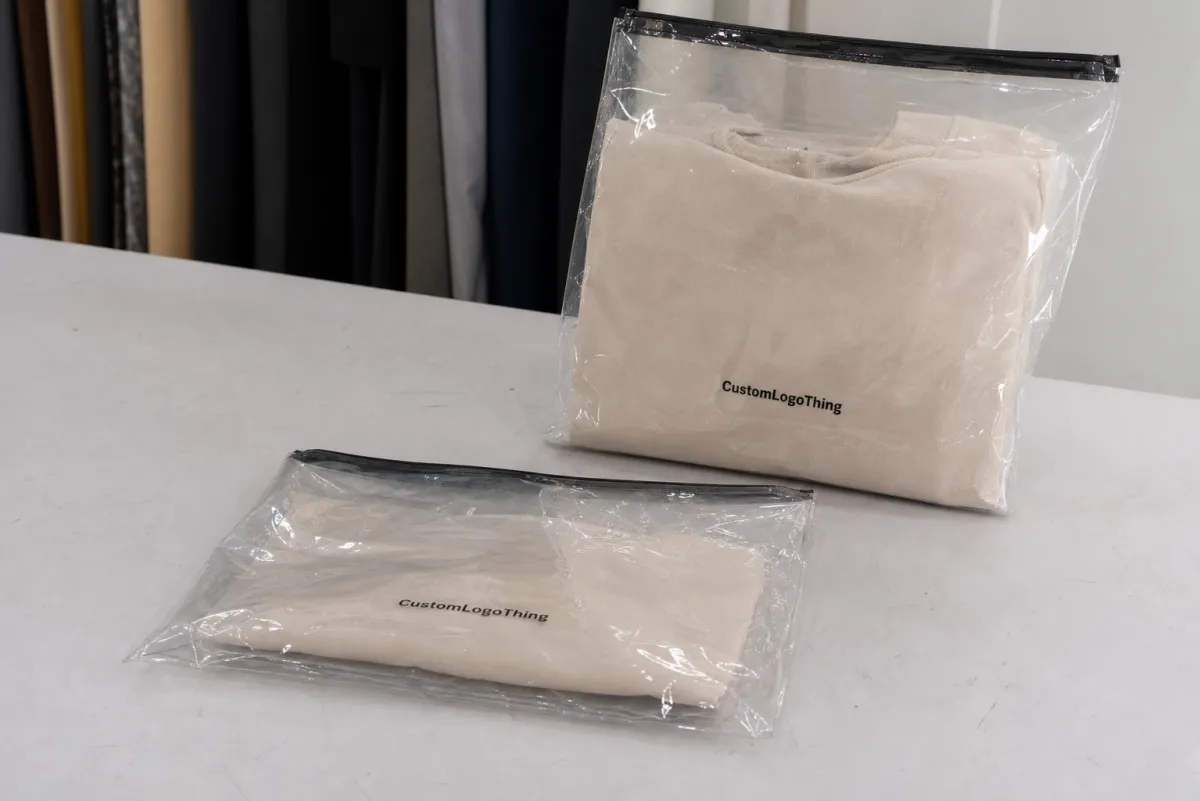
Small-batch orders work best when the use case is clear but the future is not. A buyer may be covering a limited seasonal drop, replacing damaged covers, building sample sets for sales meetings, or preparing a new uniform program that may still change. In those situations, a PVC Zipper Garment Bags small batch custom order keeps the budget tied to actual need instead of guessed volume.
The same logic applies to fashion showroom use, sample rooms, and retail back stock. Garments get tried on, moved around, re-hung, and packed again. A well-sized bag matters more than a dramatic design feature. If the piece is a gown, coat, or structured uniform, the wrong length or width shows up immediately as bunching, twisted hanging, or a zipper that strains at the top.
A short run also gives room to learn. If a bag feels too soft, the zipper pull is awkward, or the clear film looks clouded under showroom lighting, it is better to find that out with a few hundred units than with a much larger order. The best small-batch programs treat the first run as a controlled trial, not a compromise.
A short run is useful only if the spec is specific. Once the dimensions and handling needs are defined, smaller quantities can be the cleanest way to protect inventory without overbuying.
There is a practical balance here. Buyers want visibility, protection, and repeatability. They do not need decorative extras unless those extras solve a real handling issue. A clean zipper, a hanger opening that stays centered, and a bag that hangs straight often matter more than anything printed on the surface.
For planning, four questions usually answer most of the ordering problems:
- What garment is the bag protecting or displaying?
- How much extra room is needed around the shoulders or sleeves?
- Will the bag be opened repeatedly or mostly stored closed?
- Is the first order meant to confirm a format before a reorder?
Once those are clear, the rest of the spec is easier to set and much easier to quote.
Material, closure, and odor considerations
PVC looks straightforward from the outside, but the film choice changes the way the bag behaves in real use. Clearer film improves garment visibility and helps the rack look deliberate. Softer film can feel more economical, but it may wrinkle sooner or look less finished. A stiffer film creates better body and a cleaner hang, though too much stiffness can make the bag feel brittle if it is stored in a cooler room.
Odor deserves more attention than it usually gets. Garments stored in sealed cartons or tucked into closets for long stretches can pick up the smell of the packaging if the film is poorly formulated. Buyers often ask for lower-odor material for exactly that reason, especially when the bag is used on finished goods, not just on temporary samples.
Closure style affects daily handling just as much as film thickness. A top-opening zipper with a reinforced pull tab may be enough for sample garments and lighter pieces. Full-length zippers make loading easier on longer garments or wider silhouettes. If the bag will be opened often, test the zipper action against repeated use, not just the first pull.
Gusseted builds help when the garment has volume. A coat, layered uniform, or embellished dress can take up more space than a flat bag allows. Without enough depth, the zipper starts to work against the garment, and that is where wear and snagging begin. For frequent handling, a stronger zipper track and more careful seam sealing are usually worth the small added cost.
Construction details matter because they are the places where failures show up first. Heat-sealed seams should be even, the bottom should hold weight without bowing, and hanger openings need to sit centered so the bag does not twist on the rack. If the bag is likely to travel through distribution, the pull tab, seam width, and carton packing method deserve the same attention as the visible front panel.
For teams that manage several packaging formats at once, it helps to think of the garment bag as one element in a wider system. A coordinated shipper, insert, and garment cover produce a more consistent result than any one piece trying to do all the work. That consistency matters in retail packaging, where presentation and handling need to agree.
For buyers who want to think beyond shelf use, the ISTA test methods are a sensible reference point. Not every order needs formal testing, but the habits behind those methods are useful: think about pressure, stacking, vibration, and repeated handling before the bags ship.
Size, thickness, and finishing details to lock down
Size is where many custom jobs go wrong. A garment bag has to fit the actual piece, not the idealized version in a line sheet. Dresses, coats, uniforms, sample sets, and folded inventory all ask for different dimensions. If the bag is too short, hems bunch at the bottom. If it is too wide, the garment slides around and the whole presentation loses shape.
Common starting points include 24 x 40 inches for short dresses or shirts, 24 x 48 inches for longer pieces, and 24 x 60 inches or larger for coats and gowns. Those are starting points, not fixed rules. Wide shoulders, heavy embellishment, or thick sleeves can call for extra width or depth. A sample garment is often the fastest way to confirm the fit.
Thickness controls feel and durability. A thinner PVC film can be fine for light storage, but it may curl or feel flimsy on display. A heavier gauge adds body and scratch protection, though it also raises cost and can reduce flexibility. For many Small-Batch Custom Orders, the useful range is often 0.10 mm to 0.20 mm, with the final choice based on garment weight, display expectations, and how often the bag is handled.
Finishing details are easy to overlook until they become complaints. Hanger cutouts should not stretch too quickly. Zipper placement should leave enough top margin to open without catching the garment. Reinforced seams help a great deal if the bag is reused in a showroom, sample room, or retail environment. If the bags may sit in storage for months, anti-yellowing behavior is worth asking about because discoloration shows up before the garment does.
A useful spec sheet usually includes:
- Finished width, height, and gusset depth
- PVC thickness target
- Zipper style and zipper length
- Hanger opening or hanging hole position
- Print area, if branding is needed
- Carton pack count and master carton requirements
Brands with multiple SKUs often standardize bag sizes where they can. That simplifies reorder planning and makes the presentation more consistent across a line, especially if the same packaging program also uses paper inserts or coordinated retail packaging elements.
Cost, MOQ, and the quote inputs that change everything
Price depends on concrete inputs: size, film thickness, zipper hardware, print coverage, packing method, and freight. A plain clear bag with a standard zipper is much easier to quote than a custom-sized bag with reinforced seams, a printed logo, and special carton labeling. That is not a problem; it simply means the order needs clean information up front.
MOQ usually moves with complexity. A standard size and common construction can support a lower minimum than a special-size bag with printing or unusual finishing. If the build requires a custom film width or a more complicated zipper layout, setup time rises and the minimum often rises with it. For a PVC Zipper Garment Bags small batch custom order, the most favorable minimum usually comes from staying close to a standard structure.
Typical short-run ranges often fall somewhere like this:
| Option | Typical MOQ | Typical unit range | Best fit |
|---|---|---|---|
| Standard clear bag, 0.10-0.12 mm | 500-1,000 pcs | $0.80-$1.40 | Light garments, samples, showroom use |
| Heavier bag, 0.15-0.18 mm with reinforced seams | 500-1,000 pcs | $1.20-$2.10 | Coats, uniforms, repeated handling |
| Branded bag with one-color print | 1,000-3,000 pcs | $1.40-$2.60 | Retail presentation, brand programs, reorders |
| Special size or gusseted custom build | 1,000+ pcs | Quote by spec | Unusual garment dimensions or higher protection needs |
These figures are working ranges, not promises. Freight, carton count, and packing density can move the final number quickly. Large bags occupy more volume than buyers expect, and that changes shipping cost even when the material weight is modest. If the order ships to multiple locations, make sure the quote includes the destinations and any carton labeling rules.
If the goal is to keep cost sensible without weakening the bag, the best savings usually come from simple moves:
- Standardize dimensions across related garment types
- Keep print coverage limited to one area or one color
- Choose thickness based on the garment, not on habit
- Match the first order to available material widths and common zipper lengths
A useful quote request should include size, quantity, thickness target, zipper style, print requirements, packing method, ship-to location, and delivery date. A photo of the garment or an existing bag can save a lot of back-and-forth. For teams comparing sourcing routes or checking broader Wholesale Programs, a complete spec makes the comparison much cleaner.
The cheapest bag is not always the least expensive order. If the film tears, clouds, or sags, the hidden cost shows up in repacking, returns, or a presentation that looks unfinished. That risk is especially real in retail packaging, where appearance and protection both count.
Production flow, timeline, and QC checks
The front end of the process should feel orderly. Spec review comes first, artwork review follows if printing is involved, and then the measurements are confirmed before sampling or production is released. On a pvc zipper garment bags small batch custom order, that early attention matters because small clarifications save much larger delays later.
Sampling is valuable any time the fit or handling is not already proven. A prototype shows whether the film feels too soft, whether the zipper runs cleanly, and whether the garment sits correctly inside the bag. If the product is expensive, delicate, or tied to a launch date, sample approval is usually worth the extra step.
The production sequence is fairly predictable: material prep, cutting, sealing, zipper installation, inspection, packing, and shipment scheduling. If branding is part of the order, the print approval happens before the lot is released, not after the bags are already moving through the line. That is one of those points that sounds obvious until a rushed order turns into rework.
Timeline depends on real variables: sample approval speed, artwork revisions, material sourcing, seasonal workload, and shipping distance. A simple standard order can move quickly. A printed order with unusual dimensions may need more review time, especially if the material width or zipper length is not standard. Buyers planning around a launch should leave room for one round of clarification, because even good specs usually need a small adjustment somewhere.
QC on these bags should be practical, not ceremonial. Check seam consistency, zipper alignment, hanger cutout position, film clarity, and carton count. If the bag is intended for frequent use, pull the zipper several times and inspect the top edge after folding and reopening. If the carton will travel through a distribution center, think about how the bags are stacked and whether the pack density will distort the shape before they reach the floor.
After approval, the goal is simple: the delivered bag should match the signed-off sample, hang straight, close cleanly, and keep the garment in a condition that does not require immediate repacking. That is the baseline a serious packaging program should meet.
What short-run buyers need from a package partner
Short-run buyers usually come back for consistency. If the first batch is clear, centered, and dimensionally stable, the reorder becomes much easier to place. That matters because a tiny shift in size or zipper behavior is more visible when the volume is small and the bags are being handled often.
Technical guidance matters here. A good partner helps balance cost, shelf presentation, storage, and shipping durability without overbuilding the bag. That kind of judgment can prevent the most common waste points: choosing too much film thickness, specifying a zipper that is awkward to use, or ordering a size that looked fine on paper but does not fit once the hanger is inside.
Buyers do not only need a supplier. They need someone who understands how the bag behaves on the floor, in a closet, and in a carton. How the seam holds after folding. How the clear film looks under showroom lights. How much space the packed bags take up once they are boxed. Those details are not flashy, but they are where packaging becomes dependable.
That is also where coordinated branding helps. If the garment bag is part of a wider launch, the visual language should stay aligned across boxes, inserts, and covers. The point is not to make every component identical. The point is to make the whole package feel like it belongs together.
For brands scaling up, the first short run often becomes the model for the next production round. If the bag performs well, the reorder is straightforward. If the spec needs a tweak, that adjustment is easier because the actual numbers are already known. Small-batch work earns its keep by turning guesswork into data.
What to send for a faster custom quote
A faster quote starts with clear basics: garment type, finished dimensions, quantity, storage conditions, and whether the bag is for retail display, warehouse protection, or sample organization. Those five items answer most of the core questions before anyone has to infer the rest.
A reference photo helps a lot. So does a current bag, a sketch with measurements, or an image of the garment on its hanger. Visual context reduces the chance of a size miss and speeds up the spec check. That is especially useful on a pvc zipper garment bags small batch custom order, where the buyer usually wants the first shipment to be right rather than merely close.
Before requesting pricing, confirm these points:
- Minimum order comfort level
- Thickness preference
- Zipper style and opening layout
- Print needs and logo placement
- Whether the first run must match future reorders
If the team is comparing packaging options across several product lines, keep the request complete. Correct dimensions and the right zipper layout are the quickest way to avoid extra revisions. Once the spec is locked, compare price breaks, confirm lead time, and move the order into production with fewer surprises.
Frequently Asked Questions
What is the MOQ for a pvc zipper garment bags small batch custom order?
MOQ depends on bag size, film thickness, zipper style, and whether the build is standard or fully custom. A common size with simple construction usually has a lower minimum than a special-size bag with printing or extra reinforcement. The fastest way to get an exact MOQ is to send dimensions, quantity, and any finishing needs together.
How do I choose the right thickness for short-run PVC garment bags?
Use garment weight and storage conditions as the main guide. Lightweight pieces need less stiffness, while coats, uniforms, and repeated-use bags usually need more body. Thicker film improves structure and perceived quality, but it also raises cost and can reduce flexibility. If you are unsure, ask for a recommendation based on the garment sample or an existing bag.
What details do you need to quote custom PVC zipper garment bags accurately?
Provide finished dimensions, quantity, thickness target, zipper type, hanger opening needs, and any print or branding details. Include ship-to location and target delivery date so freight and lead time can be included. A reference photo or existing sample removes a lot of guesswork from the review.
How long does production usually take after approval?
Timing depends on whether the order needs a sample step, artwork changes, or special material sourcing. Short runs with clear specs can move faster than orders that need revisions or unusual finishing. Shipping time is separate from production time, so both should be confirmed before the order is released.
Are PVC zipper garment bags suitable for repeated retail use?
Yes, if the bag uses the right film thickness, reinforced seams, and a zipper that holds up to repeated opening. Retail use usually benefits from a clear finish and a size that keeps the garment smooth without compressing it. For heavier garments or frequent handling, a sturdier gauge and stronger seam construction are usually worth the extra cost.
