Custom PVC Zipper Garment Bags Bulk Order for Brands
For apparel teams, uniform programs, and retail buyers, a custom pvc zipper garment Bags Bulk Order is not really about a bag. It is about keeping inventory visible, clean, and easy to handle without creating extra work for the warehouse. The wrong size compresses shoulders. A weak zipper slows packing. Thin film that looks fine in a sample can turn cloudy, crease hard, or split at the seam once it starts moving through daily use.
That is why garment bags get serious fast. Buyers usually start with unit price, then discover the real issue is fit, consistency, and how the bag behaves after the first hundred pulls. A good spec protects the garment, speeds identification on the rail, and keeps reorders predictable. A bad one just becomes another small operational problem that shows up every day.
For teams comparing Wholesale Programs, the decision usually comes down to MOQ, lead time, and whether the supplier can repeat the same construction without drift. That matters more than polished sales language. Packaging has to function after the purchase order is signed.
Why Bulk Buyers Switch to Custom PVC Garment Bags
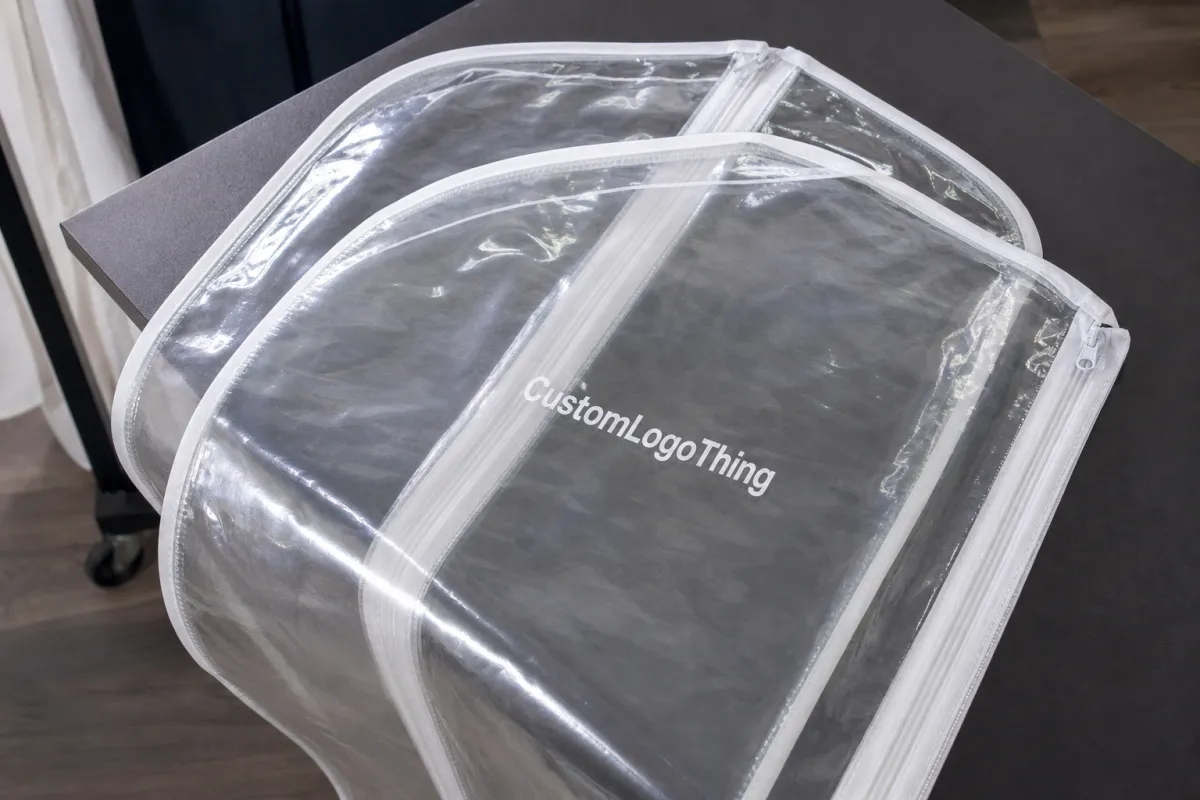
A Clear Garment Bag solves a few different problems at once. It keeps dust off pressed garments, makes SKU identification faster, and lets staff handle items without opening every cover on the rail. That is useful in retail back rooms, uniform issue systems, showroom storage, and any operation where product has to stay visible.
There is also a presentation benefit. Compared with loose poly covers, PVC bags feel more intentional. They hold shape better, especially on longer garments, and they make the inventory look organized instead of temporary. For stores that need product visibility and for brands that want cleaner presentation without moving to rigid boxes, the format makes sense.
The catch is that garment bags are easy to under-spec. One narrow width can flatten the shoulders of a blazer. One zipper that catches can slow every pack-out. One film that is too thin can crease badly and make the item look tired before it even reaches the customer. In practice, a custom PVC Zipper Garment Bags bulk order is usually won or lost on construction details, not on the first quote.
A garment bag that slows packing or varies from batch to batch is not saving money. It is adding friction in a place that should stay boring.
That is why procurement teams often evaluate these bags the same way they evaluate other product packaging pieces: not by sticker price alone, but by whether the spec supports the actual workflow. If the bag is part of a larger packaging system, it should sit comfortably beside Custom Packaging Products without forcing the rest of the process to bend around it.
What Custom PVC Zipper Garment Bags Include
A standard build usually includes a transparent PVC body, a zipper closure, and a hanger opening or top cutout. After that, the spec gets more useful. Buyers can add logo printing, size marks, care instructions, gusset depth, venting, handle cutouts, and reinforcement where the bag takes repeated stress. Those details sound small until a bag starts splitting at the seam or rubbing against the garment inside.
Clear PVC is chosen when visibility matters most. That is common for retail display, warehouse storage, and uniform programs where staff need to identify garments quickly. Semi-clear film softens the look a little. Fully transparent bags maximize visibility, which helps if the bag is doing inventory work as much as protection work.
Most bulk buyers use these bags for:
- Suits and blazers that need shoulder protection
- Dresses and formalwear that benefit from full-length visibility
- Coats and outerwear that need dust protection during storage
- Uniform programs with repetitive issue and return cycles
- Seasonal or travel storage where quick identification matters
There is a practical point that gets ignored too often: the bag should fit the garment, not just cover it. If the hanger hole is too tight, the top distorts. If the zipper runs too close to the hem, the garment catches every time it moves. If the seam structure is weak, the bag may survive sampling but fail once it starts being used on a rail or in transit.
Material, Size, and Closure Specifications to Lock In
Film thickness is usually the first choice that affects both cost and performance. Lighter PVC folds smaller, ships a bit more efficiently, and keeps the unit price lower. Thicker film adds body, resists creasing better, and feels more substantial in hand. For bulk programs, that tradeoff matters because the bag has to hold up through handling, not just survive the sample stage.
Size is just as important. A short jacket, a long coat, a formal dress, and an extended-length garment should not be forced into one generic dimension unless the range is very narrow. Measure the widest point of the garment, then add enough width to keep the shoulders from pressing against the side seams and enough length to keep hems clear of the zipper line. Over-standardizing usually creates one of two problems: wasted material or a bag that squeezes the product.
The quote request should spell out the basics so no one fills in missing information with assumptions:
- Film thickness in mm
- Finished width and length
- Zipper color and grade
- Hanger hole shape and placement
- Print location, ink count, and logo size
- Seam style and reinforcement points
That level of detail also helps if the garment bag is one piece in a larger packaging program. If your team already buys folding cartons, inserts, or mailers, keeping the spec style consistent makes sourcing easier later. Buyers with sustainability requirements can also ask how the outer cartons or inserts align with FSC sourcing; the official resource at fsc.org is a useful reference when paper components are part of the pack-out.
If the garment touches the zipper every time it moves, the size is wrong. That is not a material problem. It is a spec problem.
One more caveat: PVC is not a miracle material. In colder storage it can feel stiffer, and in poor sunlight conditions low-grade film can yellow or look tired faster than buyers expect. If the bags will be used near windows, in hot trucks, or in long-term storage, ask about film quality before you focus on print.
Custom PVC Zipper Garment Bags Bulk Order Pricing and MOQ
Price for a custom pvc zipper garment Bags Bulk Order is shaped by a few variables: thickness, dimensions, zipper grade, print coverage, and total quantity. Buyers often try to compare suppliers with a single unit number. That usually hides the real story. Tiered pricing gives a better picture of how cost changes as volume rises and where the order starts becoming efficient.
MOQ depends on the construction, but many straightforward programs sit around 500 to 1,000 units. Printed bags, oversized bags, or unusually shaped cuts can push the minimum higher because setup time increases. If the bags will be reordered, ask for pricing at 1,000, 3,000, and 5,000 units. That makes it easier to see whether the savings are meaningful or just cosmetic.
| Spec | Typical Use | Approx. Bulk Price Range | Buyer Notes |
|---|---|---|---|
| 0.12-0.15 mm PVC | Light garments, seasonal storage | $0.38-$0.52 per unit | Lower cost, lighter feel, less structure |
| 0.18-0.22 mm PVC | Uniforms, dresses, mixed apparel programs | $0.52-$0.78 per unit | Common middle ground for durability and presentation |
| 0.25-0.30 mm PVC | Coats, premium retail, repeated handling | $0.78-$1.20 per unit | Better body and abrasion resistance, higher freight impact |
These numbers are directional, not universal. Freight, artwork, sample charges, and packing method can move the landed cost in a real way. A bag that looks cheaper per unit can become expensive if it breaks down in use, creates returns friction, or forces rework. Buyers who source branded packaging already know that the lowest quote is not always the lowest total cost.
For broader packaging context and general education on materials and pack-out logic, packaging.org is a useful benchmark. It helps keep supplier claims grounded in actual packaging practice instead of marketing noise.
Production Process and Timeline for Bulk Orders
Most projects move through the same sequence: inquiry, spec confirmation, sample approval, production, quality check, packing, and shipment. The steps are simple. The delays usually come from unclear dimensions, artwork changes, or sample revisions that arrive after the line has already been scheduled.
Buyers can shorten lead time by submitting finished artwork, final garment measurements, zipper color preference, and target quantity up front. When those details are missing, the supplier has to stop and ask for clarification. That might sound minor, but it compounds quickly on repeat programs where every week matters.
Sample development and mass production do not run on the same clock. A sample may move in a few days, while a bulk run often needs 12-15 business days after proof approval. Larger or more customized orders can take longer. Transit time sits on top of that. If the bags are shipping in export cartons, it is worth checking pack-out expectations against recognized testing guidance such as ISTA.
Good status updates matter as much as speed. Buyers should expect checkpoints for artwork signoff, sample approval, production start, quality review, and ship-ready confirmation. That keeps the order from drifting and helps the garment bags line up with the rest of the packaging calendar, especially when they are being packed alongside inserts or Custom Printed Boxes in a larger launch.
One practical detail that gets overlooked: thickness affects shipping weight and carton count. A heavier film gives the bag more structure, but it also changes how much fits in a carton. That can shift freight costs enough to matter on a program with tight margin targets. Small changes become real costs when the order is large enough.
How to Evaluate a Supplier Before Reordering
A first quote is useful. A repeatable second quote is better. For garment bags, supplier evaluation should focus on consistency: material thickness, zipper smoothness, seam finishing, print accuracy, and the ability to match prior production runs without drift. If a supplier cannot hold those variables steady, the low price is doing too much work.
That repeatability matters because garment bags are not a one-off purchase. The next order has to fit the same rail, the same hanger, and the same packing process. Even a small change in width or stiffness can create problems in the warehouse. Buyers who manage package branding across multiple SKU families will recognize the pattern quickly. Packaging becomes a system, and systems dislike surprises.
Ask for more than a sample photo. Ask for reference samples, prior-run photos, and a clear statement on what can be replicated on reorder. If the line needs alternate sizes for coats, dresses, or uniforms, confirm whether the supplier can revise dimensions without rebuilding the whole spec from scratch.
QC checks should not be vague. On a useful bulk run, look for zipper travel, seam strength, print alignment, hanger hole tolerance, and carton counts that match the purchase order. If the bag has printed branding, check that the ink sits where it should and does not interfere with visibility or zipper movement. If the run is folded for packing, confirm that the fold pattern does not leave permanent creases in the product.
Supplier reliability is not a branding claim. It is a cost-control measure. Fewer defects, fewer reworks, fewer rushed replacements. That is what protects margin on a custom pvc zipper garment Bags Bulk Order.
FAQ
What is the minimum order for custom PVC zipper garment bags in bulk?
MOQ depends on size, film thickness, and print complexity, but many bulk programs start around 500 to 1,000 units when the spec is straightforward. Ask for tiered pricing at several volume breaks so you can see how the unit cost changes as the order grows.
How do I choose the right size for custom PVC zipper garment bags?
Measure the garment at its widest point and add enough width and length to avoid compression, wrinkling, or zipper strain. Use different sizes for coats, dresses, and uniforms instead of forcing one universal size across every product type.
Can custom PVC zipper garment bags be printed with a logo?
Yes, most bulk orders can include logo printing, size marks, or care information, depending on the film surface and print method. Keep artwork simple and confirm placement early so the print does not interfere with visibility or closure.
How long does production usually take for a bulk order?
Lead time depends on sample approval, order size, and customization level, so the timeline should be confirmed after specs are finalized. Faster schedules usually happen when artwork, dimensions, and zipper details are approved before production begins.
What should be included in a quote request for custom PVC zipper garment bags bulk order?
Include size, quantity, material thickness, zipper preference, print needs, and delivery destination so the quote reflects production and freight costs. A reference photo or existing sample makes the quote more accurate and reduces back-and-forth during sampling.

