PVC Zipper Garment Bags Unit Cost Breakdown for Buyers
A pvc zipper garment Bags Unit Cost Breakdown is useful only when it shows what actually changes the quote. In most cases, price follows size, film thickness, zipper spec, print coverage, packing method, and the amount of handling required before the bags are carton-packed.
The common sourcing mistake is comparing “PVC garment bag” quotes as if they were the same product. They usually are not. One supplier may be pricing a thin clear cover with a basic zipper and loose bulk packing, while another is quoting heavier film, cleaner sealing, and tighter carton loading. That gap is specification, not mystery.
The hidden cost driver buyers miss on PVC zipper garment bags
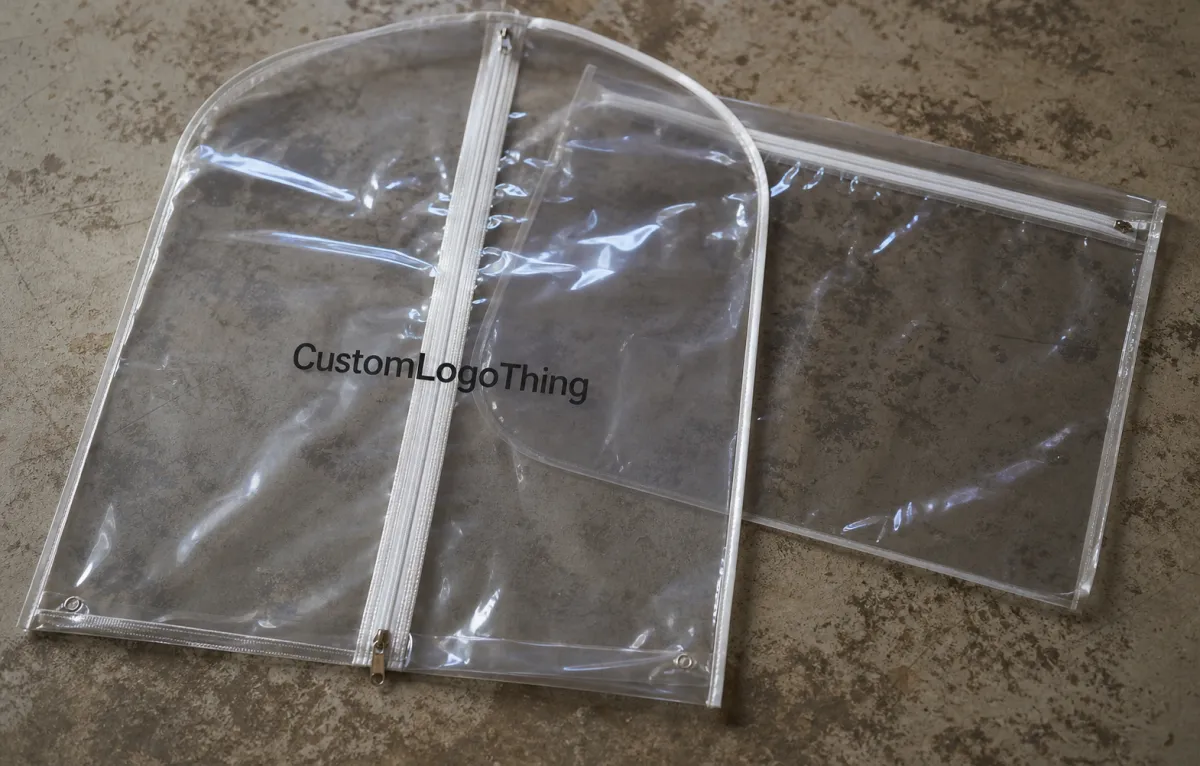
Most buyers assume the zipper is the expensive part. Usually, it is not. The biggest cost driver is the film spec, finished size, and how much handling the bag needs before it reaches cartons. A tall coat bag with a hanger opening, reinforced edges, and a smoother slider requires more production time than a basic short cover, even if the bags look similar in photos.
Clear PVC also exposes defects more easily than frosted film. Scratches, dust spots, and uneven sealing stand out immediately, so higher-appearance orders often require more sorting and rejection during production. That improves presentation, but it also raises the unit price.
Think in terms of specification rather than decoration. A better zipper helps the end user, but heavier film and cleaner sealing usually move the price more. If you want a quote that is actually comparable, ask what is standard, what is optional, and what each upgrade does to the unit cost and MOQ.
What a standard PVC zipper garment bag order includes
A standard order usually includes clear or frosted PVC, a zipper closure, hanger access, and a finished size matched to the garment. Common formats cover shirts, suits, dresses, and longer outerwear. The bag can be front-opening or side-opening, single-zipper or double-zipper, plain or printed. Those are meaningful choices because they change how the bag is built and packed.
Use case matters. Retail display bags need better clarity and cleaner edges. Travel storage bags need easier access and enough tear resistance to survive repeated use. Factory packing bags usually prioritize consistency, stackability, and low cost per piece. A supplier who does not ask how the bag will be used is guessing, and guessing is how buyers end up with soft, floppy, or overbuilt bags.
What is usually excluded from the first quote? Extra labels, printed inserts, upgraded hang tabs, carton dividers, desiccants, and stronger export cartons. If any of those matter, spell them out early. Otherwise the first quote will look low and the final order will not.
There is also a difference between a storage bag and a presentation bag. Storage buyers usually care about thickness, zipper function, and dust protection. Presentation buyers care about clarity, straight edges, and how the bag hangs on a rack. That split is where many sourcing calls go wrong.
Material, gauge, and zipper specs that change performance
Film thickness is the first spec lever. Thinner PVC lowers cost, but it also reduces body and resistance to handling. For light shirts or short-term storage, that may be fine. For coats, repeated retail use, or longer transit, weak film becomes a problem quickly.
Zipper quality matters too. A smoother slider and stronger teeth improve daily use, but they raise the cost. The same applies to seam strength and edge finishing. A neat bag is not just a visual detail; it affects whether seams split or zippers snag after use. Anti-static treatment, odor control, and other performance add-ons are useful, but they should be treated as optional upgrades, not defaults.
Virgin PVC, recycled content, and additive packages all affect the quote. Cleaner resin usually gives better transparency and fewer surface marks. Recycled content may lower the price, but it can also create stronger odor, less consistency, or a stiffer feel. If the bags are going into retail packaging, that tradeoff should be clear before you compare suppliers.
- Exact size: width, height, and gusset depth
- Opening style: front, side, or full-length zipper
- Film spec: thickness, clarity, frosted finish, anti-static treatment
- Zipper spec: slider type, tooth strength, color, pull design
- Bag orientation: hanger hole location and garment access point
Send those details up front. A quote without them is only a rough estimate with better formatting.
PVC Zipper Garment Bags Unit Cost Breakdown: what drives the price
Here is the practical version of a pvc zipper garment Bags Unit Cost Breakdown: raw PVC film, zipper hardware, cutting and sealing labor, print work if needed, packing labor, and freight preparation. For standard runs, raw material usually takes the largest share. Labor climbs quickly on smaller orders because setup and handling are spread over fewer pieces.
That is why bulk pricing improves at higher volume. The factory buys film in larger lots, the line runs longer without stopping, and packing becomes more efficient. The quote drops because the same setup work is amortized over more units. Tooling fees are usually minor for straight PVC Garment Bags unless the structure changes enough to need custom dies or special shapes.
Print coverage is another quiet cost driver. A small logo near the top seam is one thing. Full-panel branding, repeated logos, or multi-color artwork is another. More ink, more alignment work, and more inspection time all show up in the final number. If the bag only needs identification, keep the print simple.
Packaging also matters. Folded bulk packing is cheaper, but it can leave pressure marks. Retail-friendly packing with inserts or cleaner carton loading costs more, but it reduces damage and helps the bags arrive in better shape. Buyers often compare only the item price and ignore the packing spec, which is how a “cheap” order becomes expensive after arrival.
The lowest quote is often the one that forgot the zipper upgrade, the packing requirement, or the print cost. That is not savings; it is a delayed surprise.
The table below gives buyer-friendly ranges. These are typical factory-side numbers for a clean spec sheet, not a promise for every shipment, because size, print coverage, zipper grade, and packing all change the final figure.
| Spec | Typical MOQ | Unit cost range | Best fit |
|---|---|---|---|
| Clear PVC, 0.12 mm, plain zipper | 3,000-5,000 pcs | $0.42-$0.68 | Basic storage, factory packing, low decoration |
| Clear or frosted PVC, 0.14-0.16 mm, better zipper | 3,000-5,000 pcs | $0.58-$0.92 | Retail display, travel storage, repeat use |
| Printed bag, 0.16 mm, custom branding | 5,000 pcs+ | $0.82-$1.25 | Brand presentation, fashion retail, premium packaging |
| Heavy-duty bag, 0.18-0.20 mm, stronger zipper | 5,000-10,000 pcs | $1.05-$1.60 | Coats, outerwear, long-distance shipping |
That spread shows the real story: size, thickness, and print coverage move the price more than a cosmetic zipper upgrade. If the quote is based on different specs, the lower number is not a better price. It is a different product.
Production steps, lead time, and sample approval
A clean order usually moves through seven steps: quote review, spec confirmation, artwork check, sample making, approval, mass production, inspection, and carton loading. Simple clear bags move faster. Printed or heavily customized versions need more back-and-forth, and every revision adds time.
The delays are usually practical ones: wrong measurements, slow artwork approval, a sample that needs a zipper change, or a sealing edge that behaves differently in production than it looked in the file. None of that is dramatic, but all of it affects the schedule.
Typical timing is often 5-10 business days for a sample, then roughly 12-20 business days for bulk production after approval, depending on quantity and complexity. Add shipping time separately. If the order needs new print plates, special cartons, or extra packing steps, budget a little more. Buyers who need a rush job should say so early.
Sample approval matters because it catches fit issues before the full run starts. For a transactional order, that is the difference between a clean run and rework. If your program has compliance requirements, ask for paperwork before production starts. Material declarations, phthalate statements, and packing specs should be documented in writing, especially for retail channels.
Quality checks, packing methods, and shipping protection
A low unit price is useless if the bags arrive damaged or hard to use. The important checks are zipper smoothness, seam integrity, clarity consistency, edge trimming, and dimensional tolerance. If the bag is meant for retail racks, the visual finish matters. If it is meant for storage or export, seam strength and packing protection matter more.
Packing method affects both damage rate and landed cost. Folded bulk packing is cheap, but it can create creases or pressure marks. Carton inserts add protection and raise cost a bit. Moisture protection matters on longer ocean moves, especially if cartons sit in humid warehouses. Shipping protection should be part of the quote, not an afterthought.
If you are planning transit testing or stricter export packing, the methods used by ISTA are useful references. For cartons that need paper-based or recycled-content sourcing, FSC certification can matter on the packaging side, even if the bag itself is PVC.
For inspection, ask whether the factory records AQL levels, carton counts, and defect photos. That is a boring request, which is exactly why it works. A supplier that can show repeatable checks is usually safer than one that only says the goods are “good quality.”
Cheap bags that deform in transit are not cheap. They are just expensive in a later invoice.
What to ask before you place a supplier order
A serious supplier should answer pricing with numbers, not vague promises. Ask what is included in the unit price, what triggers a surcharge, and what MOQ applies to each spec. Then ask the obvious follow-up: does the quote change if thickness moves from 0.12 mm to 0.16 mm, or if the zipper changes from standard to upgraded?
Response quality matters. If a supplier can quote cleanly on size, gauge, zipper type, print colors, and packing, they usually understand production better too. If they cannot separate those items, the final order is likely to carry surprises.
Also ask how they handle reorders. A good factory should keep the confirmed spec sheet, zipper choice, and carton count on file so the next run does not start from zero. That matters because reorders are where sloppy communication turns into size drift, mismatched film, and a quote that no longer resembles the first one.
- What is included in the quoted unit cost?
- What setup charges apply to print or packaging changes?
- Is there a MOQ difference for plain versus printed bags?
- Are cartons, inserts, or moisture protection included?
- Can you quote EXW, FOB, and landed cost separately?
Compare vendors using the same spec sheet. If one quote is based on a 0.12 mm bag and another on a 0.16 mm bag, the lower number is not better. It is a different product.
Next steps for a clean quote and faster reorder
If you want a useful quote, send the full spec in one shot: size, thickness, zipper style, print colors, quantity, packing method, destination, and target timing. That is enough for a supplier to build a real pvc zipper garment bags Unit Cost Breakdown instead of sending back a guess.
For retail display or premium storage, ask for a sample or pre-production proof before the run starts. It is cheaper to approve a zipper or sealing change once than to discover it after thousands of bags are packed. For reorders, keep the confirmed spec sheet, carton count, and print file together so the next run stays consistent.
Three things keep a quote honest: locked dimensions, a clear material spec, and a packing standard that does not change midstream. Everything else should be treated as an option, not a surprise.
- Confirm exact dimensions and bag style.
- Lock thickness, zipper, and print details.
- Set packing requirements and carton count.
- Ask for sample timing and bulk lead time separately.
- Request factory price plus freight so you can compare landed cost.
What affects pvc zipper garment bags unit cost the most?
Bag size, PVC thickness, and zipper style usually matter more than small design changes. Print coverage, custom packing, and low order quantity can raise the unit price quickly. Shipping method also changes landed cost, so compare factory price and freight together.
What MOQ should I expect for custom PVC zipper garment bags?
MOQ depends on size, thickness, and whether the bag is printed or plain. Simple clear bags often run at lower quantities than fully custom versions. Ask for MOQ by spec, not a generic number, because one small change can shift the threshold.
How long does production usually take for PVC zipper garment bags?
Sampling is usually faster than bulk production, but approval delays can stretch the schedule. Plain orders move quicker than printed or highly customized orders. A supplier should give you separate timing for sample, production, inspection, and shipping.
Can I reduce the unit cost without making the bag look cheap?
Yes. The easiest levers are size optimization, sensible thickness selection, and simpler printing. Standard zipper styles and efficient carton packing can trim cost without hurting appearance. Avoid overbuilding the bag; extra material only helps when the product needs it.
What details do you need for an accurate quote?
Send exact dimensions, thickness, zipper type, print colors, and quantity. Include packing requirements, shipping destination, and whether you need samples first. The more complete the spec sheet, the less time you waste on back-and-forth quoting.

