Order Zipper Packaging Bags Bulk Custom Logo Without Waste
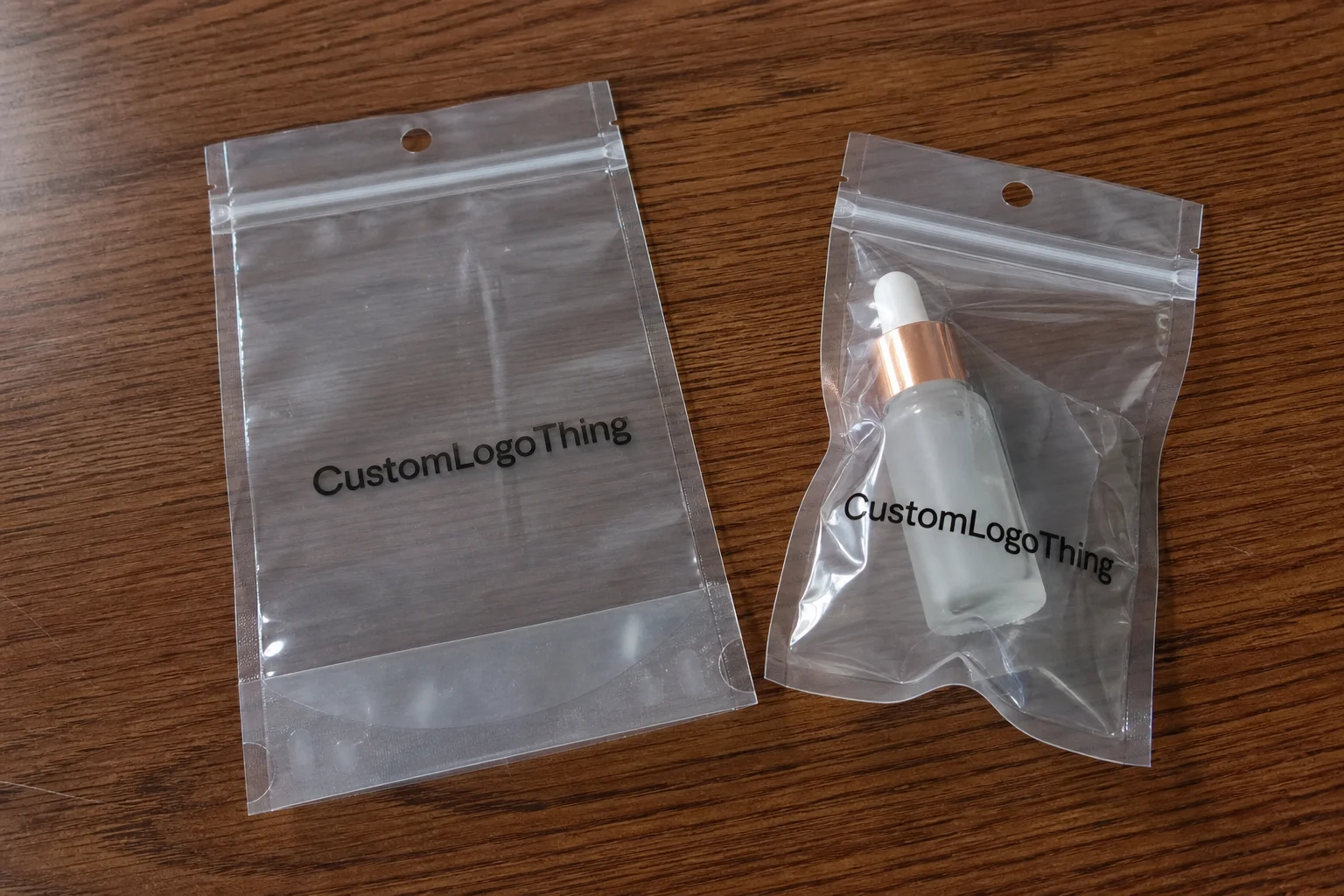
A pouch can cost less than the product label. Still, one cloudy film, weak zipper, or logo trapped under a fold can make a $38 accessory look like it came from a clearance bin. Buyers sourcing Zipper Packaging Bags Bulk custom logo orders are usually trying to solve three problems at once: shelf visibility, product protection, and a unit cost that does not jump every reorder.
That is the real job. A resealable bag is not just a plastic sleeve with branding. It reduces friction after opening, protects the remaining contents from dust and spill risk, and gives repeat buyers a familiar package format. That matters for apparel, accessories, dry non-liquid goods, cosmetics tools, hardware kits, cannabis accessories where legal, stationery, promotional sets, and subscription refills.
The cheaper alternative is usually a plain poly bag. Fine for internal packing. Weak for retail. A rigid jar or tub can look premium, but freight density suffers because you are shipping air inside the container. Paperboard cartons display well, especially for retail shelves, but they often still need an inner bag if the product is small, loose, powdery, oily, scented, or handled more than once.
| Packaging Format | Typical Strength | Common Tradeoff | Best Fit |
|---|---|---|---|
| Custom zipper bag | Low storage volume, repeat closure, strong branding panel | Needs correct film, zipper, and seal spec | Refills, kits, apparel, accessories, small retail goods |
| Plain poly bag | Lowest simple packing cost | Weak shelf impression and limited reuse | Internal packing, low-margin components, warehouse handling |
| Rigid container | High protection and strong shelf presence | Higher freight cube and storage footprint | Fragile, liquid, or high-weight products |
| Paperboard carton | Excellent print surface and retail blocking | May require inserts or inner protection | Premium boxed sets and structured product packaging |
From a buyer's side of the table, the smartest order is not the cheapest bag. It is a repeatable packaging system. It has to survive packing tables, master cartons, parcel delivery, store shelves, and customer hands without making the brand look sloppy. Custom Logo Things helps buyers define film, zipper, print, size, and quantity so the quote reflects the real use case, not a catalog guess wearing a nice shirt.
Product Details That Determine Bag Performance
A zipper bag has more working parts than people give it credit for. Front panel. Back panel. Side seals. Bottom seal. Zipper track. Lip area. Optional bottom gusset. Hang hole. Tear notch. Print surface. Miss one detail and the mistake can repeat across 5,000 or 50,000 units. Very efficient, in the worst possible way.
Zipper choice is practical, not decorative. Standard press-to-close zippers suit lightweight retail goods and most promotional kits. Stronger resealable tracks make sense for heavier contents, dense hardware, or products opened dozens of times. Slider closures can help when repeated opening is central to the user experience, but they usually raise cost and may reduce usable print area.
Film selection changes the hand-feel, clarity, stiffness, and risk profile. LDPE is soft and flexible. HDPE is crisper and often economical. CPP or OPP-style films can offer cleaner display clarity for visible products. Laminated structures can add stiffness, barrier performance, or a more premium surface. Matte and frosted films hide scuffs and feel more finished, but they can mute visibility. That tradeoff is fine if the product is not meant to be inspected through the pouch. Less fine if color, texture, or product count sells the item.
The contents should drive the spec. Oily products, sharp hardware, scented items, powders, bulky bundles, and folded textiles behave differently inside a bag. A soft T-shirt may tolerate a lighter gauge. A kit with screws and metal clips may need thicker film, stronger side seals, and a zipper that does not split when the customer squeezes the package.
Packaging callout: The logo should sit where the buyer looks first: brand, contents, closure. If the mark lands under a fold, zipper seam, gusset shadow, or barcode block, the bag may be technically printed and commercially disappointing.
Printing method matters too. Spot color printing is efficient for clean logos, simple graphics, and repeatable brand marks. Full-color process supports gradients, photography, and complex packaging design. Transparent films often need a white ink underlayer so colors do not vanish against the product inside. Heavy ink coverage can affect drying consistency, print cost, rub resistance, and inspection standards.
Ask for samples when the bag will hold high-margin goods, heavy items, odor-sensitive products, or anything where clarity and texture influence perceived value. For broader packaging comparisons, Custom Logo Things also offers Custom Packaging Products that can be matched with bags, sleeves, inserts, or custom printed boxes.
Specifications Buyers Should Lock Before Quoting
A clean quote starts with locked specifications. Prepare width, height, bottom gusset depth if needed, film thickness, material type, quantity, print colors, print sides, zipper style, and packing method. If the finished bags must ship flat, be case-packed by SKU, arrive in bundles of 100, or include carton labels for warehouse receiving, say that before pricing.
Size the product as packed, not as imagined on a design board. Soft goods compress. Hardware does not. Powders settle. Bundles bulge at the center. A 6 inch by 9 inch flat bag may fit a folded item on the table, then fail once the zipper lip needs half an inch of clean closure space.
Film thickness has a direct cost and performance effect. Lighter gauges can reduce unit price for small, soft, low-risk items. Heavier gauges improve puncture resistance, hand-feel, and tolerance for overstuffing. Many retail zipper bags fall broadly around 2 mil to 5 mil, but laminated or specialty films may be specified in microns instead of mils. Do not compare those quotes like they are identical. They are not.
Print area is not the same as bag size. Buyers often assume the entire front panel can carry artwork. It cannot. Zipper clearance, side seals, bottom gussets, hang holes, tear notches, and registration tolerances reduce the safe artwork zone. Fine type near an edge is a predictable failure point.
- Preferred artwork: AI, EPS, or editable PDF vector files for clean logo edges and accurate scaling.
- Possible but limited: High-resolution raster files, usually 300 dpi at final size, if the design avoids tiny type.
- Risky files: Screenshots, web logos, flattened social graphics, or low-resolution PNG files.
- Color controls: Pantone references for spot colors, CMYK builds for process print, and clear notes for white ink layers.
Compliance depends on category and sales channel. Food-contact expectations, child-resistant rules, recycling marks, suffocation warnings, and country-of-origin statements may apply. Not always. But the question belongs early in the conversation, especially for marketplaces, retail buyers, or regulated categories. For packaging distribution and transit testing references, buyers can review resources from the International Safe Transit Association.
Repeat buyers should keep a specification sheet. It prevents silent changes between orders and makes price comparisons more honest. A quoted bag described only as “clear zip bag with logo” is not a spec. It is a little trap with a purchase order attached.
Pricing, MOQ, and Unit Cost Drivers
Bulk zipper bag pricing is usually driven by material volume, bag dimensions, film thickness, zipper complexity, print colors, print coverage, quantity, tooling or plate needs, finishing requirements, and carton packing. A small one-color bag and a large matte laminated gusseted bag are different products, even if both get called zipper pouches in an email thread.
MOQ is not just a sales threshold. It reflects setup time, material conversion efficiency, printing changeover, and waste allowance. A press does not become efficient because a buyer only needs 300 bags for a test. That is why bulk custom logo zipper bag quotes often look better once the quantity crosses a practical production level.
Under-ordering can inflate unit cost through repeated setup charges. Over-ordering can tie up cash and warehouse space if a logo, product size, compliance mark, or SKU mix changes. The lowest unit price is not automatically the best financial decision. Demand certainty matters. So does having a place to store cartons that are not supposed to be absorbing dust beside last year's discontinued insert cards.
| Order Scenario | Typical Use | Cost Behavior | Buyer Watchout |
|---|---|---|---|
| Pilot quantity | Launch test, sample drop, small promotion | Higher unit cost because setup is spread over fewer bags | Do not over-customize before the product size is proven |
| Standard reorder | Established SKU with predictable monthly movement | Better unit cost and easier production planning | Keep approved specs and samples on file |
| Growth quantity | Retail rollout, subscription volume, multi-location fulfillment | Lowest unit cost potential | Confirm storage, branding stability, and receiving deadlines |
Several quote variables get missed. Two-sided printing. White ink backing. Matte finish. Custom gusset size. Special zipper style. Carton labeling. Expedited production. Each can be reasonable. None should appear as a surprise after approval.
As a planning range, a simple Custom Printed Zipper bag for a moderate bulk order may land around $0.10 to $0.35 per unit depending on size, material, print, and quantity. Larger laminated, gusseted, or specialty closure bags can move higher. Freight, raw material changes, sampling, and production route can shift the number, so treat ranges as planning guidance, not a promise carved into stone.
Ask for quantity breaks: pilot, standard reorder, and growth volume. Custom Logo Things is direct about pricing logic because the right fit changes by product. Lightweight stationery refills do not need the same film as sharp metal hardware. Procurement teams can also review Wholesale Programs for repeat packaging orders across multiple SKUs.
Proofing, Production Steps, and Lead Time
The order path is simple when the inputs are complete: submit specifications, confirm artwork, receive quote, approve digital proof, approve sample if required, move to production, inspect, pack, and ship. Slow orders usually do not fail because the bag is complicated. They stall because one required detail is missing.
Proofing checks logo placement, print dimensions, colors, zipper orientation, bag size, warnings, transparency effects, and any white ink layers. A digital proof verifies layout. It does not always prove final film feel, exact production color, zipper resistance, or the way a frosted surface changes contrast. Physical samples or pre-production samples are more useful when shelf appeal, odor control, tactile quality, or fit affects the sale.
Timeline depends on custom printing, material availability, quantity, sampling requests, seasonal production cycles, freight method, and buyer approval speed. A repeat run with approved files may move much faster than a first order with new artwork. For planning, buyers often allow 12 to 20 business days after proof approval for many standard custom runs, with sampling, complex laminations, high quantities, or ocean freight adding time.
The most common delay is painfully ordinary: incomplete artwork. A low-resolution logo can turn a ready-to-quote Zipper Packaging Bags Bulk custom logo order into a multi-day correction cycle. The same problem appears with missing Pantone references, unclear print side instructions, and size drawings that do not show zipper orientation.
- Confirm packed product dimensions and target quantity.
- Send vector artwork with color references and print-side notes.
- Review quote options by quantity, material, and finish.
- Approve the digital proof only after checking size, zipper direction, and safe print area.
- Request a sample if the product is high-margin, heavy, scented, regulated, or display-sensitive.
- Build buffer for internal approval, production, transit, and warehouse receiving.
Buyers with final size, quantity, material preference, and vector artwork can move faster because the basic packaging architecture is already set. Buyers still deciding between clear OPP-style film, matte LDPE, a gusseted base, or a hang hole need a specification conversation first. That is not delay. That is how you avoid buying the wrong bag neatly and at scale.
Quality Checks That Prevent Expensive Reorders
In bulk custom packaging, a small specification error repeats thousands of times. Quality checks are cheaper than corrective reorders. Obvious, yes. Frequently ignored, also yes.
Inspection points should include zipper alignment, seal strength, print registration, ink adhesion, film clarity, thickness consistency, odor, carton labeling, and count accuracy. For clear bags, haze and scuffing deserve attention because they directly affect product visibility. For opaque bags, ink contrast and rub resistance matter more.
Zipper testing is simple but revealing. The bag should open and close cleanly without splitting at the side seal or demanding so much force that the customer damages the package. Test it with the real product inside. Empty-bag testing can hide stress points caused by thickness, corners, product weight, or uneven fill.
Print quality standards need extra scrutiny for fine type, QR codes, barcodes, and regulatory icons. A large logo may tolerate minor ink variation. A barcode does not care about your brand vision. If the bag supports retail scanning, test printed codes before approving bulk production. ASTM packaging test methods may also be relevant for seal, tensile, or material evaluations depending on product risk; buyers can research standards through ASTM International.
Packaging quality also affects labor. Slippery films can slow hand packing. Weak seals create rework. Inconsistent bag openings frustrate operators. A bag that saves $0.02 per unit but adds 8 seconds of packing time can lose money fast in a fulfillment environment.
Retain an approved sample from each production run. Label it with size, material, film thickness, print colors, order quantity, and approval date. Future orders can then be compared against a physical benchmark instead of memory, a screen image, or a vague phrase such as “same as last time.” Custom Logo Things supports repeatability by documenting approved specifications and helping buyers flag risks before bulk production begins.
Next Steps to Place a Clean Bulk Bag Order
A clean order starts with a clean checklist. Confirm packed product dimensions. Choose clear, frosted, matte, or opaque film. Decide whether the bag needs a gusset. Define print colors and print sides. Set quantity targets. Prepare vector artwork. Name the deadline.
Send product photos or a sample if dimensions are uncertain, especially for soft goods, kits, bundles, or uneven profiles. A cable set, skincare sample kit, folded cap, and loose hardware pack may all appear small on a desk. Inside a zipper bag, each creates a different stress pattern.
Ask for quantity breaks before committing. Procurement should compare pilot, standard, and larger-volume costs without restarting the discussion. That also helps marketing and operations agree on inventory risk. If a product is still being tested, a smaller run may be wiser even at a higher unit price. If the SKU is stable and reorders are frequent, the larger break may protect margin.
State deadlines early. Launch dates, retail delivery windows, trade shows, subscription box packing dates, and warehouse receiving cutoffs all affect the right production plan. Flag special requirements before quoting: food-contact expectations, suffocation warnings, hang holes, barcode printing, child-resistant needs, matte finish, carton labeling, or retail packaging rules from a specific sales channel.
To quote Zipper Packaging Bags Bulk custom logo accurately, Custom Logo Things needs size, material direction, print requirements, quantity, and timeline. With those details, the order can move from estimate to proof without unnecessary guesswork. The better the inputs, the fewer expensive surprises after production starts.
Frequently Asked Questions
What is the usual MOQ for custom logo zipper packaging bags in bulk?
MOQ depends on bag size, film type, print method, and customization level. Simpler one-color printed bags usually have lower MOQs than laminated, full-color, gusseted, or specialty zipper bags. Buyers should request several quantity breaks so setup impact and true unit cost are visible before approval.
How do I choose the right size for bulk zipper bags with a custom logo?
Measure the product in its packed shape, including thickness, folds, bundles, or accessories. Leave enough room above the product for the zipper track to close without stress. For bulky or multi-item kits, a bottom gusset or a larger flat bag can prevent seam strain.
Can zipper packaging bags be printed on both sides?
Yes, many Custom Zipper Bags can be printed on one or both panels depending on film, bag structure, and artwork. Two-sided printing may increase cost because of added ink coverage, registration needs, and production setup. Keep essential branding and product information inside the safe print area away from seals, zipper tracks, and gussets.
How long does production take for zipper packaging bags bulk custom logo orders?
Lead time depends on artwork readiness, proof approval, material availability, sample needs, order quantity, and shipping method. Digital proof approval is often the fastest step when buyers provide vector artwork and complete specifications. Launch orders should include buffer time for sampling, internal review, production, transit, and warehouse receiving.
What affects the price of custom zipper plastic bags the most?
The biggest pricing factors are bag dimensions, film thickness, material type, order quantity, print colors, print coverage, and zipper style. Special finishes, white ink backing, gussets, hang holes, and expedited timelines can also affect the quote. The best quote requests include size, quantity, film preference, artwork files, deadline, and any compliance or packing requirements.