Custom Logo Things
Paper Shopping Bags for Ecommerce Orders
Paper Shopping Bags for ecommerce orders can give folded apparel, accessory sets, and gift-ready kits a cleaner arrival than an oversized carton, while keeping branding visible and pack-out simple from the first item to the last-mile handoff.
Paper shopping bags for ecommerce orders: when they make sense
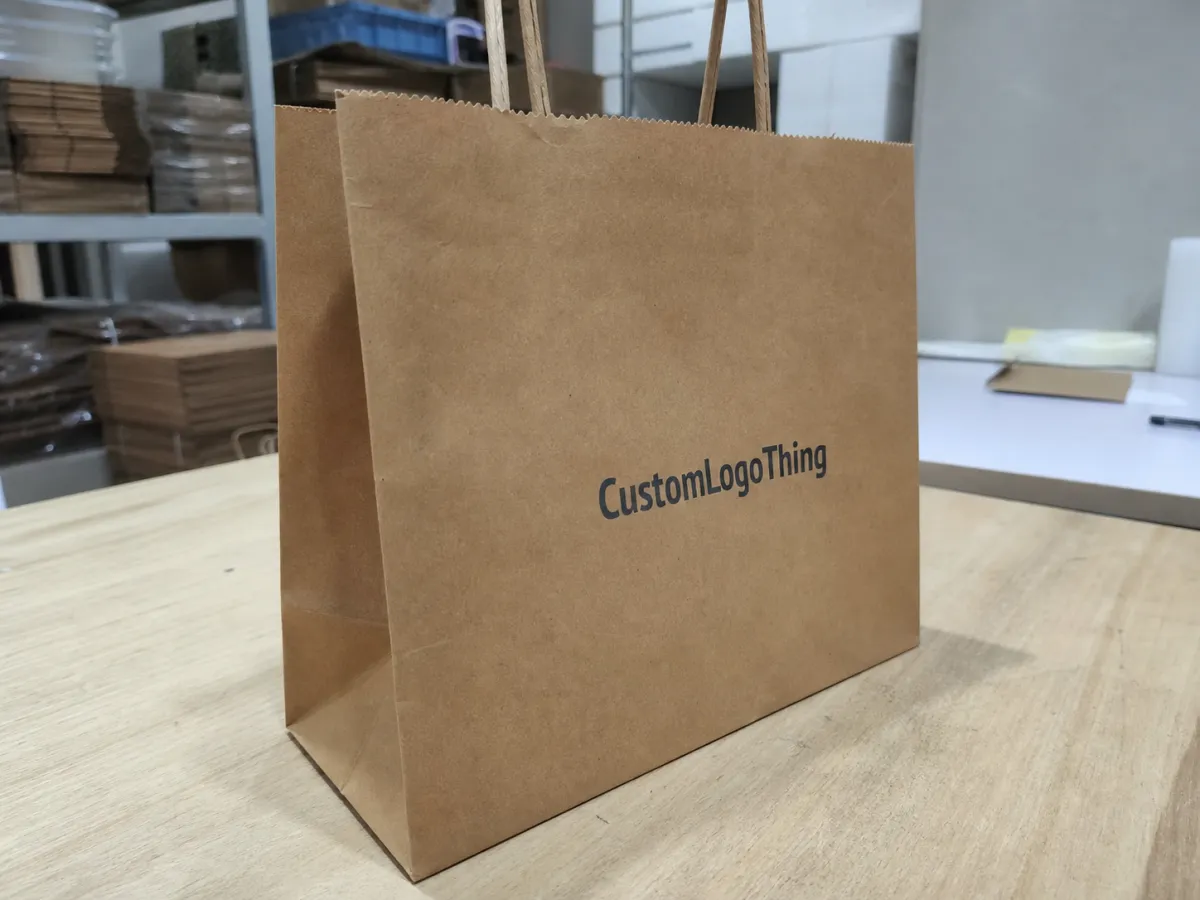
Paper Shopping Bags for ecommerce orders work best for light to medium-weight products that fold cleanly and benefit from a finished, retail-style presentation. Typical fits include folded apparel, scarf bundles, small beauty kits, jewelry boxes, stationery packs, and curated gift sets. If the contents sit neatly in a rectangle and do not need rigid crush protection, this format can be a good match.
The main advantage is practical. A correctly sized bag reduces void fill, speeds packing, and gives the customer a branded outer package before the order is even opened. For direct-to-consumer brands, that can support the unboxing experience without adding much complexity to the line. The tradeoff is simple: the bag has to fit the product, not the other way around.
There are clear limits. Paper bags are not a good choice for heavy items, sharp corners, wet goods, or shipments likely to be crushed in transit. They are also risky when the order will move through a rough carrier chain without secondary protection. If a supplier says one structure can handle every use case, that is a warning sign. Good packaging starts with the packed item, its filled weight, and the route it will travel.
For buyers, the decision usually comes down to whether the bag supports both the product and the operation. If it packs cleanly, travels safely, and carries the brand without slowing fulfillment, it earns its place. If it creates rework, damage risk, or added freight cube, a carton or mailer may be the better answer.
Paper grades, liners, and handle styles that survive shipping
Material choice affects appearance, print quality, and how well the bag survives handling. Kraft paper gives a natural look and a straightforward sustainability story. White paper creates a cleaner print field for logos and full-panel artwork. Recycled-content papers help when visible fiber reuse matters, while coated stocks improve color sharpness and scuff resistance at a higher price.
Basis weight matters more than many buyers expect. For light apparel or accessory orders, a range around 120-150 gsm is often enough. Heavier folded sets or denser products may need 170-230 gsm, especially if the bag must hold shape during packing and shipping. The difference is not only visual; it changes how the bag folds, stacks, and resists seam stress.
Handle style also changes cost and failure points. Twisted paper handles are common because they balance price and utility. Flat handles keep the profile compact for shipping and carton packing. Rope handles feel more premium, but they usually cost more and need tighter control around attachment. Die-cut handles work well for flat kits and slim packs, though they often need reinforcement so the top edge does not tear under repeated handling.
The weak points are predictable: handle attachment, top fold, bottom fold, and any insert used to stabilize the base. Those are worth checking on samples because they fail before the printed panels do. A small board insert can keep a bag from bowing under folded apparel. A stronger bottom patch can prevent sagging and split seams. Both changes are more useful than a prettier print if the order needs to survive real transit.
The balance matters. Overbuilt bags can become bulky, expensive, and awkward to store. Underbuilt bags create damage claims and rework. The right construction supports the product without making the pack-out line fight the package.
Size, print, and structural specifications to lock in
For Paper Shopping Bags for ecommerce orders, sizing should start with the packed footprint, not a retail shelf size that only looks close. Measure the folded item length, width, and thickness after packing, then add just enough room for easy insertion and a clean close. Too much slack lets the contents shift. Too little makes packing slow and messy.
The spec sheet should call out the details that affect both performance and price: width, gusset, height, handle drop, paper basis weight, print coverage, and any reinforcement at the mouth or bottom. If the artwork uses both panels, confirm the print area, color count, and whether the design needs edge bleed or a safe margin near the fold. A one-color logo on kraft is a different build from a full-wrap design with heavy ink coverage, and the quote should show that difference clearly.
Artwork placement deserves extra attention. A logo that looks centered on a screen can drift toward a fold or disappear into a gusset once the bag is built. Dark solids can also look different on kraft than on white stock; the brown substrate can dull some colors and change contrast. That is not a defect. It is a material reality, and it should appear in the proof before production.
A filled sample is the best approval step. Put the actual ecommerce contents into the bag, close it, lift it, and check three things: whether the bag holds shape, whether the handles sit comfortably in the hand, and whether the top edge stays neat when the bag is moved. If the product leans, compresses, or leaves empty zones that invite shifting, the spec needs another pass.
For recurring programs, the most useful file set is usually a dieline, approved artwork, a written spec sheet, and a signed sample reference. That creates a stable record for reorders and reduces the chance that a later run quietly drifts from the original approved build.
Cost, pricing, MOQ, and what changes unit cost
Pricing is driven by a few predictable variables: bag size, paper grade, handle style, reinforcement, print complexity, and carton configuration. Larger bags consume more fiber. Premium handles add labor. Dense ink coverage takes more press time. Custom cartons may look minor, but they can affect packing density, storage, and freight once the order scales.
Minimum order quantity usually lowers the unit price, but it also raises inventory commitment. That is a good trade when the SKU is stable and demand is steady. It is harder to justify for a new ecommerce program still testing sizes, bundle types, or promotional shifts. In those cases, a smaller run can be the smarter choice even if the per-bag price is slightly higher.
| Option | Typical use | Approx. unit range at 5,000 pcs | What usually changes the price |
|---|---|---|---|
| Plain kraft bag, unprinted | Simple apparel or accessory orders | $0.18-$0.32 | Paper weight, size, handle type, carton pack |
| Printed white bag with twisted handles | Retail-ready DTC apparel | $0.28-$0.52 | Color count, coverage area, finish, proofing |
| Recycled-content bag with flat handles | Light to medium gifting and apparel | $0.24-$0.45 | Recycled fiber blend, reinforcement, size |
| Premium rope-handle bag | Gift sets and higher-margin brands | $0.60-$1.10 | Handle material, board insert, heavier board stock |
Those figures are only starting points. Freight can change landed cost more than the factory quote suggests, especially on bulky bags that use a lot of cube. Storage matters too. A bag that stacks poorly can cost more to handle than one that is a few cents higher at purchase but cleaner in carton packs.
My rule of thumb is simple: if a cheaper bag creates slower packing, more rework, or more customer complaints, it is not actually the cheaper bag.
That is why serious buyers look at landed cost, not just piece price. The real number includes freight, storage, handling, and the cost of inventory that sits too long before it is used.
Process, timeline, and turnaround from proof to shipment
The ordering process should be short and orderly. It usually begins with a brief covering dimensions, quantity, paper preference, print goals, and delivery window. The supplier then prepares or confirms the dieline, issues a quote, and sends an artwork proof. If the design is new or the pack is unusually specific, a physical sample or prototype comes next. Final approval leads to production, packing, and shipment.
Timelines are usually lost in the same few places. Artwork that is not print-ready adds days. Slow proof review adds more. Material sourcing can also stretch the schedule, especially if the bag needs a specific paper color, recycled-content blend, or handle type that is not stocked in-house. For custom printed bags, a practical turnaround is often 12 to 15 business days after proof approval, and more complex builds can run longer. Unprinted bags can move faster, sometimes in 7 to 10 business days, depending on stock and carton configuration.
Quality control should happen before the order is released, not after it lands. Ask for a handle pull check, a bottom seam inspection, and a rub test on printed areas. If the order will travel through a distribution network, ask how the packed cartons handle drop, vibration, and compression. The International Safe Transit Association publishes useful testing concepts at ista.org, and the thinking behind those tests is relevant here even for simple bag programs.
Before production starts, confirm the dimensions, print placement, carton counts, and ship date in writing. A one-page approval record is usually enough to prevent confusion later, and it gives both sides something concrete to reference if the reorder comes back months later.
What a reliable packaging partner should provide
A reliable partner does more than send a quote. They should say whether the paper weight suits the load, whether the handle style matches the intended carry, and whether the print plan is realistic on that stock. They should also tell you when a design is likely to cause trouble. A weak spec caught early is a favor, not a nuisance.
Sample control matters just as much as pricing. The approved sample should match the intended look, feel, and packed performance closely enough that the production run is not a surprise. If a sample looks good flat on a table but collapses when filled, the review was incomplete. Good packaging suppliers understand that visual approval and functional approval are both required.
Experienced buyers also look for consistency across reorders. A bag that is easy to pack, stacks cleanly, and comes back with the same dimensions and print quality on the next run is worth more than a slightly cheaper version that creates friction on the floor. That is especially true for ecommerce teams that do not want to recut artwork or revalidate construction every quarter.
Documentation matters too. If fiber sourcing is part of your criteria, ask whether the paper chain is certified and whether the records are actually available, not just implied. The Forest Stewardship Council explains chain-of-custody and certification basics at fsc.org, which is useful when sustainability claims need backup instead of vague language.
Common ordering mistakes that raise costs or damage claims
The most common mistake is oversizing the bag. Extra room sounds harmless, but it raises material use, makes the contents shift, and often leaves the package looking less finished in the customer's hand. It also increases cube, which matters in freight, pallet loading, and warehouse storage. A bag that is only a little too large can become expensive in several ways at once.
Another mistake is under-specifying the load path. If the bag is carrying several folded garments or a bundled gift set, the handle attachment and bottom construction need to withstand repeated handling, not just one lift in a sample review. Weak seams sometimes survive a quick check and then fail later after a longer route through fulfillment, carrier sortation, and delivery.
Artwork approval can cause its own problems. A logo might look centered on a screen and still sit too close to the fold or into the gusset once the bag is built. Heavy ink coverage on uncoated kraft can also produce a rougher finish than expected. That is not an error in printing so much as a mismatch between design intent and substrate behavior. The proof should show those realities before the order is locked.
Reorder planning gets overlooked more often than it should. If carton counts, pallet patterns, and replenishment cadence are not considered up front, a bag program that looked efficient on paper can become awkward in storage and awkward on the line. Paper shopping bags for ecommerce orders are best treated as an operational input with brand value, not as a decorative extra that can be bought once and forgotten.
Next steps for quoting, sampling, and placing the order
Before requesting a quote, gather the basics: folded product dimensions, average filled weight, artwork files, target quantity, and delivery window. The more complete the brief, the cleaner the price and lead time will be. If you already know you want kraft, white, or recycled-content paper, say so. If you do not, ask for a recommendation and let the supplier explain the tradeoffs in print quality, feel, and cost.
The safest next step is usually a short sample path. Ask for a dieline, a material recommendation, and a physical or digital sample so you can compare the options against the actual contents. That matters most when the design includes custom printing, unusual dimensions, or a packed weight that sits near the top end of the bag spec. A little extra time here tends to save a lot of trouble later.
After that, review landed cost, MOQ, and turnaround together. Separating those decisions creates blind spots. The right version is the one that fits the fulfillment rhythm, storage capacity, and brand presentation without adding avoidable friction on the packing line. For many programs, paper shopping bags for ecommerce orders sit in a useful middle ground: polished enough for the customer, practical enough for the warehouse, and repeatable enough to reorder with confidence.
Are paper shopping bags for ecommerce orders strong enough for folded apparel?
Yes, if the bag size, paper grade, handle style, and bottom construction are matched to the packed weight. They work best for folded shirts, light garments, accessory bundles, and other orders that do not need rigid carton protection.
How do I choose the right size?
Start with the actual footprint of the product after folding, then confirm gusset depth and height so the bag closes cleanly without excess slack. Ask for a sample or dieline and test it with a filled pack before approving production.
What affects MOQ and unit cost?
Size, paper stock, print colors, handle style, reinforcement, and carton configuration all affect setup complexity and minimum quantity. Higher MOQs usually reduce the per-bag price, but they also increase inventory commitment and storage needs.
Can I get a sample before ordering?
Yes, and it is the safest way to confirm size, print placement, handle feel, and overall fit before production starts. A sample is especially useful when the order includes custom printing, unusual dimensions, or heavier-than-average contents.
How long does production usually take?
Turnaround depends on artwork readiness, proof approval, stock selection, and whether the bag is printed or unprinted. A clean brief and fast approvals shorten the timeline more than almost anything else in the process.

