Corporate Gifting Paper Shopping Bags cost is never just a packaging line item. It shapes how the gift feels in the hand, how safely it travels, and how much of the budget gets spent on details people actually notice. A good bag can make a simple gift feel considered. A weak one can make a strong gift look rushed.
That is why buyers who handle corporate programs tend to think in terms of structure, print, and landed cost rather than unit price alone. The bag may be the first thing someone sees and the last thing they keep. If it tears, buckles, or looks underbuilt, the whole presentation drops with it.
Why the bag often outlasts the gift
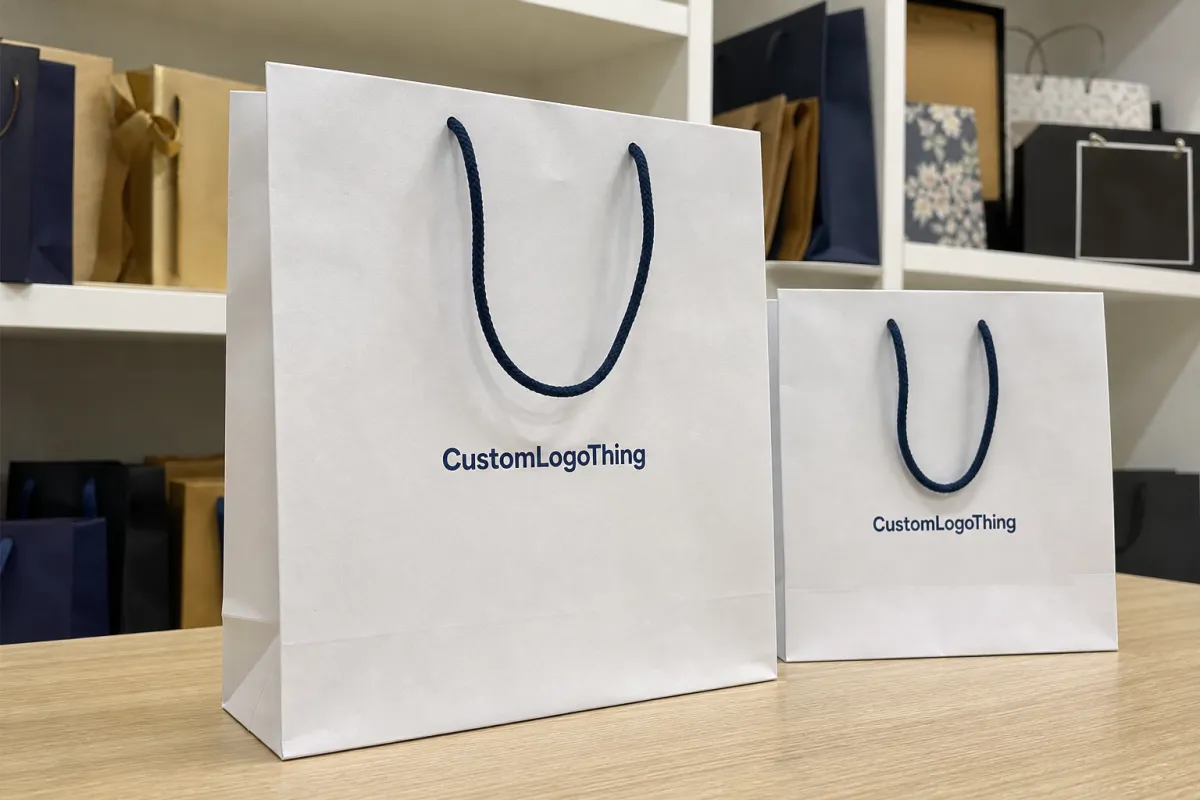
A corporate gift has two jobs. The obvious one is carrying the item. The less obvious one is carrying the brand impression after the gift is handed over. A thick notebook in a limp bag still feels like a compromise. A modest gift in a well-built bag feels deliberate. People remember that difference.
Packaging buyers often learn this the hard way. The bag is not just a wrapper; it is part of the delivery system. Clean corners, a flat base, and handles that sit evenly all signal that someone planned the presentation. When those details are sloppy, the whole package reads as disposable, even if the contents are not.
That is why corporate gifting Paper Shopping Bags cost should be treated as a quality decision, not a race to the bottom. Saving a few cents per piece can be false economy if the bag needs rework, extra inserts, or a replacement run because the handles fail under load. The cheapest quote is only useful if the bag still does its job.
A premium gift in a flimsy bag still feels flimsy. The bag does not fix the gift, but it does change how the gift is perceived.
Paper, finish, and print choices that change the look
The paper stock is the first major cost lever. Kraft paper brings a natural, practical look and usually suits brands that want a recycled or understated presentation. Coated paper gives a smoother surface and cleaner color reproduction, which is helpful when the artwork has fine type or solid brand colors. Art paper sits higher on the finish ladder and is often chosen when the bag needs a more polished, premium feel.
Paper weight matters too. Lightweight stock can work for small items, but it tends to buckle if the bag is oversized or the handles are carrying more than expected. Heavier stock costs more, though not always dramatically. In many orders, the better value comes from Choosing the Right thickness for the load instead of the thinnest acceptable sheet.
Finish changes the visual tone quickly. Matte lamination keeps glare down and gives the bag a calm, controlled surface. Gloss makes color pop, but it also shows fingerprints and can look louder than some brands want. Soft-touch finish feels more upscale in hand and is often chosen for executive gifts or launch kits. It does add cost, so it makes sense when the bag is part of the experience, not just a carrier.
Decoration drives cost in a different way. A one-color logo on kraft can look clean and restrained. Full-wrap printing, foil stamping, embossing, and spot UV move the bag into a more premium category, but each of those choices adds tooling, setup, or finishing time. The effect is strongest on bags that people will carry into meetings, events, or client visits. It is less useful when the bag is only moving a standard internal gift from point A to point B.
- One-color print: Best for controlled budgets and simpler brand presentations.
- Full-color artwork: Good for campaigns, though ink coverage raises cost.
- Foil or embossing: Strong for hero pieces, not necessary for routine orders.
- Soft-touch or matte lamination: Higher perceived value, moderate to high price impact.
Sizes, handles, inserts, and load limits
Size should follow the gift, not the other way around. If the bag is too tight, the top edge distorts and the handles pull at an odd angle. If it is too large, the item slides around and the presentation feels improvised. A good size gives enough room for packing while keeping the profile neat.
Handle choice affects both appearance and real carrying comfort. Twisted paper handles are economical and work well for lighter gifts. Rope handles feel stronger and give the bag a more finished look. Cotton handles sit in the premium category and are comfortable if the recipient will carry the bag for a while. Ribbon handles can look elegant, but they are usually better for lighter contents. Die-cut handles save material and can look neat, although they are best for lighter loads and shorter carries.
Structural details matter more than buyers sometimes expect. A board insert stiffens the bottom and helps the bag keep its shape. Reinforced top edges reduce sagging around the handle area. Side gussets add volume without turning the package into a box. These are not decorative features; they change how the bag performs in the hand and in transit.
For normal corporate gifting, a medium paper bag with a proper bottom board and rope handles can often handle around 2 to 4 kg comfortably. Larger bags with heavier stock and reinforced construction can carry more, but only if the build supports it. A bottle, boxed gift set, or dense product kit should always be tested before approval. Load capacity is about structure, not hope.
Buyers also need to think about shipping behavior. A bag that looks fine on a sample table can crease badly under carton pressure or arrive with handle marks if the packing spec is weak. Ask suppliers how they pack the finished bags, whether they use protective tissue or inner sleeves, and what they inspect before carton sealing. Practical answers matter more than polished wording.
If a supplier understands basic transport testing language from groups like ISTA, that is a useful sign. It usually means they have thought beyond the appearance of the sample and into what happens once the bags are stacked, boxed, and shipped.
Corporate gifting paper shopping bags cost: what drives it
Corporate gifting Paper Shopping Bags cost is shaped by a fairly small set of variables: paper stock, size, print coverage, number of colors, handle type, lamination, and finishing effects. Everything else usually hangs off those decisions. If one quote comes in far below the others, one of those items is probably lighter than it appears, or it has been removed from the comparison entirely.
The cost curve is not linear. Some upgrades move the number only a little. Others change it quickly. A simple kraft bag with a single logo can stay at the lower end. Move to a larger format, stronger paper, rope handles, and a matte finish, and the price rises into the middle. Add soft-touch, foil, embossing, or complex print coverage, and the bag moves into premium territory fast.
Setup costs can matter more than buyers expect. Dies, plates, lamination setup, and tool preparation are spread across the order quantity. That means a 500-piece run can look expensive per piece even if the design itself is straightforward. A 5,000-piece order usually dilutes those costs and makes more sophisticated construction easier to justify. Same design, different economics.
| Spec choice | Typical use | Typical unit cost at 5,000 pcs | Cost impact |
|---|---|---|---|
| Natural kraft, twisted handles, 1-color logo | Simple corporate gifts, internal events, modest budgets | $0.18-$0.35 | Lowest |
| Coated paper, rope handles, 1-2 colors, matte finish | Client gifts, retail-style presentation, branded kits | $0.32-$0.65 | Moderate |
| Art paper, reinforced top, soft-touch, foil or embossing | VIP gifting, executive sets, launch events | $0.70-$1.60+ | High |
These are working ranges, not fixed prices. Order size, geography, print method, packing style, and freight can move the total. That is why two quotes are only comparable if the spec sheet is truly the same. If one includes stronger handles, thicker board, or a better finish, then the higher number may actually be the more accurate quote.
Hidden costs are common in packaging. Freight, carton packing, split shipments, and artwork revisions all change the landed cost. Some suppliers also quote only the bag itself and leave out outer carton charges or shipping to the final destination. That makes the first number look cleaner than the real budget. A full landed estimate is the safer starting point.
For teams that need a sustainability story, ask whether the paper is FSC-certified and whether the supplier can document chain-of-custody. The FSC system helps when you want a responsible material claim that is more than a vague label. Recycling compatibility matters too. The EPA has straightforward packaging and recycling guidance at epa.gov/recycle, which is worth checking if the bag is meant to fit into a broader waste plan.
MOQ, sampling, and quote details buyers should lock in
MOQ is not a vanity number. It affects inventory, price per unit, and whether the order is practical for the program. Many custom paper bag runs begin around 500 to 1,000 pieces, though the minimum can rise with larger sizes, special finishes, or more involved print. Simpler digital runs may go lower. Premium work often needs more volume to stay sensible.
The trap is celebrating a low minimum while ignoring the price attached to it. A small MOQ can still be expensive if the bag uses custom tools, special finishes, or labor-heavy assembly. The better question is whether the order size fits the event, the budget, and the chance of a repeat run. If the bag will be used again, a slightly higher MOQ can actually be the better buy.
A useful quote request includes more than a logo file. Send the measurements, the gift size, the stock, and the deadline. The more complete the spec, the fewer assumptions the supplier makes.
- Dimensions: Width, height, and gusset, plus the size of the box or product inside.
- Paper stock and GSM: Kraft, coated, or art paper, with thickness or weight.
- Handle type: Twisted paper, rope, cotton, ribbon, or die-cut.
- Print setup: Number of colors, coverage, and whether foil, embossing, or spot UV is required.
- Quantity and delivery address: Needed for freight and landed pricing.
- Sample requirement: Production sample, plain sample, or pre-production proof.
Sampling is worth the time when the order is for executives, press kits, or premium gifting. It is also worth it when the bag needs to carry weight, because handle feel and bottom support are easier to judge in hand than in a flat proof. If the sample feels wrong, it usually means the structure is wrong. That rarely improves at scale.
Color accuracy deserves attention too. A logo that shifts too far from brand standards can make the whole order look off, even when the bag construction is strong. Buyers should ask how the supplier handles color matching, what proofing method they use, and whether final production is checked against the approved sample or proof.
Production steps, timeline, and lead time buffers
The production path is fairly predictable: artwork review, proofing, sampling if needed, printing, lamination or other finishing, die-cutting, gluing, assembly, inspection, and packing. Each stage adds time. Each stage can also slow down if the artwork is unclear or if someone asks for revisions late in the process.
For most custom orders, artwork review and proof approval can take 1 to 3 business days when files are clean. A physical sample may take a few extra days, depending on complexity. Mass production often falls in the 10 to 20 business day range after approval. Shipping is separate and should be treated that way from the start, not folded into production estimates as an afterthought.
Late art changes are the most common delay. So are color files that are not prepared correctly, sample revisions that go back and forth too many times, and holiday congestion that hits the factory or freight schedule. A buyer who assumes every step will move perfectly is usually the buyer who ends up paying for rush work. Build a buffer. It costs less than a panic order.
Good suppliers will be direct about what affects the schedule. They should be able to say whether foil adds extra lead time, whether the die needs fresh setup, and whether the requested delivery window is realistic. That kind of plain talk is more useful than a polished promise.
Quality control should also be visible in the process. The useful checks are simple: print registration, color consistency, handle attachment, bottom sealing, corner alignment, and carton packing. If a supplier cannot explain how they inspect those points, the quote is carrying more risk than the spreadsheet shows.
Why the right supplier saves more than a low quote
A low quote is attractive until the first problem appears. Then the hidden cost arrives as reprints, sorted defects, late delivery, or bags that do not match the approved sample. The supplier who checks measurements carefully, keeps colors consistent, and answers technical questions clearly may not be the cheapest line on paper. In real terms, they can still be the better value.
Consistency matters most on repeat programs. Corporate gifting rarely happens once and never again. It usually involves multiple drops, multiple audiences, and more than one reviewer on the brand side. If the second run looks different from the first, the presentation loses credibility. That is why stable color control, repeatable handle placement, and reliable assembly are not luxury features. They are basics.
Useful suppliers also know where the risk sits. They can tell you if a larger format needs thicker board, if a rope handle needs reinforcement at the punch, or if a matte finish will show handling marks during transport. They do not need to make the order sound complicated. They just need to prevent avoidable failure.
Sustainability claims need the same discipline. Recyclable paper, FSC-certified stock, and reduced material waste are all useful only if the structure still holds up. A weak bag with a green label is still a weak bag. Buyers notice that quickly, especially in premium programs where the packaging is part of the message.
What to send for a fast quote and clean reorder
If you want a quote that can actually be compared, send a complete spec sheet. Include the target quantity, dimensions, paper stock, GSM, handle style, print colors, finish, delivery location, and deadline. Add whether the bag needs to carry a box, bottle, or mixed gift kit. That context helps avoid mismatched pricing.
To compare two quotes fairly, the details have to line up. Same size. Same paper. Same handle. Same finish. Same quantity. Same delivery point. If any of those change, the corporate gifting Paper Shopping Bags cost changes too. A stripped-down quote and a premium quote are not alternatives; they are different products.
A clean buying sequence usually looks like this:
- Request a sample or production proof for the final structure.
- Confirm MOQ and the true cost per piece at the target quantity.
- Approve artwork only after checking size, bleed, and logo placement.
- Lock the timeline with shipping included, not just production.
- Save the final spec sheet for the next reorder.
That last step gets missed more often than it should. Months later, someone asks why the reorder feels different. Usually the answer is simple: the original spec was never preserved clearly enough. Once the dimensions, paper, and finish drift, the bag drifts with them.
The best corporate gifting bags are not always the most expensive ones. They are the ones that fit the gift, carry safely, reproduce the brand cleanly, and arrive on schedule without surprise charges. That is the practical answer to corporate gifting paper shopping bags cost, and it is usually the difference between a forgettable handoff and a presentation that feels planned from the start.
What affects corporate gifting paper shopping bags cost the most?
Paper stock, size, and print coverage usually move cost first. Premium handles, lamination, foil, embossing, and larger formats add more quickly. Freight and packaging can change the landed number, so full quotes are more useful than bag-only pricing.
What is a normal MOQ for corporate gifting paper shopping bags?
Many custom runs start around 500 to 1,000 pieces, but the real minimum depends on size, print method, and finish. Digital or simplified runs can sometimes go lower, while premium structures often need higher quantities to stay practical.
How long does production usually take after artwork approval?
Clean artwork can move through proofing in 1 to 3 business days. Mass production often takes about 10 to 20 business days after approval, depending on complexity. Shipping time is separate and should be built into the schedule early.
Which specs should I confirm before requesting a quote?
Confirm dimensions, paper GSM, handle type, print colors, finish, and quantity. Add shipping destination and whether you need samples or split deliveries. A complete spec sheet makes corporate gifting paper shopping bags cost much easier to compare.
How do I lower corporate gifting paper shopping bags cost without making the bags look cheap?
Use a standard size, fewer colors, and a simple finish if the brand allows it. Keep the structure strong and the print clean. Cheap-looking bags usually come from weak construction or poor alignment, not from sensible simplification.


