Soap buyers often spend more time on the bar formula than on the bag that carries it out the door. That is a mistake. The package is the first physical contact point, and in retail that first touch does a lot of quiet selling. For brands comparing soap brand Paper Shopping Bags MOQ, the real question is not just how low the minimum can go, but whether the quantity, structure, and print spec actually fit how the soap sells.
Paper Shopping Bags can make a handmade bar feel giftable, tidy, and price-justified. They also help a small soap line look like it belongs on a boutique shelf instead of at a temporary market table. The best versions do not shout. They simply look like they were planned.
The bag should feel like part of the product line, not a separate decision made after the rest of the branding was finished.
Why Paper Shopping Bags Still Win at the Counter
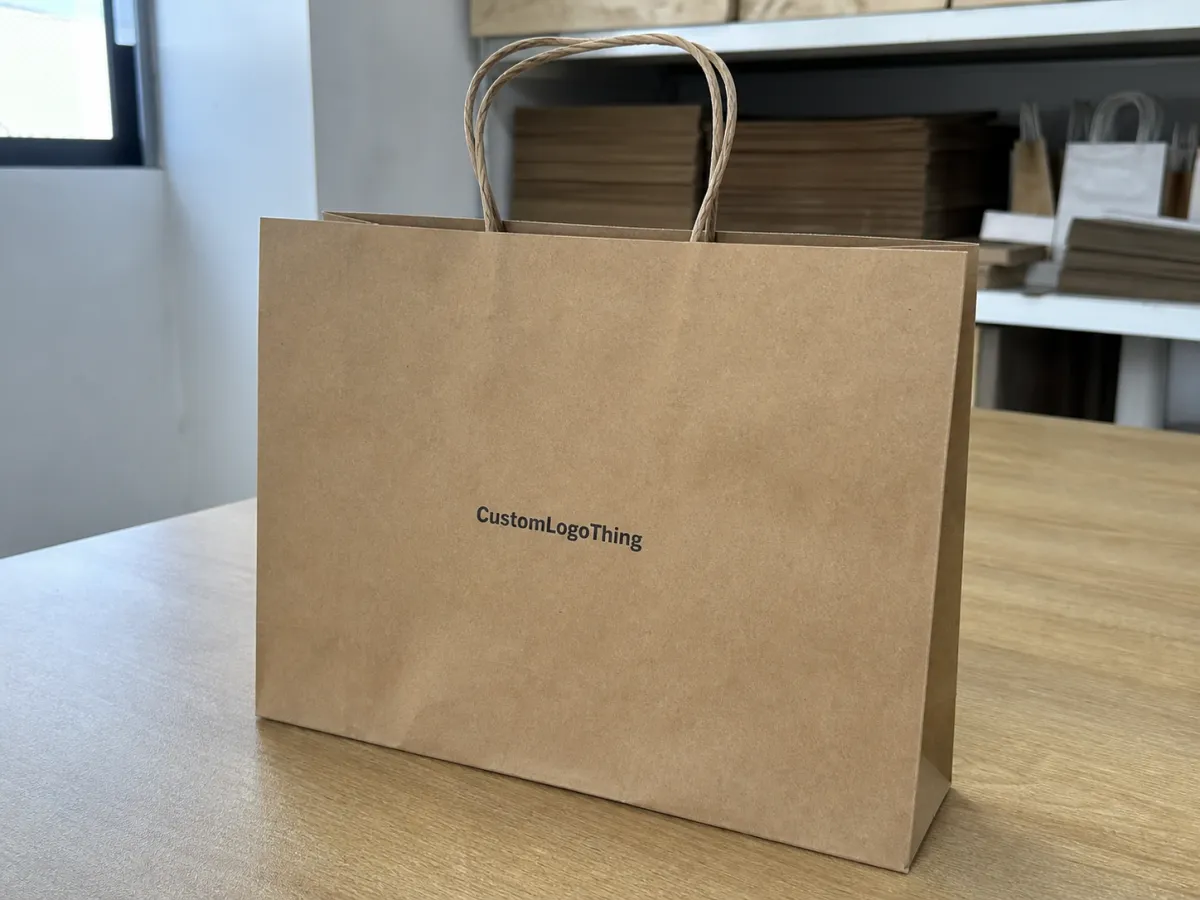
At point of sale, the bag does more than carry the soap. It protects the purchase, but it also frames the brand. A rigid enough paper bag with a clean logo makes a bar feel more finished, even when the soap itself is simple. That matters for handcrafted lines, because presentation often carries part of the perceived value.
Loose wrapping can work for low-price bars, especially at market stalls where speed matters. It also tends to read as temporary. A paper shopping bag creates structure, gives the customer something easy to carry, and improves the odds that the brand will be remembered later. That memory matters more than a discount that disappears in a week.
There is a practical side too. Paper bags stack well, print well, and usually photograph better than plastic options. They are easier to standardize across farmers markets, spas, small retailers, and subscription inserts. If a soap brand wants one packaging system that can flex across channels, this is often the simplest place to start.
The buying decision should follow sell-through. A custom bag that looks strong in a mockup but sits in storage for a year is not efficient. That is why Soap Brand Paper Shopping Bags MOQ has to be judged against actual reorder rhythm, not optimism.
Sizes, Gussets, and Handle Styles for Soap Sets
Bag size should start with the product, not with what a supplier already has on hand. A single wrapped bar usually fits a narrow bag around 110-130 mm wide, 70-90 mm deep, and 180-220 mm tall. Two-bar packs need more room, often 140-170 mm wide with an 80-100 mm gusset. Gift sets and mixed bundles commonly move into the 180-240 mm width range and 100-140 mm of depth, especially if the set includes tissue, a box, or an insert card.
Headroom gets overlooked all the time. Leave enough clearance at the top so the product does not look squashed, but not so much that the bag turns into dead air. In practice, 10-20 mm above the item usually keeps the profile clean. If the bag will be handed across a counter, that small difference changes how premium it feels.
Handle choice changes both cost and perception:
- Twisted paper handles are practical, durable enough for most boutique soap orders, and usually keep pricing sensible.
- Flat paper handles are the low-cost option for lighter loads and straightforward retail use.
- Rope handles raise the perceived value and suit gift sets or higher-ticket soap bundles.
- Die-cut handles keep the silhouette clean, though they are not always the best match for heavier packs.
Bottom support matters just as much as handle style. If the soap is boxed, jarred, or bundled unevenly, a weak base can make the whole bag collapse visually. Too shallow and the product sits awkwardly. Too wide and the shelf presentation starts to look careless. The best dimensions protect the product and keep the line looking deliberate.
Paper Weight, Finish, and Print Specs That Protect the Brand
Paper weight should match the load and the brand position. Lightweight stock around 120-157 gsm can work for sample runs, event giveaways, or very light purchases. For boutique retail, 157-210 gsm usually gives a better hand feel and a more stable shape. If the bag will be reused or carry a heavier bundle, reinforced stock or a stronger board insert helps the sidewalls stay upright.
Finish shapes the first impression faster than most buyers expect. Uncoated kraft gives a natural, handmade feel. Matte paper looks cleaner and more polished. Soft-touch lamination changes the feel immediately, but it also adds cost and can show scuffs in different ways than expected. Spot UV, foil, and specialty inks can make a strong visual point, though they add setup time and raise the risk of wasted samples if the art is not resolved early.
Print coverage should be tied to the actual brand need. One-color printing on kraft is usually the fastest, easiest route for repeat orders. Full-color art works better when the soap line depends on scent-led storytelling, seasonal graphics, or a highly recognizable visual system. Inside print can add a nice surprise, but it adds proofing complexity too. The more decoration involved, the more careful the approval process needs to be.
Material sourcing matters if the brand is making sustainability claims. FSC-certified paper gives buyers a cleaner way to talk about sourcing, because the certification has a defined standard behind it. That is easier to defend than vague claims about being "eco-friendly." The FSC site is useful when a buyer wants to understand what the certification covers.
There is one more detail worth checking. Some soaps carry fragrance oils or residual moisture if they are not fully cured or wrapped. Paper bags are not product barriers. They do not protect against scent transfer or humidity the way a sealed pouch might. If the bags will sit near bath products for a while, choose inks and finishes that resist rubbing and color shift.
Soap Brand Paper Shopping Bags MOQ, Pricing, and Unit Cost
The minimum order quantity changes with size, handle type, print complexity, finish, and paper weight. Simple bags can sometimes be made at a lower starting quantity than premium versions, but the cost per piece rises quickly once the order drops. That is normal. Smaller runs keep cash tied up for less time, but they are expensive on a unit basis.
For launch testing, a low MOQ can be a smart choice. It reduces dead stock and gives the brand room to adjust if the product mix changes. For a stable soap line, though, buying only the bare minimum often wastes money. Moving one step above the lowest tier can improve unit cost and reduce the risk of a weak reorder window.
| Order Tier | Typical MOQ | Indicative Unit Cost | Best Fit | Main Tradeoff |
|---|---|---|---|---|
| Launch sample run | 200-500 pcs | $1.20-$2.80 each | Testing a new soap line or a premium shelf pitch | Highest setup cost per bag |
| Small retail run | 500-1,000 pcs | $0.70-$1.60 each | Markets, boutique trials, and seasonal bundles | Fewer finish choices |
| Core production run | 3,000-5,000 pcs | $0.30-$0.85 each | Established scent ranges and repeat reorders | More inventory commitment |
| Scale run | 10,000+ pcs | $0.18-$0.45 each | Higher-volume retail or multi-channel distribution | Less flexibility if the design changes |
Those ranges move with the spec. Rope handles, foil stamping, lamination, and inside print all push cost upward. Setup items such as plates, dies, sampling, and proofing can add another $40-$200, depending on the job. Freight matters too. On small orders, shipping can distort the price more than the bag itself.
Comparing quotes by sticker price alone leads to bad decisions. Landed unit cost is the number that matters: bag price, setup, sampling, freight, and any likely reprint waste should all be included. A quote that omits shipping is not a bargain. It is incomplete.
For buyers who need a quick reference point on packaging terms and production logic, packaging.org is a useful neutral source. It does not replace supplier quotes, but it helps keep the conversation grounded in real packaging variables rather than glossy promises.
Production Steps, Lead Time, and Proof Approval
A clean order usually follows the same path: brief, spec confirmation, artwork check, digital proof, sample, production, then shipment. Skip a step and the risk shifts back to the buyer. A competent supplier should confirm the finished size, handle type, paper stock, finish, print colors, quantity, and target ship date before the quote is locked.
Lead time depends on complexity. A simple kraft bag with one-color print can often move from proof approval to production in 10-15 business days. More complex finishes usually need 15-25 business days, sometimes longer if materials are not already in stock. Freight is separate. Sea shipping can add 20-40 days, while air freight shortens transit at a much higher price.
Proof approval is where many schedules get damaged. If artwork is approved late, the production line did not really slip; the clock started late. Slow back-and-forth on logo placement, color matching, or dieline corrections can add several days before the first bag is made. Vector files, Pantone references, and a clean layout file save time because they cut reproofing.
If the bags will be used in retail launch kits or higher-value bundles, ask for a pre-production sample or a mockup with the final dimensions. That extra check is cheap compared with ordering several thousand bags that look fine in a PDF and awkward in a hand-held test.
Seasonal launches need buffer time. A soap scent tied to a holiday market or a spring refresh should not be paired with a complicated custom bag that needs multiple approval rounds. Simple packaging choices keep the calendar under control.
What a Reliable Packaging Partner Handles Well
A good packaging partner does more than quote a number. They catch artwork issues, confirm that the bag structure fits the soap, and point out weak assumptions before production starts. That includes color consistency, glue-line quality, trim accuracy, and handle strength that matches the intended load. Those checks sound basic, but they are the difference between a bag that sells the brand and one that quietly weakens it.
The best suppliers also translate brand language into something printable. If the logo file is too small, the artwork is set up in the wrong format, or the finish is too ambitious for the quantity, they should say so early. That is not friction. That is protection against waste.
Direct factory buying often gives better visibility into spec, lead time, and unit cost, especially on repeat orders. A reseller can be easier for one-off purchases or smaller brands that want a lighter buying process. The tradeoff is simple: more middle layers usually mean less transparency when something changes.
Repeatability matters for soap brands with multiple scents or seasonal colorways. If the base bag stays the same and only the insert, label, or sticker changes, reorders stay cleaner and the packaging system becomes easier to manage. Changing the bag for every SKU usually creates inventory problems fast.
Ordering Mistakes That Inflate Cost or Delay Reorders
The most common error is vague spec language. "Medium bag" is not a spec. Neither is "premium finish." Quotes become much clearer when the buyer gives exact dimensions, gusset depth, handle type, paper weight, print colors, finish, quantity, destination, and target ship date. Without those details, every supplier is filling in gaps.
Artwork quality matters just as much. Low-resolution files cause rework, and rework burns time. A logo should be supplied in vector format when possible. Color should be referenced specifically, not described as "close enough." Those shortcuts almost always lead to more proof rounds.
Inventory planning can go wrong in both directions. Buying too much too early ties up cash in bags that may not match the next scent cycle. Buying too little forces another setup charge and can leave shelves empty during a busy week. The right MOQ is the one that fits forecast, storage space, and reorder timing.
Before asking for a quote, have this ready:
- Finished bag dimensions and gusset depth
- Quantity by SKU or launch phase
- Paper stock preference and finish
- Handle style and color
- Print colors and logo files
- Target ship date and destination
- Sample request, if needed
If one soap line includes several scents, keeping the bag base identical and changing only the insert, label, or sticker usually saves money and keeps brand consistency tighter. It also makes reorder planning much less complicated. The warehouse team will appreciate that even if nobody says it out loud.
Next Steps to Request a Quote and Lock the Spec
A usable quote starts with a usable brief. Send the finished dimensions, quantity, artwork, finish preference, and target ship date in one message. That reduces back-and-forth and gives the supplier enough information to price the job properly. If you want to compare options, ask for two or three specs side by side so MOQ, unit cost, and finish tradeoffs are easy to see.
For premium retail bags or gift bundles, a sample or proof is worth the time. Fixing a bad order costs more than approving a clean one. If the spec is still in flux, keep the design simple and the quantity disciplined. Complicated packaging and a short deadline do not mix well.
The clearest buying rule is also the least glamorous: keep the spec tight, compare the landed cost, and order against real sell-through. For Soap Brand Paper Shopping Bags MOQ, the best number is usually the one that protects margin, matches reorder rhythm, and keeps the soap line looking consistent from first purchase to repeat sale.
FAQ
What is a typical MOQ for soap brand paper shopping bags?
Many custom runs start in the low hundreds per style, but the floor depends on size, handle type, print coverage, and finish. A simple kraft bag can sit lower than a laminated or foil design. Tiered pricing is useful because unit cost often improves one step above the minimum.
Can I use one bag for multiple soap scents?
Yes. The easiest approach is to keep the base bag identical and change only the insert, sticker, or label. If the print, stock, or handle changes, the order often becomes a separate setup with its own MOQ.
Which specs matter most for premium soap bags?
Paper weight, handle style, and finish shape the first impression. Gusset depth and base support matter if the soap is boxed, jarred, or bundled with extras. A sample with the actual product inside is the best way to confirm fit.
How long does production usually take?
Simple bags can move in a few weeks after approval, while more complex finishes or higher quantities usually take longer. Proofing, sampling, and freight method all affect timing, so build in buffer time for seasonal launches.
How should I compare quotes?
Compare landed unit cost, not just the factory price. Make sure each quote includes sampling, setup, proofing, freight, and finish charges. The comparison only works if every supplier is quoting the same spec.
What is the safest way to set MOQ?
Use sell-through, storage space, and reorder timing. That keeps soap brand Paper Shopping Bags MOQ tied to real demand instead of a number that only looks efficient on paper.


