Paper Shopping Bags for Subscription Boxes: Buyer's Guide
Paper Shopping Bags for subscription boxes solve a practical problem: they keep a recurring kit organized without pushing the program into rigid gift-box territory. For brands that ship changing assortments month after month, the bag adds structure, protects presentation, and still leaves room for fast fulfillment.
The real value is not the look in a mockup. It is whether the bag fits the packed contents, holds up in transit, and stays within budget when the order repeats. That means sizing, stock, handle style, and print all matter more than decorative extras.
Used well, the bag becomes part of the packing system. Used poorly, it slows the line, adds waste, and makes the kit look loose or cramped when the customer opens the carton.
Paper Shopping Bags for Subscription Boxes: What They Solve
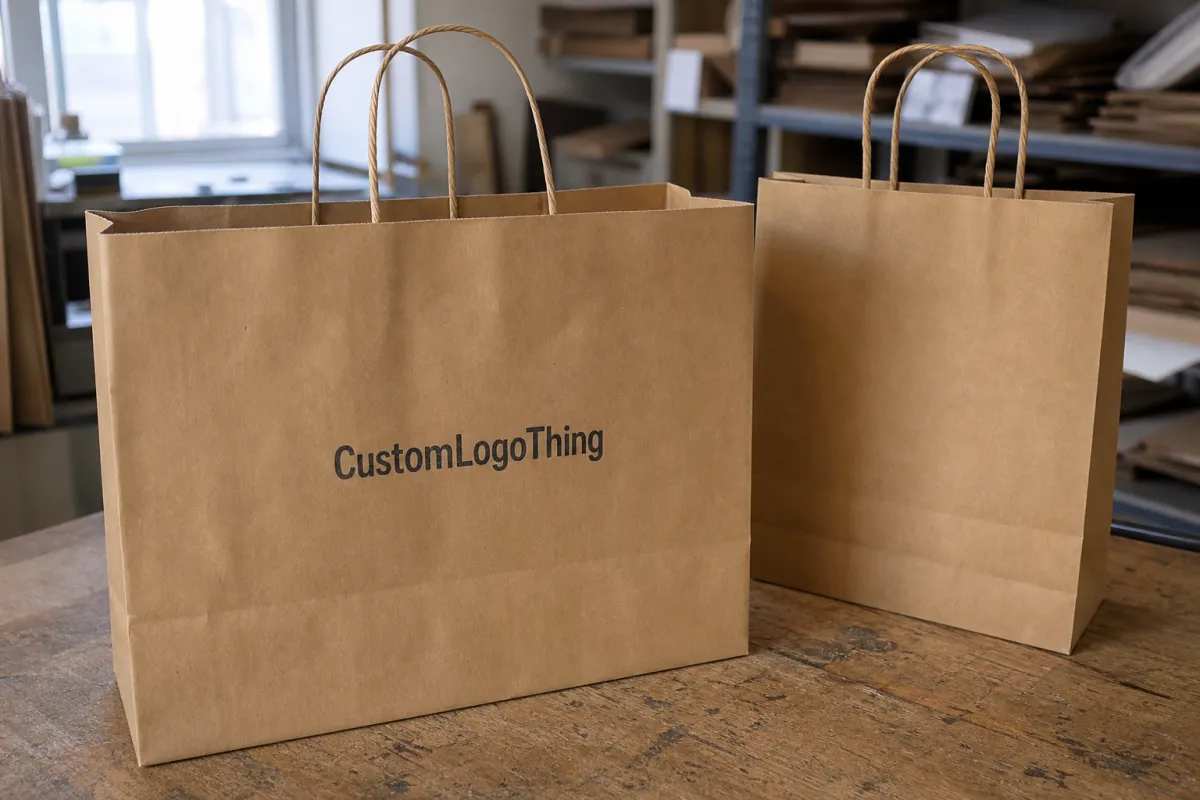
Subscription kits often fail at the reveal stage. Inserts slide, tissue wrinkles, and mixed products arrive bent or scuffed. A paper bag creates a consistent inner layer that keeps the contents together before the customer sees them.
That consistency helps fulfillment too. Loose components take longer to place and are easier to misalign. A properly sized bag gathers apparel accessories, beauty items, stationery sets, and mixed bundles into one unit, which reduces rework and keeps the line moving.
It also gives brands a simpler alternative to heavier custom structures. Compared with rigid gift boxes or complex inserts, paper bags are usually lighter, easier to source, and more practical for recurring programs that need repeatable specs.
"A bag is only decoration if it never has to survive production."
The buyer's question should be whether the bag works in the pack line and on the truck, not just whether it photographs well. A good spec has to balance presentation with handling, stacking, and closure performance.
For programs that use multiple packaging components, spec the bag alongside the outer carton and inserts. If you need to compare packaging options, review Custom Packaging Products alongside the bag spec so the system is designed as one build.
How the Bag Fits Into the Unboxing Flow
Most subscription packaging follows a simple sequence: outer carton, inner bag, then product reveal. That layered structure gives the kit a more finished feel and helps hide variation from cycle to cycle.
The bag sits late in the pack flow. Products are gathered, folded or sealed, then placed into the final shipper. If the opening is too tight, packers fight the bag. If the gusset is wrong, it collapses. If the bag is too deep, the contents sink and shift. Flat dimensions alone do not tell you whether it will work.
Filled samples matter more than flat samples. The best test is the actual packed kit with tissue, cards, closures, and bulky inserts included. That version shows whether the bag still closes cleanly and keeps the contents aligned.
There is also a difference between a display bag and a transit-ready bag. A display bag only needs to look neat inside the carton. A transit-ready bag needs more body, better crush resistance, and a closure that stays put if the parcel gets handled more than once.
Pack speed is another reason this format is useful. A consistent shape is easier to grab, fold, and place. That reduces repacking, which often becomes the hidden cost when the packaging spec is off.
Choosing the Right Stock, Handles, and Print
The technical choices matter more than the artwork. Paper weight, handle style, closure method, print coverage, and finish all affect cost and performance. Those are the decisions that determine whether the bag feels sturdy or flimsy.
For lightweight kits, 120-150 gsm kraft or coated paper is often enough if the contents are flat and the bag stays inside the shipper. For heavier bundles, 170-250 gsm gives more stiffness and better crease resistance. If the bag will be carried, reused, or stacked, heavier stock is usually the safer choice.
Finish changes both feel and risk. Uncoated kraft looks warmer and more natural. Coated stock improves print sharpness. Lamination can protect the surface, but it adds cost and can make the bag feel less paper-like. In many programs, a durable matte or semi-coated surface is more useful than a glossy finish that scuffs easily.
Handle and closure choices
Use the simplest option that fits the use case. No-handle bags work well for nested kits and internal packs. Die-cut handles keep the look clean and stack well. Rope handles feel more premium and can support carry use, but they add cost and are often unnecessary if the bag never leaves the carton. Closures should follow the same logic: a sticker seal, fold-over top, or tuck can be enough when the bag only needs to stay neat in transit.
Print decisions that move the budget
One-color branding on kraft paper is usually the lowest-cost route and still looks strong when the layout is disciplined. Full coverage, extra spot colors, foil, and soft-touch finishes raise setup and unit cost quickly. Those effects can work, but they should earn their place in the budget.
For many buyers, clarity matters more than complexity. A clean logo, good spacing, and sensible contrast often do more for a subscription kit than decorative extras. Simple artwork also tends to hold up better across repeat runs and reorders.
| Option | Typical Use | Indicative Unit Cost | Notes |
|---|---|---|---|
| Lightweight kraft bag | Flat inserts, small accessories, low-fill kits | $0.18-$0.32 at 5,000 units | Good for simple branding and low weight |
| Medium-weight printed bag | Standard subscription bundles, mixed product sets | $0.28-$0.48 at 5,000 units | Balanced structure, wider finish options |
| Premium coated or laminated bag | Gift-style presentation, higher-touch unboxing | $0.45-$0.85 at 5,000 units | More visual impact, higher finishing and handling cost |
If sustainability is part of the brief, ask for paper source, recycled content, and certification claims in writing. FSC is a common sourcing reference. For recycling guidance, the EPA recycling resources are useful. Just remember that coatings, metallic inks, and lamination can affect how the bag is sorted after use, so the claim should match the actual build.
Cost, Pricing, and MOQ: What Drives the Quote
Pricing usually comes down to five variables: size, paper weight, print complexity, handle type, and order quantity. Size and stock often matter more than buyers expect. A small change in height or gusset can increase board usage enough to move the price.
MOQ changes the math. Smaller runs often land in the $0.60 to $1.10 range per bag because setup, plates, and make-ready are spread across fewer units. As volume rises, the same basic structure may drop below $0.40 if the print is simple. That does not make the lowest price the best choice; it only shows how scale affects the quote.
Ask for tiered pricing so you can compare real breakpoints. A quote at 3,000 pieces and another at 10,000 pieces usually shows the tradeoff between unit cost and total spend. That matters because a lower per-unit price can still be a worse purchase if it leaves you with excess inventory.
Request landed cost, not just ex-factory pricing. Freight, cartons, plates, setup, and finishing can change the final number enough to alter the decision. If the quote omits those items, you are not comparing full costs.
Every quote should include the same core fields:
- Final bag dimensions and dieline
- Paper weight and stock type
- Handle style or closure method
- Print method, color count, and finish
- MOQ, lead time, and sample availability
- Whether shipping, plates, and setup are included
If those details are missing, comparison shopping becomes guesswork. A cheaper unit price may hide thinner paper, smaller dimensions, or separate charges that were left out of the headline number.
Production Process and Timeline: From Proof to Delivery
A clean production schedule starts before artwork is final. The usual path is brief, dieline confirmation, artwork proof, sample or mockup, approval, manufacturing, inspection, and shipment. That order matters because a mistake found early is cheap; a mistake found after print approval is not.
For a standard printed order, many teams should plan on about 12-15 business days after proof approval for production, then add transit time. Samples can add several days if the bag is complex or if revisions are needed.
Most delays are routine rather than dramatic: missing measurements, late color changes, a seam too close to a logo, or handle orientation approved too late. Those issues do not look urgent in email, which is why they often survive too long.
Quality control should happen at multiple points. Check the proof against the dieline, confirm the material thickness, review glue placement, inspect handle attachment, and verify print registration. On arrival, inspect for scuffing, crushed corners, ink rub, and uneven folding. Those are the failures that usually show up first in real use.
For higher-value kits, it can be worth testing the package against a recognized transit protocol such as ISTA 3A. The reference at ISTA is useful if the program needs more structure around validation. The point is not over-engineering the bag; it is checking whether the presentation survives real handling.
Build a buffer into the schedule for seasonal spikes, influencer drops, and renewal peaks. If inventory lands late, a rushed reprint can erase the savings from the original quote.
Step-by-Step Ordering Guide for Subscription Programs
The cleanest ordering process starts with the packed kit, not the artwork file. Measure the finished contents with tissue, inserts, and any closure fold included. A bag sized to the empty product often ends up wrong once the full set is assembled.
- Measure the packed kit, then add room for folds and closure.
- Confirm the internal width, gusset, and height that matter.
- Choose paper weight based on the filled load, not the hero item.
- Select handle or closure style after the pack flow is set.
- Build artwork around the largest visible panel first.
- Run a filled sample on the actual packing line before approval.
That last step saves money because a bag can look perfect in a proof and still be awkward in production. If the opening is tight or the fold sequence slows the packer down, the line will show it immediately.
Artwork also needs to respect the dieline. Logos too close to a gusset line can distort once the bag is assembled. Fine lines can disappear near folds. Text that looks clear on screen can become awkward after the paper is glued and creased. Map the design to the real structure, then check the visible panel as if the bag were already filled.
If the program will reorder, ask for a complete spec file after approval. Final dimensions, stock, handle details, print method, and approved artwork should all be documented. Reorders move faster and fail less often when the approved version is easy to find.
Common Mistakes That Inflate Cost or Hurt Presentation
The expensive mistakes are usually small. Sizing the bag to the outer carton instead of the packed contents wastes material and creates a loose look. Choosing a glossy finish because it looks good on a mockup can backfire when the surface scuffs during packing or shipment. Approving artwork without checking seam location can force a reprint that should have been avoided.
Over-specifying is another common trap. Foil, heavy lamination, extra spot colors, and complex effects can make the render look expensive, but they may not improve the customer experience much if the bag is only seen briefly inside a mailer. In many cases, better structure and a cleaner print do more for perceived value.
Another miss is forgetting how the bag behaves after packing. A beautiful bag that collapses inside the carton is a bad bag. A handle that bruises under load is also a bad bag. A closure that shifts during transit ruins the reveal. These failures are usually visible in the first sample if anyone tests it properly.
"Beautiful is not enough. A bag has to fit the line, fit the carton, and still look intentional after transit."
Keep the design simple enough to manufacture well and strong enough to survive the actual packing flow. That is what protects both presentation and unit economics.
Expert Tips and Next Steps for a Smarter Order
Standardizing one or two bag sizes across a subscription program saves time and money. It simplifies storage, keeps reorders predictable, and reduces the number of specs that need to be maintained. Brands with several tiers often find that one bag family covers more use cases than expected.
A pilot run is worth it even if the spec seems settled. A limited order lets you test packing speed, customer reaction, and shelf appeal before larger spend is locked in. It also shows whether the bag still works once inserts, tissue, and promo cards are added.
If sustainability claims matter, make them measurable. Ask for paper grade, fiber source, and any certification details in writing. If the bag is supposed to be recyclable, confirm whether inks, coatings, or adhesives change how it is handled after use.
Paper Shopping Bags for subscription boxes work best as part of a repeatable system, not a one-off design exercise. The strongest programs treat the first order as a testable spec, document what passed, and use that data to tighten the next run.
FAQ
How do I size paper shopping bags for subscription box kits?
Measure the packed kit, not the empty products. Add room for tissue, inserts, folds, and any closure overlap. Ask for a dieline or a filled sample so the bag reflects the real internal dimensions and does not wrinkle or split under load.
What paper weight works best for paper shopping bags for subscription box shipments?
Use lighter stock for flat, low-weight kits and heavier stock for taller or denser bundles. A practical range is 120-150 gsm for lighter presentation bags and 170-250 gsm for more structure. Match the paper to the filled load, not the hero item alone.
Do subscription box paper bags need handles or closures?
Only if the use case calls for it. Handles help when the bag is carried or reused. Closures help when the bag stays inside a shipper and needs to hold its shape during transit. Die-cut handles, rope handles, sticker seals, and fold-over tops each solve a different problem.
How much do custom paper shopping bags for subscription boxes usually cost?
Cost depends on size, stock, print coverage, finish, and volume. Smaller runs often cost more per unit because setup costs are spread across fewer bags. Larger orders usually lower the unit price, but freight, plates, and finishing still affect the final number.
What should I ask for in a quote for paper shopping bags for subscription boxes?
Ask for the dieline, paper weight, handle type, print method, MOQ, lead time, sample option, and whether shipping or setup charges are included. Also request the final approved spec so the next run matches the first one without guesswork.

