Performance Golf Caps material and Sizing Guide for Buyers starts with a simple reality: a cap can photograph well, carry a clean logo, and still feel wrong after a few holes. Sweat, crown depth, closure range, and fabric handfeel decide whether the cap disappears on the head or becomes something the wearer keeps adjusting. If you are sourcing for a team, a pro shop, a retail line, or a branded event, the right spec needs to work in heat, hold shape after repeated wear, and fit more than one head shape without compromise. That is the practical purpose of this guide.
Performance Golf Caps Material and Sizing Guide: why good-looking caps fail
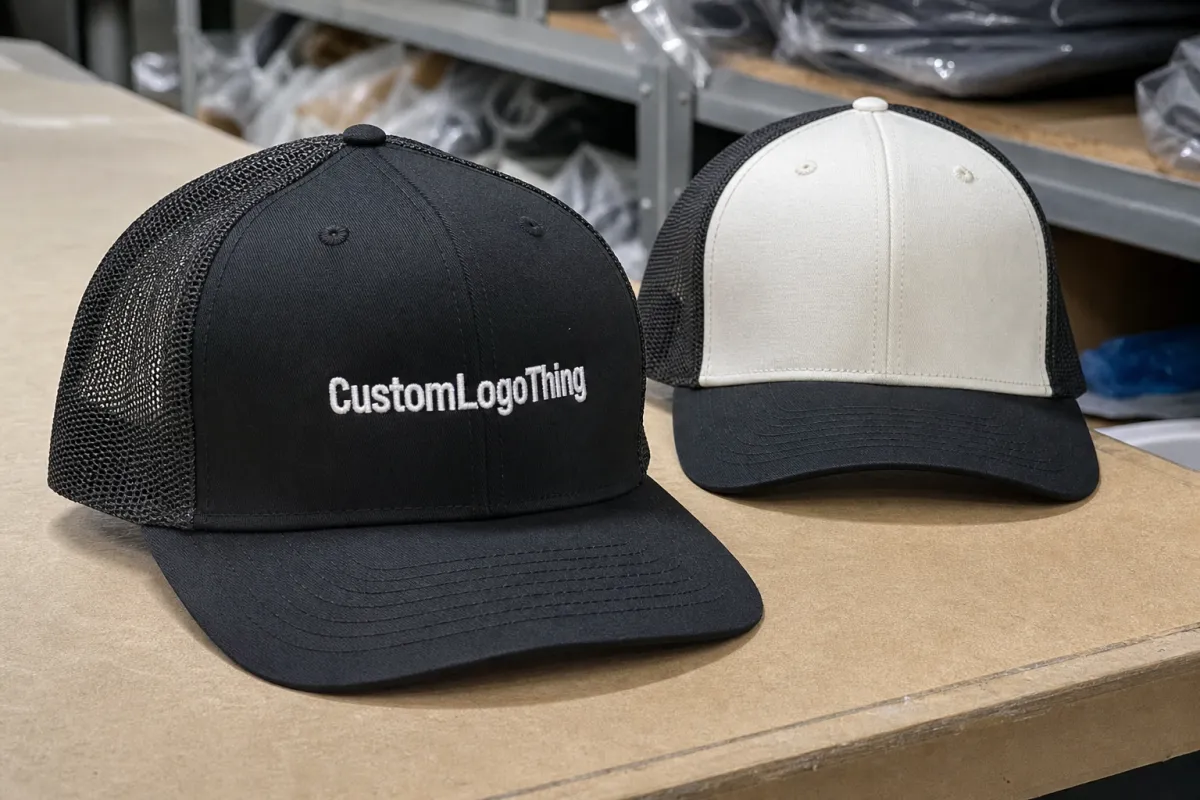
Most cap buying mistakes begin with appearance. A buyer sees a sharp front panel, a neat logo, maybe a color swatch that looks right under office lighting, and assumes the product is finished. Then the sample arrives and tells a different story: the crown sits too high, the fabric feels warm after ten minutes, the rear closure pinches, or the bill warps after a little packing pressure. That gap between “looks right” and “wears right” is the reason a Performance Golf Caps material and sizing guide matters before any order is approved.
Performance means a few very specific things. The cap should dry quickly, allow air movement, hold its structure, and stay comfortable during a full round. It sounds straightforward, but those four requirements pull against each other. A fabric that feels soft may absorb too much moisture. A stiff crown may hold logo shape beautifully and still feel rigid on the head. A lightweight build can cool well and still collapse if the panels and inner structure are underbuilt. Buyers need to judge the cap the way an end user will: after a warm tee box, a long cart ride, and a full day of wear, not just in a sample room.
A few traits separate a genuinely usable performance cap from a generic promotional one:
- Low moisture retention so the cap does not stay damp after sweating.
- Airflow through the crown using mesh, perforation, or lighter panel construction.
- Controlled structure so the front keeps its shape without feeling overbuilt.
- Stable fit range across smaller, average, and larger head sizes.
- Durable stitching that holds up through wear, packing, and repeated cleaning.
That is the lens to use. Not “Does it look cool on a flat lay?” Cool is easy. Wearable is the part people pay for twice.
What makes a golf cap perform during a round
The strongest performance caps usually start with polyester or a polyester-spandex blend. Polyester dries fast, takes decoration well, and handles repeated wear better than cotton-heavy builds. A small amount of spandex can improve recovery, which matters if the cap is packed tightly or stretched on and off all day. Nylon can work too, especially in lighter constructions, though the handfeel and print behavior shift enough that buyers should see a sample before committing.
Fabric weight is worth checking rather than assuming. Most performance caps land in a lighter range than lifestyle headwear, and a few grams either way are noticeable once the cap heats up. A fabric that feels substantial on a table can feel dense on the course. In hot climates, buyers usually do better with lighter face fabrics, breathable side or back panels, and a sweatband that manages moisture instead of simply absorbing it.
Crown shape changes how the cap wears. Low-crown styles sit closer to the head and often feel more modern or athletic. Mid-crown caps are the safest general-purpose choice because they suit a wider range of wearers. High-crown builds give more front-panel space for branding, but they also create more volume and can feel taller than some golfers want. That is why sizing and shape belong together. A cap that is “one size fits most” on paper can still fail badly if the crown is too shallow for the intended wearer or too tall for the intended look.
Details matter more than buyers expect. Stitch density affects durability and the way the cap keeps its form. Panel count changes fit, seam bulk, and how a logo crosses the front. Brim stiffness decides whether the bill keeps its curve or starts to wave after repeated use. Closure hardware affects comfort and finish: hook-and-loop is forgiving, snapback is quick, strapback can feel more polished, and stretch-fit styles need better control from the start because there is less room to correct a poor pattern.
There is also the sweatband, which often gets overlooked until someone actually wears the sample. A thin, scratchy band cheapens the experience quickly. A softer band with enough structure to manage moisture makes the cap easier to forget, and that is the point. A good golf cap should disappear on the wearer’s head. If it keeps needing adjustment, the pattern or materials need work.
How to size the fit without guessing
Fit should be measured, not inferred from a label. Start with a tape measure around the widest part of the head, just above the eyebrows and ears, and record the circumference in centimeters. That gives you the actual head size. Then compare that number with the supplier’s closure range, crown depth, and sample fit. A lot of sourcing problems begin when buyers accept “one size fits most” without checking how much adjustment space the pattern really provides.
For adjustable caps, a working range often sits somewhere around 56-61 cm, but the exact comfort zone depends on crown depth, rear band construction, and closure type. If the target audience includes smaller or larger heads, ask for a wider usable range, such as 54-63 cm. For fitted styles, the target size should sit near the middle of the band rather than at the edge. Edge-of-range fits tend to feel awkward, even if they are technically within spec.
Crown depth deserves the same attention as circumference. Two caps can both be labeled medium and still wear very differently because one sits shallow and another sits deeper. That difference changes how the front panel frames the face, how the logo sits, and whether the brim feels balanced. If a sample looks fine in photos but rides high on the head, the issue is usually pattern depth, not logo placement or closure style.
Fit approval should involve more than one person. Three head shapes is a better minimum than one:
- Narrow head to confirm the cap can cinch down without puckering.
- Average head to test the intended baseline fit.
- Wider head to see whether the closure range and crown depth still hold.
That small amount of testing prevents expensive surprises. One cap that feels fine on one tester can still create a return problem across a full order if the pattern does not suit the actual audience.
Cost, pricing, and MOQ: what changes your unit cost
Cap pricing is usually a stack of small decisions rather than one big one. Fabric choice, panel count, closure hardware, decoration method, and packing all affect the number. A simple 5-panel polyester cap with a heat-transfer logo will usually land below a structured 6-panel cap with a woven patch, laser-perforated side panels, and a custom metal buckle. More operations mean more labor, more setup, and more chances for variation to show up in production.
MOQ matters because setup costs have to be spread across the order. At low volume, the unit price climbs quickly. At higher volume, the price improves, but the inventory risk increases too. A buyer ordering 300 caps for a tournament can tolerate a slightly higher unit cost if the cap is for a fixed event. A buyer ordering 5,000 units for retail has to think harder about fit, color accuracy, and sell-through. A spec mistake at that scale is not a small inconvenience; it becomes stock that has to be discounted, reworked, or stored.
| Spec level | Typical MOQ | Indicative unit price | Best use case | Tradeoff |
|---|---|---|---|---|
| Basic performance cap, 5-panel, hook-and-loop closure, heat-transfer logo | 300-500 pcs | $2.20-$3.80 at 1,000 pcs | Giveaways, club events, promo bundles | Lower cost, but less retail polish |
| Balanced retail spec, 6-panel, structured front, woven patch or embroidery | 300-500 pcs | $3.80-$6.20 at 1,000 pcs | Pro shops, team merchandise, premium events | Better presentation, slightly tighter margin |
| Premium stretch-fit or perforated build, custom closure, detailed decoration | 500+ pcs | $5.80-$9.50 at 1,000 pcs | Retail programs, higher-ticket collections | Looks stronger, but inventory risk rises |
Those figures are a buying map, not a quote. If a price seems unusually low, check what got removed from the build: lighter fabric, simpler decoration, fewer stitches, cheaper packing, or a weaker closure. If a price seems high, it is often because the cap is doing more work than a basic promo style. A useful Performance Golf Caps material and sizing guide should judge cost against use case, not against the cheapest number on the page.
Process and timeline: sample approval to production steps
A clean sourcing process usually follows the same path. The spec is reviewed first: fabric, crown shape, closure, logo method, quantity, and any packaging requirements. Then comes the digital mockup, followed by a sample or pre-production sample, fit approval, bulk production, inspection, and shipping. The sequence is simple enough. The trouble starts when buyers treat the sample stage like a formality instead of the point where the product gets confirmed.
Lead times vary, but a realistic planning window often looks like this:
- Mockup review: 1-3 business days.
- Sample build: 7-12 business days.
- Bulk production: 12-20 business days after approval.
- Shipping: depends on air or ocean freight, plus customs and final-mile delivery.
Late logo changes are one of the easiest ways to push a schedule off track. Material substitutions do the same thing. So does slow feedback from the buyer. A supplier may be ready to cut fabric, but if the logo position changes twice after the sample is issued, the clock resets. Build a little buffer into the schedule, especially if the caps are tied to a tournament date, a product launch, or a retail delivery window.
For packaged retail units, ask how the cartons are tested. Transit damage is easier to prevent than to fix, and golf caps show shipping damage quickly because the bill loses shape fast. Standards from ISTA can help define the testing approach for drops and vibration. If paper-based cartons or inserts are part of the brief, FSC guidance is useful for specifying certified material. Those checks do not choose the design for you, but they keep the support materials from drifting into vague sustainability claims.
Mistakes that make caps feel cheap fast
The quickest way to weaken a performance cap is to overcomplicate it. Too many logos, too much contrast, and too many materials crowd a small surface area and make the product feel busy instead of intentional. A clean front logo, one secondary mark if it is actually needed, and one or two material contrasts usually read better than a cap that tries to advertise every feature at once.
Fit mistakes are just as common. Buyers often assume one size fits most is enough, then discover that the audience includes a wider spread of head sizes than the spec can handle. A closure can technically cover the right measurement range and still feel wrong if the rear tail is bulky, the band is stiff, or the crown sits too shallow. The cap may be wearable, but not comfortably enough to earn repeat use.
Comfort problems usually show up in a few predictable places:
- Stiff inner bands that press into the forehead.
- Poor rear ventilation that traps heat where it should escape.
- Bill shapes that do not suit the intended golfer profile.
- Logo placement that collides with seams or panel breaks.
Packaging can hurt the product too. A cap tossed into a thin polybag can arrive wrinkled or crushed, and that immediately lowers the perceived value. For retail or e-commerce, use a carton that protects the bill, then add a layer of paper or tissue where presentation matters. If sustainability is part of the brief, specify recycled content, FSC certified paper components, or post-consumer waste where the material allows it. Biodegradable packaging only helps if the disposal path makes sense for the buyer; otherwise, it becomes a label without much real benefit.
Expert tips for a cleaner retail-ready spec
Build the cap spec from the use case outward. Tournament giveaway caps should lean toward cost control, broad fit, and simple decoration. Pro shop retail caps need better handfeel, better shape retention, and cleaner finishing. Team merchandise usually sits between those two, with enough polish to sell well but enough value to survive a larger order. Starting with the audience instead of the factory catalog tends to sharpen the entire brief.
A retail-ready sample usually checks out against a short list:
- Crown depth matches the intended wearer profile.
- Sweatband feels soft and substantial, not paper-thin.
- Logo placement stays clear of seam intersections.
- Closure moves smoothly and does not snag hair.
- Color looks correct in daylight, not only under indoor lighting.
That daylight check matters more than people expect. Blue can look colder outside. Gray can flatten out. Black can reveal stitching more sharply than it did in the sample room. A cap that passes under office lights may still feel off in full sun, so the sample should be inspected outdoors and from a few angles before approval.
Decoration should stay disciplined. One strong logo treatment is usually enough for a performance cap. Extra marks only help if they serve the brand and do not interfere with wearability. Every additional hit adds cost, but it also adds visual noise. For clean sourcing, keep the Performance Golf Caps material and sizing guide next to the quote request and use it as a checklist rather than as background reading.
Standards can help keep the brief grounded. ASTM testing is useful for material and packaging references, while ISTA is practical for transit and drop testing. That kind of structure keeps the order from turning into a collection of loose preferences.
Next steps: build the brief, request quotes, and approve samples
Before asking for pricing, put the brief in one page if possible. Include the target wearer, expected head-size range, preferred fabric, decoration method, quantity, delivery date, and whether the cap is meant for retail, a giveaway, or team use. A short, clear brief saves time because suppliers are quoting against the same target instead of guessing what you meant by “premium” or “athletic.”
It also helps to request at least two sample options. One can be the leaner build and one can be the slightly more premium spec. That comparison makes the tradeoff visible. Sometimes the lower-cost cap is perfectly fine. Sometimes it is plainly the wrong place to save money because the fit, finish, or shape retention falls apart too quickly.
The same logic applies to packaging and shipping. If the caps are going to a pro shop, a solid carton with paper protection may be enough. If they are going direct to customers, ask for stronger pack-out protection and cleaner presentation. If a freight quote drops cost by cutting protection, ask what happens when the box takes a hit. The answer usually tells you whether the savings are real or temporary.
The best performance golf caps material and sizing guide is not a decorative content piece. It is a sourcing tool. Use it to match fabric to climate, crown to head shape, closure to wearer range, and packaging to the way the cap will actually move through production and shipping. That is how you avoid the expensive kind of surprise.
Frequently Asked Questions
What material works best for performance golf cap fabrics?
Lightweight polyester or a polyester-spandex blend is usually the safest place to start. Polyester dries quickly, keeps shape better than cotton-heavy fabric, and works well with embroidery, woven patches, and heat-transfer decoration. If the cap will be worn in heat or humidity, heavy cotton twill is usually a poorer choice unless the buyer specifically wants a lifestyle look over on-course performance.
How do I measure golf cap sizing correctly?
Use a tape measure around the widest part of the head, just above the ears and eyebrows, and record the circumference in centimeters. Then compare that number with the actual fit range, closure type, and crown depth. A sample should also be tried on by several head shapes so the approval is based on real fit rather than one person's preference.
How many sizes should a golf cap line include?
Most buyers can start with one adjustable size if the closure range is generous and the crown pattern is forgiving. A two-size run makes more sense when the target audience is broad or the cap is sold through retail. More sizes add complexity, so the extra options should solve a fit problem that is actually measurable.
What affects pricing most in custom golf caps?
Fabric choice, panel count, decoration method, and closure type usually drive the biggest price swings. Lower MOQ almost always raises the unit cost because setup work is spread across fewer pieces. If the quote seems high, ask for a breakdown so you can see whether the premium comes from the fabric, the logo, the closure, or the packing spec.
How long does sample and production lead time usually take?
Sampling often takes longer than buyers expect because fit, logo placement, and fabric handfeel all need review. Production timing depends on order size, material availability, and how quickly approvals come back. A little buffer time helps protect the launch date, especially if there is a revision cycle before bulk production starts.


