Most garment bags are not protecting the clothes as much as they are protecting the brand moment. That is why logo printed garment Bags Private Label orders matter more than buyers expect, especially for apparel brands shipping dresses, coats, uniforms, bridalwear, or boutique inventory that needs to look intentional the second it leaves the box.
A garment bag is simple. Until it is not. Size, film thickness, hanger opening, print placement, warning text, carton packing, and reorder consistency can all affect whether the final bag feels retail-ready or like something grabbed from the back of a dry cleaner. The difference is not always dramatic on a spreadsheet. It is very obvious in a warehouse.
What Logo Printed Garment Bags Private Label Actually Means
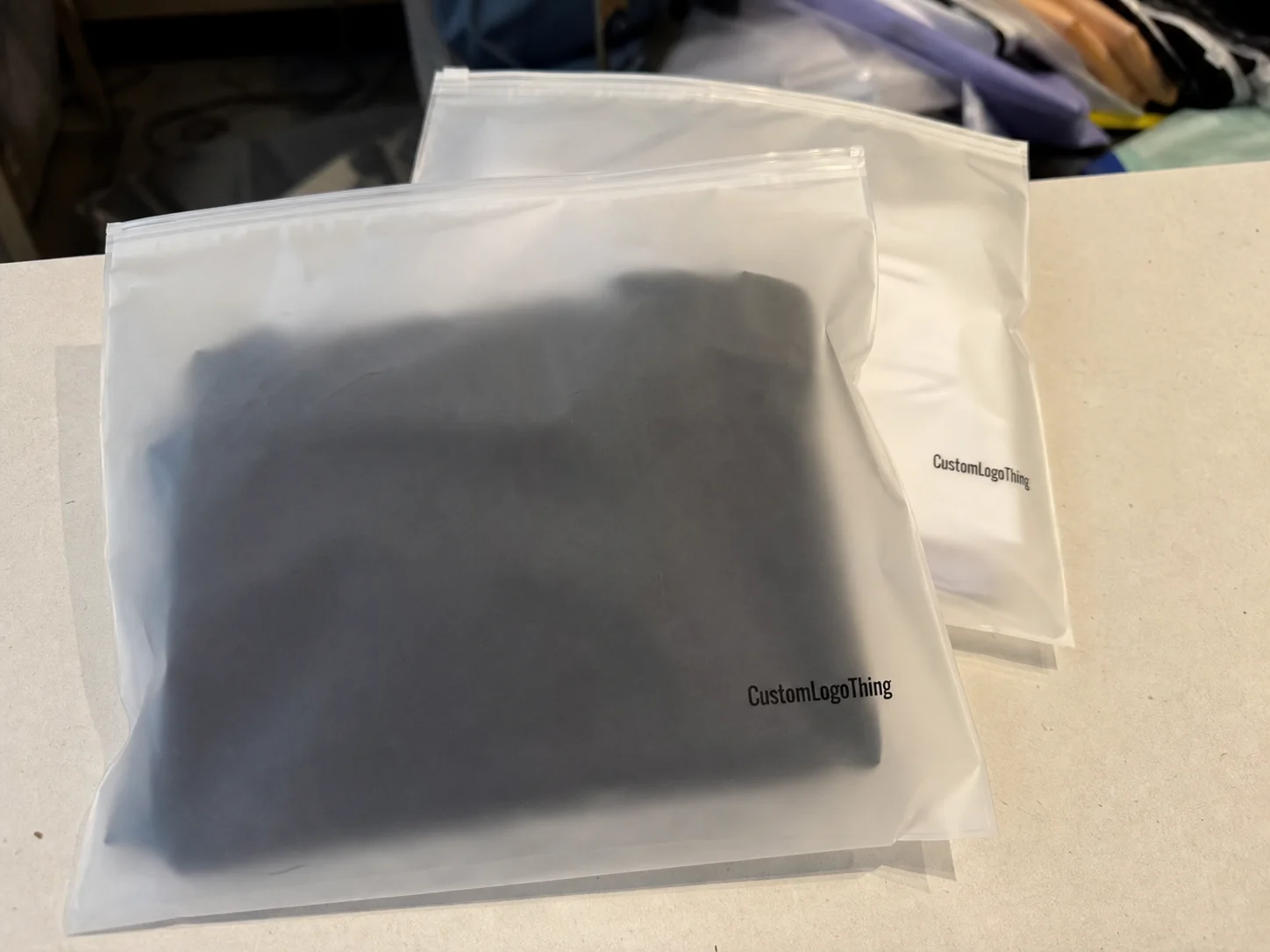
Logo printed garment bags private label packaging means plastic garment bags printed with your brand identity, not the supplier’s. That can include a logo, size mark, care message, barcode area, QR code, handling instructions, suffocation warning, or private label apparel branding. Sometimes it looks premium. Sometimes it just looks consistent. Both are valid.
Do not confuse every garment cover with private label garment packaging. A dry-cleaner bag is usually thin, generic, and built for short-term protection. A retail garment bag may be clearer, stronger, and better sized for folded or hanging presentation. A poly garment bag for apparel fulfillment may prioritize barcode readability, fast packing, and low unit cost. A private label version ties those functions back to your brand.
Private label does not always mean fancy. Often it means the logo is in the right place, the film thickness is repeatable, the warning copy is approved, and there is no random supplier branding printed near your neckline. Shocking, I know.
Common buyers include fashion brands, uniform programs, bridal shops, outerwear brands, boutiques, apparel distributors, sample rooms, and e-commerce fulfillment teams. They Buy Custom Printed garment bags for cleaner presentation, easier sorting, fewer generic shipments, and better perceived value. A $140 coat in a flimsy no-name bag feels less expensive before the customer even touches the fabric.
Before requesting a quote, pin down seven buying variables: bag size, film type, thickness, print method, order quantity, closure style, and lead time. Skip those details and every supplier will quote something slightly different. Then you are not comparing prices. You are comparing fog.
How Custom Printed Garment Bags Are Made
Most custom printed garment bags follow a practical production flow: film extrusion or film sourcing, bag conversion, printing, cutting, sealing, packing, and carton labeling. Some factories print before conversion. Others convert first, depending on the format and press setup. Either way, the finished bag has to run through equipment, not just look nice in a PDF.
LDPE is the common choice for soft, flexible, clearer garment bags. It has a smoother handfeel and works well for retail apparel packaging. HDPE is thinner and crinklier, often used where cost matters more than touch. Recycled-content blends may be available, but confirm clarity, strength, minimum order quantity, and print behavior before assuming they perform like virgin film. Plastic is not one single thing.
Formats vary. Flat open-end bags are the simplest. Side-gusseted covers give coats, gowns, and fuller garments more room. Wicketed bags work well in faster packing lines. Zipper Garment Bags cost more but feel more permanent for suits, bridalwear, uniforms, and travel-friendly packaging. Hanger-hole styles need clean reinforcement around the top because thin film can tear under load.
Flexographic printing handles most volume orders. It is efficient, repeatable, and suitable for one-color or multi-color logos on plastic film. Simple one-color logo printing is usually the safest route for lower complexity. Multi-color printing works when brand accuracy matters, but it adds plate costs, registration control, and more room for tiny alignment issues.
Artwork needs discipline. Fine lines can fill in. Tiny text can blur. Large ink coverage can stiffen the feel of the bag or show wrinkles more clearly. A centered logo, top chest print, repeating pattern, bottom brand block, barcode zone, or QR panel can all work, but each choice should match how the garment is folded, hung, packed, and photographed.
Buyer reality: Flexible packaging has tolerances. Plastic moves, ink behaves differently on film than on paper, and exact perfection is not how these bags work. Aim for controlled, approved, repeatable production.
Key Specs That Decide Whether the Bag Feels Cheap or Retail-Ready
Size is the first spec buyers underestimate. Shirts may fit in smaller folded poly garment bags around 10 x 14 inches or 12 x 16 inches. Dresses often need longer bags, especially if hung. Coats need more width, more depth, and stronger film. Bridalwear needs more room than anyone wants to admit, because tulle, beading, and structured bodices do not care about your tidy measurement chart.
Film thickness controls both cost and feel. Light garment bags may run around 1.0 to 1.5 mil, mid-range retail bags often sit around 2.0 to 3.0 mil, and heavier reusable zipper garment bags can go beyond that depending on construction. In microns, that roughly means 25 to 75 microns for many disposable or semi-disposable plastic options. Thicker film costs more because material weight drives pricing, but it also resists tearing and feels less disposable.
Finish matters. Clear film lets the garment show, which helps warehouse teams and retail staff. Frosted or semi-opaque film hides wrinkles and gives a softer branded look. Tinted film can look polished but may affect barcode scanning or color visibility. Matte finishes feel more premium, while glossy clear film can make apparel look crisp and clean if the garment itself is presentation-ready.
Closures change both function and price. Open-end bags are cheaper and fast to pack. Adhesive strips help with folded apparel and e-commerce shipments. Zippers feel better for suits, gowns, and uniforms but add cost and minimums. Snap closures exist, though they are less common for lightweight poly bags. Hanger openings, vent holes, and bottom seal strength should be specified, not assumed.
Logo size is another trap. Bigger is not automatically better. A large logo across a wrinkled bag can turn into modern art, and not the expensive kind. For many private label garment bags, a 3 to 8 inch logo works better than a billboard print, especially on thin film. Use one or two ink colors unless the brand truly needs more.
Compliance and usability details are not decoration. Certain bag sizes and markets may require suffocation warnings. Recycle marks may apply depending on material and local rules. Country-of-origin labeling can matter for the garment or outer carton. Barcode areas need enough quiet space to scan. Carton labels should show item code, quantity, dimensions, color, and purchase order number so warehouse receiving does not turn into a group therapy session.
Private label consistency comes from a spec sheet: dimensions, material, thickness, finish, print file name, ink colors, warning text, packing count, carton size, and reorder notes. If you also use hang tags, stickers, or size labels, keep them aligned with your garment bag system. Custom Logo Things also supports Custom Labels & Tags for brands trying to keep apparel packaging from looking like five vendors had an argument.
| Spec Choice | Typical Range | Best For | Tradeoff |
|---|---|---|---|
| LDPE film | 1.5-3.0 mil | Retail apparel, boutiques, e-commerce presentation | Higher cost than very thin HDPE |
| HDPE film | 0.8-1.5 mil | Low-cost garment coverage and short-term handling | Crinklier feel and less premium look |
| One-color print | Logo or warning text | Simple brand packaging and lower setup complexity | Less visual detail |
| Zipper style | Often 2.5 mil and up | Suits, gowns, uniforms, bridalwear | Higher unit cost and MOQ |
Cost, Pricing, and MOQ for Private Label Garment Bags
Pricing for logo printed garment bags private label orders depends on material weight first, then print complexity, bag size, quantity, packing method, and freight. Not the logo. The logo is not magic. A bigger bag uses more plastic. Thicker film uses more resin. Multi-color printing needs more setup and tighter registration. Zippers, adhesive strips, and special finishes add labor or components.
For simple one-color printed poly garment bags at moderate volume, buyers may see broad ranges such as $0.12-$0.35 per unit for smaller apparel bags and $0.35-$1.20+ for larger hanging garment covers, depending on thickness, size, and freight. Zipper garment bags, frosted finishes, heavy film, or large multi-color print areas can move higher. These are planning ranges, not universal price promises, because resin markets, destination, and order size change the math.
MOQ exists because factories need enough volume to justify film setup, print plates, ink setup, machine time, and packing labor. A simple stock-size one-color bag might start lower than a custom-size, thick, multi-color, zipper garment bag. If a supplier quotes 1,000 pieces for a stock print and 10,000 pieces for a custom extrusion, that is not random cruelty. Different setup burden.
Small runs help test presentation. Larger runs reduce unit cost but create storage, cash-flow, and forecasting commitments. A boutique might start with 2,000 to 5,000 pieces if stock sizing works. A distributor or uniform program may need 25,000 to 100,000 pieces to bring unit cost down and keep replenishment sane. The right number depends on monthly usage, reorder lead time, and how much warehouse space you can spare.
Prepare quote inputs before asking for pricing: dimensions, thickness, material, print colors, artwork file, order quantity, closure type, packing requirements, destination, and target delivery date. If you ask for a “nice custom garment bag,” you will get a nice vague quote. Then everyone loses time.
Setup fees and plate charges are usually tied to artwork and printing plates. They may be one-time costs if the artwork repeats, or they may recur if the logo changes, colors change, or plates wear out. Ask whether plates are stored for reorders and whether reorder pricing assumes the same art, same size, same film, and same packing.
Never compare quotes by unit price alone. A cheaper quote may use thinner film, smaller dimensions, looser tolerances, vague carton packing, or freight terms that make the invoice ugly later. Confirm Incoterms or delivery terms, carton counts, inspection expectations, and whether the price includes plate charges, proofing, and domestic delivery.
Process and Timeline From Artwork to Delivery
The order process is straightforward if nobody skips steps. Confirm specs. Request a Quote. Review artwork. Approve a digital proof. Approve a physical sample if needed. Start production. Inspect. Pack. Ship. Receive. Each step removes one class of problem before it becomes a carton full of expensive regret.
Timeline depends on artwork readiness, color matching, plate making, material availability, print complexity, production queue, inspection, packing, and freight method. Simple reorders may move faster because plates and specs are already approved. First-time logo printed garment bags private label orders usually take longer because the supplier has to verify every assumption.
Buyers constantly mix up production lead time and delivery time. Production lead time is the time needed to make the bags after approvals. Delivery time is the time needed to move cartons to your location. Trucks, ports, couriers, and receiving docks all exist. Annoying, but true.
As a planning range, simple printed garment bags may need 10-20 business days after proof approval for production, while custom film, zipper styles, multi-color printing, or heavier inspection requirements can push longer. Add domestic transit, air freight, or ocean freight on top. If color matching is strict, add proofing time. If legal needs to approve warning text, add that too.
Digital proofs confirm layout, print size, placement, warning copy, and orientation. Physical samples confirm material feel, thickness, clarity, print behavior, closure function, and whether the actual garment fits. A pre-production sample is worth the delay for new sizing, new film, premium retail use, multi-color logos, strict brand color, or first-time supplier orders.
For standards and shipping performance, buyers can reference ISTA packaging test methods for transport concerns, especially if garment bags are part of a larger e-commerce packout. For sustainability claims, use careful language and confirm materials against real guidance from sources such as the EPA recycling information. “Recyclable” is not a sticker you slap on because it sounds nice.
Build in a buffer. Five to ten business days for proof corrections, sample transit, internal approvals, or freight hiccups is not excessive. Treating the ship date like a motivational quote is how teams end up paying rush freight for bags that should have been ordered three weeks earlier.
Common Mistakes Buyers Make With Printed Garment Packaging
The first mistake is choosing the bag size from the garment’s flat measurement. Real garments need room for folds, hangers, cuffs, linings, bulk, and human beings packing quickly. Add practical clearance. For folded apparel, test with the thickest SKU. For hanging apparel, test with the real hanger, not the fantasy hanger from the tech pack.
The second mistake is ordering the thinnest film because it saves money. It does, briefly. Then bags split during fulfillment, corners poke through, returns look messy, and staff double-bag units to compensate. A small increase from 1.0 mil to 1.5 or 2.0 mil can change performance dramatically for heavier garments.
The third mistake is sending low-resolution artwork. Screenshots, JPEGs pulled from a website, and messy Canva exports do not print cleanly on flexible plastic. Vector artwork in AI, EPS, or clean PDF format is the safer route. Convert fonts to outlines. Define Pantone or CMYK expectations. Keep line weights realistic.
The fourth mistake is overloading the bag. Logo, slogan, care instructions, social handles, QR code, return message, barcode, warning text, and three icons all fighting for space will not look premium. It will look nervous. Give the logo breathing room and keep required information legible.
The fifth mistake is ignoring warehouse handling. A bag that looks fine on a desk may fail when packed by staff moving fast at scale. Ask how bags are supplied: rolls, bundles, wicketed stacks, or cartons. Confirm how many pieces per inner pack and outer carton. A smart packing format can save more labor than a tiny unit-price discount.
The sixth mistake is skipping compliance text. Suffocation warnings may be required for certain bag sizes and markets. Recycle marks, country-of-origin handling, and retailer routing labels may also matter. This depends on where you sell and how the packaging is used, so verify before production.
The seventh mistake is approving a quote without carton details, delivery terms, or reorder notes. Your simple spec sheet should include bag dimensions, material, thickness, closure, print colors, artwork version, warning text, carton quantity, carton dimensions, net weight, gross weight, and supplier item code. Boring? Yes. Useful? Extremely.
Next Steps Before You Place a Garment Bag Order
Start with the garment, not the bag. Identify whether it ships folded or hanging, whether the customer opens it at home or in-store, and whether staff need to scan, sort, steam, or hang it before sale. A bridesmaid dress, a chef coat, a cashmere sweater, and a school uniform do not need the same packaging.
- Garment type: shirt, dress, coat, suit, uniform, bridalwear, or sample piece.
- Format: folded poly bag, hanging cover, gusseted bag, zipper bag, or wicketed packing bag.
- Size: tested with real garments, hangers, folds, and packing method.
- Film: LDPE, HDPE, recycled-content blend, clear, frosted, tinted, matte, or glossy.
- Print: logo placement, ink colors, warning text, barcode zone, and artwork file version.
- Order plan: quantity range, target delivery date, packing count, storage space, and reorder trigger.
Test one or two sizes against actual garments before approving production. Measuring in a spreadsheet is cute. Stuffing an actual coat into the bag is better. If the garment fights the bag during testing, fulfillment staff will hate it at 600 units per day.
Create a private label packaging spec sheet. Include dimensions, material, thickness, finish, closure, print file name, ink colors, warning text, carton count, carton label format, and reorder notes. If your brand also needs neck labels, size stickers, hang tags, or care labels, keep those details linked to the same packaging record. A coordinated setup using Custom Labels & Tags and garment bags is easier to reorder than scattered files named “final-final-logo-new.”
Send suppliers clean quote information: vector logo, reference photos, desired finish, quantity range, shipping address, target arrival date, and compliance requirements. Ask for good, better, and premium options. For example, compare a 1-color 1.5 mil open-end LDPE bag, a 2.0 mil frosted bag with warning copy, and a 3.0 mil zipper cover for premium garments. Tradeoffs beat guessing.
The smartest logo printed garment bags private label order is not the flashiest one. It is the one that fits the garment, protects the presentation, hits the budget, and can be reordered without starting from zero.
FAQ
What are logo printed private label garment bags used for?
They are used to package, protect, identify, and present apparel under a brand’s own name instead of using plain stock bags. Common uses include boutiques, fashion brands, uniforms, formalwear, outerwear, bridal shops, sample sales, and e-commerce apparel fulfillment. They can carry a logo, size marker, warning text, barcode area, QR code, care message, or retail handling instructions.
What is the best material for logo printed garment bags?
LDPE is usually the best material for buyers who want a soft, flexible, clear garment bag with a smoother retail feel. HDPE can work for lighter, lower-cost applications, but it usually feels crinklier and less premium. Recycled-content options may be available, but confirm clarity, strength, print quality, and MOQ before assuming they perform like virgin film.
How much do custom private label garment bags cost?
Cost depends mainly on bag size, plastic thickness, material type, print colors, quantity, closure style, packing method, and freight. Larger and thicker bags cost more because they use more material, while multi-color printing can add plate and setup costs. The cleanest comparison is to request pricing at multiple quantities using the same dimensions, thickness, artwork, and delivery terms.
What MOQ should I expect for logo printed garment bags?
MOQ varies by factory, bag style, material, print method, and whether the supplier can use existing film stock. Simple one-color printed bags usually have lower minimums than custom-size, thick, multi-color, zipper, or specialty-finish bags. If the MOQ feels high, ask for a stock-size option, fewer print colors, or a phased order plan instead of weakening the entire spec.
How long does production take for private label garment bags?
Timeline depends on artwork approval, proofing, plate making, material availability, production queue, inspection, packing, and shipping method. First orders usually take longer than reorders because the specs, artwork, and print setup still need approval. Buyers should separate production lead time from transit time and build in a buffer for proof revisions, freight delays, and internal approvals.


