Two pet treat brands can launch nearly identical Rigid Gift Boxes in the same month, at the same price point, and still get very different reorder rates. I’ve seen one hold crisp texture and aroma for weeks while the other gets complaints about stale smell and greasy interior walls by week two. That is exactly why a pet treat Magnetic Boxes Material guide matters: box shape is only the visible part, while board density, liners, insert fit, and barrier strategy decide real performance.
For Custom Logo Things buyers, this topic usually starts as a visual branding discussion and quickly turns into a protection-and-cost conversation. Premium magnetic boxes can absolutely lift perceived value, but they should be engineered as systems, not just decorated shells. A solid Pet Treat Magnetic Boxes material guide helps you choose what truly protects product quality and what only inflates unit cost.
Pet Treat Magnetic Boxes Material Guide: Why Material Choice Decides Shelf Success
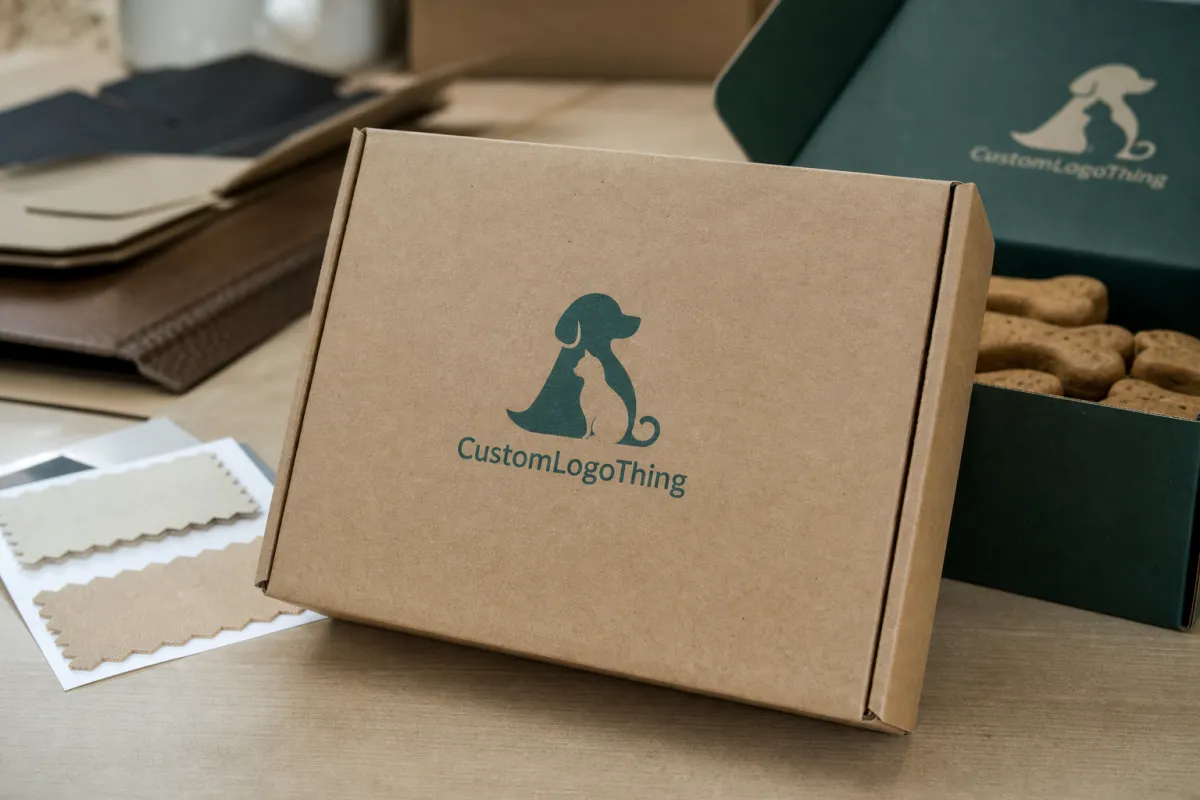
Start with a practical scenario. Brand A and Brand B both use a rigid magnetic box with similar dimensions, similar exterior graphics, and similar retail positioning. Brand A uses 1200gsm greyboard, a coated interior liner with better stain resistance, and a tight-fit inner pouch. Brand B uses 1000gsm board and a basic uncoated liner with a looser inner bag. Six weeks after launch, Brand A has stronger repeat orders and lower damage returns. Brand B has more corner crush, more grease marks, and more “treats seemed old” comments. That gap is the reason a pet treat Magnetic Boxes Material guide should be part of procurement from day one, not a last-minute check.
In pet treat applications, magnetic boxes are typically rigid paperboard cartons with concealed magnets inside the front wall and closing flap. They are common for premium training treat sets, holiday bundles, first-order welcome kits, and subscription add-ons. The closure adds a satisfying snap, and the rigid walls provide stronger shape retention than folding cartons. Still, this format is usually secondary packaging, not the main freshness barrier. A useful pet treat magnetic boxes material guide always separates “presentation packaging” from “food barrier packaging.”
Why are pet treats different from many other dry goods? Three reasons: aroma, fat transfer, and texture sensitivity. Oily chews can migrate grease through weak liners, freeze-dried products lose quality quickly with moisture ingress, and crunchy biscuits crumble with poor movement control. So the pet treat magnetic boxes material guide process needs to include inner pack selection, not just exterior decoration.
Another piece many teams miss: compliance context. If your treats remain in a sealed pouch inside the magnetic box, the rigid box may not be direct food-contact packaging. If you want direct contact in an insert or tray, then material and ink suitability standards get tighter, and you may need migration-related verification with your suppliers. A reliable pet treat magnetic boxes material guide should flag that early, before artwork approval.
Here is what smart Buyers Should Expect to evaluate: structural strength, substrate combinations, liner behavior, insert choices, finish durability, assembly tolerances, lead time realities, and landed cost impact. If you’re reviewing Custom Packaging Products for a premium launch, map each visual feature to a performance function. That single discipline prevents over-spec and under-protection at the same time.
Quick reality check: A beautiful magnetic box can still fail if the inner barrier is wrong. Freshness retention usually comes from pouch film structure and seal integrity, while the rigid box delivers protection, premium perception, and reusable value.
How Pet Treat Magnetic Boxes Work: Structure, Protection, and Brand Experience
The core build is straightforward: a rigid board shell (often greyboard or chipboard), an exterior wrap sheet, an interior liner sheet, magnets concealed at closure points, and a glued assembly process that locks squareness. Inside a detailed pet treat magnetic boxes material guide, each of those layers gets its own spec line because each layer changes performance and cost.
Board cores for this format are commonly 1000gsm to 1500gsm for most retail-ready sizes, with 1200gsm as a frequent middle point. Exterior wraps are often 128gsm to 157gsm art paper or specialty papers laminated to the board. Interior liners can be plain white, printed, coated, or textured. The magnetic pair is typically small neodymium or ferrite components selected for enough closure pull without making the box difficult to open repeatedly.
Closure quality depends heavily on placement tolerance. A 1mm magnet misalignment may still close, but the “snap” weakens and feels inconsistent across batches. At 2mm or more, users may press the flap repeatedly to find the closure point, which creates immediate frustration. A precise pet treat magnetic boxes material guide should include magnet position tolerance and a basic open-close cycle test target.
Protection functions go beyond closure. Rigid walls help resist panel flex and corner deformation in parcel networks, where boxes often face compression and short drops. For brittle products, insert design is just as important as wall strength. Paperboard partitions, molded pulp cavities, or fitted card trays reduce movement and reduce crumb generation during transport. In many tests, a moderate-strength insert performs better than simply increasing board thickness.
Barrier strategy is non-negotiable for most treats. Magnetic boxes are usually outer packs. Use sealed inner pouches (often multilayer film or high-barrier mono structures, depending on product and sustainability goals) to control oxygen and moisture. A practical pet treat magnetic boxes material guide connects those two components: inner barrier for freshness, rigid magnetic box for premium delivery and shelf impact.
From a brand experience point of view, finishes matter. Soft-touch lamination feels premium but can show fingerprints on dark colors. Matte film hides scuffs better than high gloss in many retail environments. Foil stamping adds contrast and shelf pop but increases tooling and alignment checks. Emboss and deboss improve tactile identity with minimal extra ink. A balanced pet treat magnetic boxes material guide compares these choices by durability, not just appearance.
Use cases where magnetic boxes perform well include launch bundles, seasonal gifting, boutique retail displays, and high-AOV direct-to-consumer kits. In each case, reuse value matters. Customers often keep these boxes, which extends brand visibility in homes and makes the format attractive despite higher cost than standard folding cartons.
Pet Treat Magnetic Boxes Material Guide: Key Factors to Select the Right Build
Board selection and thickness logic
Board thickness is one of the biggest structural decisions in any pet treat magnetic boxes material guide. Typical ranges:
- 1000gsm: lighter gift sets, smaller footprint boxes, lower product weight
- 1200gsm: common balance of stiffness and cost for premium retail
- 1400-1500gsm: larger formats, heavier assortments, higher compression risk
Moving from 1200gsm to 1400gsm can improve panel rigidity, but it also adds board cost, weight, and freight impact. If damage is mostly internal product movement, an improved insert may outperform thicker board at lower total cost. This is a classic decision point where a pet treat magnetic boxes material guide saves money by targeting the actual failure mode.
Wrap papers: print quality, abrasion, and brand tone
Common wrap options include coated art paper, textured specialty sheets, and kraft paper-look stocks. Coated art paper gives strong color fidelity and crisp detail. Textured papers create a handcrafted premium feel but can soften fine typography. Natural kraft aesthetics communicate authenticity and can work beautifully for clean-label pet lines, though dark ink contrast and scuff behavior should be tested first.
If your box moves through heavy parcel handling, check abrasion resistance. Some specialty wraps look excellent in proofs but scuff easily in real shipment. A solid pet treat magnetic boxes material guide pairs wrap choice with rub testing and carton-level transit checks.
Interior materials and insert paths
Interior choices include plain liner paper, printed liner paper, molded pulp, partitioned paperboard, and foam options such as EVA. For sustainability-driven programs, molded pulp and engineered paper inserts are often preferred over foam. If direct contact is planned, verify suitability and odor neutrality. For secondary packaging, focus on fiber shed risk, scuff risk on inner pouches, and fit stability under drop events.
Many buyers also compare rigid inserts versus lightweight corrugated cardboard support pieces. Corrugated can reduce cost and improve cushioning, but it needs smart design to avoid a low-end look in premium kits. A detailed pet treat magnetic boxes material guide helps teams prototype both and judge real-world tradeoffs.
Treat type compatibility
Different treats demand different internal strategies:
- Oily chews: stronger stain-resistant liners, sealed pouches with better grease barrier, tighter fit to prevent pouch rubbing
- Freeze-dried cubes: moisture-sensitive; prioritize high-barrier inner packs and rigid insert support to reduce crushing
- Crunchy biscuits: movement control first; cavity inserts reduce breakage
- Soft bites: aroma control and seal integrity become central
This is where the pet treat magnetic boxes material guide shifts from “packaging preference” to “product protection plan.”
Sustainability choices without losing premium feel
You can absolutely pursue premium and eco-minded positioning together. Look for FSC certified papers and boards through chain-of-custody suppliers (reference: fsc.org). Ask about recycled content percentages and post-consumer waste where available. Many premium wraps now include recycled fibers with good print performance.
Also review finish combinations. Heavy multi-layer film and mixed-material inserts may reduce recyclability in some regions. A practical pet treat magnetic boxes material guide often recommends simplified material stacks, minimal plastic where feasible, and paper-based inserts as first pass. If your brand goals include biodegradable packaging claims, confirm definitions and local waste-stream reality before labeling.
Quality and validation standards
Before approving production, run checks for colorfastness, rub resistance, odor transfer, and closure consistency. For shipping performance, plan transit simulation aligned with parcel handling profiles; ISTA protocols are a common reference point (see ista.org). A no-surprises pet treat magnetic boxes material guide includes these tests before mass run commitment.
Production Steps, Process, Timeline, and Lead Time for Custom Orders
Custom rigid box production follows a predictable path, but each stage has failure points. The best way to use a pet treat magnetic boxes material guide is to attach it to your internal project timeline and approvals calendar.
Typical production sequence
- Dieline and structural brief: dimensions, product fit, opening direction, insert concept
- White sample: plain structural mockup for fit and usability
- Artwork proofing: color, bleed, alignment, panel hierarchy, legal text
- Material approval: board gsm, wrap sheet, liner, magnets, adhesive system
- Pre-production sample: final-like sample with printing and finishing
- Mass production: cutting, wrapping, magnet embedding, assembly, QC checks
- Packing and shipment: master carton configuration, palletization, freight handoff
In a standard program, sampling can take 7-12 business days for simple builds and longer for special textures or multi-step finishes. Production after approval often runs 12-20 business days depending on complexity and quantity. Freight adds variability. Your pet treat magnetic boxes material guide planning should include buffer time, especially for launch windows with fixed retail dates.
Where delays usually happen
Most schedule slips are not machine issues; they are spec clarity issues. Common examples include late artwork corrections, last-minute board substitution, magnet sourcing mismatches, and insert redesign after final fit testing. Every one of those can trigger new sampling and reset the calendar. A clear pet treat magnetic boxes material guide reduces these loops by locking critical specs early.
Complexity increases timeline. Multiple foil colors, deep emboss, intricate cavity inserts, and multi-SKU assortments all require extra setup and tighter QA controls. If your campaign depends on a single ship date, simplify one variable. In practice, reducing finish layers is often safer than compressing QC time.
Approval checklist teams should lock early
- Final dimensions and tolerance
- Board grade and thickness
- Magnet strength target and placement tolerance
- Exterior/interior paper specs
- Print references and color acceptance range
- Finish stack (lamination, foil, emboss, spot effects)
- Insert structure and material
- Pack-out method in master cartons
Cross-functional alignment matters here. Marketing signs appearance, QA checks performance, operations validates packing flow, and procurement confirms commercial terms. Your pet treat magnetic boxes material guide should become the shared master sheet across those teams, not a design-only document.
Cost, Pricing, MOQ, and Unit Cost: What Drives the Quote
Rigid magnetic boxes are premium by nature, so quote transparency matters. A disciplined pet treat magnetic boxes material guide approach helps buyers compare apples to apples and avoid surprises during sampling.
Main cost drivers
- Board thickness and density
- Exterior wrap grade and print coverage
- Interior liner type (plain vs printed vs coated)
- Magnet size/count and insertion process
- Insert complexity and material type
- Finish steps (matte film, foil, emboss, spot coatings)
- Assembly labor and QC level
For many projects, unit pricing at 5,000 pieces can land roughly in the $0.95 to $2.40 range for standard sizes, with higher values for specialty finishes and complicated inserts. At 1,000 pieces, the same design may rise sharply due to setup allocation. That is why MOQ expectations should be built into your pet treat magnetic boxes material guide decisions from the first RFQ.
Example price comparison table
| Build Tier | Typical Spec | MOQ Range | Estimated Unit Cost (5,000 pcs) | Best Fit |
|---|---|---|---|---|
| Good | 1000-1200gsm board, matte lamination, simple card insert, 1-color inside | 2,000-3,000 | $0.95-$1.35 | Intro premium lines, controlled budget programs |
| Better | 1200gsm board, printed liner, improved insert fit, selective foil | 3,000-5,000 | $1.30-$1.95 | Mainstream premium retail and DTC kits |
| Best | 1400gsm board, specialty wrap, multi-finish effects, engineered insert | 5,000+ | $1.90-$2.40+ | Gift sets, launch editions, high perceived-value programs |
Dimensions also change cost quickly. A modest increase in depth can drive more board usage, larger wraps, and higher packing volume in shipping cartons. If your pet treat magnetic boxes material guide includes multiple SKUs, standardizing footprints can reduce tooling variation and improve production efficiency.
Finish decisions deserve discipline. Matte lamination alone may deliver a clean premium look with good scuff resistance. Adding foil + emboss + spot UV can look exceptional, but it adds setup steps, tolerance checks, and reject risk. Choose one hero finish first, then test if additional processes truly add conversion value. This is one of the easiest ways to keep your pet treat magnetic boxes material guide commercially sound.
Shipping configuration matters too. Some rigid magnetic boxes ship pre-assembled for quality consistency, while collapsible styles can reduce freight cube. Both have tradeoffs in labor and presentation. Your pet treat magnetic boxes material guide should evaluate landed cost, not factory unit price alone.
For quote hygiene, provide exact dimensions, treat weight range, intended channel (retail shelf, e-commerce, gifting), expected quantity tiers, and finish priorities. Request at least three price breaks (for example 2,000 / 5,000 / 10,000) and one alternative spec. Teams sourcing through Custom Packaging Products typically get faster, more comparable quotes when that brief is standardized.
Common Mistakes in Pet Treat Magnetic Box Material Selection
Mistake one is selecting for looks only. A box can look premium in a studio photo and still fail under humidity, grease transfer, and repeated handling. A working pet treat magnetic boxes material guide puts performance checks before decorative upgrades.
Mistake two is assuming the magnetic box itself preserves freshness. It rarely does. If aroma and texture stability are priorities, inner barrier packaging is doing the heavy lifting. The pet treat magnetic boxes material guide should always identify the inner pouch structure and seal approach before finalizing outer box materials.
Mistake three is overdesigning finishes before structural validation. I’ve seen programs approve foil, emboss, and specialty coatings while closure alignment and corner strength were still unstable. The result: beautiful boxes with higher defect rates. Lock structure first, then decorate.
Mistake four is choosing inserts that shed fibers or abrade inner pouches. This is more common than many people expect, especially in rough-cut low-density inserts. Ask for handling tests with actual filled pouches. Your pet treat magnetic boxes material guide should include rub checks and drop checks for insert interaction.
Mistake five is ignoring tolerance stack-up. Board thickness variation, wrap stretch, glue application, and magnet placement all accumulate. Small offsets can make closure feel inconsistent at scale. Set acceptance criteria for alignment and snap force, and sample across multiple units, not a single hero sample.
Mistake six is comparing mismatched quotes. One supplier prices 1000gsm board and simple liner, another prices 1400gsm with upgraded insert, and teams still try to compare unit numbers directly. Build one master spec sheet tied to your pet treat magnetic boxes material guide, then request alternatives as separate lines.
Mistake seven is rushing launch approvals and skipping transit simulation. A short delay for testing is cheaper than a large reprint after damage complaints. Use structured pre-launch checks, especially for DTC channels where parcel handling can be rough.
Expert Tips and Actionable Next Steps to Finalize Your Pet Treat Magnetic Boxes Material Guide Decisions
If you want smooth execution, follow a fixed sequence. First define treat format and shelf-life expectations. Second, choose inner barrier packaging. Third, define rigid box structure. Fourth, select finishes that fit budget and durability targets. That order keeps your pet treat magnetic boxes material guide grounded in product reality instead of aesthetics alone.
Build a good / better / best matrix
Create three spec tiers before requesting final quotes. Each tier should show board grade, wrap type, insert material, finish stack, recyclability profile, and expected unit range. This turns internal debate into a clear business choice rather than subjective preference. A tiered matrix is one of the most useful tools inside a pet treat magnetic boxes material guide.
Request physical alternatives and test in-house
Ask suppliers for at least two board thicknesses and two insert approaches. Then run basic handling tests internally:
- 10x repeated open/close cycles to check magnet consistency
- Short drop sequence in shipper carton to evaluate corner crush
- Rub test of filled pouches against insert contact points
- Visual scuff review after routine warehouse handling
These simple steps catch issues early and make the pet treat magnetic boxes material guide far more practical than a spec sheet alone.
Enforce cross-functional sign-off
One master document should be approved by brand, QA, operations, and procurement. If even one function approves late, change orders multiply. Tie every quote, sample, and PO line back to that single pet treat magnetic boxes material guide record.
Launch-readiness checklist
- Approved dieline and final dimensions
- Color targets and finish standards locked
- Closure alignment test passed
- Insert fit test passed with filled product
- Transit simulation completed
- Master carton pack-out approved
- Freight schedule and buffer confirmed
For teams ready to move, gather product dimensions and weights, define your three quantity tiers, shortlist top two finish priorities, and request comparable proposals using one standardized brief. You can also review available structures through Custom Packaging Products to speed up concept filtering before sampling.
Final thought: the fastest path from research to reliable production is turning your pet treat magnetic boxes material guide into a supplier-ready specification package with measurable tolerances, approved materials, and clear test criteria. That is how the pet treat magnetic boxes material guide becomes a real buying tool instead of a design mood board.
FAQs
What materials are best in a pet treat magnetic boxes material guide for oily or high-aroma treats?
Use magnetic boxes as secondary packaging, then pair them with high-barrier sealed inner pouches to control oil transfer and aroma loss. Choose stain-resistant interior liners and wraps with solid rub resistance so outer presentation stays clean. In a strict pet treat magnetic boxes material guide, also verify odor neutrality and relevant ink/adhesive suitability before production.
How do I estimate lead time for custom pet treat magnetic boxes with inserts?
Break timeline into design, sampling, revision rounds, production, and shipping instead of asking for one single number. Complex inserts and specialty finishes usually add days due to setup and QC checks. A disciplined pet treat magnetic boxes material guide locks dimensions, artwork, and core materials early so repeat sampling loops are minimized.
What MOQ should I expect for pet treat magnetic boxes, and how does it affect unit cost?
Rigid magnetic boxes typically run higher MOQs than folding cartons because of setup, tooling allocation, and manual assembly steps. Lower quantities spread those fixed costs across fewer units, so per-unit pricing rises fast. Your pet treat magnetic boxes material guide should include tiered quote requests to show where meaningful cost breaks begin.
Can pet treat magnetic boxes be eco-friendly without losing a premium look?
Yes. You can combine recycled materials, certified paper options, and simplified insert structures while maintaining a premium finish profile. Many brands reduce plastic-heavy elements and still keep strong shelf presence through smart print and tactile effects. A balanced pet treat magnetic boxes material guide maps sustainability targets and visual goals together, not as separate decisions.
What should I include in a quote request based on a pet treat magnetic boxes material guide?
Provide external and internal dimensions, treat type, inner-pack format, target quantity tiers, sales channel, board preference, insert style, finish requirements, and closure expectations. Ask suppliers to price one main build plus one alternative with clear differences. A complete brief aligned to a pet treat magnetic boxes material guide gives comparable pricing and better sample recommendations.


