pet treat Paper Shopping Bags moq is usually not a random number. It reflects setup time, print method, paper grade, and how much handling the run needs before the first packed carton leaves the floor. For a treat brand, that matters because the bag is doing three jobs at once: carrying the product, protecting aroma, and selling the brand on shelf.
That is why a small order can cost more per bag than a larger repeat order, even if the design looks simple. A 2,000-unit launch with a custom dieline, coated stock, and a matte finish may carry more setup pressure than a 10,000-unit reprint with the tooling already in place. From a buyer's point of view, the real question is not just the minimum. It is whether the minimum supports the right unit cost, lead time, and presentation for the channel you are selling into.
Practical rule: if the bag must look premium, survive shipping, and support margin, you should judge the quote as a package of MOQ, cost per piece, and delivery schedule, not as a single number on a line sheet.
Pet Treat Paper Shopping Bags MOQ: what drives the number
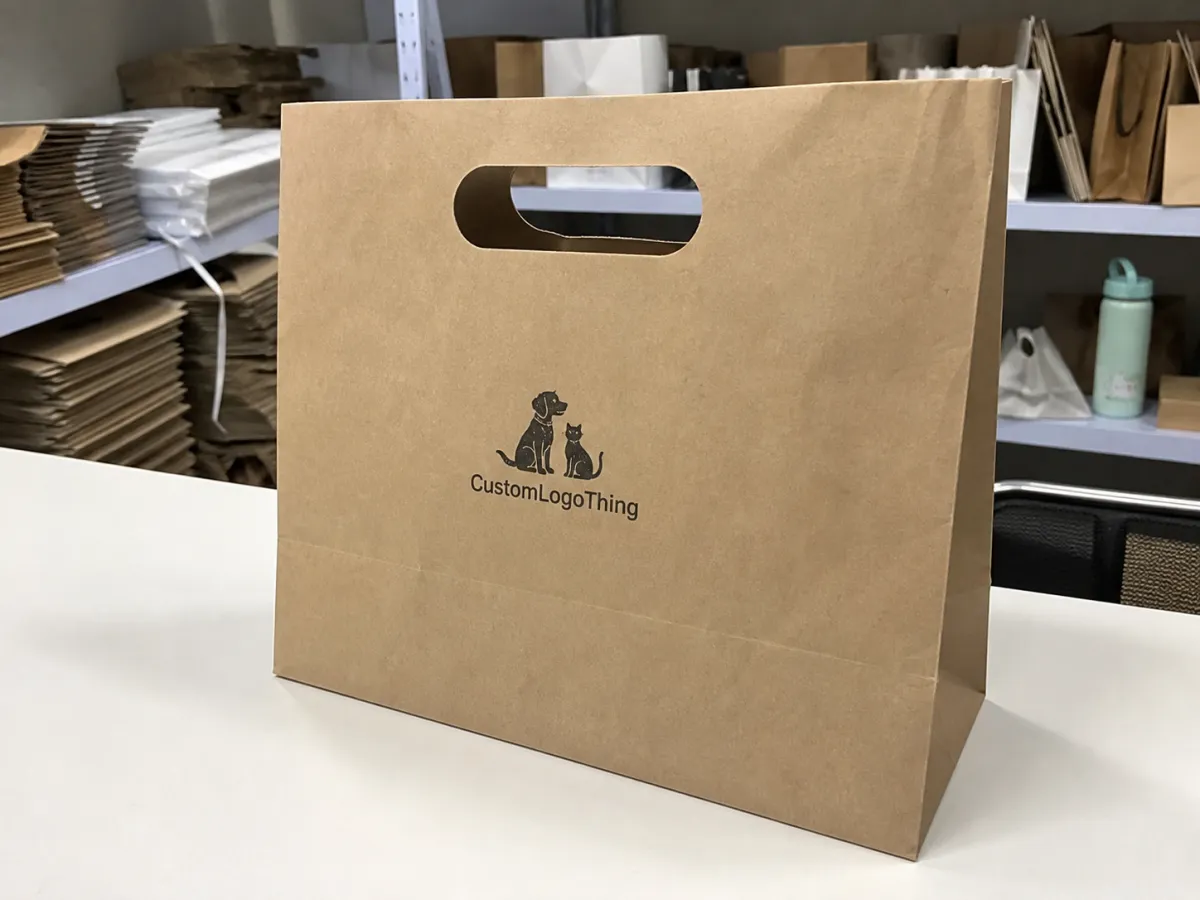
The biggest mistake buyers make is treating pet treat Paper Shopping Bags moq as if it were fixed by the bag itself. It is not. The minimum is usually driven by the number of production steps that must be locked before the line can run: dieline prep, plate or digital setup, ink matching, paper conversion, die cutting, gluing, and carton packing. If the design is already approved and the supplier has made a similar bag before, the threshold can drop. If the order needs a fresh structure, special coating, or new print layout, the threshold rises fast.
Here is the practical scenario most teams recognize. A 2,000-unit run looks manageable on paper. Then the factory has to create a new dieline, confirm the handle reinforcement, and set up a custom print job with two colors and a barcode panel. The result is often a higher setup charge spread over a small quantity, which pushes the cost per piece up. A larger repeat order, by contrast, can absorb those fixed costs far more efficiently. That is why the second order is frequently cheaper than the first, even with the same artwork.
Pet brands care about more than appearance. A shelf-ready paper bag affects impulse appeal, odor retention, and margin control at the same time. If the bag feels flimsy, the retail buyer notices. If the print is muddy, the premium signal drops. If the bag is overbuilt, the margin disappears. That tradeoff is exactly why pet treat Paper Shopping Bags moq should be discussed alongside the full retail job, not in isolation.
For most buyers, the decision comes down to four variables:
- Minimum order: how many bags the supplier needs to justify the run.
- Unit cost: what each bag costs once the fixed setup is spread across the order.
- Lead time: how long proof approval, production, and freight will take.
- Shelf presentation: whether the bag feels credible beside other specialty pet products.
That combination is where experienced buyers separate a workable quote from a cheap-looking one that causes problems later. The lowest number rarely stays the lowest once the wrong spec is loaded into production.
Paper grades, handles, and bag styles that fit treat products
Not every paper bag style suits treats. Loose biscuits, bite-size chews, and pouch-in-bag retail kits each behave differently on the shelf and in transit. A flat-bottom format usually works well for compact fills and upright display. Side-gusset bags help when the product is light but bulky. A true shopping-bag structure is the better fit when the pack must be carried home, handed over at checkout, or used as part of a branded retail experience.
Flat-bottom bags are efficient for stability. They stand upright, which helps with display, but they are not always the best choice if you need a strong handle or a premium gifting feel. Side-gusset bags pack neatly and can hold odd shapes, yet they offer less shelf drama unless the artwork is built carefully. Shopping-bag formats usually support stronger handles, better top reinforcement, and more obvious brand presence, which is why they are common for specialty pet stores and boutique treat lines.
Paper choice matters just as much. Kraft paper is the workhorse: natural, familiar, and cost-conscious. White kraft gives cleaner print contrast and is often chosen for brighter branding. Coated paper improves color density and can support a more polished finish, though it usually increases price. Recycled-content stock is useful for brands that need a clearer sustainability story, but the recycled blend should still be tested for strength, print holdout, and scuff resistance before a bulk order.
Handle style changes both presentation and packing speed. Rope handles look premium but can add cost. Twisted paper handles are a good middle ground for retail shopping bags. Flat handles are generally more economical and easier to ship in volume. Window placement is another decision point. A clear window can show the treat itself, which is useful for freshness cues and impulse buying, but the cutout affects strength and print space.
Useful add-ons that change the end result
- Reinforced top edges: better carry strength and cleaner opening.
- Matte or gloss finish: different shelf signals, different scuff behavior.
- Barcode-friendly zones: keep scannable areas clear of heavy ink coverage.
- Inner liners: useful if odor retention or moisture control is a concern.
- Food-safe inks: worth asking for if the bag sits close to open food or secondary packaging.
For buyers comparing paper options, the right source is not only a price sheet. It is also documentation. The FSC standard can matter if your brand needs traceable paper sourcing, and many retailers now ask about recycled content and chain-of-custody language before approving the packaging spec.
Print specs, barrier choices, and compliance details buyers ask for
A proper spec sheet should remove guesswork. For pet treat Paper Shopping Bags, that means bag width, gusset, height, paper weight, handle type, print coverage, and fill volume. If those fields are missing, the quote will usually be built on assumptions. Assumptions are expensive because they create revisions, and revisions slow down approvals.
Print choices deserve close attention. A one-color logo on kraft stock can be fast and economical. A multi-color artwork package on white kraft or coated stock needs more control, especially if the brand wants exact color matching across cartons, labels, and bags. CMYK works well for image-heavy designs. Spot colors are often better if the brand uses a signature tone that must stay consistent from order to order. If the bag needs a QR code or barcode panel, keep that area clean and confirm scan quality before production starts.
Barrier questions are common in pet packaging. Paper alone does not provide the same moisture resistance as laminated film, so the buyer needs to be clear about storage conditions and product behavior. Will the bag sit in a dry boutique, or in a distribution chain that sees warm trucks and seasonal humidity? Will it carry a sealed inner pouch, or direct-fill treats? Those answers determine whether you need a liner, a coated surface, or a different structure entirely. The wrong choice here can lead to curling, odor transfer, or print scuffing before the products even reach the shelf.
For shipping and handling expectations, it helps to know how the bag will behave once packed into cartons. Industry testing references from organizations such as Packaging School and packaging industry resources can help teams think through compression, stacking, and transit exposure. For higher-risk routes, that matters as much as the artwork.
Most importers also ask about migration-safe inks, especially if the bag is stored near edible products or secondary food packaging. That is not always a legal requirement for every pet treat format, but it is a sensible procurement question. If the supplier cannot explain the ink system, the buyer should keep pushing until the answer is clear.
One more detail that saves time: confirm the storage climate before you approve color. A cool warehouse, a humid dock, and an air-freighted carton do not behave the same way. Paper moves. Ink shifts. Finishes react. The supplier should be able to account for that before the first production sheet runs.
Pricing, MOQ, and unit-cost tradeoffs for bulk orders
Good pricing breaks down into five parts: paper, print setup, finishing, packaging, and freight. Buyers who only look at the headline number miss the biggest cost drivers. A quote that looks high may simply include better paper, stronger handles, or tighter packing. A quote that looks low may leave out one of those items and reappear later as an add-on.
MOQ moves with print method. Digital printing usually supports lower runs because it avoids plate costs and can handle variable artwork more efficiently. Offset and flexo become more attractive as the quantity grows, because their fixed setup costs spread over more units. That is why pet treat paper shopping bags moq often lands higher for a complex custom print job than for a simple stock bag with one logo color.
| Printing option | Typical MOQ | Typical cost per piece | Best fit |
|---|---|---|---|
| Digital print | 500-2,000 units | $0.30-$0.70 | Small launches, fast testing, lower inventory risk |
| Offset print | 2,000-10,000 units | $0.18-$0.45 | Sharper branding, repeatable artwork, mid-size bulk orders |
| Flexo print | 5,000+ units | $0.15-$0.38 | Simpler art, long runs, tighter control of bulk pricing |
Those figures are not fixed rules. They move with paper weight, handle style, artwork coverage, and carton pack-out. A plain kraft bag with one-color print may land near the lower end of the range. A coated bag with a window, reinforced top, and two-sided print can climb quickly. That is normal. The real mistake is comparing a basic spec against a premium spec and calling one supplier expensive.
Several moves lower unit cost without damaging the bag's usefulness:
- Use fewer ink colors if the brand can tolerate it.
- Standardize the bag size across more than one SKU.
- Keep the dieline close to a proven format.
- Reuse artwork from a previous order where possible.
- Reduce finish complexity unless the shelf needs it.
That is why strong buyers ask for an apples-to-apples comparison. They compare the same paper grade, the same print method, the same bag size, and the same carton configuration. If the quote includes tooling fees, ask whether those fees are one-time or recurring. If the supplier mentions setup charges, ask whether they apply to every reorder or only the first production run. Those two questions alone can change the total landed cost more than a small per-unit discount.
For most bulk buyers, the smarter question is not, "What is the cheapest quote?" It is, "What does the quote include, and what happens on the repeat order?" That is where real buying discipline shows up.
Process, timeline, and production steps from proof to shipment
A clean production workflow reduces mistakes. The typical sequence is simple enough, but each step needs sign-off before the next one begins: inquiry, dieline confirmation, artwork proof, sample approval, production, quality check, packing, and shipping. When one of those steps is rushed, the rest of the schedule absorbs the damage.
Lead time depends on setup complexity and the print method. For standard custom runs, 12-15 business days after proof approval is a common factory window. More intricate orders with special finishes or custom windows can move into the 20-25 business day range. Transit adds its own clock. Air freight is faster but more expensive. Sea freight is slower but often better for bulk pricing. Ground shipping is useful for domestic distribution, but it should be built into the delivery promise from day one.
Late artwork changes are the most predictable delay. Missing barcode details are another. Unclear finish selections can stop a job before it starts because the factory cannot guess whether the brand wants matte, gloss, or soft-touch handling. If the buyer changes the structure after sample approval, the calendar usually slips again. In practice, the most efficient projects are the ones where the brand makes the hard decisions early.
Buyers should expect clear checkpoints from the supplier:
- Spec sheet: bag size, paper weight, handle, print method, and pack method.
- Artwork proof: layout, color placement, barcode area, and bleed confirmation.
- Sample or prototype: structural check, fit check, and shelf-view check.
- Production update: confirmation that materials and print are on schedule.
- Inspection photos: carton packing, print consistency, and finished quantity.
If you need a broader packaging checklist, the answers in our FAQ cover common quote questions, sample requests, and order timing. That kind of reference saves back-and-forth, especially for teams managing several SKUs at once.
One more operational detail: ask how the cartons are packed. Overfilled cartons damage bag edges. Underfilled cartons waste freight space and can allow scuffing during transit. The best suppliers usually know the difference and can explain it without hedging.
What to verify before you approve a pet treat run
Supplier reliability is not a branding claim. It is a proof exercise. A credible supplier should be able to show category experience, material traceability, and documented QC. That does not mean a glossy brochure. It means the supplier can explain how a similar bag was produced, what paper was used, how color was controlled, and how the cartons were packed for shipment.
Ask for evidence of consistency. Past production photos help. So do color tolerance notes, sample comparisons, and carton packing methods. If the printed logo on the sample looks one way and the bulk run another, the supplier should be able to explain why before the order moves forward. A good factory is comfortable discussing tolerance. A weak one avoids the topic.
Communication is part of quality. A supplier that replies quickly but changes the spec without warning is creating risk. A supplier that asks the right questions and documents changes is reducing risk. That difference matters more than many buyers admit. It is often the reason the second order runs better than the first.
What to watch closely:
- Response speed on artwork and sample questions.
- How change requests are recorded and confirmed.
- Whether the replacement policy is clear if a run misses the agreed spec.
- Whether the supplier can repeat the same bag without re-explaining every detail.
From a packaging buyer's point of view, repeatability is the real advantage. The best supplier does not create drama on reorder. They make the process easier because the spec is already locked, the paper is known, and the print result is predictable. That is how a custom bag program becomes manageable instead of fragile.
Next steps: what to send for an accurate quote and sample
If you want a quote that reflects reality, send five things first: the product size or fill weight, target quantity, artwork files, finish preference, and delivery date. If any of those are missing, the supplier has to guess. Guessing is how pricing drifts and timelines get stretched.
Start with a sample, prototype, or digital proof whenever possible. A sample lets you check structure, print placement, and shelf fit before you commit to volume. That is especially helpful for treat brands using irregular product shapes, printed inner pouches, or retail inserts that change the final footprint. If the pack must sit upright, carry cleanly, and read well from three feet away, the sample phase is not optional.
The most efficient ordering sequence is simple: confirm bag structure, confirm pricing and MOQ, approve the proof, then lock the production calendar. If the supplier cannot keep those four steps clear, the order is not ready yet. It is better to spend one more day on the spec than to lose two weeks in revision.
For buyers comparing pet treat paper shopping bags moq across suppliers, the goal is not just to find the lowest minimum. It is to find the lowest-risk combination of price, print quality, and delivery timing. That is the standard that keeps a launch on track and makes the repeat order easier than the first.
If you need more order help after that, the FAQ is a practical next stop before you request samples or lock artwork.
FAQ
What is the typical MOQ for pet treat paper shopping bags?
MOQ depends on print method, paper stock, and finishing, so custom runs often start higher than plain stock bags. If you need more colors, special coatings, or a custom dieline, expect the minimum to rise. For pet treat paper shopping bags moq, the real driver is usually the setup burden rather than the bag shape alone.
Can I order custom pet treat paper shopping bags with a lower MOQ?
Yes, lower MOQ is usually easier with digital printing, limited colors, and standard bag dimensions. The tradeoff is often a higher unit cost, so compare the total landed cost, not just the minimum.
Which size works best for pet treats and sample packs?
Choose size based on fill weight, treat shape, and how much shelf presence you want, not just the SKU name. Ask for a sample fit check if the product is irregular, bulky, or packaged with inserts.
How long is the lead time after artwork approval?
Lead time usually depends on setup complexity, print method, and current production queue. Shipping method can add several days or weeks, so confirm both factory time and transit time before you promise delivery.
What should I send to get an accurate quote for pet treat paper shopping bags?
Send bag size, quantity, print file, finish preference, and any compliance or barrier requirements. If you already have a target MOQ or launch date, include those so the quote matches the real plan for pet treat paper shopping bags moq.

