A soap brand Paper Shopping Bags material guide does more than point to a paper weight and call it done. Soap is light, but the packaging still has to survive friction, checkout handling, occasional humidity, and the small abuse that comes from being carried in one hand while the customer juggles everything else in the other. A bag that looks refined on the mockup can still fold poorly, scuff easily, or feel underbuilt once it reaches a real store floor.
That is why the material decision cannot stop at “kraft or coated.” Buyers need to look at fiber content, basis weight, caliper, finish, handle style, reinforcement, print method, and the actual load the bag will carry. A clean-looking bag that crushes in transit is a weak investment. A simple kraft bag that holds shape, prints clearly, and fits the soap line can be the more credible choice. The best packaging decisions tend to be boring in the right way: they work, they last, and they match the product without trying too hard.
What a Soap Brand Paper Shopping Bags Material Guide Really Needs to Do
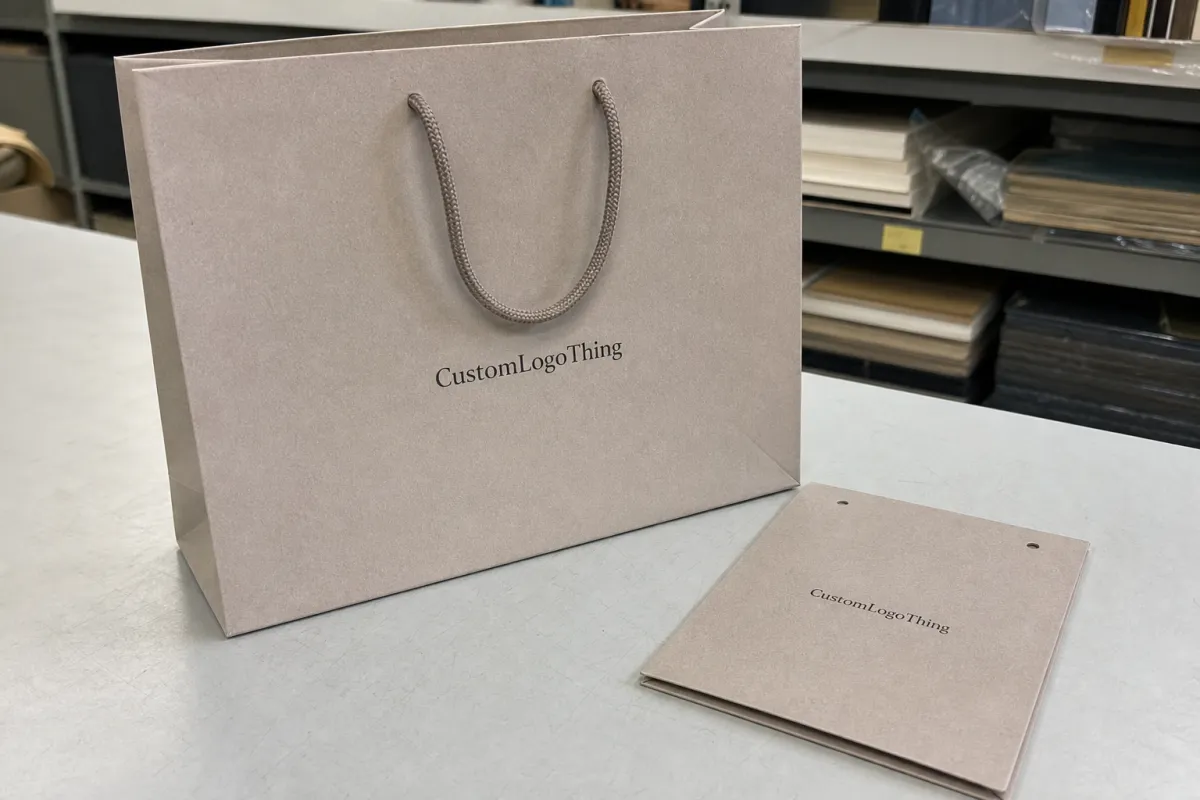
Soap packaging sits in a strange middle space. It is not heavy, but it is rarely dry, perfectly uniform, or protected by a rigid carton. Handmade bars can carry soft wraps, slightly oily surfaces, and irregular edges. Gift sets may include inserts, tissue, and multiple pieces. Even a small weight change can affect how the bag hangs, folds, and feels in the hand.
A useful soap brand Paper Shopping Bags material guide has to answer three practical questions: will the bag protect the product, will it communicate the right brand tone, and will it hold up in the actual retail workflow. Those are not separate decisions. They interact. A high-gloss finish may make a premium line feel polished, but it can also show handling marks sooner. A natural kraft stock may suit an earthy soap brand, but tiny type and detailed gradients can print less crisply than expected.
A bag can look premium in a proof and still fail in the customer’s hand. That gap is where most packaging mistakes start.
The bag also has to stay in its lane. Paper Shopping Bags are presentation and carry packaging, not shipping cartons. They should support display, brand identity, and hand carry, but they should not be expected to absorb the same abuse as corrugated mailers. Once a buyer accepts that difference, the specification becomes easier to control. The goal is not the fanciest paper. The goal is the right paper for the soap, the storefront, and the promise printed on the front panel.
For soap brands planning a launch or refresh, the spec usually makes the most sense when matched to the product tier:
- Handmade or small-batch bars usually work well with kraft or recycled papers that keep the look natural and tactile.
- Spa, gift, and seasonal collections often need smoother stock for sharper print and more controlled color.
- Bundled retail sets need stronger bottoms, better handle anchoring, and enough gusset width to avoid bulging.
The material choice should also respect the selling environment. A boutique bag may need a more refined finish because it is part of the brand experience. A busy market stall may need thicker stock and sturdier handles because the bag will be folded, stacked, and reopened many times before it leaves the counter.
How Paper Bag Construction Works for Soap Packaging
Paper shopping bags look simple from a distance, but the construction details decide whether they feel flimsy or dependable. Front and back panels, side gussets, bottom panel, handle attachment, top fold, and any reinforcement patches all affect how the bag behaves once it is loaded. A wider gusset gives the product room and keeps the profile cleaner. A reinforced base spreads weight more evenly. A stronger handle attachment matters more than most brand owners expect, because handle failure destroys trust quickly.
For soap packaging, the most common paper choices are kraft paper, recycled paper, coated paper, and premium art paper. Kraft paper gives the familiar natural look that fits handmade soap, apothecary branding, and environmentally minded product lines. Recycled paper can be excellent if the fiber blend is stable and the sheet is made well. Coated paper usually gives better print clarity, tighter registration, and deeper color density. Premium art paper sits at the more refined end of the range and can feel luxurious, but it is not automatically the strongest option.
Finish changes both the look and the wear pattern. Matte finishes soften glare and suit botanical, minimal, or ingredient-led branding. Gloss finishes deepen color and make logos pop under store lighting, though they can show fingerprints and handling marks more quickly. Soft-touch finishes feel distinctive and can elevate a premium line, but they add cost and may limit recyclability depending on the coating system. A protective varnish or surface treatment can help in humid retail settings where raw paper would scuff or mark too easily.
Construction details that change the outcome
- Handle type: Paper twist handles are economical and common; cotton rope or ribbon handles feel more premium but add material and assembly cost.
- Reinforcement: A top fold, handle patch, or bottom board can improve carry strength without changing the visible design much.
- Gusset width: Wider gussets help with soap bundles, gift sets, and boxed bars by reducing bulging and corner stress.
- Finish selection: Matte hides scuffs better than high gloss, which can show wear after a short retail cycle.
One detail that gets overlooked often is that a bag designed for one wrapped bar is not the same as a bag for two bars, a boxed gift set, or a bundle with tissue and inserts. The load profile changes quickly, and so does the stress on the handles and bottom seam. That is why real testing matters more than a theoretical weight estimate. A bag can pass a visual approval and still fail when the exact product mix is packed into it.
Material Factors That Change Durability, Print, and Sustainability
Durability starts with paper weight and fiber quality, but those are only the first layer of the decision. A mid-weight stock with strong fibers and good reinforcement can outperform a heavier sheet that is poorly converted. Handle style, glue quality, fold memory, and print coverage all play a role. Heavy full-bleed ink can stiffen the sheet or expose weak spots if the paper was already marginal. A sound soap Brand Paper Shopping Bags Material guide keeps those variables in the same frame instead of treating them separately.
Print quality is where the choice becomes visible. Rough kraft paper gives a warm, honest look, but very small type, thin lines, and dense gradients can print less cleanly than buyers expect. A smoother coated stock supports sharper logos, better color consistency, and stronger contrast. That matters for soap brands that use precise typography, botanical illustrations, or a more polished retail look. If the bag is part of the shelf display, print clarity has to hold up from a few feet away and again in the customer’s hand.
Sustainability claims need discipline. Recycled content helps, especially when the blend includes meaningful post-consumer waste, but the story changes if the bag uses heavy lamination, metallic film, plastic handles, or other mixed materials. A paper bag can still be recyclable in theory and awkward in practice if the finish or components confuse local recycling systems. The EPA’s recycling guidance is a useful reality check for brands that want to make claims they can defend: EPA recycling guidance.
Certification can help, but it should support a sound material choice rather than replace it. FSC certified paper is a useful signal for buyers who want a responsible sourcing story, provided the bag is otherwise well built. A certification mark does not solve weak construction, bad print matching, or a finish that clashes with the brand. For many soap lines, the better story comes from a straightforward combination: credible fiber sourcing, sensible finishing, and a bag that can actually be reused before it is recycled.
Texture also shapes perception in a very practical way. A soap line built around botanicals, essential oils, and muted colors often looks more believable in uncoated kraft than in a bright glossy bag. A premium spa line may need the opposite treatment, with a smoother surface and a controlled sheen. Neither is universally right. The better option is the one that matches the product and the store conditions without overreaching.
| Material option | Typical spec | Print and feel | Best use | Indicative price at 5,000 pcs |
|---|---|---|---|---|
| Kraft paper | 180-250gsm, natural brown or bleached | Warm, textured, good for simple graphics | Handmade soap, earthy branding, value-conscious retail | $0.18-$0.30 per unit |
| Recycled paper | 170-230gsm, blend with post-consumer waste | Slightly variable shade, solid strength if well made | Eco-led launches, general retail, private label | $0.20-$0.34 per unit |
| Coated art paper | 157-210gsm with matte or gloss coating | Sharper print, richer color, smoother hand feel | Spa sets, premium gift bags, branded retail programs | $0.24-$0.42 per unit |
| Soft-touch laminated paper | 170-250gsm plus specialty coating | Velvety finish, luxurious but less recyclable in some formats | High-end collections, presentation-focused launches | $0.30-$0.55 per unit |
Those numbers are not fixed quotes. They move with size, handle type, print coverage, conversion complexity, and order quantity. A bag that uses standard paper but needs a custom handle, added reinforcement, or a specialty coating can end up costing more than a heavier stock with simpler finishing. Buyers often assume paper weight drives price by itself, but in practice the conversion details can matter just as much.
For quality control, the most useful checks are usually the practical ones: rub resistance on the print, handle pull strength, fold cracking at the creases, glue integrity at the side seam, and whether the bottom panel stays flat after loading. If the bag is meant for humid environments, ask for a material that resists waviness and surface marking better than a basic dry-store sample might suggest.
Paper Bag Process and Lead Time: From Spec to Delivery
A reliable bag project follows a clear sequence, and skipped steps usually show up later as delays or rework. It starts with dimensions and load target, then moves to paper selection, artwork setup, sample approval, color checking, and only then into printing and conversion. Packing and shipment come after the spec is locked. That sounds obvious, but many custom orders still unravel because artwork changes arrive late or the bag size was never fully matched to the product set.
Most delays come from a few predictable places. Artwork revisions are the most common. Color matching takes time too, especially if the brand uses a specific green, cream, or charcoal that needs to read consistently across different papers. Handle sourcing can add days if the bag needs ribbon, rope, or a custom finish instead of a standard paper twill handle. Seasonal demand also slows production because mills, printers, and finishers get crowded at the same time.
A practical planning range for custom paper shopping bags is often 12-18 business days from proof approval to production for repeatable builds, with the full process landing around three to six weeks once sampling, revisions, and freight are included. First orders, specialty papers, custom sizes, or heavier print coverage can extend that timeline. Buyers who treat the bag as a packaging project rather than a last-minute purchase usually get better results and fewer surprises.
Speed usually comes from clarity. A locked dieline, approved artwork, and one clean sample round save more time than a rushed order ever does.
There is also a timing lesson that matters for soap brands with seasonal launches. If the bag has to support a holiday line, a spring release, or a product refresh, the schedule should work backward from the shelf date, not forward from the purchase order. That means sample approval before the calendar gets tight, and it means allowing room for small corrections. The best suppliers are usually the ones who can point to the step that may slow things down before it becomes a problem.
Cost, MOQ, and Quote Variables to Compare
Pricing is where many buyers lose clarity. The unit price looks tidy on paper, but the real number is the landed cost after tooling, samples, freight, packing, and any rush charges are included. A soap Brand Paper Shopping Bags Material guide is only useful if it encourages buyers to compare the full quote, not just the line item attached to the bag itself.
The main cost drivers are paper grade, size, print complexity, handle construction, reinforcement, finish, and quantity. MOQ, or minimum order quantity, sits at the center of that tradeoff. A lower MOQ is helpful for a launch, a seasonal test, or a product line that is still being refined. It lowers risk, but it often increases the per-unit price and narrows the set of materials or finishing choices. A higher MOQ usually improves efficiency, which is why established soap lines can often justify it more easily than a brand in the first phase of growth.
Buyers should ask for itemized quotes that separate the real cost layers:
- Tooling or plate charges for setup
- Sampling costs for physical prototypes or mockups
- Freight and any duty exposure if relevant
- Rush fees for compressed schedules
- Outer carton or shipment packaging so the bags arrive flat and undamaged
A lower unit price on a coated bag is not always the better deal if freight, setup, and special finishing are higher. The same is true for recycled stock that looks affordable until the print requirements or handle type add complexity. Comparing landed cost reveals the real number, which is the one that matters once the bags are on the shelf and in use.
For planning purposes, the quote should also make clear whether the price assumes standard handles, standard glue patterns, and stock dimensions. Small changes in height, width, gusset depth, or handle length can alter the run enough to change both cost and lead time. That is especially true for paper shopping bags intended to carry boxed soaps or gift sets, where strength and presentation both have to stay in balance.
Common Mistakes Soap Brands Make When Choosing Bag Stock
The first mistake is choosing the thinnest stock because the soap itself feels light. That logic fails quickly. A bag does not only carry weight; it carries movement, friction, and the customer’s perception of quality. Thin paper creases too easily, tears near the handles, and can make a well-made soap line feel cheaper than it is.
The second mistake is ignoring humidity and fragrance residue. Bath and spa environments are often damp, and paper that looks fine in a dry sample room can behave differently after real retail handling. Uncoated papers can also show marks or soft spots if the product inside has oils on the wrap or if the bag is handled many times before it leaves the store. A smarter spec takes that into account instead of assuming the bag will stay pristine.
The third mistake is overdesigning rough paper. Tiny type, dense gradients, and dark full-bleed artwork rarely look as clean on kraft as they do on a smoother coated sheet. That does not mean the design has to be simple in a bland way. It means the graphic language should respect the paper. On natural stock, restraint often gives a better result than trying to force a luxury print system onto an earthy material.
The fourth mistake is skipping actual testing. Not a visual check. Actual testing with the soap bars, inserts, tissue, and packaging flow that will be used in production. Load the bag. Carry it. Set it on a counter. Check the handles after repeated lifts. Fold it open and closed a few times. If the bag is for gift sets, test the full bundle, not a guessed weight. That is where the weak points show up.
Another issue appears when brands make sustainability claims the package cannot support. A paper bag may contain recycled content, but that does not automatically make every coating, handle, or decorative layer easy to recycle. A bag may be recyclable in one system and difficult in another. Careful wording is better than overstated claims, especially for brands that sell into environmentally conscious audiences.
This is where a focused soap brand paper shopping bags material guide earns its value. It forces the brand to choose between wishful thinking and a spec that can survive real use.
Expert Next Steps for Choosing the Right Bag Material
Start with three sample builds rather than one. Keep the dimensions close, then vary the paper weight, finish, and handle construction so the differences are easy to feel. One sample should sit near the target. One should be slightly lighter. One should lean more premium. That range usually tells the truth faster than a long discussion over a single option.
Then test the samples with the actual soap bars and packaging inserts. Look for scuffing, handle pull strength, crease resistance, and shelf presentation after repeated handling. If the bags are used for gift packs, include tissue and any decorative filler in the test. If they go into a boutique or market stall, ask the staff to carry them as they normally would. The point is not laboratory perfection. The point is a bag that behaves well in the setting where it will be sold.
Ask for a clean spec sheet before approval. It should cover material, basis weight, MOQ, print method, finish, lead time, and the likely cost triggers. If the supplier cannot explain how a 200gsm kraft compares with a coated stock in color control or carry performance, keep pressing for specifics. Good sourcing depends on clear tradeoffs, not broad reassurance.
From there, the decision becomes more straightforward. Choose the bag that travels well, prints cleanly, and holds together in the customer’s hands. If the soap brand leans artisanal, that may be a textured kraft with restrained print and minimal finish. If the line leans premium, it may be a smoother coated sheet with stronger color control and a more refined surface. Either can be right. The real test is whether the bag feels like it belongs to the soap rather than sitting beside it as a separate idea.
The strongest packaging decision is usually the one that feels obvious after the testing is done.
Keep the brand promise, the retail environment, and the material spec in the same conversation. That is how the bag supports the soap line instead of competing with it. A careful material choice does not just improve appearance; it reduces damage, lowers complaint risk, and makes the package easier to repeat on the next run.
What is the best soap brand paper shopping bag material for handmade bars?
Start with a medium-weight kraft or a smooth coated paper if you want a balance of durability, print quality, and cost. Handmade bars often look best on paper that feels natural, but if the soap carries oils or sits in humid retail displays, ask for a more protective finish or added reinforcement. Test the bag with the actual bar, because handmade products often vary in shape and density more than expected.
How thick should soap brand paper shopping bags be for retail use?
Choose thickness based on the full load, not just one bar, especially if the bag may hold gift sets, boxed soaps, or bundled items. Many brands begin with a mid-range stock and move upward once carry testing shows whether the bag feels too flimsy or too rigid. A supplier should be able to recommend a paper weight that fits your size, handle style, and the way customers will actually use it.
Are recycled soap brand paper shopping bags strong enough for premium packaging?
Yes, if the recycled fiber blend has enough strength and the bag structure includes proper reinforcement at the handles and base. Premium does not require virgin fiber alone; it requires consistent print results, stable construction, and a finish that fits the brand. Request samples and fold tests before approving recycled stock for launch or retail rollout.
What affects soap brand paper shopping bags pricing the most?
The biggest price levers are paper grade, quantity, print coverage, size, handle construction, and finishing. Special coatings, custom tooling, and rush production can raise cost quickly even when the paper itself is standard. Compare quotes on landed cost so freight and setup do not distort the decision.
How can I shorten soap brand paper shopping bags lead time?
Lock the bag size, paper choice, and print layout early so the supplier can move through sampling and production without rework. Use standard construction where possible, because custom die lines and specialty materials usually add time. Approve proofs quickly and keep artwork changes to a minimum if the delivery window is tight.


