Supplement Ribbed Winter Beanies Material Sample Kit Guide
A winter beanie can look simple on a spec sheet and still go wrong in production. Rib tension shifts. Yarn softens after finishing. A cuff that looked balanced in a photo starts sitting too high once it is worn. That is why a supplement Ribbed Winter Beanies Material Sample guide matters: it exposes the small decisions that determine whether the final piece feels premium, average, or frustratingly off.
For brand buyers, retailers, and private label teams, the first physical sample does more than confirm shape. It shows whether the knit holds its structure, whether the handfeel works for real wear, and whether the logo still reads cleanly after stretch and recovery. A screen image cannot tell you that. A spec sheet only gets you halfway there.
Ribbed beanies are especially sensitive because the same basic pattern can behave very differently depending on yarn type, stitch density, and finishing method. A tighter rib can feel reassuring and snug. A looser rib can look softer and more relaxed. The wrong balance often becomes obvious only after the sample is on a head, under actual use conditions, for more than a minute or two.
What a Ribbed Winter Beanie Sample Shows Before Production
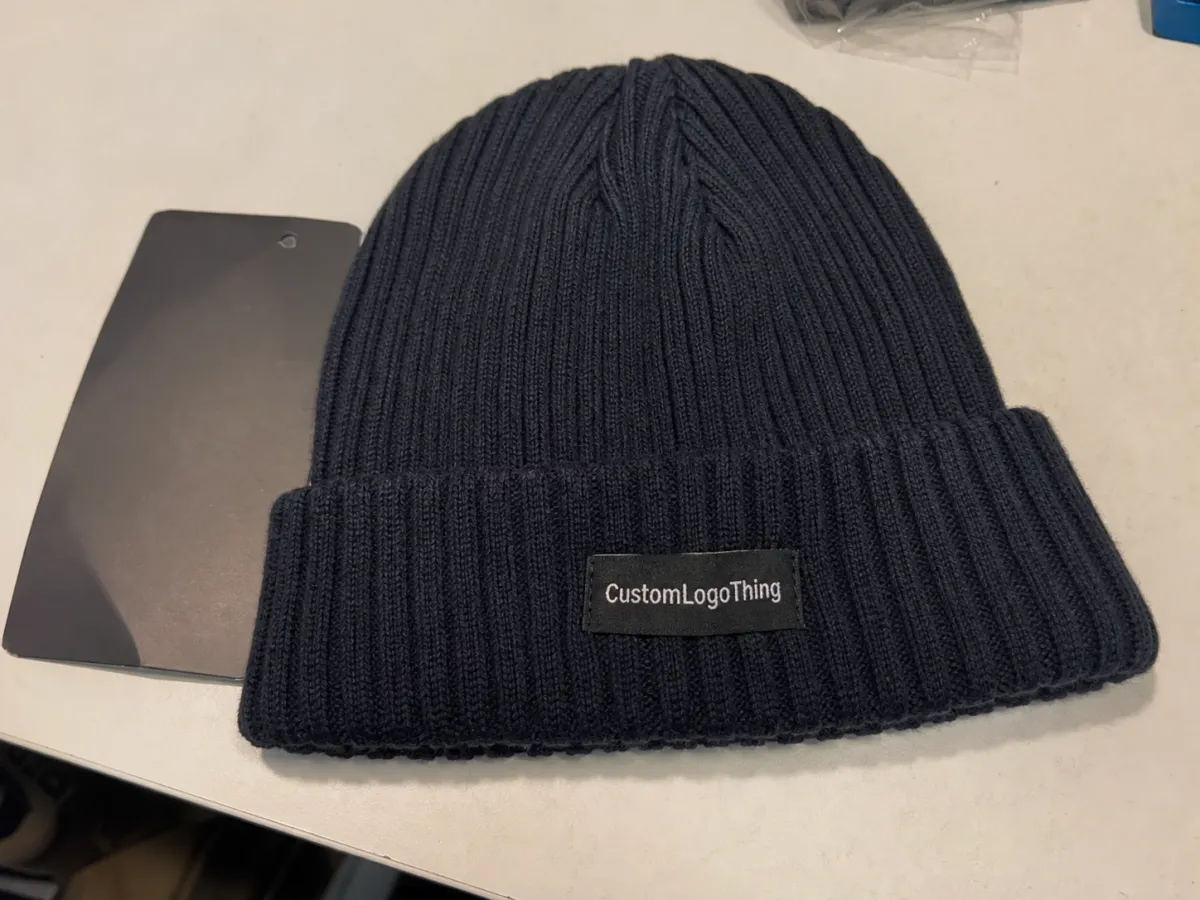
The first thing a sample should answer is whether the silhouette matches the intended market. Crown height, cuff depth, and overall width are not cosmetic details. They decide whether the beanie reads as a classic watch cap, a slouchy streetwear piece, or a closer-fitting utility style. Change one measurement by a small amount and the entire profile shifts.
Rib density matters just as much. A tight 1x1 rib usually feels firmer and recovers better after stretch. A wider 2x2 rib can soften the look and reduce the feeling of compression, but it may also relax more during wear. That makes physical sampling far more useful than a digital approval round alone. Photos are helpful for comparison. They are not enough for handfeel.
- Check stretch recovery by pulling the cuff and letting it return without distortion.
- Measure finished height after steaming or blocking, not only straight off the machine.
- Test the beanie on a real head to judge fit across forehead, temples, and ears.
- Inspect the side and back view because many beanies fail there, not in front.
One common mistake is approving the sample before it has been finished properly. Steam blocking, trimming, and final shaping can change the final look more than buyers expect. A sample that appears slightly oversized at first may settle into the intended fit after finishing. A neat-looking sample may relax too much after a day of wear. The only honest review is the finished version.
Another useful habit is to compare the sample with the approved target on paper. Measure the relaxed width, stretched width, crown depth, and cuff length. If the physical sample differs from the tech pack, note whether the difference is acceptable or whether it suggests the pattern needs adjustment before the production run starts.
How Rib Structure, Yarn, and Finish Change the Feel
Rib structure determines how the beanie moves. Tight ribs keep shape better and usually look cleaner in retail. Looser ribs give more drape and can feel softer, but they often reveal uneven tension more quickly. The more open the knit, the more important it becomes to control gauge and finishing, because small irregularities show up immediately in the surface.
Yarn choice adds another layer. A 2-ply yarn generally gives a more even appearance and better stability than a single-ply yarn. Heavier yarns create more insulation and a chunkier surface, but they can also make the beanie bulkier than intended. If the style is meant to feel lightweight, that extra mass may work against the design.
Fiber content changes comfort, warmth, and price in one step. Acrylic is common because it is cost-effective, easy to source, and soft enough for broad retail use. Wool offers better natural warmth and resilience, though some wearers still find it scratchy. A wool-acrylic blend often lands in the middle, balancing feel, cost, and recovery. Recycled acrylic and recycled polyester blends can be practical for sustainability goals, but the buyer should ask about lot consistency and pilling, not just the recycled claim.
Finishing can sharpen or soften the result. Steam blocking can straighten edges and improve symmetry. Tumble drying can tighten the knit and reduce the relaxed look. Brushing may increase softness, but it can also raise the surface and make pilling more likely later. A sample should be handled, worn, and checked after a little movement. That reveals more than a staged photo ever will.
A sample proves more than whether the beanie can be made. It shows whether the chosen construction is worth repeating at scale.
Packaging quality deserves attention at this stage too. If the sample arrives in corrugated cardboard with a clean kraft paper wrap, it usually arrives looking more intentional than a loose poly bag. For buyers who care about certified paper, FSC certified inserts are a practical starting point, and recycled paperboard is easy to specify without creating a complicated sourcing brief. For shipping tests, the standards referenced by ISTA are a useful baseline, while FSC is the clearest reference for paper sourcing language.
Material Factors That Affect Warmth, Shape, and Branding
Warmth is not just about thickness. A dense ribbed beanie traps heat better than a loose one, but dense construction can also reduce breathability and make the piece less comfortable indoors. For a cold-weather retail program, that tradeoff may be exactly right. For an employee uniform or a giveaway meant to be worn in mixed settings, too much insulation can become a problem.
Color behaves differently on ribbed knit than it does on smooth fabric. Deep solids often look richer, but heather and melange yarns can shift the perceived tone under different lighting. A charcoal heather may look nearly black under fluorescent lights and then read as visibly gray in daylight. Buyers who care about color accuracy should view the sample in both environments and compare it against the intended Pantone reference if the factory can match it.
Decoration should always be tested on the same knit that will be used in production. Embroidery can create a premium look, but dense stitch counts can pucker on stretch fabric. Woven labels usually sit flatter and work well on ribbed surfaces. Silicone patches and woven patches can strengthen branding, but placement needs to respect how much the beanie will stretch in wear. A logo that looks centered on the table can shift once the knit opens up on a head.
That becomes even more important near the cuff edge, where movement is greatest. If the branding is too large or too close to the stretch zone, distortion shows up fast. Small logos often hold up better than oversized ones, not because they are more attractive by default, but because they respect the behavior of the fabric.
Durability checks should be part of sampling, even for low-volume orders. A beanie does not need lab testing for every project, but it does need basic wear observation. Check whether the cuff relaxes too quickly, whether the seams stay flat, whether the yarn fuzzes after rubbing, and whether the logo still sits correctly after repeated stretch and release. Those are practical indicators buyers can act on before production starts.
- For colder retail programs, choose denser ribbing and warmer fiber blends.
- For uniforms or promo wear, prioritize comfort, breathability, and easier recovery.
- For logo-heavy designs, test decoration on the exact knit, not a close substitute.
- For repeat wear, ask how the yarn resists pilling and shape loss.
Sample Process and Timeline for Approval
The best sample process starts with clear input. A tech pack helps, but a concise brief can still work if it includes the target dimensions, reference images, logo artwork, fiber preference, and intended end use. If the buyer is vague, the supplier has to guess at fit, handfeel, and finish. Guessing is expensive.
Once the brief is set, the usual path is straightforward: yarn sourcing, color matching, knitting, finishing, and shipment. If the yarn is stock and the decoration is simple, a first sample can sometimes be turned around in 5 to 7 business days before shipping. Custom yarn matching, special patches, or embroidery programs often push the timeline to 10 to 20 business days. Special-order yarn or back-and-forth color corrections can extend that further.
Shipping can be the hidden variable. Domestic sample freight may run only $12-$35, while international delivery, customs handling, and rush service can add a meaningful amount. If the sample needs to move between multiple approvers, build in extra time for sign-off. A buyer who plans for one round only often loses more time than a buyer who expects one revision.
The review order should stay practical. Fit test first. Color review second. Decoration check third. Then wear the piece for a few minutes and see what happens. That sequence catches most of the real problems without turning the approval process into a vague discussion about whether the sample "feels right."
Simple builds move faster, but every custom detail adds friction once the yarn, gauge, logo, and finish all have to agree.
If the sample kit is going to a merchandising team or retail buyer, packaging should be part of the approval. A neat shipper made from kraft paper or wrapped in tissue usually presents better than loose plastic. If the final program includes printed inserts, using FSC certified paperboard now keeps the sample aligned with the production brief instead of creating a second packaging standard later.
Cost, Pricing, and MOQ for Sample Kits
Sample pricing includes more than one beanie. The fee often covers pattern setup, knitting time, yarn sourcing, color matching, finishing, and freight. If the design needs a custom patch or logo test, the price rises again because the supplier has to run additional setup work for a unit that may never become part of a full order.
Typical sample prices vary by complexity. A basic stock-color proto sample may land around $35-$80. A custom color-matched sample often sits in the $75-$150 range. A fully decorated approval sample can run $100-$220 or more if it includes embroidery, labels, or patch testing. Some suppliers will credit part of the sample fee against production, but that is not universal, and the terms should be written down before work starts.
| Sample option | Typical fee | Best for | Tradeoff |
|---|---|---|---|
| Stock-color proto sample | $35-$80 | Fast shape and feel check | Weak on exact color and branding |
| Custom color-matched sample | $75-$150 | Closer production approval | Longer lead time if yarn must be matched |
| Fully decorated approval sample | $100-$220 | Embroidery, patch, and label sign-off | Decoration changes can trigger revision charges |
| Credited sample program | $0-$100 upfront, often credited later | Orders likely to move forward | Terms vary, and not every supplier offers credit |
MOQ affects the economics more than many buyers realize. A single approval sample carries the same setup burden that would later be spread across dozens or hundreds of pieces in production. That makes low sample prices less informative than the buyer expects. A cheap sample that ignores the real construction details is not a bargain if it leads to revision rounds later.
For production planning, the price range depends on the build. An acrylic ribbed beanie with a woven label might land around $2.25-$4.75 per unit at moderate volume. Wool-blend styles, special patches, or higher-grade yarns can move into the $4.50-$8.50 range or above, depending on quantity and decoration. Small orders usually sit at the higher end of those ranges because setup costs are spread across fewer pieces.
Ask about revision charges before approving the first round. Also ask whether lab dips, yarn substitutions, or decoration changes are billed separately. Those details matter more than the headline sample fee. A clear quote makes the supplement Ribbed Winter Beanies material sample guide actually useful, because it connects the physical sample to the budget that follows it.
Common Sample Comparison Mistakes Buyers Make
The biggest mistake is judging everything from photos. Ribbed knit changes under different lighting, and close-up images often exaggerate texture or hide unevenness. A second mistake is comparing a sample on the wrong head form. A narrow display form can make the beanie look too loose, while a smaller form can make the same piece look tight and unwearable.
Decoration gets overlooked too often. Embroidery can pucker, patches can lift, and logos can distort as the knit stretches. If the branding sits close to the cuff or across a high-motion area, the problem becomes more obvious. Buyers should always move the beanie through a few stretch cycles before signing off.
Memory is another weak point. Without a written record, the sample review becomes subjective very quickly. One person remembers a darker gray, another remembers a softer handfeel, and the conversation drifts away from the actual spec.
- Do not compare under one light source only. Check daylight and indoor lighting.
- Do not approve on one head form only. Fit on a real head whenever possible.
- Do not skip logo stretch testing. Move the beanie before you confirm decoration.
- Do not rely on memory. Record yarn, gauge, dimensions, and finish notes.
Packaging can also distort the buyer's impression. A sample that arrives wrinkled, crushed, or loosely packed may seem lower quality than it actually is. That is why presentation materials matter. A shipper made from corrugated cardboard with a clean kraft paper wrap often gives a better read on the product. If the broader program uses biodegradable packaging or recycled content, keep the sample kit aligned so the production conversation stays consistent.
Expert Checks Before You Move to Production
Once the sample is close, the final job is documentation. Production teams need a version of the approved sample that they can follow without interpretation. That means recording fiber content, gauge, dimensions, cuff structure, logo size, color code, and packaging notes in one place. If even one of those details is missing, the final batch can drift.
- Record the approved measurements with a ruler or soft tape in the photo set.
- Capture the exact sample beside the color reference and logo placement.
- Confirm yarn continuity if the same lot should be held for production.
- Approve any substitute materials in writing before scale-up begins.
- Reserve extra material if repeat orders or size repeats are likely later.
A neutral-background photo of the approved sample is worth keeping with the tech pack. It should show the finished beanie, not only a close crop of the knit. If the program includes retail packaging, note whether the factory should use FSC certified inserts, recycled paperboard, or a biodegradable packaging option. Those details prevent a lot of avoidable confusion once production is underway.
From a practical buyer's perspective, the strongest sample is not the one that looks most dramatic in a presentation. It is the one that can be repeated with confidence. That is the point of a supplement Ribbed Winter Beanies Material Sample guide: to turn a visual concept into a production-ready specification that controls fit, finish, packaging, and cost before the order scales.
What should I check first in a ribbed winter beanie sample?
Start with stretch recovery, cuff height, and overall shape. Those three items tell you whether the beanie will wear as intended. After that, check yarn feel, seam quality, and how the knit behaves after a few minutes on the head.
How many sample rounds are normal before production approval?
One physical sample plus one revision round is common for straightforward styles. Custom colors, special decoration, or new yarns often need more than one correction cycle because the first round usually settles fit and the second round locks the details.
What affects the price of ribbed winter beanie samples the most?
Setup work, yarn sourcing, color matching, and decoration trials usually drive the biggest differences. Freight and revision charges can also raise the total, so it helps to ask what is included before you approve the build.
Can I judge warmth from a material sample alone?
A sample gives a strong signal, but warmth depends on fiber content, knit density, and whether the beanie has extra structure or lining. Use the sample to compare insulation and breathability, not to replace real wear testing in cold conditions.
What details should I send to get the right beanie sample?
Send target dimensions, logo artwork, color references, and the intended use case. If you have a deadline or budget cap, include that early so the sample path is realistic from the start.
Handled well, the supplement Ribbed Winter Beanies Material Sample guide becomes more than a checklist. It becomes the easiest way to move from idea to approved production with fewer surprises in fit, finish, packaging, and final cost.


