Cosmetics cuffed knit Beanies Unit Cost Review discussions usually go sideways because the first question is too vague. A buyer asks for “a nice winter promo,” then gets three quotes that do not seem related. The fix is mechanical, not mysterious: quantity, decoration method, packaging, and delivery timing have to be defined before pricing starts. Those four items control most of the spread.
For beauty brands, a cuffed knit beanie can do more work than its price suggests. It photographs well, fits a wide audience, and feels useful in a way many promo items do not. That makes it a practical choice for holiday bundles, influencer kits, retail launches, staff uniforms, and VIP gifts. The challenge is keeping the item polished without turning it into an expensive custom project.
That balance is where the economics live. A beanie with disciplined artwork, a stable yarn color, and simple packaging can look far more premium than the unit cost implies. The same beanie with oversized embroidery, rushed proofing, and fancy inserts can waste budget fast. The point of a Cosmetics Cuffed Knit Beanies Unit Cost Review is to separate the appearance of value from the actual cost drivers.
“A clean cuff, a restrained logo, and the right yarn do more for perceived value than most buyers expect. The savings come from avoiding unnecessary complexity.”
Why Cosmetics Cuffed Knit Beanies Work for Beauty Promotions
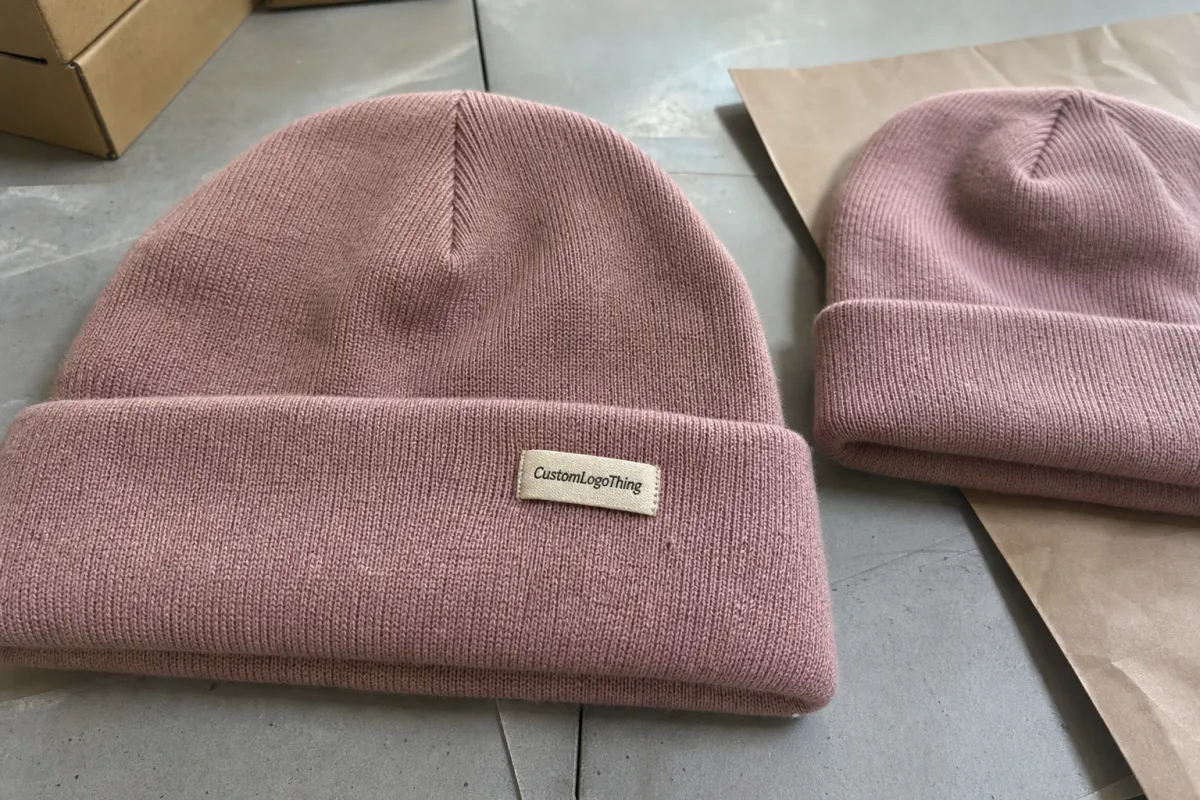
Beauty and cosmetics brands care about presentation, but they also care about how a product travels through real life. A cuffed knit beanie handles both. The folded band gives a visible branding zone, and that zone sits where the eye lands in photos, which matters for event teams, social posts, and launch content. A logo buried in the knit rarely performs as well.
The style also has a broad practical appeal. It suits store staff, warehouse teams, brand ambassadors, and customer giveaways without feeling overly promotional. That is useful in cosmetics, where too much branding can make a gift feel like an ad. The beanie still signals the brand, but it does so quietly enough to be worn again.
There is also a cost argument. Compared with many branded accessories, cuffed knit beanies leave room for premium cues without demanding high decoration spend. One-color embroidery, a woven patch, or a stitched label can lift the product far above “basic swag.” The trap is trying to force too much detail onto a small surface. That usually creates puckering, crowded artwork, or thread buildup that looks worse in person than it does in a mockup.
For cosmetic promotions, the strongest use cases are clear. Seasonal gift sets need something warm and wearable. PR mailers need an item that feels considered. Retail launches need packaging that holds up on shelves and in unboxing videos. Staff programs need repeatable sizing and consistent color. A cuffed knit beanie fits all of those needs if the spec is controlled from the start.
Product Details That Make This Style Easy to Sell
The cuff is the reason this format keeps getting ordered. It adds a flatter surface for decoration, gives the hat a more finished shape, and makes the logo easier to place. A plain beanie can work, but the cuffed version usually sells better because it gives buyers a clearer branding zone and a cleaner profile.
Most cuffs and crowns fall into familiar ranges: crown height around 8 to 9 inches, cuff depth around 2.5 to 3.5 inches, with enough stretch to cover a broad audience. That range is not decorative trivia. It affects fit, logo placement, and how the beanie sits once it is worn. A shallow crown tends to look underbuilt. An oversized crown can swallow the logo and make the product feel loose or sloppy.
Material choice changes the result more than many buyers expect. Standard acrylic is the workhorse because it is affordable, consistent, and easy to knit in volume. Acrylic-wool blends bring a softer hand and a slightly more elevated feel, but they usually raise the price. Heavier gauges can look richer, while finer gauges offer a neater knit structure. The right answer depends on the brand position, the climate, and the decoration method.
Decoration also affects the final impression:
- Embroidery works best for clean logos, short copy, and a premium retail look.
- Woven patches handle small details and multiple colors better than thread alone.
- Faux leather patches create a fashion-forward read, though they do not suit every beauty brand.
- Sewn labels are subtle and useful for understated staff wear or minimalist merchandising.
Packaging deserves more attention than it usually gets. A clear polybag is the cheapest baseline. Add a belly band, tissue, or a small insert and the perceived value rises quickly. That matters in cosmetics, where the unboxing moment often gets shared. Poor packaging can make a good beanie look like leftover inventory. Clean folding and consistent bag sizing matter more than a flashy finish.
Color control is another practical issue. Cosmetics branding is often built on exact shades, so a “close enough” yarn match can become a problem. If the beanie is tied to a retail launch or a paid bundle, ask for the closest available yarn match, a strike-off if needed, and a clear note on acceptable tolerance. Drift in navy, charcoal, and cream shades is common enough to matter. It is easier to solve before production than after a first shipment lands.
Specifications Buyers Should Lock Before Quoting
Most pricing problems begin with incomplete specs. If the factory has to guess, the quote will either be padded or unreliable. The most useful starting points are yarn blend, knit gauge, cuff depth, crown height, logo size, packaging format, and the delivery destination. Those details are enough to anchor a real estimate.
For most cosmetics programs, one of three material paths makes sense. Standard acrylic keeps the cost low and the production process predictable. Acrylic with a small wool blend adds softness and a slightly more premium hand-feel. Specialty yarns, recycled blends, or unusually thick knits can work, but they tend to raise MOQs and extend sample time.
Logo decisions matter just as much as material choices. A centered cuff logo is usually the safest option because it gives the cleanest read in photos and on the shelf. Side placements can work for fashion-led brands, but they reduce visibility. If the artwork is too wide for the cuff, the result feels crowded. That is a design issue, not a manufacturing one, and it usually starts with a logo that was never meant for a small surface.
These are the items worth locking before pricing:
- Yarn blend and target hand-feel
- Color reference, including PMS if the brand needs close matching
- Logo method and maximum imprint size
- Cuff depth and overall fit profile
- Packaging format and whether the item is retail, gift, or staff use
- Labeling requirements for resale, export, or internal distribution
Compliance details are not glamorous, but they prevent delays. Retail-bound beanies may need fiber content, care instructions, and origin marking. Printed cartons or paper inserts may need a paper sourcing review. If the packaging needs to align with FSC expectations, look at FSC. If the shipment is going into a program where carton integrity matters, transportation testing standards from ISTA can help define expectations. Not every promo order requires formal testing, but larger retail drops often benefit from it.
Artwork quality also affects cost in ways that are easy to overlook. A clean vector file can move a quote forward quickly. A low-resolution logo, a missing outline, or unclear colors leads to proof revisions and slower approvals. In a cosmetics Cuffed Knit Beanies Unit Cost review, those soft costs matter because they delay the schedule and can trigger extra setup charges.
Cosmetics Cuffed Knit Beanies Unit Cost Review
A useful unit cost review separates the order into clear pieces: blank beanie, decoration, setup or digitizing, packaging, freight, and any sample or rush fees. If those buckets are not shown separately, the quote may look low at first and then grow once the extras are added. That is a common source of bad budget decisions.
For a standard acrylic cuffed knit beanie with simple decoration, the landed unit cost usually moves with quantity and decoration method more than any other factor. The ranges below are typical for planning, not guarantees, and freight can move the final number.
| Quantity | Simple embroidery | Woven patch | Faux leather patch | Notes |
|---|---|---|---|---|
| 100-150 pcs | $4.80-$8.25 | $5.40-$9.10 | $5.60-$9.40 | Setup costs weigh heavily at lower volume |
| 300-500 pcs | $3.60-$6.20 | $4.10-$6.90 | $4.30-$7.20 | Common MOQ band for cosmetics campaigns |
| 1,000+ pcs | $2.95-$5.10 | $3.35-$5.80 | $3.55-$6.00 | Best pricing if the spec stays simple |
The spread makes sense once the fixed costs are visible. Digitizing, patch setup, tooling, and proofing do not shrink much just because the order is small. A 100-piece run can absorb a $60 setup fee very differently from a 1,000-piece run. That is why small orders often look expensive on a per-piece basis even when the blank product is inexpensive.
Decoration choice changes the economics too. A one-color embroidery job usually keeps labor lower than a multi-color patch or a layered label stack. If the logo is small and straightforward, embroidery often gives the best value. If the mark has fine detail or several colors, a woven patch can be the better compromise. Faux leather patches usually sit somewhere in the middle, depending on the amount of customization.
MOQ is another place where buyers get caught off guard. Clean, simple beanies often start around 100 to 300 pieces. Add custom labels, special yarns, complex stitch patterns, or more elaborate packaging, and the floor can move up. That is normal factory behavior, not a negotiation tactic. A complicated order needs more time, more labor, and more waste control.
Common cost traps are easy to spot once you have seen a few quotes. Too many thread colors raise stitching time. Late artwork changes trigger new setup. Fancy packaging on a low-volume order adds more than most teams expect. Rush freight is useful, but it should be treated as a separate budget line, not hidden inside the product cost. A clean review makes those tradeoffs visible before the purchase order is issued.
If the goal is to protect margin, keep the spec narrow. One logo placement. One or two colors. Standard yarn. Predictable packaging. That combination tends to produce the most stable pricing and the least noise during production. The product still feels branded; it just does not carry avoidable cost.
Process and Timeline: From Artwork to Delivery
The production path is fairly standard: quote, artwork check, proof, sample or pre-production approval, bulk knitting, decoration, inspection, packing, and shipping. Delays usually come from the front end. If artwork is weak or approvals are slow, the rest of the schedule moves with it. That is the part buyers underestimate.
A realistic sample cycle is often 7 to 14 days, depending on the decoration method and how many edits are needed. Bulk production commonly falls in the 15 to 30 day range after final approval. Transit time sits on top of that. Air is faster and more expensive. Ocean is cheaper and slower. Those tradeoffs are fixed, even if a quote sounds optimistic.
- Quote and spec check: 1 to 3 business days if the artwork is complete.
- Mockup and proof: 1 to 5 business days.
- Sample or pre-production approval: 7 to 14 days.
- Bulk production: 15 to 30 days, longer in peak season.
- Inspection, packing, and freight booking: 2 to 5 business days before shipment.
Inspection should not be treated as a formality. With knit goods, the useful checks are simple but important: size tolerance, stitch consistency, embroidery alignment, loose threads, color match, and clean folding for packing. A beanie can look acceptable in a digital proof and still fail visually if the thread tension is off or the cuff sits unevenly. Small defects stand out quickly on headwear because the product is worn at eye level.
Approval speed matters, but so does discipline. If the buyer keeps changing logo size, thread color, or packaging after the proof stage, the schedule will stretch. That is not a supplier failure. It is rework. A stronger timeline usually comes from fewer decisions, made earlier, with the key details locked before the sample starts.
Rush service exists, but it is better used as a backstop than a plan. Faster freight can solve a date problem, but it will not fix missing artwork or unclear packaging instructions. The safest approach is to build a buffer into the schedule and treat the sample as a checkpoint, not an optional step.
Why This Beanie Order Stays Predictable at Scale
Repeatability is where the economics of this item really show up. A beanie program becomes more predictable when the supplier controls knitting, decoration, packing, and inspection with fewer handoffs. Each extra handoff adds time, and time often becomes cost. For cosmetics brands that reorder seasonally, that consistency can matter as much as the initial quote.
Clear line-item pricing helps too. If the quote separates the blank product, decoration, setup, packaging, and freight, the buyer can compare options without guessing. That structure also makes it easier to explain the order internally. Marketing wants the look. Operations wants the timing. Finance wants the landed cost. A clean breakdown helps all three.
Color consistency deserves a specific mention. A navy that shifts toward black, or a cream that reads slightly yellow in a second run, can create unnecessary approval work. Ask about yarn lot control, acceptable shade tolerance, and how reorders are matched to the original run. If a beanie becomes part of a recurring gift set or a uniform kit, that consistency is not cosmetic; it is operational.
The boring parts tend to be the valuable ones here. Stable specs. Clear approvals. Low-drama packing. Honest lead times. Those are the details that keep a cosmetics cuffed knit beanies unit cost review useful after the first order, not just on the first quote.
Next Steps to Price, Sample, and Place the Order
A good quote starts with a complete request. Send quantity, target budget, logo file, preferred color, destination, packaging needs, and delivery date together. That gives a supplier enough to price the order properly. If those details are missing, the quote is only a rough estimate dressed up as certainty.
Ask for tiered pricing. A 100-piece run, a 300- to 500-piece campaign, and a 1,000-piece reorder each tell a different story. The break between them shows how much setup and labor are affecting the unit cost. That comparison is often more useful than a single number because it shows whether the project becomes efficient at higher volume or stays expensive regardless of size.
If the beanies are tied to a retail launch, PR shipment, or paid bundle, request a sample or pre-production proof before bulk production. It is a small fee compared with the cost of correcting a full run. The sample is where logo size, stitch behavior, cuff depth, and color are confirmed. Once those are locked, the rest of the order is much less fragile.
For cosmetics buyers, the best result is usually not the most decorated product. It is the one that looks intentional, lands on time, and stays inside the budget the team already approved. That usually means one strong logo, one stable yarn color, one clear package, and one realistic delivery window.
What changes the cosmetics cuffed knit beanies unit cost the most?
Quantity has the biggest effect because setup costs spread more efficiently at higher volume. Decoration method, logo size, number of colors, packaging, and rush freight also move the landed cost. A simple spec is almost always cheaper than a heavily customized one.
What MOQ should I expect for cosmetics cuffed knit beanies?
Simple custom beanies often start around 100 to 300 pieces. More complex specs, such as custom labels, specialty yarns, or detailed patches, usually push the minimum higher. The most useful approach is to ask for pricing at several tiers so the break points are visible.
How long does production usually take after approval?
Sample approval often takes 7 to 14 days. Bulk production commonly takes 15 to 30 days after final sign-off, with peak season orders taking longer. Freight method and artwork revisions can extend the final delivery date.
Which decoration method works best for cosmetics-branded beanies?
Embroidery is the cleanest choice for simple logos and a premium look. Woven patches are better for fine detail or multiple colors. Subtle woven labels or side labels work well when the brand wants a quieter finish.
Can I approve a sample before the full order ships?
Yes. A pre-production sample or proof is the safest way to confirm fit, color, and logo placement before bulk starts. The fee is usually worth it if the order is tied to a launch or retail deadline.


