Fitness woven label Beanies Bulk Order Planning gets cleaner once the label is treated as a production choice, not a decoration bolted on at the end. That shift sounds small. It is not. A woven label can alter stitch placement, cuff stretch, proof timing, and the final quote because the factory has to build around the branding plan rather than improvise it later.
The first sample usually exposes this fast. One label sits flush on a ribbed cuff; another creates a ridge, twists the fold, or forces a seam allowance that changes the look of the hat. That is why fitness woven label beanies Bulk Order Planning works best when the buyer defines the fabric, label style, placement, and quantity before asking for pricing. Ambiguity is expensive. Specificity is cheaper.
Why Beanie Labeling Changes the Whole Order
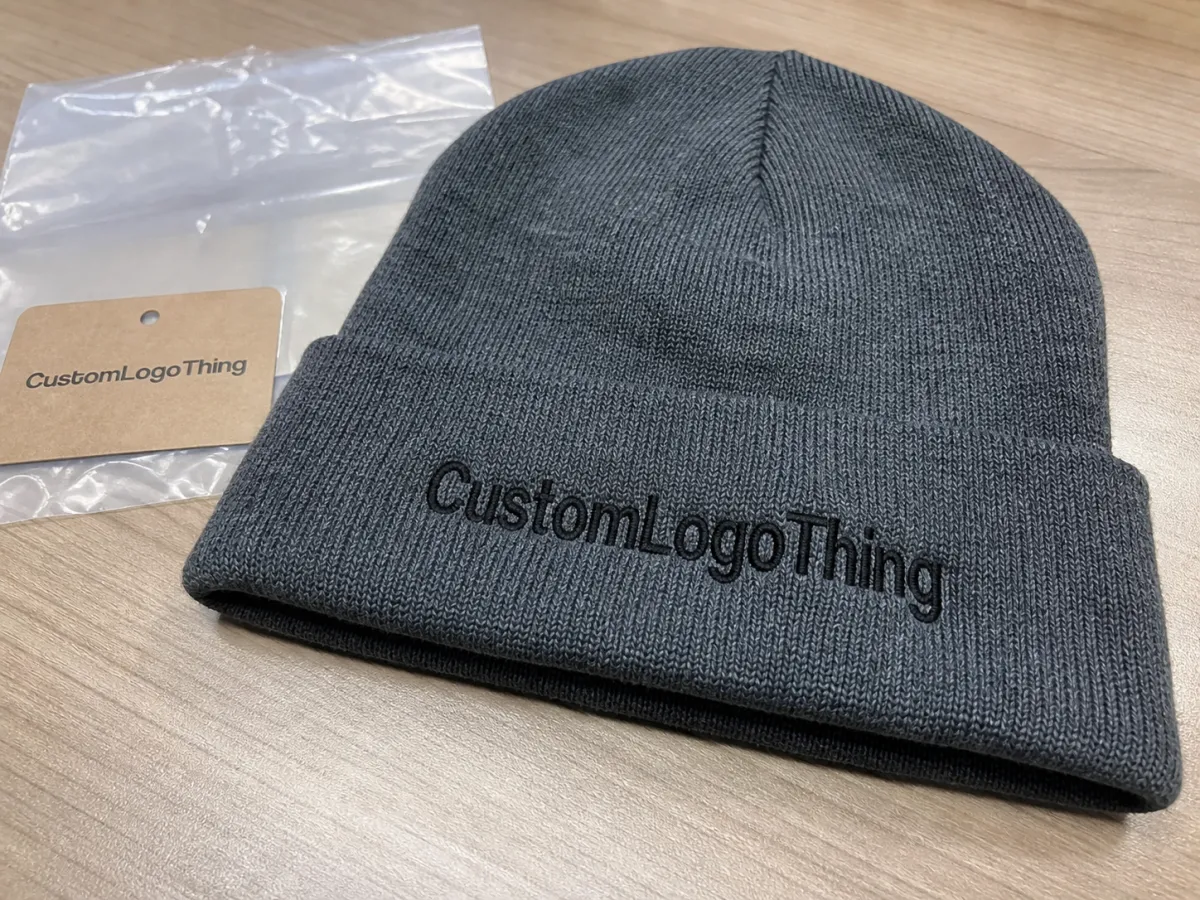
The smallest woven label often creates the biggest delay. Thread color, fold style, backing, stitch density, and placement all need approval before bulk knitting or sewing begins. Each choice affects how the beanie wears after repeated stretch and recovery. On rib-knit cuffs, especially, a label that looks perfect flat can pull once the hat is worn, packed, and shipped.
From a buyer’s point of view, the label is not just decoration. It carries brand recognition, hand-feel, and resale value. A gym giveaway can tolerate a simpler finish if the priority is volume and speed. Retail pieces usually need tighter edge control, cleaner logo definition, and more consistent placement from piece to piece. Team uniforms sit between those poles, where durability matters as much as appearance.
Fitness Woven Label Beanies Bulk Order planning works better when the label decision comes first and the beanie body is built around it. That sequence helps a supplier confirm whether the cuff depth leaves enough visual space, whether the crown shape shifts the placement, and whether the label size stays readable after folding. Oversized labels dominate the knit. Tiny labels disappear into it.
- Gym staff giveaways: work best with simple woven labels, moderate stitch counts, and cost-conscious packaging.
- Retail resale: usually needs cleaner edge finishes, sharper artwork detail, and closer color matching.
- Team uniforms: benefit from repeatable placement and stronger wash durability.
- Event merch: often needs a balanced spec that keeps unit cost controlled without looking generic.
“If the label spec is vague, the quote will be vague too. Exact placement, exact size, and a defined fold style remove most of the surprises later.”
That is a practical buying rule, not a slogan. Fitness Woven Label Beanies bulk order planning is mostly a process of removing guesswork early, because every uncertain detail becomes a revision, and revisions cost time.
Woven Label Construction Choices That Affect Wear
Woven labels are not interchangeable. A center-fold label is usually the easiest to sew into a seam or tuck into a cuff edge. An end-fold label tends to give a cleaner face when it sits on the outside of a hat. A flat label can work when the buyer needs more room for graphics or multiple lines of text, but it needs more precise attachment so the edges do not curl.
Thread count matters more than many buyers expect. Higher density can sharpen the logo, but it also increases cost and can make the label feel stiffer. Lower density softens the hand-feel, yet fine details may blur once the beanie knit stretches. The practical middle ground is usually the best answer: enough detail to keep the logo legible from retail distance, not so much that the label feels scratchy or heavy.
Edge finish and backing change the user experience too. A heat-cut edge can feel cleaner on certain styles, while a woven fold often looks more refined on premium retail pieces. Some buyers ask for a soft backing or a slim support layer to help the label hold shape. That can help, but it should be tested carefully. A backing that looks harmless on paper may change how the cuff drapes on the actual beanie.
In practice, one woven label can do more than brand the item. If the layout is planned well, it can carry the logo, size information, and sometimes a short care note, which reduces the need for extra hang tags or print steps. That is one reason fitness woven label Beanies Bulk Order Planning usually benefits from compact artwork instead of crowded art. The more tasks the label must handle, the more important its construction becomes.
Readability is another issue buyers underestimate. A logo that looks crisp on a screen may lose definition once it is woven into textured yarn. Fine lines, tiny lettering, and thin outlines are the first things to disappear. For that reason, it helps to judge woven label art at arm’s length, not at a zoomed-in desktop view. What reads well at 1000 percent zoom often fails in the hand.
If you want to compare branding formats before committing, review Custom Labels & Tags alongside the beanie spec. That keeps the decoration choice tied to the garment, which is exactly how fitness woven label beanies bulk order planning should work.
Beanie Specs Buyers Must Lock Before Quoting
Before any factory can quote accurately, the buyer needs to lock the core beanie spec. That usually means fabric blend, knit density, cuff height, crown shape, label placement, and whether the hat is single-layer or double-layer. Yarn choice changes warmth and hand-feel. Knit density changes stretch recovery. Construction changes how much clean surface is available for a woven label.
Acrylic remains common because it is cost-effective and predictable across large runs. Acrylic-wool blends bring more warmth and a softer feel, but they can raise unit cost and sometimes narrow the wash window. Recycled yarn options are increasingly used for programs that need stronger sustainability messaging, though pricing and minimums can vary more depending on yarn source and color.
The label cannot be separated from those body choices. A thicker cuff usually gives better visual space for branding, while a shallow cuff limits placement options. A double-layer beanie hides internal stitching more easily than a lighter single-layer build. If the buyer wants the label centered on the front cuff, the factory needs exact measurements from the folded edge, not a loose instruction like “place it on the front.”
A one-page tech sheet is the easiest way to protect the order. Include art file format, Pantone references, placement dimensions, fold depth, size range, packaging instructions, and any retail compliance notes. If the order is part of a broader sourcing program, line it up with Wholesale Programs so the quote and replenishment path are both clear.
- Fabric: acrylic, acrylic-wool blend, or recycled yarn option.
- Construction: single-layer or double-layer, with cuff height measured in centimeters or inches.
- Label spec: size, fold type, backing, stitch direction, and exact placement.
- Artwork: vector file, Pantone or PMS references, and approved small-size readability.
- Packing: polybag, size sticker, carton count, and any retail insert requirements.
Once those details are fixed, fitness woven label beanies bulk order planning becomes much more predictable. The quote is cleaner, the sample is easier to judge, and the factory has fewer reasons to stop production for clarification.
Cost, Pricing, and MOQ Planning for Bulk Beanies
Pricing for custom beanies is built from several pieces, not one lump number. Fabric cost, label setup, sewing labor, packing, sampling, and freight all play a role. Some quotes include the label in the garment price; others separate the decoration charge. Buyers should ask for a line-by-line breakdown so the comparison is fair, especially if one supplier is offering stock blanks and another is offering fully custom knit production.
The MOQ usually changes with complexity. Stock beanies with a sewn woven label can sometimes start lower than a fully custom knit build. Add a second label location, more thread colors, or a special fold style, and the minimum often rises because setup time has to be spread across more units. Mixed colorways push minimums upward too, since yarn changeovers and label sorting add labor.
| Option | Typical MOQ | Approx. Unit Price | Best Fit |
|---|---|---|---|
| Stock acrylic beanie + simple woven label | 300-500 pcs | $1.85-$3.20 | Promotions, staff giveaways, fast-turn programs |
| Custom cuff beanie + woven label | 500-1,000 pcs | $2.90-$4.80 | Retail starter runs, team merchandise, branded resale |
| Fully custom knit beanie + detailed woven label | 1,000+ pcs | $3.80-$6.50 | Seasonal drops, premium retail, repeat replenishment |
Those numbers are broad on purpose. A dense knit, premium yarn, or complex label can move the quote higher, while a simpler body with standard packaging can keep it lower. Freight also matters. Air shipping is faster but more expensive; sea freight lowers landed unit cost, but it requires more calendar time and a tighter receiving plan.
For buyers trying to protect margin, the most useful move is to quote the same spec twice: once at the target quantity and once at a safer backup quantity. That shows the break point clearly. It also helps purchasing decide whether a larger run is worth the lower per-unit cost or whether a smaller run makes more sense for the first season.
If sustainability claims matter, ask whether the packaging insert is FSC-certified and whether carton materials can be sourced with a documented paper trail. For transit performance, general packaging and shipping guidance from sources like ISTA and FSC can help the order be judged on handling and material integrity, not just the garment itself.
Fitness woven label beanies bulk order planning becomes easier once the buyer can separate setup cost from repeat-unit cost. That is where the buying decision really lives.
Process and Timeline: From Art File to Shipment
The workflow is straightforward: inquiry, spec review, mockup, sample or digital proof, approval, production, inspection, packing, and shipment. The catch is that every step depends on the one before it. If the artwork file is incomplete, the mockup stalls. If the label placement is still open, the sample may need to be remade. If the buyer changes the color after proof approval, the schedule can slip fast.
Sampling takes longer than many buyers expect because the woven label often needs its own proof or stitch test before the main run starts. A digital proof may be enough for a simple project, but a premium retail order usually benefits from a physical sample. The buyer can feel the cuff, inspect the label edge, and check how the logo reads at actual size. Spending a few extra days here is usually cheaper than accepting a bulk batch that feels slightly wrong.
A practical calendar for fitness woven label beanies bulk order planning often looks like this:
- Proofing: 2-5 business days, depending on how clean the artwork is.
- Sampling: 5-10 business days for standard programs, longer if a new knit structure is involved.
- Bulk production: often 12-20 business days after approval, subject to factory capacity and yarn availability.
- Transit: 4-8 business days for air, longer for sea depending on lane and receiving location.
- Buffer: add time for customs, warehouse receiving, and carton inspection.
That schedule is not fixed. It depends on seasonality, order size, and how quickly the buyer signs off. A winter retail launch needs a larger cushion than an internal giveaway program. If the order is tied to an event date, build the calendar backward from delivery, not from the purchase order date.
The most common slowdowns are missing logo files, vague placement instructions, late color changes, and debates about knit density after the sample arrives. None of those are unusual. They are simply costly when they happen after the machine slot is already booked.
What Makes a Supplier Reliable on Repeat Orders
A reliable supplier does more than make the first sample look good. It repeats the same result next season. That means consistent color control, clear communication about what the quote includes, and proof files that match the actual production intent. If the label sits 12 mm from the cuff edge on the approved sample, it should not drift to 18 mm on the next run without a clear reason.
Inspection matters more than buyers sometimes expect. Look for label alignment, loose threads, stitch consistency, clean folding, and pack-out accuracy. Small defects become obvious when multiplied by 500 or 5,000 pieces. A beanie with one crooked label is still wearable; a bulk order with inconsistent placement looks careless on a retail shelf.
Repeat orders also depend on what the supplier saves. If artwork, placement notes, carton counts, and material specs are archived properly, reordering becomes faster and less risky. That continuity matters for seasonal programs, team restocks, and event merchandise that needs a quick rerun with minimal review.
The best suppliers also know when to say no, or at least when to recommend a change. If a buyer wants a label construction that will wrinkle the cuff, or a logo detail that will vanish in the knit, the supplier should flag it early. Honest pushback is useful. It prevents a bad product from reaching production under the wrong spec.
For buyers comparing vendors, look for three signals: clear quote inclusions, usable proof files, and a direct answer on feasibility. If you need a tighter buying process, keep the vendor conversation aligned with your FAQ or internal order notes so the same questions are not repeated on every reorder.
Next Steps: Build a Quote-Ready Beanie Spec Sheet
Start with five decisions: beanie style, yarn blend, label art, label placement, and order quantity. Put them in writing, and attach reference images if you have them. That one page saves time on both sides because the supplier can quote the real project instead of guessing at the details.
Then ask for MOQ confirmation, sample timing, and production calendar in the same conversation. Do not separate those questions if you can avoid it. A quote that looks strong on price but misses the schedule is not a good quote. A quote that fits the schedule but misses the packaging standard is not a good quote either.
Once the proposals arrive, compare only the ones built on the same spec sheet. That is the cleanest way to judge value. One supplier may look cheaper because the label is simpler, the packaging is thinner, or the quantity assumption is different. Apples-to-apples comparison is the only way to see the real difference.
For fitness retail, staff branding, or event merch, fitness woven label beanies bulk order planning should stay focused on the practical points: fabric, placement, MOQ, proofing, and repeatability. Get those right, and the rest of the project usually falls into place with less friction.
What should I confirm before asking for a quote on fitness woven label beanies bulk order planning?
Confirm the yarn blend, cuff style, label size and placement, art files, and target quantity before requesting pricing. That keeps quotes aligned, reduces revision cycles, and makes it easier to compare vendors on the same basis.
How does woven label choice change the final beanie cost?
More detailed labels usually mean higher setup and sewing labor. Fold style, stitch count, and color count can shift the unit price even when the beanie body stays the same, and if the label also covers sizing, you may save on extra tag steps.
What MOQ is normal for custom woven label beanies?
MOQ depends on whether the beanie is stock-based or custom knit. Complex labels, mixed colorways, or special packaging often require larger minimums, so it helps to ask for MOQ at both your target quantity and a backup quantity to see the break point.
How long does production usually take after approval?
Sampling and proofing often take the longest if artwork or placement needs revision. Bulk production timing depends on factory capacity, order size, and shipping method, so build in transit time and warehouse receiving time as part of the full schedule.
Can I reuse the same woven label spec for future reorders?
Yes, and that is usually the best way to keep color, placement, and pricing consistent. Save artwork, measurements, and packing notes so future orders move faster; that makes fitness woven label beanies bulk order planning simpler and more predictable.


